
The Voice That Arrived Like Weather
Some voices enter a room. Others change the weather in it. In the autumn of 1993, when a nine-man crew from Staten Island and Brooklyn released a debut album that sounded as if it had been recorded in a basement during a blackout, the wildest sound on it did not belong to the sharpest lyricist or the smoothest storyteller. It belonged to the man who seemed to be singing, shouting, laughing and falling apart all at once — and somehow landing exactly where the beat needed him.
His name was Russell Tyrone Jones. The world would know him as Ol’ Dirty Bastard, ODB for short, and for eleven remarkable, chaotic years he was the most unpredictable member of the most important rap group of his generation — and, by almost every serious account, the most original vocalist hip-hop had ever heard. Nobody sounded like him — before or since. That is not a slogan. It is the simplest accurate description of what he did with a microphone.
This is the story of a Brooklyn boy who loved kung fu films and rap records, who helped build the Wu-Tang Clan from a cousin’s basement dream into a cultural empire, who made a solo album critics are still arguing about thirty years later, who crashed the Grammys, rescued a child from a burning car, went to prison, came home, and died two days short of his thirty-sixth birthday. It is a story about genius and self-destruction living in the same body, and about a voice that refused to behave — and is loved, still, precisely because it never did.
Fort Greene: Three Cousins, Two Obsessions
Russell Tyrone Jones was born on November 15, 1968, in Fort Greene, Brooklyn, in New York City. Jones grew up there with two cousins who would change his life, and with him, the sound of American music: Robert Diggs, the future RZA, and Gary Grice, the future GZA.
The three boys shared two obsessions: rap music, then still a young art form finding its voice on New York streets, and martial arts cinema — the dubbed kung fu films full of honour codes, impossible fight scenes and heroes with strange names. The films were more than entertainment to them. They were a mythology, a way of imagining themselves as warriors with a code, a clan, a purpose.
Jones, Diggs and Grice began making music together as teenagers, first as Force of the Imperial Master, then as All in Together Now, after an underground single of the same name. They were three cousins teaching themselves how to rhyme, how to produce, how to dream in public. But the shape of what was coming was already there: the martial arts imagery, the idea of a brotherhood bound by loyalty, and Jones’s voice — already impossible to mistake for anyone else’s.
Six more members joined — Method Man, Raekwon, Ghostface Killah, Inspectah Deck, U-God and Masta Killa — and the nine of them became the Wu-Tang Clan, formed in 1992. Nine men, nine distinct voices, one shared vision, and a plan that was as clever as it was ambitious: the group would make records together, but each member would also sign a solo deal, so that the Clan could dominate from nine directions at once.
Jones took his stage name from a 1980 Chinese martial arts film, Ol’ Dirty and the Bastard, also known as An Old Kung Fu Master, starring Yuen Siu-tien. The name was a joke, a provocation and a perfect fit. As Method Man later put it, the name also pointed to the nature of his rapping — “there ain’t no father to his style.” Nobody had taught Jones to rap that way, because nobody had ever rapped that way before.
36 Chambers: The World Hears Him
The Wu-Tang Clan’s debut album, Enter the Wu-Tang (36 Chambers), was released on November 9, 1993, by Loud Records and RCA Records. Its title drew on two martial arts films, Enter the Dragon (1973) and The 36th Chamber of Shaolin (1978), and its sound drew on almost nothing that was on the radio at the time. RZA, the group’s de facto leader and producer, built the record from stark, dissonant piano loops, dusty soul samples and drums that hit like a door slamming.
The album peaked at number 41 on the US Billboard 200, selling 30,000 copies in its first week, a modest start that hid what was happening underneath. Word of mouth did what radio had not. By 1995 it had been certified platinum by the Recording Industry Association of America, and in November 2025 it was certified four times platinum. It is now routinely ranked among the greatest albums in hip-hop history.
What listeners remembered, though, was not only the production. It was the voices — nine of them, each unmistakable — and among them, one that sounded like it had arrived from another planet. On 36 Chambers, Jones did not so much deliver verses as detonate them. He slurred, he crooned, he yelped, he growled. He started a line in one place and finished it somewhere nobody had predicted. Other rappers sounded as if they were performing. He sounded as if he were thinking out loud.

The Voice Itself: Half-Rapped, Half-Sung, Wholly His
To describe Ol’ Dirty Bastard’s style is to run out of ordinary words for rapping. The critic Steve Huey of AllMusic called his rhymes “outrageously profane, free-associative rhymes delivered in a distinctive half-rapped, half-sung style.” That is accurate, as far as it goes. But it does not quite capture what it felt like to hear him for the first time.
Most rappers of his era worked within a structure: a verse had a shape, a rhyme scheme had a logic, a hook arrived where a hook was supposed to arrive. Jones treated structure as a suggestion. He avoided standard verse and song structures, leaned on ad-libs, and let his voice bend — critics have described his delivery as vibrato-enhanced, sliding up and down in pitch the way a singer might, except that no singer would choose those notes, in that order, over that beat.
Rolling Stone critic Touré, reviewing his solo debut, wrote that with his “raspy, lisp-punctuated voice and half-sung, half-rapped style, Ol’ Dirty Bastard may well be the most original vocalist in hip-hop history.” It was a large claim in 1995. Time has not shrunk it.
Going Solo: Return to the 36 Chambers
Jones had signed to Elektra Records in January 1993, before the Clan’s debut album was even released, and he spent the next two years working on his first solo record, much of it in RZA’s basement studio in New York City, with RZA producing and guest appearances from his fellow Clan members. It was, in every sense, a family record.
Return to the 36 Chambers: The Dirty Version was released on March 28, 1995, the second solo album to emerge from the nine-member Clan, after Method Man’s Tical in 1994. Its first single, “Brooklyn Zoo,” released on January 21, 1995, was a snarling love letter to his home borough. Its second, “Shimmy Shimmy Ya,” released on May 9, 1995, was looser, funnier, more melodic — a song that seemed to shimmy even as it threatened to fall over.
The album peaked at number seven on the Billboard 200 and number two on the Top R&B/Hip-Hop Albums chart, selling 81,000 copies in its first week, and it went on to platinum status. Critics praised the bizarre lyrical delivery and RZA’s eerie, minimalist production — beats even more stripped-down than those on 36 Chambers, leaving Jones’s voice nowhere to hide. The album was nominated for Best Rap Album at the 1996 Grammy Awards, losing to Naughty by Nature’s Poverty’s Paradise.
The record was raw and gritty, funny and frightening, sometimes within the same track. Pitchfork, revisiting it years later, called it “a work of orchestrated negligence and a makeshift classic.” The negligence was orchestrated. The mess was the method.
Success, however, brought its own strange contradictions. In 1995, while his album was still in the top ten, Jones was filmed by an MTV camera crew taking two of his three children by limousine to a New York State welfare office to cash a $375 welfare check and receive food stamps. He had recently received a $45,000 cash advance for his first solo album, but he had not yet filed his taxes for the year and was still listed as eligible. His caseworker revoked his eligibility after seeing the segment, and critics of the welfare system seized on the incident as an example of the abuse they claimed was widespread — a claim that fed into the welfare reforms enacted in 1996. It was not a crime. It was a young man, newly famous, navigating a system he barely understood, with cameras following him. But it was also a preview of a pattern that would follow him for the rest of his life: the public Jones and the private Jones were the same person, and he seemed unable — or unwilling — to keep one hidden from the other.
The Crossover Years: Mariah, the Clan, and the World
The same year his solo album arrived, Jones did something nobody would have predicted: he sang on a pop record, and helped make history. Mariah Carey invited him to appear on the remix of her single “Fantasy,” from her fifth studio album, Daydream. The remix, produced with Sean Combs — then known as Puff Daddy — paired Carey’s soaring vocal with Jones’s rough, playful verses, and it worked precisely because the two voices could not have been more different. “Fantasy” became the first single by a female artist to debut at number one on the Billboard Hot 100, and it stayed there for eight consecutive weeks. It proved that Jones’s voice could live anywhere — even at the very top of the pop charts — without losing what made it his.
In 1997 he returned to the Clan for its second album, Wu-Tang Forever, released on June 3, 1997, as a double album after a long run of successful solo projects from the group’s members. He had fewer appearances on it than on the debut — one solo track, “Dog Shit,” verses on “Maria,” “Reunited” and “Heaterz,” and the spoken introduction to the lead single, “Triumph” — but the album itself was a phenomenon, debuting at number one on the Billboard 200 with 612,000 copies sold in its first week and certified four times platinum on October 15, 1997. The Clan was no longer an underground sensation. It was the biggest group in rap.
A year later came another unexpected hit. “Ghetto Supastar (That Is What You Are),” released in 1998 by Pras of the Fugees, featured Jones alongside the R&B singer Mýa on the soundtrack of the film Bulworth. It peaked at number 15 on the Billboard Hot 100, reached number one in New Zealand, Germany, Ireland and the Netherlands, and was certified platinum in the United States. In 1999 it earned a Grammy nomination for Best Rap Performance by a Duo or Group. Jones, the man who had once seemed too strange for radio, now had a voice on records that played everywhere in the world.
February 1998: A Rescue, Then the Grammys
First came the rescue. Jones was in his Brooklyn recording studio when he saw a car accident through the window. He ran to the scene with a friend and organised about a dozen onlookers, who together lifted a 1996 Ford Mustang and pulled a four-year-old girl from the wreckage. She was taken to hospital with first- and second-degree burns. Jones visited her in hospital frequently, using a false name, until members of the media recognised him. It was an act of instinctive, unpublicised kindness that tells you as much about a person as any record ever could.
That same evening, he went to the Grammy Awards. As Shawn Colvin stepped up to accept the award for Song of the Year, Jones rushed the stage, uninvited, and took the microphone. He told the audience he had bought an expensive outfit that day because he had expected Wu-Tang to win the Grammy for Best Rap Album — an award that had gone instead to Puff Daddy. Then, in the line that would follow him for the rest of his life, he said: “when it comes to the children, Wu-Tang is for the children. We teach the children.” He added that Puffy was good, but Wu-Tang was the best, told the crowd he loved them, and left the stage to applause.
The incident was covered everywhere, and it has been retold ever since as a punchline, a scandal, or a piece of hip-hop folklore. But listen to what he actually said, and a different picture emerges. He believed — genuinely, if incoherently — that his group deserved to win, and that the children watching at home deserved to see someone like him stand up and say so. He was wrong about the etiquette, and right about the feeling. The morning after, he appeared on The Howard Stern Show to discuss what he had done. He had said what he meant.
The Second Album, and the Long Slide
Nigga Please, his second studio album, was released on September 14, 1999, recorded between jail sentences, with production from RZA, The Neptunes, Irv Gotti and others, and guests including Kelis, Lil’ Mo and the comedian Chris Rock. It debuted at number ten on the Billboard 200, with 93,000 copies sold in its first week, and was certified gold on December 6, 1999. Its lead single, “Got Your Money,” produced by The Neptunes and featuring Kelis, peaked at number 33 in the United States and number 11 in the United Kingdom, with a video directed by Hype Williams. It was slicker and more commercial than his debut — and it would be the last album released in his lifetime.
The years after that were a long slide through arrests, courtrooms and prison, and it is impossible to tell his story honestly without telling that part of it too. The troubles had begun early — a conviction for second-degree assault in 1993, and a shooting in 1994 that left him wounded in the abdomen — but they accelerated sharply after 1997: an arrest for failure to pay child support; a guilty plea in 1998 to attempted assault on his wife; a shooting during a home-invasion robbery at his girlfriend’s house that same year; an arrest for shoplifting a pair of fifty-dollar shoes in Virginia Beach while carrying close to five hundred dollars in cash.
In January 1999, two officers from the Street Crimes Unit fired eight shots at him after stopping his car in Bedford-Stuyvesant, accusing him of firing at them. A grand jury cleared him, and no weapons or shell casings other than those of the officers were found. Weeks later he was arrested for driving without a licence, for wearing a bulletproof vest as a convicted felon, and for drug possession. In October 2000 he escaped from a court-ordered drug treatment facility and spent a month as a fugitive — turning up, astonishingly, on stage at the Hammerstein Ballroom in New York at the release party for the Clan’s third album, The W — before being arrested outside a McDonald’s in South Philadelphia while signing autographs. A Manhattan court sentenced him to two to four years in prison. He was released on parole on May 1, 2003.

In 2001, while he was in jail for crack cocaine possession, Elektra Records released a greatest-hits album, The Dirty Story: The Best of Ol’ Dirty Bastard, despite there being only two albums in his back catalogue — a decision made both to end their contract with him and to profit from the publicity around his legal troubles. The following year, D-3 Records released The Trials and Tribulations of Russell Jones, compiled without his input. The industry had stopped waiting for him to make a record and started packaging the chaos instead.
Coming Home, and the Last Summer
On the day he was released from prison in 2003, Jones signed with Roc-A-Fella Records. He went to live at his mother’s home under house arrest and court-ordered probation, and he used his criminal record as the title of his VH1 special, Inside Out: Ol’ Dirty Bastard on Parole. He recorded a third album, A Son Unique, scheduled for release in 2004. As of 2020, it had never been released in physical form.

In October 2004, one month before his death, his last collaboration was with Jon B. on the track “Everytime,” from the album Stronger Everyday. And in the summer of 2004, he returned to the stage with the Clan one last time.
On July 17, 2004, Ol’ Dirty Bastard gave his last live performance with the Wu-Tang Clan, at the Rock the Bells hip-hop festival in San Bernardino, California. His final concert of all came on November 11, 2004, at the 8150 nightclub in Vail, Colorado.
Two days later, on November 13, 2004, Jones collapsed at approximately 4:35 p.m. at RZA’s recording studio in New York City. He was pronounced dead at the scene, two days before his thirty-sixth birthday. The official cause of death was a drug overdose; an autopsy found a lethal mixture of cocaine and the prescription opioid tramadol. The overdose was ruled accidental, and witnesses said he had complained of chest pain before collapsing.
RZA, writing in his 2009 book The Tao of Wu, called Jones “a scientist and a minor prophet” and “a visionary,” and wrote that jail, drugs and family stress had taken away his ability to see. He recalled a night shortly before the end when Jones looked him in the eye and said, “RZA, I don’t understand.” RZA wrote that he knew, in that moment, that they had lost him. Eight hours later, Jones was gone.
Music biographer James Parker later wrote that Jones had been diagnosed with schizophrenia around 2003. The critic Steve Huey had put it more carefully years earlier: it was difficult for observers to tell whether Jones’s erratic behaviour was the result of serious drug problems or genuine mental instability. The truth was probably both — and neither explanation, on its own, is enough.
The Legacy: A Street, a Day, and a Sound That Won’t Fade
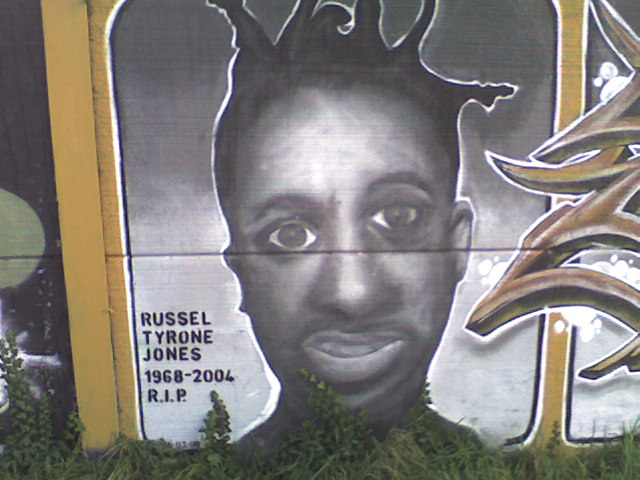
Jones left behind several children, including the rapper Young Dirty Bastard, and a body of work with the Wu-Tang Clan that changed the sound of rap forever. And he left behind a question that has never quite been answered: what would he have sounded like if he had lived?
The culture has not stopped answering it. A documentary about his life, Dirty: Platinum Edition, was released in 2013. A second, A Tale of Two Dirtys, made with his estate, followed in 2024. In 2023, the New York City Council designated his birthday, November 15, as Ol’ Dirty Bastard Day. In July 2026, Putnam Avenue in Bed-Stuy was co-named ODB Jones Way. To mark what would have been his fiftieth birthday, “Intoxicated,” from the unreleased A Son Unique, was released as a single on November 15, 2018. The rapper Kyle has cited Jones as an influence, and the cover of the JPEGMafia album Veteran pays homage to Return to the 36 Chambers: The Dirty Version.
Closing: Nobody Sounded Like Him
There is a temptation, when writing about Ol’ Dirty Bastard, to tidy him up: to make him a martyr, or a cautionary tale, or a clown, or a genius, and to leave it at that. He was none of those things, and all of them. He was a Brooklyn boy who loved kung fu films and became a warrior in a clan of nine — a father, a cousin, a friend, a troublemaker, a rescuer, a fugitive, a prisoner, a pop star and a punchline, sometimes in the same week.
What remains, twenty-two years after his death, is the sound. Put on “Shimmy Shimmy Ya” or “Brooklyn Zoo” or his verse on “Triumph,” and the room changes. The voice comes out of the speakers like weather — unpredictable, ungovernable, impossible to ignore. You can hear the joy in it, and the pain, and the mischief, and the stubborn refusal to sound like anybody else.
Nobody sounded like him — before or since. Nobody ever will. That is the tragedy, and the triumph, and the reason we are still listening.
Leave a Reply