
On 13 November 1978 — forty-eight years ago today — Siouxsie and the Banshees released their debut album, The Scream. It reached number twelve on the UK Albums Chart. No singles were released to promote it. It was recorded in one week and mixed in three. And it changed the sound of British music.
The Scream is now considered a pioneering work of post-punk, a landmark album, and one of the most influential debut records ever made. Joy Division, U2, Killing Joke, Steve Albini of Big Black and the Jesus and Mary Chain have all cited it as an influence. It profoundly affected noise rock and alternative rock, and rock guitar playing in general. But in 1978, it was simply a shock: a record that sounded like nothing else, made by a band that no record company had wanted to sign a year earlier, produced by a man who recorded the drums backwards, and fronted by a singer whose voice slid around the melody like something alive. It was claustrophobic and spacious at the same time. It was cold, machine-like and passionate at the same time. It was, as one journalist wrote, the sound of a twenty-first century industrial plant — made in 1978.
The title came, in part, from a film. In The Swimmer, from 1968, starring Burt Lancaster, the main character, Neddy Merrill, sets out to swim home, using open-air pools, climbing over garden fences from pool to pool. His journey puts him into a state of mental and physical exhaustion, and in the end, as the music historian Simon Goddard put it, “all Neddy Merrill could think to do was scream, […] as a scream of exhausted jubilance after a troubled, arduous journey”. That is what The Scream is: not a scream of terror, but a scream of exhausted jubilation, after a troubled, arduous journey. The band had been on that journey for two years. The album is the scream at the end of it.

Twenty minutes on the Lord’s Prayer
Siouxsie and the Banshees were formed in London in 1976 by the vocalist Siouxsie Sioux and the bassist Steven Severin. The Times would later call them “one of the most audacious and uncompromising musical adventurers of the post-punk era”. But they did not begin as a band at all. Siouxsie and Severin had met at a Roxy Music concert in September 1975, at a time when glam rock had faded and there was nothing new coming through with which they could identify. From February 1976, they began to follow an unsigned band, the Sex Pistols. The journalist Caroline Coon dubbed them and their friends the “Bromley Contingent”, as most of them came from the Bromley area of south-east London — a label Severin came to despise. “There was no such thing, it was just a bunch of people drawn together by the way they felt and they looked.”
They were all inspired by the Sex Pistols and their uncompromising attitude. And when they learned that one of the bands scheduled to play the 100 Club Punk Festival, organised by the Sex Pistols’ manager Malcolm McLaren, was pulling out from the bill at the last minute, Siouxsie suggested that she and Severin play — even though they had no band name and no additional members. Two days later, the pair appeared at the festival in London on 20 September 1976, with two borrowed musicians at their side: Marco Pirroni on guitar and Sid Vicious on drums. Their set consisted of a twenty-minute improvisation based on “The Lord’s Prayer”. The band intended to split up after the gig. But they were asked to play again.
Over the next few months, Siouxsie and Severin recruited the drummer Kenny Morris and the guitarist Peter Fenton. After playing several gigs in early 1977, they realised that Fenton did not fit in, because he was “a real rock guitarist”; he was fired on stage in mid-May. John McKay took his place in July. Their first live appearance on television took place in November 1977, on Granada Television in Manchester, on Tony Wilson’s show So It Goes. In that month they also recorded their first John Peel session for BBC radio, in which they premiered a new song, “Metal Postcard” — a song that introduced a “motorik austerity” in the drum patterns, along with “space in the sound” and “serrated guitars”. The band described their music as “cold, machine-like and passionate at the same time”. When they appeared on the cover of Sounds magazine, Vivien Goldman wrote: “they sound like a 21st-century industrial plant”. Two years after a twenty-minute improvisation on a prayer, they were the band the record companies could not afford to ignore — even if, for a while longer, none of them would sign them.
The band nobody would sign
In late 1977, Siouxsie and the Banshees received major press coverage but failed to secure a recording deal. They were famous — or at least notorious — and they were unsigned. It is a strange combination, and it frustrated their fans enough that someone took direct action: in October 1977, the music paper Sounds reported that someone had sprayed the walls of fifteen record companies with the words “Sign the Banshees: Do it now”. Fifteen companies, fifteen walls, one message. It is one of the great stories of punk-era do-it-yourself promotion, and it worked — eventually. In June 1978, the band signed with Polydor.
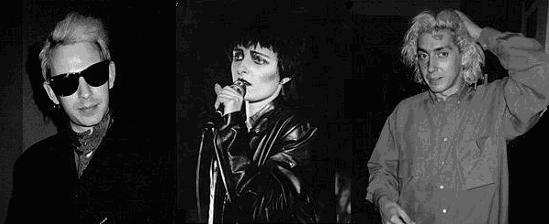
The band that signed with Polydor was not quite the band that had started out. In July 1977, John McKay had become the band’s guitarist, and the music historian Clinton Heylin has argued that the recruitment of McKay — along with the first steps of Magazine in late 1977 and the formation of Public Image Ltd in mid-1978 — marked the “true starting-point for English post-punk”. McKay co-wrote most of the songs on The Scream. Only “Carcass” dated from the band’s time with Peter Fenton, their guitarist from January to May 1977. McKay’s guitar is the sound of the album: angular, jagged, splintering, refusing to sound like a guitar at all.
Before the album, the band had recorded two sessions for BBC radio, and those sessions were how most people first heard them. “Mirage”, “Metal Postcard” and “Suburban Relapse” premiered in a John Peel session in November 1977, and “Overground” and “Carcass” were aired three months later, in February 1978. When recording their first Peel session, Siouxsie Sioux and the bassist Steven Severin described their music as “cold, machine-like and passionate at the same time”. The music journalist Vivien Goldman wrote: “Siouxsie and the Banshees sound like a 21st century industrial plant”. Their first Peel session became one of the most requested in the show’s history. John Peel, the most important DJ in British music, understood what he was hearing. More than a month before the album’s release, he broadcast it on BBC Radio 1 from an advance copy on a cassette, from beginning to end, with no interruptions. When he finished playing it, he said, “that’s the one boys and girls, that’s the one.”
One week at RAK
The Scream was recorded in one week during August 1978, and mixed in three weeks at RAK Studios in London, with Steve Lillywhite co-producing. The group was in the studio while their debut single, “Hong Kong Garden”, was being released — the single that had finally announced them to the charts, recorded with the same co-producer. Lillywhite was recruited because he recorded the drums in a different way. He asked the drummer, Kenny Morris, to play the bass drum and the snare drum first, and then to do the cymbals and the tom-toms later. Morris used cymbals sparingly: in the early days of the group, he did not incorporate any in his playing at all. The result was a drum sound unlike anything else in rock music: heavy on tom-toms, machine-like, with a deep echo that the music journalist Kris Needs noted in Lillywhite’s production. On “Metal Postcard”, there is what Needs called a “motorik austerity” in the rhythm patterns — the relentless, driving pulse of German motorik rock, stripped down to its skeleton.
Joy Division’s drummer, Stephen Morris, wrote in his autobiography that the Banshees used “the bass-led rhythm” and that their drummer “Kenny Morris played mostly toms”. Percussion was an important component of the music: the future Banshees drummer Budgie later remarked that Morris did “a lot of percussion overdubs” and that “they are really part of the songs”. The drums on The Scream are not a background. They are not a beat to dance to. They are architecture — the walls of the room the songs live in, the machine that the guitars and the voice move around.
The whole record has that quality: of being built, not played. The music historian Simon Goddard described it as a “claustrophobic abyss of angst and angularity”, and said it was part of a triptych of albums layering the foundations of post-punk. The sound has been described as claustrophobic, and as big with a lot of space — two descriptions that seem to contradict each other, and that are both true. It is claustrophobic because there is nowhere to hide in it: every instrument is exposed, every sound is deliberate. And it is spacious because the band left room in the music — long silences, slow tempos, sounds that arrive from a distance and take their time.
A pure musical democracy
The “original… idea”, as the band put it, was “a pure musical democracy”. The group did not want any lead instrument — neither the voice nor the guitar, “which usually dominated” the music. Every member of the band “occupied their own space, melodically and rhythmically”. Severin did not see “the bass as a supporting instrument”: he always thought of it “as a driving instrument”. It is a radical idea, and it is the key to the album. In most rock bands, the guitar leads and the bass follows. On The Scream, the bass leads. The guitar splinters around it. The drums build the room. And the voice moves through it all, not on top of the music but inside it.

The opening cut, “Pure”, shows how it works. It had a spacious, atmospheric sound. The journalist Miranda Sawyer noted that Siouxsie’s “vocals came from a distance”, that “there was a lot of space” and that “the sound was big and slow”. The music journalist Ian Birch wrote that “Pure” was an atmosphere piece: “a snarling, predatory bass stalks its ground before it’s met by teeth-grinding guitar splinters, and the distant footfall of drums. Siouxsie’s voice becomes an instrument.” Siouxsie’s way of singing was singular: the musician Boz Boorer observed that “the whooping vocal wasn’t just singing a tune, it would slide around”. Kris Needs remarked that at the end of “Pure”, it seeps out into “Jigsaw Feeling”, a “song of disorientation and bewilderment” with a “huge, sometimes awe-inspiring sound”.
Another song, “Switch”, was divided into three sections, one per character — “for the different people who swap jobs with terrible results: scientists, general practitioner and vicar”. The music was “monochrome and minimal”. It is a song about people who are not who they are supposed to be, about roles that do not fit, about a world in which the scientist and the vicar and the doctor have swapped places and everything has gone wrong. It could be a description of the album itself: a record in which every instrument has swapped its usual job, in which the bass leads and the guitar splinters and the voice becomes an instrument, and the result is not chaos but a new kind of order.
Cinema, suburbia and fear
Siouxsie wanted the Banshees’ music to be “cinematic”. Bernard Herrmann’s score to Alfred Hitchcock’s Psycho inspired the music of “Suburban Relapse”, where the guitars echo the knife-screeching violins of the famous shower scene. The group did not want a guitar to sound like a guitar. They wanted “their music to be exciting, with a sense of fear, of uneasiness to it”. The soundtrack of The Omen also inspired them. It is a telling pair of influences: two horror films, two scores that work by making the audience afraid of sounds they cannot quite place. The Banshees wanted their music to do the same thing — to be exciting not because it was loud or fast, but because it was uneasy, because something in it did not quite fit, because it sounded like a place you did not want to be alone in.
The lyrics had their own reference points: J. G. Ballard and William S. Burroughs. In a track such as “Suburban Relapse”, the band wrote about suburbia, where they were born and raised. Severin emphasised: “That’s why J.G. Ballard resonated so much with us, because all his near-future tales were set in this bizarre suburban wasteland. Suburbia is a place where you can imagine any kind of possibility, because there’s space, not urban clutter”. It is a precise description of the album’s sound, too: the space, the possibility, the wasteland. Ballard’s suburbia is a place where the houses are all the same and anything can happen behind any one of their doors. The Scream sounds like that place — like the moment when the door opens and you find out what has been happening inside.
The songs are full of that suburban unease. “Suburban Relapse” is about a breakdown in a place that is supposed to be safe. “Jigsaw Feeling” is about disorientation, about a self that will not fit together. “Switch” is about people in the wrong jobs, in the wrong lives. And underneath it all is the bass, driving, and the drums, machine-like, and the guitar, splintering, and the voice, sliding around the melody, coming from a distance. It is the sound of a band that grew up in the suburbs and never trusted them — and that turned that distrust into art.
The title, and the cover
The idea for the cover was Siouxsie’s. The photographer Paul Wakefield met with her and the band to discuss the project, and what they decided on was as strange and as deliberate as the music: disquieting and unnerving images, shot underwater in a swimming pool. “You can’t scream underwater,” Wakefield later said — and that is the point. The album is called The Scream, and its cover shows people who cannot scream. It is a joke, and it is not a joke. It is the image of a scream that has nowhere to go.
Wakefield wanted to be able to completely control the lighting, and so an indoor pool was the only option. He scouted quite a few pools, but when he saw the pool in the YMCA in Central London — dark blue tiled, with light blue lane stripes instead of the normal reverse colours — he knew it was the ideal location. He wanted to give it an eerie underwater night-time feel, and the setting was perfect. They used a number of 1000K and 2000K lights around the pool edge. And they used schoolkids as models — children, not the band, floating underwater in the dark blue pool, lit by the harsh lights, unable to scream. “They pretty well ran riot,” Wakefield said. It is one of the most unsettling album covers of the era, and one of the most honest: a picture of drowning that is also a picture of a band, a picture of a scream that cannot be heard.
Release, and what the critics said
The Scream was released on 13 November 1978. It was an almost instant commercial success, peaking at number twelve on the UK Albums Chart. No singles were released to promote the album — a remarkable decision, and a sign of how confident Polydor had become. The record did not need a single. It was the single.

The critics understood what they were hearing. The Scream was named “the best debut album of the year” by Sounds. The reviewer Peter Silverton gave the album five stars out of five, and the paper listed it at number two in its end-of-year best album list. Record Mirror also published a five-star review, saying: The Scream “points to the future, real music for the new age. … It is vital, it’s moving. It’s a … landmark.” Chris Westwood praised the cohesion between the words and the music: “The album’s lyrical frame of mind is perfectly reflected in the work of [guitarist] McKay, [bassist] Severin and [drummer] Morris; constantly shifting, restless, controlled aggression, they are as essential as Siouxsie.” Melody Maker described the sound as “strong, abrasive” — and the praise kept coming, from papers that had, a year earlier, been writing about a band that could not get a record deal.
It is worth remembering how fast all of this happened. In October 1977, someone was spraying “Sign the Banshees: Do it now” on the walls of fifteen record companies. In November 1977, the band was playing its first Peel session. In June 1978, they signed with Polydor. In August 1978, they recorded the album in a week. In November 1978, it was number twelve in the charts and the best debut album of the year. Thirteen months, from graffiti to glory. It is one of the fastest journeys in the history of British music — and it was earned, note by note, in a week at RAK.
What remains
The Scream has been reissued twice since its release, and each reissue is a measure of how the album’s reputation has grown. It was reissued on CD in the UK on 27 October 2005, as part of Universal’s Deluxe Edition series: a remastered version of the album on the first disc, and a second disc of demo and live tracks together with the singles from that period. A single-disc edition was also released, with the two non-album singles “Hong Kong Garden” and “The Staircase (Mystery)” as bonus tracks. And in September 2018, a 180-gram black vinyl LP reissue of the original edition was released, mastered from the original quarter-inch tapes and cut half-speed at Abbey Road Studios by Miles Showell — the same studio where the Beatles had made their records, now cutting a record that had been made to sound like the future.

The influence the album was supposed to have, it had. Bands and musicians including Joy Division, U2, Killing Joke, Steve Albini of Big Black and the Jesus and Mary Chain have cited it as an influence, and its impact on noise rock, alternative rock and rock guitar playing in general has been profound. You can hear it in Joy Division’s bass-led rhythm, in U2’s early atmospherics, in Killing Joke’s controlled aggression, in the Jesus and Mary Chain’s walls of noise. You can hear it, more quietly, in every band since that has decided the bass could lead, that the guitar did not have to sound like a guitar, that a voice could be an instrument, that a record could be claustrophobic and spacious at the same time.
The band that made The Scream did not stay together in that form for long. Their second album, Join Hands, was released in 1979 — and a few dates into the tour that September, Morris and McKay left an in-store signing after an argument and quit the band. In need of replacements, the Banshees’ manager called the drummer Budgie, formerly with the Slits, and asked him to audition. Budgie was hired, and Robert Smith of the Cure — whose group were already the support band on the tour — offered his services on guitar. The tour resumed, and after the last concert Smith returned to the Cure. Budgie became a permanent member, and with the guitarist John McGeoch the band changed direction and became one of the most successful alternative pop groups of the 1980s. Their third album, Kaleidoscope, released in 1980, peaked at number five on the UK Albums Chart. With Juju, in 1981, which also reached the top ten, they became an influence on the emerging gothic scene. They made their breakthrough in North America with Peepshow in 1988, and achieved a mainstream hit in the United States in 1991 with the pop single “Kiss Them for Me”. During their career, Siouxsie and the Banshees released eleven studio albums and thirty singles, and they have been cited as an influence by bands such as Joy Division, the Cure, U2 and Radiohead, and singers such as Tricky and Jeff Buckley. Siouxsie and Severin were the only constant members. The band disbanded in 1996.
Forty-eight years after its release, The Scream still sounds like the future — or at least like a future that never quite arrived, a twenty-first century industrial plant glimpsed from 1978. It is the sound of a band that nobody would sign, recording an album in a week, in a studio in London, with a producer who recorded the drums backwards, and making something that has outlasted almost everything else released that year. It is the sound of a scream that cannot be heard underwater, and that has been heard ever since. That is the one, boys and girls. That is the one.
Leave a Reply