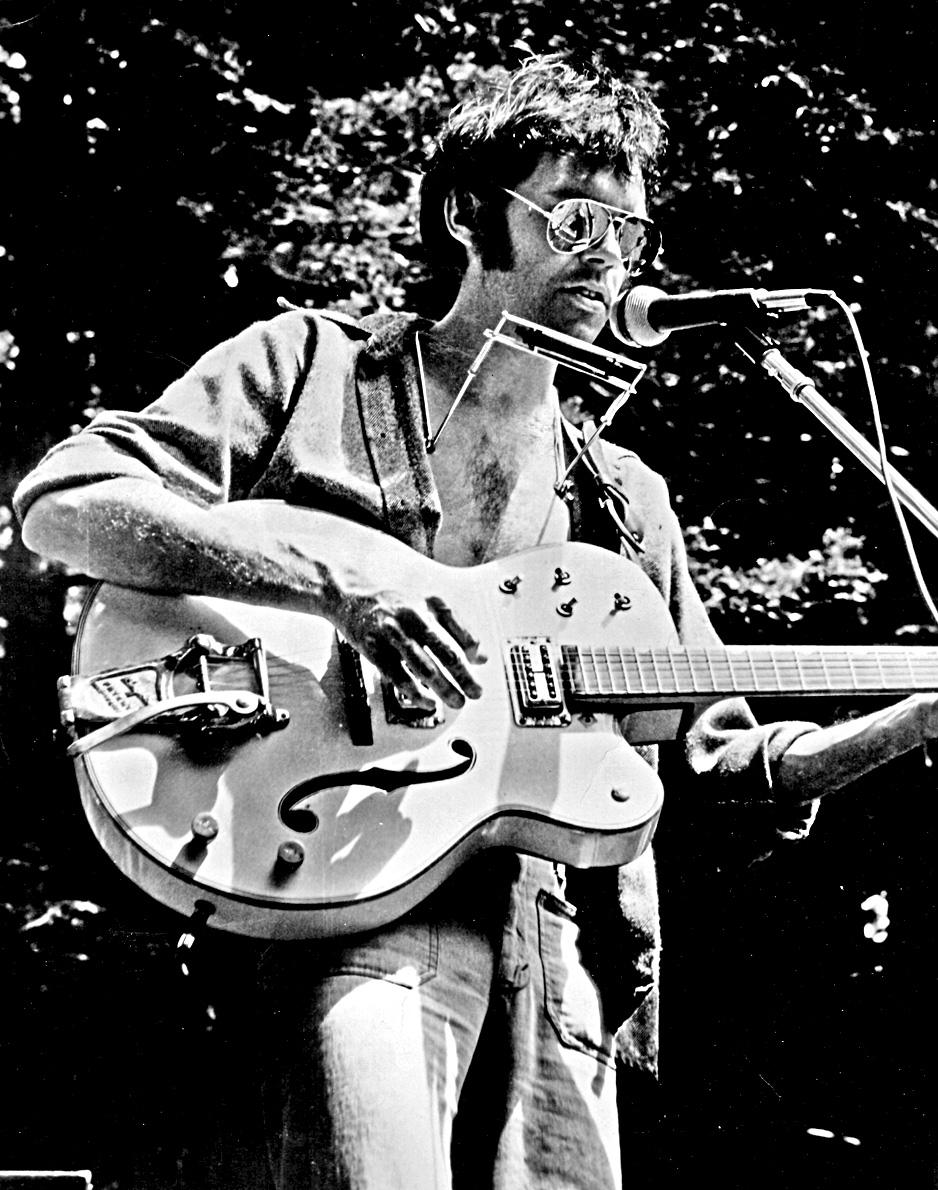
Opening: Eighty-One Candles on a Restless Life
On November 12, 2026, Neil Young turns eighty-one. That is a long life by any measure, and an almost unreasonable length of time for a rock-and-roll career. Most of the singers who shared a stage with Young in the 1960s have long since retired or fallen silent altogether. Young has done none of those things. He still writes, still records, and still changes his mind about what his music should sound like next. In September 2026, less than two months before this birthday, he released a brand-new album, Second Song, with his band the Chrome Hearts. It was not a farewell, and it did not sound like one.
His career has never followed a straight road. It has swerved between gentle acoustic folk and amplifier-shaking electric storms, between country warmth and bleak, unpolished confession, between the very centre of popular music and the rough ground far outside it. He has had exactly one single reach number one in the United States, and he spent much of the next fifty years running away from the success it brought him. He has been inducted into the Rock and Roll Hall of Fame twice, and other musicians gave him the nickname that fits him best: the Godfather of Grunge, earned not by chasing fashion but by playing so loudly, so roughly, and so honestly that a younger generation heard its own future in his noise.
A Small Town, a Summer Illness, and a Boy Who Would Not Sit Still
Neil Percival Young was born on November 12, 1945, in Toronto, Ontario. His father, Scott Young, was a journalist and author, and his mother, Edna, known as Rassy, came from a family with American roots. Neil was the couple’s second son; his older brother, Robert, known as Bob, had been born in 1942. Shortly after Neil’s birth, the family moved to Omemee, a small rural community in Ontario that Young would later remember fondly as a “sleepy little place,” a town where a boy could roam and where music arrived mostly through the radio.
Then, in the late summer of 1951, when Neil was five, that quiet childhood was broken open. Polio swept through Ontario in what would prove to be the last great outbreak of the disease in the province, and Neil caught it. The illness left his left side partly paralysed. He spent time in hospital, and his family took him south to Florida for the winter to help him recover, before returning to Canada in 1952. The paralysis never fully left him, and it shaped the way he moved and the way he stood with a guitar. But it did not make him still. Music became his way of moving. He listened to the radio constantly, soaking up rock and roll, rockabilly, doo-wop, rhythm and blues, and country, and he idolised Elvis Presley.
His first instrument was a plastic ukulele, a toy in all but name, and he worked his way forward from there, as he later put it, through a better ukulele, a banjo ukulele, and a baritone ukulele — everything, in his own telling, but a guitar. By the time he was a teenager, he was living with his mother in Winnipeg, Manitoba, after his parents’ marriage had ended and his mother had moved back there with him. At Earl Grey Junior High School in the Fort Rouge neighbourhood, he formed his first band, the Jades, and met Ken Koblun, who would become a lasting musical companion. At Kelvin High School he played in a string of instrumental rock bands, and then he left school to play music full time. His first steady band was the Squires, with Koblun, Jeff Wuckert, and Bill Edmondson on drums. They had a local hit called “The Sultan,” and over three years they played hundreds of shows across Winnipeg and rural Manitoba.
Winnipeg also gave Young his first steps as a songwriter. There he wrote “Sugar Mountain,” a wistful meditation on lost youth, and “Flying on the Ground Is Wrong,” which became a Canadian Top 40 hit for the Winnipeg band the Guess Who — Young’s first real success as a songwriter for somebody else. In 1965 he toured Canada as a solo artist. He was twenty years old, and he was already looking beyond Canada.
The Hearse to Los Angeles
The next step came in Toronto in 1966, when Young joined a band called the Mynah Birds. The group was fronted by a charismatic young singer named Rick James, who would later become famous in his own right, and it had secured a recording contract with the Motown label. Then the door slammed shut. As the band was recording its first album, James was arrested for being absent without leave from the United States Navy Reserve, and the Mynah Birds fell apart. Young and the band’s bass player, Bruce Palmer, found themselves in Toronto with no band and no prospects. They pawned the group’s musical equipment, took the money, and bought a Pontiac hearse. Then they pointed that hearse south and drove to Los Angeles. It was an absurd vehicle for a rock-and-roll dream — long, black, and built for funerals — but it carried them all the way to California, and it carried them into history.
Los Angeles in 1966 was crowded with young musicians chasing the same dream, and Young and Palmer might easily have vanished into that crowd. Instead, chance intervened in the most literal way. Stuck in traffic on Sunset Boulevard, they spotted a familiar face in another car: Stephen Stills, a musician Young had first met years earlier in Fort William, when Stills’s band, the Company, had been playing at the same venue as the Squires. Along with Richie Furay and Dewey Martin, Young, Palmer, and Stills formed Buffalo Springfield. The group mixed folk, country, psychedelia, and rock, sharpened by the twin lead guitars of Stills and Young, and their first album, Buffalo Springfield, released in 1966, sold well after Stills’s topical song “For What It’s Worth” became a hit, lifted by Young’s melodic harmonics on electric guitar. Buffalo Springfield helped to shape folk rock and country rock, two genres that would define the next decade. It did not last: distrust of the band’s management, Palmer’s arrest and deportation, and the strain between strong-willed members pulled the group apart. In May 1968 the band split for good, although a final studio album, Last Time Around, was released to fulfil a contractual obligation, with Young contributing “On the Way Home” and “I Am a Child.” Nearly thirty years later, in 1997, Buffalo Springfield would be inducted into the Rock and Roll Hall of Fame. Young did not attend the ceremony. It was a characteristic gesture: even an honour, if it came in the wrong shape, was something he would walk away from.

Crazy Horse and the First Solo Rush
After Buffalo Springfield broke up, Young signed a solo deal with Reprise Records, the label that was also home to his friend Joni Mitchell, with whom he shared a manager, Elliot Roberts. Roberts would manage Young until Roberts’s death in 2019, one of the longest partnerships in popular music. Young’s first solo album, Neil Young, was released on January 22, 1969, and received mixed reviews. Young himself later dismissed it, saying it had been overdubbed rather than played. He wanted something rawer, and he found it in three musicians from a band called the Rockets: Danny Whitten on guitar, Billy Talbot on bass, and Ralph Molina on drums. The three took the name Crazy Horse, and the album they made with Young, Everybody Knows This Is Nowhere, released in May 1969, was recorded in just two weeks. It contains three of the most enduring songs Young ever wrote: “Cinnamon Girl,” “Cowgirl in the Sand,” and “Down by the River.” Young reportedly wrote all three in bed on the same day while nursing a fever of 39 degrees Celsius, 102 degrees Fahrenheit. The songs had a heat and a looseness that his debut had lacked — long, wandering guitar lines and a rhythm section that leaned into the groove rather than polishing it. Crazy Horse would become Young’s home base for the rest of his life, the band he returned to whenever he wanted his music to sound like electricity rather than craft.

The year 1969 also brought Young back together with Stephen Stills, this time inside a group that already existed. Crosby, Stills and Nash had released one album as a trio in May 1969 and won the Grammy Award for Best New Artist. Young was first offered a place as a sideman, but he agreed to join only on the condition that he became a full member, and the group was renamed Crosby, Stills, Nash and Young. The quartet made its debut in Chicago on August 16, 1969, and then played the Woodstock Festival.
Harvest and the Hit He Ran Away From
If 1969 was the year Young found his sound, 1970 was the year he found his audience. In August of that year he released his third solo album, After the Gold Rush, featuring Nils Lofgren, Stephen Stills, and the CSNY bassist Greg Reeves. The record was less amplified than Everybody Knows This Is Nowhere, with a wider range of sounds, and it became his commercial breakthrough as a solo artist. It held some of his best-known work: “Tell Me Why,” “Don’t Let It Bring You Down,” the singles “Only Love Can Break Your Heart” and “When You Dance I Can Really Love,” and the dreamlike piano title track. It also held “Southern Man,” a heavy blues-rock condemnation of racism that angered many listeners in the American South and prompted Lynyrd Skynyrd to answer Young by name in their hit “Sweet Home Alabama.”
Then came Harvest. Released in February 1972, Young’s fourth studio album was recorded in part in Nashville in February 1971, during sessions that produced both its lead single, “Heart of Gold,” and its second single, “Old Man.” Young had injured his back and could not play electric guitar comfortably, so he leaned into acoustic instruments and country session players, and he invited James Taylor and Linda Ronstadt to sing backing vocals on “Heart of Gold” and “Old Man.” The result was gentle, warm, and immediately beloved. Harvest reached number one on the Billboard 200 albums chart on March 11, 1972, spending two weeks at the top and ending a seven-week run by Don McLean’s American Pie. It went on to become the best-selling album in the United States for the whole of 1972, and it remains Young’s best-selling solo album. “Heart of Gold,” released as the lead single in January 1972, climbed to number one on the Billboard Hot 100 on March 18, 1972, a week after the album had topped its own chart. It also reached number one in Canada and number ten in the United Kingdom. It remains the only number-one single of Neil Young’s entire career. “Old Man,” the follow-up, reached number 31 on the Hot 100, Young’s second-highest-charting solo single.
Young heard it differently. In the liner notes to Decade, the three-record compilation he released in 1977, he wrote that “Heart of Gold” had put him “in the middle of the road.” Travelling there, he said, soon became boring, “so I headed for the ditch. A rougher ride but I saw more interesting people.” It is one of the most famous sentences Young ever wrote, and it is also a perfect summary of his career. The middle of the road was comfortable, well-lit, and crowded. The ditch was rough, lonely, and full of strangers worth meeting. Young chose the ditch, and he stayed there for years.
Four Voices, One Protest Song
The success of Harvest sometimes makes it easy to forget that Young was also, at the very same time, part of the biggest vocal group in America. Crosby, Stills, Nash and Young’s first album together, Déjà Vu, was released on March 11, 1970, and it topped the charts. The making of the record was famously difficult, with the musicians arguing frequently, above all Young and Stills, who both fought for control. Stills would spend the rest of their long relationship complaining that Young wanted to play folk music in a rock band. But the friction produced something extraordinary, and Déjà Vu remains one of the defining albums of its era.
Two months after Déjà Vu was released, Young wrote the song that would become CSNY’s sharpest moment. On May 4, 1970, members of the Ohio National Guard opened fire on students protesting against the Vietnam War at Kent State University, killing four of them. Young wrote “Ohio” in response, and CSNY recorded it and released it as a single with remarkable speed, even while the group’s “Teach Your Children” was still climbing the singles charts. “Ohio” named the dead, named the place, and named the president, and it did so while the event was still raw in the public mind. It showed a side of Young that would return again and again: when something in the world angered him, he did not wait for a better moment to say so.
Into the Ditch
Young meant what he wrote in the Decade liner notes. After Harvest, he did not try to repeat it. Instead, he made three albums that are now known together as the Ditch Trilogy: Time Fades Away in 1973, On the Beach in 1974, and Tonight’s the Night in 1975. They are bleak, unvarnished, and intensely personal records, and they were shaped by grief. In late 1972, Danny Whitten, the guitarist who had helped to define the sound of Crazy Horse, died of a heroin overdose. Only months later, Bruce Berry, a roadie who had worked closely with the band, died in similar circumstances. Time Fades Away, a live album with no hit singles, was raw and restless. On the Beach was quieter but no less despairing, a record that many listeners now regard as one of the most honest albums Young ever made. Tonight’s the Night was the darkest of the three. It had been recorded mainly in August 1973, in the immediate aftermath of the deaths, but the record company held it back, and it was not released until June 1975, after the other two albums had already come out.
The Ditch Trilogy sold far less than Harvest, and at the time some listeners wondered whether Young had lost his way. In hindsight, the opposite was true. Those three records proved that Young would follow his material wherever it led him, even if it led him away from the audience he had just won. He emerged from that period with renewed energy, and in June 1979 came the album that gave this birthday story its title: Rust Never Sleeps. The record was half acoustic and half electric, and much of it had been recorded live, on two separate tours — a run of solo acoustic performances and then the full “Rust Never Sleeps” tour, in which each show was split in half, one part quiet and one part loud, just like the album itself. It opened with “My My, Hey Hey (Out of the Blue),” a gentle acoustic song, and closed its electric side with “Hey Hey, My My (Into the Black),” the same song turned into a distorted storm. Between those two versions lay the whole of Young’s art: the folk singer and the electric guitarist, the storyteller and the noise-maker, living in the same body.

The Godfather of Grunge and the Long Middle Years
Rust Never Sleeps did more than close the 1970s for Young. It gave him the reputation that would follow him into the next decades. His distorted electric guitar playing, especially with Crazy Horse, earned him the nickname “Godfather of Grunge,” and the name stuck because it was true. When the Seattle bands of the late 1980s and early 1990s — above all Pearl Jam and Nirvana — talked about the musicians who had shown them the way, Young was near the top of every list. He did not merely influence them from a distance. In 1995 he recorded the album Mirror Ball with Pearl Jam, a collaboration between a fifty-year-old legend and a band young enough to be his children, and it sounded like neither a tribute nor a favour. It sounded like a conversation.
The decades after Rust Never Sleeps were not a smooth road. Young changed labels, fought with record companies, and made films under the pseudonym Bernard Shakey, and released albums that veered from country to rockabilly to electronic experiments and back again. Through all of it, the honours accumulated, even when Young himself seemed indifferent to them. He has received multiple Grammy and Juno Awards. Rolling Stone placed him on its list of the 100 greatest musical artists, and ranked him number 30 on its 2023 list of the 250 greatest guitarists of all time. Twenty-one of his albums and singles have been certified gold or platinum in the United States. He was awarded the Order of Manitoba in 2006 and made an Officer of the Order of Canada in 2010. In 2020 he became a citizen of the United States as well as Canada, a formal recognition of a life that had been lived on both sides of the border for more than fifty years. The Hall inducted Young as a solo artist in 1995, and then again in 1997 as a member of Buffalo Springfield. The double induction tells the story of his career in miniature: he mattered as part of a band, and he mattered on his own.
Eighty-One and Still Writing
If Young’s story ended in the 1990s, it would already be a remarkable one. But it does not end there, and that is the point of this birthday. In his seventies, Young kept recording, kept touring, and kept finding new collaborators. He used the Neil Young Archives, his vast online project, to open up his past to his listeners, releasing old recordings and films that had sat in vaults for decades. In 2023 he was photographed playing in support of the Fairy Creek activists in British Columbia, a reminder that the young man who wrote “Ohio” in a hurry in 1970 had never stopped believing that a song could be an answer to something happening right now.

Then, in 2025, he found a new band. The Chrome Hearts became his latest backing group, and their first studio album together, Talkin’ to the Trees, was released that year. The band included Micah Nelson, another son of Willie Nelson, on guitar and vocals, the veteran Muscle Shoals keyboard player Spooner Oldham, bassist Corey McCormick, and drummer Anthony LoGerfo. In 2026, Young and the Chrome Hearts recorded a new album at Shangri-La Studios in Malibu, California, the studio associated with the producer Rick Rubin. It was engineered and mixed by John Hanlon and produced by Lou Adler with the Volume Dealers, including Young himself and Niko Bolas. The album, Second Song, was released on September 18, 2026, through Reprise Records. It was the group’s second studio album together, and their third album in total, following the live album As Time Explodes, which had been released in April 2026. Second Song contains seven songs, all written by Young and all previously unreleased. Five of them were newly written, and two were new recordings of compositions dating back to Young’s earliest years as a songwriter, in the early 1960s: “Casting Me Away from You” and “I’ll Love You Forever.” The title track itself runs for more than eleven minutes, a long, rambling song that Young has described as a set of songs that came to him while he was in Colorado. The album’s sound is largely semi-acoustic folk and country rock, Young’s home ground, played by a band that knows how to leave space around a voice.
Closing: What the Rust Teaches Us
Neil Young took the title Rust Never Sleeps from a slogan for a rust-proofing product, and he turned it into a philosophy. Rust, in his hands, is not only decay. It is also time, and time does not stop for anyone. The only answer Young has ever offered to that fact is to keep moving. Keep writing. Keep playing. Keep changing. That is why his eighty-first birthday feels less like a milestone than like a checkpoint on a road that is still open. The boy from Omemee is still in there, listening to the radio and working out how to get from a plastic ukulele to a guitar. The young man who drove a hearse to Los Angeles is still in there too, betting everything on a chance meeting in traffic. And the eighty-year-old who recorded Second Song in Malibu is still in there, writing new songs and digging up old ones, as if the distance between 1962 and 2026 were nothing at all. Happy eighty-first birthday, Neil Young. The rust never sleeps — and neither, it turns out, do you.
Leave a Reply