
Some number-one records arrive after years of careful planning. Others arrive almost by accident, carried along by a machine that was set too fast, a television left on late at night, and a singer who happened to walk through the door at exactly the right moment the next morning. “Wild, Wild West” belongs to the second kind. It is a bright, breathless pop record, built in about two hours from a rhythm that was never meant to sound the way it did. Within a few months, that hurried mistake had crossed the Atlantic, filled dance floors, dominated MTV, and carried four London club musicians to the top of the American chart — a place no British act in their position had ever reached before, and a place they reached without ever being heard in quite the same way at home.
Five Years in the Clubs
The Escape Club came together in London in 1983, from the remains of two earlier bands. Lead singer and rhythm guitarist Trevor Steel and guitarist John Holliday had played together in Mad Shadows. Bassist Johnnie Christo, also known as John Christoforou, and drummer Milan Zekavica had come from another London band, the Expressos. When those two groups ran their course, the four musicians found each other, and the new band began to play. It was the ordinary, hopeful regrouping of musicians who already knew the city’s small stages and late-night crowds, and who believed that, together, they might get further than they had managed apart.
The first fruits of that work came slowly. In 1985, the band signed with EMI and released their first single, a brooding, synthesiser-led track called “Breathing”. The following year, EMI released their debut album, White Fields. It did not find an audience. In Britain, where the band had built their name on stage, the record went nowhere. The Escape Club could have folded at that point, as many bands did. Instead, they went back to work, and they began to think differently about what kind of record they wanted to make next. What they wanted, above all, was movement. The club years had taught them that their strength lay in rhythm, in songs that made a room move, and their next album would lean into that strength far more directly than White Fields had.

A New Producer and a New Direction
That next album would take the swagger of seventies glam rock and run it through an eighties dance beat, bright and insistent and built for the floor. It was a deliberate change of direction, and it needed a producer who understood both sides of that idea: the guitars and the groove, the old glamour and the new pulse. That producer was Chris Kimsey. By the time the Escape Club began work with him, Kimsey had already built a reputation on records that balanced rock weight with studio polish. He had produced the Rolling Stones’ 1983 album Undercover, and he had worked with the Psychedelic Furs and with Killing Joke.
There was, however, a complication. When the album was complete, EMI, the label that had released White Fields, heard it and were not impressed. The record they had expected was not the record the band had made, and the label chose not to release it. For a band that had already waited five years for a breakthrough, that rejection could have been the end of the story. Instead, it became a turning point. The Escape Club took the finished album elsewhere, and Atlantic Records signed the band and agreed to put it out. The album was released in the summer of 1988, and its title track was chosen as the first single. What none of them could have known was that the most important moment in the making of that record had already happened, late one night, in a room with a television and a drum machine.

The Night the Beat Doubled
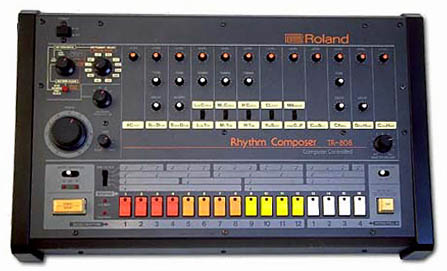
The story of “Wild, Wild West” begins with something ordinary: a musician at home, late at night, with the television on. John Holliday, the band’s guitarist, was watching television when a track by Run-DMC came on. Run-DMC were, by 1988, one of the defining hip-hop acts of the decade, a group whose hard, stripped-back beats and shouted, interlocking vocals had carried rap from the streets of New York into the mainstream of American pop. Their sound was built on rhythm above all else, on drums that hit like a door slamming and on voices that rode the beat rather than floating above it. Holliday heard that sound coming from the television, and something in it stayed with him. He went upstairs, switched on his drum machine, and tried to put a hip-hop beat of his own into it.
A drum pattern at double speed is not simply a faster version of the same thing. It changes the character of the rhythm entirely. It turns a steady, strutting groove into something breathless and urgent, a pattern that seems to chase itself around the room. It leaves less space for a singer to breathe, and it demands a different kind of energy from everyone who plays over it. A careful musician might have stopped, corrected the setting, and started again at the speed he had intended. Holliday did not. He left the racing pattern where it was, with that doubled beat still sitting in the machine, waiting for someone else to hear it. It was wrong, in the sense that it was not the beat he had set out to make, and it was right, in the sense that it sounded alive. The next morning would prove him right, in a way that no amount of careful planning could have arranged.
Two Hours the Next Morning
The next morning, Trevor Steel came round. Steel was the band’s lead singer and rhythm guitarist, the voice that would carry any song the band wrote, and the person whose ear would decide whether a rhythm was worth building on or worth forgetting. Holliday played him the pattern, still running at double speed, still racing, still sounding like a beat that had somewhere urgent to be. Steel listened, and then he did the simplest and most remarkable thing a singer can do with a new rhythm: he started singing over it.
Within two hours, the two men had a song. Not a sketch, not a fragment, but a song, whole enough to be recognised as one, fast and funny and built for dancing. The doubled beat had done its work. It had given Steel a tempo that would not let him slow down, a pulse that pushed his voice forward, and a mood that matched the words that came with it. The song that emerged was not a careful, considered piece of writing. It was a rush, a sprint, a record that sounded like the speed at which it had been made.
The Long Middle That Was Never Meant to Stay
Every pop single of the late 1980s lived in two forms. There was the short version, cut for radio, tight and bright and over in under four minutes, and there was the long version, pressed onto a twelve-inch single for clubs and for fans, where a song could stretch out and show off. The long middle section of “Wild, Wild West”, with its rap, was made for that second world. It was written for the twelve-inch single, a place where a band could let a song breathe, where a rhythm could run on a little longer than radio would allow, and where a spoken, rapped passage could sit in the centre of a pop record without worrying about whether a radio programmer would have the patience for it.
The band, however, fell in love with the full-length version. They liked the way the song opened up in its middle, the way the rap gave it a different voice and a different energy, the way the record seemed to grow stranger and more exciting the longer it went on. The short version was neat. The long version was the song as they heard it in their heads, and they did not want to cut it down. So they released the whole thing. The album version runs to five minutes and forty-four seconds, and the single edit, at three minutes and fifty-nine seconds, is the shorter form that radio knew best. But the version that defined the record was the long one, with its rap in the middle and its feeling that the band had decided, for once, to let a record be as long as it wanted to be.
Ronnie, Yuppies, and the Sound of 1988
If the music of “Wild, Wild West” was playful, its lyrics were watchful. The song looked straight at the decade around it, and it did not look away. It name-checked “Ronnie”, Ronald Reagan, the American president who was, in 1988, in the final year of his presidency, a figure who had dominated the politics of the decade and whose name, in a pop song, carried a whole world of associations with it. To name a president in a dance record is a bold choice. It anchors the song in a particular time and place, and it tells the listener that this is not a song about love in the abstract, but a song about the world the listener is actually living in.
Around that name, the lyrics gathered the other great facts of the late 1980s. There were the yuppies, the young, ambitious professionals who had become the decade’s most visible symbol, getting rich quickly in the cities of Britain and America, buying and selling, spending and showing off, living at a speed that matched the doubled beat of the song itself. There was the Cold War, the long, frozen confrontation between East and West that had shaped the politics of the entire post-war era and that, in 1988, still hung over every conversation about the future. And there was the fear of AIDS, the epidemic that had arrived in the early years of the decade and that, by 1988, had changed the way a whole generation thought about love, about risk, and about the fragility of the body. These were not light subjects, and they were not the subjects a listener might expect to find in a bright, funny dance record. That was the point. The Escape Club were writing a pop song that laughed and worried at the same time, a record that could fill a dance floor and still notice the world outside the club door.

Release, MTV, and the Climb to Number One
“Wild, Wild West” was released as a single on July 15, 1988, on WEA and Atlantic, with the Escape Club credited as songwriters and Chris Kimsey as producer. The album, Wild Wild West, had been released that summer, and the single was its opening move. In the United States, the record began its life quietly, as most records do. It entered the Billboard Hot 100 near the bottom, at number 94, in the chart dated August 20, 1988, and it began, slowly at first, to climb.
What carried it upward, as much as the song itself, was its video. In 1988, MTV was the most powerful force in American popular music, the channel that could turn a song into a national event in a matter of weeks, and the video for “Wild, Wild West” received major rotation on the channel. It gave American audiences a face to put to the sound they were hearing on the radio. For a British band that had never been to the United States before the song took off, that video was their introduction, their first handshake with an audience they had never met, and it worked. The more the video played, the more the record sold, until the song was everywhere at once.
In Britain, the story was very different. The video was banned from British television. The reasons for the ban were never made entirely clear, and the band and those who reported on the ban could only speculate about what had caused it. The speculation centred on the video’s use of disembodied limbs and lingerie, images that, in the view of those who objected to them, came across as offensive or sexist. Whether that was the full explanation, or only part of it, the result was the same: the video that was helping to make the band famous in America could not be shown at home. It was a strange, almost symbolic split. In one country, the record was a hit. In the other, it was, in effect, invisible.
The climb itself was slow, steady, and, in the end, unstoppable. By the chart dated October 15, in its ninth week, the record had broken into the top ten for the first time, rising eleven places to number nine. A week later, on October 22, it stood at number five. By October 29, in its eleventh week, it had reached number three. The peak came in the week of November 12, 1988, when “Wild, Wild West” reached number one on the Billboard Hot 100. It stayed there for one week, a single, shining week at the summit, and it was enough. In thirteen weeks, a song that had begun as a doubled beat on a drum machine in London had travelled across the Atlantic and risen to the top of the most important chart in American popular music. It also reached No. 6 in Australia, No. 2 on Canada’s Top Singles chart, No. 1 on Canada’s Dance/Urban chart and No. 12 in New Zealand, finishing No. 18 on Billboard’s 1988 year-end Hot 100. Both the single and the album were certified Gold in the United States, the single for sales of 500,000 copies.
The Only Ones
The most remarkable fact about “Wild, Wild West” is also the simplest to state, and the hardest to explain. The Escape Club became the only British artist ever to top the American chart without ever charting at home in the United Kingdom. No other British band, before or since, has managed that particular distinction, and it tells us as much about the music business of the 1980s as it does about the band themselves.
A British band that succeeded in America had almost always succeeded in Britain first. The Beatles, the Rolling Stones, the Police, Duran Duran, and the dozens of other British acts who topped the Hot 100 in the decades before 1988 had all been hits at home before they were hits abroad. Their American success was an extension of a career that had already been proven in London, Manchester, or Liverpool. The Escape Club broke that pattern completely. They were a British band whose first real hit was an American one, whose audience was, at first, an ocean away, and whose home country, for reasons that had as much to do with a banned video and a record that did not fit the British radio of the moment as with anything the band did wrong, simply did not hear them in the same way.
After the West Went Quiet
In 1989, two more singles followed from Wild Wild West: “Shake for the Sheik”, which reached No. 28 on the Billboard Hot 100, and “Walking Through Walls”, which reached No. 81. The band returned to the studio in 1990 to record their next album, Dollars and Sex, which was released in March 1991. Its first single, “Call It Poison”, did not reach the American Top 40, and for a moment it looked as if the band’s American moment might be over. Then Atlantic released a second single, a love song called “I’ll Be There”, and the record found its audience in a very different way. Listeners who had heard it began phoning radio stations and requesting it, and the song, driven by that word of mouth, climbed to number eight on the Billboard Hot 100 in August 1991, and achieved Gold status in the United States. It was a very different kind of hit: slower, more emotional, and a song that had become an anthem for listeners who had experienced loss of their own. It also meant that the Escape Club were not, after all, a one-hit wonder. They had reached the American Top 10 twice, three years apart, with two very different records.
It was not, however, enough to sustain the band indefinitely. In 1992, the Escape Club disbanded. The group had been together for a long time by then, and the idea of starting again seemed too much, particularly with the debts and contractual difficulties that had built up over the years. Johnnie Christo and Milan Zekavica left to pursue projects of their own, and Trevor Steel and John Holliday began a new career as songwriters and producers, working with British and Irish pop acts including Atomic Kitten and Westlife. It was a quiet end to a loud career, and it might have been the end of the story altogether. It was not. In 2009, Steel and Holliday reunited the Escape Club, with new member Red Broad, and in February 2012 they self-released a new studio album, Celebrity, on their own label. In 2019, Johnnie Christo returned to the line-up, and the band played as a full group for the first time in twenty-five years, on the Lost 80s Live tour of the United States, the country where their story had, in a sense, always belonged.
Why It Still Sounds Like 1988
“Wild, Wild West” endures because it is a record that knows exactly what it is. It is not a song that pretends to be timeless. It is a song that is proudly, defiantly of its time, and that is why it still works as a way of remembering that time. Play it now, and you can hear the whole of 1988 in it: the doubled beat that came from a hip-hop record on television, the rap in the middle that belonged on a twelve-inch single, the gunshots and lasers and Star Wars blasters that fired through the mix, the name of a president, the hurry of young professionals getting rich, the distant cold of the Cold War, and the fear that ran underneath it all. It is a dance record that carries the news with it, and it is a news report that you can dance to.
And that, finally, is why the record’s strange chart history matters. The Escape Club were the only British act to top the American chart without ever charting at home, and that fact will always be attached to their name. But the fact is not the whole story. The whole story is a London band, a television left on late, a drum machine set too fast, a singer arriving at the right moment, a long middle section that was never meant to be released, a video that one country loved and another banned, and a song that climbed for thirteen weeks until, for one week in November 1988, it stood at the top of America. It is a story about a wild west that was never a place on a map, but a moment in time, and about four musicians who, for a little while, rode straight through the middle of it.
Leave a Reply