
It is December 26, 1969, and the stage of Philharmonic Hall in New York City looks wrong.
There is a piano, as you would expect. But beside it sits something else entirely: a tangle of cables, dials and keyboards that most of the audience has never seen on a concert stage before. It is a synthesiser — a Moog, and an ARP — and the man about to play it is a soft-spoken Canadian pianist who has already spent nearly twenty years quietly breaking every rule jazz had given him.
His name is Paul Bley. He is thirty-seven years old. And tonight he is about to give the first live synthesiser performance ever heard in this hall, a concert billed as the “Bley-Peacock Synthesizer Show,” with the singer and composer Annette Peacock.
The audience does not know quite what to expect. Neither, in a sense, does Bley. That is the point. For almost two decades he has been moving toward music with no fixed centre — music that is invented in the moment, note by note, with no chord changes to lean on and no melody to fall back on. Tonight, the machine beside the piano will take that idea further than anyone has taken it before.
Paul Bley was born in Montreal on November 10, 1932. On November 10, 2026, he would have turned ninety-four. He died in 2016, at the age of eighty-three, but the music he made — from bebop sessions with Charlie Parker in the 1950s to the solo piano recordings of the 2000s — still sounds like the future arriving early. This is the story of a pianist who never played it safe, and who changed jazz by refusing to repeat himself.
The Prodigy from Montreal
Bley was born Hyman Bley in Montreal, Quebec, on November 10, 1932. His adoptive parents were Betty Marcovitch, an immigrant from Romania, and Joseph Bley, the owner of an embroidery factory. Only in 1993 — when a relative from the New York branch of the family walked into the Sweet Basil Jazz Club in New York City — did Bley learn that his father was actually his biological parent.
Music came early. At the age of five he began studying the violin, but at seven, after his mother divorced his father, he switched to the piano. By eleven he had received a junior diploma from the McGill Conservatory in Montreal. At thirteen he formed a band that played at summer resorts in Ste. Agathe, Quebec. As a teenager he changed his name to “Paul,” thinking that girls would find it more attractive. He was already playing with touring American bands as a teenager, including Al Cowan’s Tramp Band.
Then came the call that changed everything. In 1949, when Bley was starting his senior year of high school, Oscar Peterson — already the most famous jazz pianist Canada had ever produced — asked Bley to fulfil his contract at the Alberta Lounge in Montreal. A teenager was being asked to stand in for a master. The next year Bley left Montreal for New York City and the Juilliard School. He would live in the United States for his entire adult life, but he never renounced his Canadian citizenship.
Playing with Bird: The 1950s
New York in the early 1950s was the centre of the jazz world, and Bley wasted no time. In 1951, on summer break from Juilliard, he returned to Montreal and helped organise the Montreal Jazz Workshop. In 1953 he invited the bebop alto saxophonist and composer Charlie Parker to the Jazz Workshop, where he played and recorded with him, making the record Charlie Parker Montreal 1953.
Think about that for a moment. Bley was twenty years old, and he was sharing a stage with Charlie Parker — “Bird” — the man who had reinvented jazz in the 1940s and whose influence hung over every young musician in America. It was the kind of break most musicians dream about for a lifetime. Bley treated it as a beginning, not a peak.
Back in New York, he hired Jackie McLean, Al Levitt and Doug Watkins for an extended gig at the Copa City on Long Island. From the early 1950s until 1960 he led a series of trios with Al Levitt and Peter Ind; recordings of this trio from 1954 were included in the Mercury album Paul Bley. In 1953 the Shaw Agency booked Bley and his trio to tour with Lester Young, billed as “Lester Young and the Paul Bley Trio,” and he also performed with the tenor saxophonist Ben Webster. In the same year, Charles Mingus produced the Introducing Paul Bley album for his own label, Debut Records, with Mingus on bass and the drummer Art Blakey. Bley would record again with the Charles Mingus Group in 1960.

In 1954 Bley received a call from Chet Baker, inviting him to play opposite Baker’s quintet at Jazz City in Hollywood for the month of March. That was followed by a tour with the singer Dakota Staton. Down Beat magazine interviewed Bley for its July 13, 1955, issue, and the title of the article was prescient: “PAUL BLEY, Jazz Is Just About Ready for Another Revolution.” The article quoted Bley as saying, “I’d like to write longer forms, I’d like to write music without a chordal center.”
That sentence is the key to everything Bley did afterwards. Most jazz of the time was built on chord changes — a harmonic roadmap that told every musician where the music was going. Bley wanted to throw the map away.
Bley’s trio with Hal Gaylor and Lennie McBrowne toured across the United States in 1956, including a club in Juarez, Mexico. The tour ended with an invitation to play a New Year’s Eve gig in 1956 at the home of Lucille Ball and Desi Arnaz in Palm Springs. During the evening, Bley collapsed on the bandstand with a bleeding ulcer, and Lucille Ball immediately took him to Palm Springs Hospital and paid for all of his medical care. Bley, who had met Karen Borg while she was working as a cigarette girl at Birdland in New York, married her after she came out to meet him in Los Angeles. She became Carla Bley — one of the most important composers in jazz in her own right.
In 1957 Bley stayed in Los Angeles, where he had the house band at the Hillcrest Club. By 1958 the original band, with vibraphone player Dave Pike, had evolved into a quintet, with Bley hiring young avant-garde musicians: the trumpet player Don Cherry, the alto saxophonist Ornette Coleman, the bassist Charlie Haden and the drummer Billy Higgins. It was a band full of musicians who would go on to reshape jazz — and Bley had put them together.
The Free Jazz Revolution: The 1960s
In the early 1960s Bley was part of a trio with Jimmy Giuffre on reeds and Steve Swallow on bass. Its repertoire included compositions by Giuffre, Bley and his now ex-wife, the composer Carla Bley. The group’s music presented innovations in chamber jazz and free jazz. The 1961 European tour of the Giuffre 3 shocked audiences expecting bebop, but the many recordings released from that tour have since proven to be classics of free jazz.
During the same period Bley was touring and recording with the tenor saxophonist Sonny Rollins, which culminated in the RCA Victor album Sonny Meets Hawk!, with the tenor saxophonist Coleman Hawkins. Bley’s solo on “All the Things You Are” from that album has been called “the shot heard around the world” by the guitarist Pat Metheny.
In 1964 Bley was instrumental in the formation of the Jazz Composers Guild, a co-operative organisation that brought together many free jazz musicians in New York: Bill Dixon, Roswell Rudd, Cecil Taylor, Archie Shepp, Carla Bley, Michael Mantler, Sun Ra and others. The guild organised weekly concerts and created a forum for the “October Revolution” of 1964 — a series of concerts that announced free jazz as a movement, not just a handful of isolated experiments.
The influential album Turning Point, released by Improvising Artists in 1975, was recorded in 1964, when Bley brought John Gilmore, Gary Peacock and Paul Motian to the University of Washington. It captures Bley at the moment when his music was at its most daring: no chordal centre, no safety net, just four musicians listening to each other with total attention.
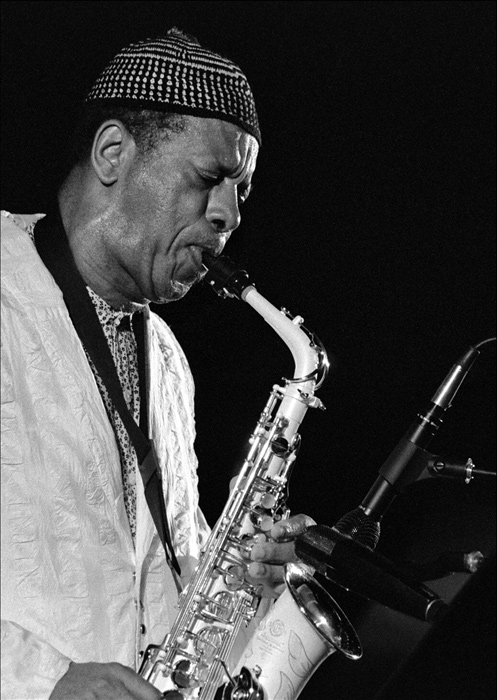
Then, in the late 1960s, Bley did something nobody expected. He turned to the synthesiser. He pioneered the use of the ARP and Moog synthesisers, giving the first live synthesiser performance at Philharmonic Hall in New York City on December 26, 1969 — the “Bley-Peacock Synthesizer Show,” a group with the singer and composer Annette Peacock, who had written much of his personal repertoire since 1964. The performance was followed by her playing on the recordings Dual Unity (credited to “Annette & Paul Bley”) and Improvisie, a French release of two extended improvisational tracks with Bley on synthesisers, Peacock’s voice and keyboards, and percussion by the Dutch free jazz drummer Han Bennink.
It is worth pausing on how strange this was. In 1969 the synthesiser was a laboratory instrument, associated with university studios and experimental composers — not with jazz, and certainly not with a live concert in one of America’s great concert halls. Bley treated it the way he treated the piano: as an instrument for improvisation, for sound made in the moment. The New York Times critic Ben Ratliff would later describe his music as “deeply original and aesthetically aggressive.” That night at Philharmonic Hall was both of those things at once.
Solo Piano and a Label of His Own: The 1970s
In 1972 Manfred Eicher released Bley’s first solo piano recording, Open, to Love, on ECM Records. It is one of the most important albums in Bley’s catalogue, and one of the defining solo piano records in jazz. Stripped of a band, Bley had nowhere to hide — and nothing to hide behind. Every note, every silence, every choice of harmony was his alone. The album showed that free improvisation did not have to be loud or chaotic; it could be quiet, spacious and intensely melodic.
Bley also released the trio album Paul Bley & Scorpio for Milestone Records in 1972, on which he plays two electric pianos and an ARP synthesiser. In 1974 Bley and the video artist Carol Goss, his second wife, founded the production company Improvising Artists, known as IAI Records & Video. The label issued acoustic recordings by many of the most creative improvisers of the twentieth century, as well as the electric quartet album Jaco — the debut recording of Pat Metheny on electric guitar and Jaco Pastorius on electric bass, with Bley on electric piano and Bruce Ditmas on drums. Think about that line-up: two of the most influential musicians of the next generation, making their debut on a record led by Bley.
IAI’s records and videos included performances by Jimmy Giuffre, Lee Konitz, Dave Holland, Marion Brown, Lester Bowie, Steve Lacy, Ran Blake, Gary Peacock, two solo piano records by Sun Ra, and others. Bley and Carol Goss are credited in a Billboard cover story with the first commercial “music video.”
The Later Decades: Still Listening, Still Playing
Bley was featured in Ron Mann’s 1981 documentary film Imagine the Sound, in which he performs and discusses the evolution of free jazz and his music. He recorded for multiple labels in the 1980s in many formats, including solo piano albums such as Tears, Tango Palace and Blues for Red; duos such as Diane with Chet Baker and The Montreal Tapes with Charlie Haden and Paul Motian; and Fragments with John Surman, Bill Frisell and Paul Motian for ECM.
In the 1990s Bley continued to tour in Europe, Japan, South America and the United States, recording prolifically as a soloist and with a wide range of ensembles. In 1993 the Montreal International Jazz Festival produced a Paul Bley Homage concert series of four nights — a homecoming honour for the prodigy who had left the city four decades earlier. In some years he recorded more than eight albums. He also revisited the synthesiser in a record for Postcards titled Synthesis.
During this time Bley also became a part-time faculty member of the New England Conservatory, where he taught musicians including Satoko Fujii and Yitzhak Yedid. He would travel to Boston for one day a month, ostensibly to have lobster, often meeting students in coffee shops — he considered that they already knew how to play, but needed guidance in life. The American television network Bravo and the French-German network Arte co-produced a one-hour biography of Paul Bley in 1998, and his autobiography, Stopping Time: Paul Bley and the Transformation of Jazz, was published in 1999.
In 2001 the National Archives of Canada acquired Bley’s archives. In 2003 a book based on Bley interviews by the musicologist Norman Meehan, Time Will Tell, was published. In 2008 he was made a member of the Order of Canada, one of the country’s highest honours.
Bley released several solo piano recordings in the 2000s, including Basics, Nothing to Declare and About Time for Justin Time Records and Solo in Mondsee and Play Blue – Oslo Concert for ECM Records. His last public performances were in 2010, playing a solo piano concert at the La Villette Jazz Festival in Paris, followed by a duo with Charlie Haden at the Blue Note in New York City during a full moon.
Bley died of natural causes on January 3, 2016, at home in Stuart, Florida, aged eighty-three.
Why He Still Matters
Paul Bley never had a hit single. He never filled a stadium. His name does not appear on the lists of best-selling jazz musicians, and most casual listeners have never heard of him. And yet almost every serious jazz pianist who came after him has had to reckon with what he did.
He was there at the beginning of free jazz, playing with Ornette Coleman, Don Cherry and Charlie Haden in Los Angeles in 1958, before most people had even heard the term. He was there in 1964, helping to found the Jazz Composers Guild and giving the “October Revolution” a stage. He was there in 1969, playing a synthesiser live at Philharmonic Hall when the instrument was still a curiosity. And he was there in 1972, with Open, to Love, showing that a single piano, played alone, could hold an audience’s attention for an entire album with nothing but invention.
Ben Ratliff of the New York Times described his music as “deeply original and aesthetically aggressive.” Both words matter. The originality is obvious: nobody else sounded like Bley, because nobody else was willing to give up as much as he gave up — the chord changes, the familiar melodies, the safety of a tune everyone knew. The aggression is quieter, and easy to miss. Bley’s playing could be soft and spacious, almost fragile. But underneath it was a refusal: a refusal to play what was expected, to repeat what had worked before, to give the audience the easy version.
That refusal is his legacy. Jazz is an art of improvisation, and improvisation is an art of risk. Paul Bley took more risks, for longer, than almost anyone in the music — and he did it without raising his voice. On November 10, 2026, his ninety-fourth birthday, the best way to remember him is the simplest one: put on Open, to Love, or Turning Point, or the Giuffre trio recordings, and listen to a pianist thinking out loud, one note at a time, with nowhere to hide and nothing to prove.
Paul Bley: The Montreal Prodigy Who Walked Away from the Map
To understand Paul Bley’s music, you have to understand the journey that took him from a child prodigy in Montreal to one of the most radical improvisers jazz has ever known.
A Child Prodigy in Montreal
Bley was born Hyman Bley in Montreal on November 10, 1932, to Betty Marcovitch, an immigrant from Romania, and Joseph Bley, the owner of an embroidery factory. He began studying the violin at five, switched to the piano at seven after his parents divorced, and had a junior diploma from the McGill Conservatory by the age of eleven. At thirteen he was leading a band at summer resorts in Ste. Agathe, Quebec. As a teenager he changed his name to Paul, and he was already playing with touring American bands.
The turning point of his youth came in 1949, when Oscar Peterson asked the seventeen-year-old Bley to fulfil his contract at the Alberta Lounge in Montreal. It was an extraordinary vote of confidence from the greatest Canadian jazz pianist of the era — and a sign of how quickly Bley’s reputation had grown. The following year he left Montreal for New York City and Juilliard.
New York, Bebop and the First Records
In New York, Bley moved fast. In 1951 he returned to Montreal on summer break from Juilliard and helped organise the Montreal Jazz Workshop. In 1953 he invited Charlie Parker to the workshop and recorded with him. He led trios with Al Levitt and Peter Ind, toured with Lester Young, and recorded Introducing Paul Bley in 1953 with Charles Mingus producing and playing bass and Art Blakey on drums.
In 1954 he played opposite Chet Baker’s quintet at Jazz City in Hollywood, toured with Dakota Staton, and was interviewed by Down Beat under the headline “PAUL BLEY, Jazz Is Just About Ready for Another Revolution.” He was twenty-two, and he was already talking about writing music without a chordal centre. In 1956 his trio with Hal Gaylor and Lennie McBrowne toured the United States, ending with the New Year’s Eve gig at Lucille Ball and Desi Arnaz’s home in Palm Springs, where Bley collapsed with a bleeding ulcer and Ball paid for his hospital care. He married Karen Borg — who became Carla Bley — after she came out to meet him in Los Angeles.
The Giuffre Trio and the Free Jazz Years
In Los Angeles in 1957 and 1958, Bley led the house band at the Hillcrest Club and assembled a quintet with Don Cherry, Ornette Coleman, Charlie Haden and Billy Higgins. In the early 1960s he formed the trio with Jimmy Giuffre and Steve Swallow, whose chamber-jazz innovations and 1961 European tour became classics of free jazz. He toured and recorded with Sonny Rollins, culminating in Sonny Meets Hawk! with Coleman Hawkins, and in 1964 he helped found the Jazz Composers Guild, the co-operative that organised the “October Revolution” concerts in New York.
Synthesisers, Solo Piano and Improvising Artists
In the late 1960s Bley pioneered the live use of the ARP and Moog synthesisers, giving the first live synthesiser performance at Philharmonic Hall on December 26, 1969, with Annette Peacock. In 1972 ECM released his first solo piano recording, Open, to Love, and in 1974 he and Carol Goss founded Improvising Artists (IAI Records & Video), a label that documented many of the most creative improvisers of the century — and released Jaco, the debut recording of Pat Metheny and Jaco Pastorius. In the 1980s he recorded prolifically in every format, from solo piano to duos with Chet Baker and Charlie Haden; in the 1990s he toured the world, was honoured with a four-night homage at the Montreal International Jazz Festival in 1993, and taught at the New England Conservatory.
Honours and Farewell
In 2001 the National Archives of Canada acquired his archives. His autobiography, Stopping Time, was published in 1999, and Norman Meehan’s interview book Time Will Tell followed in 2003. In 2008 he was made a member of the Order of Canada. His last public performances were in 2010 — a solo piano concert at the La Villette Jazz Festival in Paris, and a duo with Charlie Haden at the Blue Note in New York. He died of natural causes on January 3, 2016, at home in Stuart, Florida, aged eighty-three. His prolific output, as his obituaries noted, stretched from influential recordings of the 1950s through to his solo piano recordings of the 2000s — six decades of music made without a map, and without compromise.
Leave a Reply