
It is 1972, and a young man is working as an assistant in a record shop in Swindon, a railway town in Wiltshire, England.
The shop is called the Bon Marché. The young man is Andy Partridge, and he has just met another local musician — a guitarist called Dave Gregory — who is playing a record that stops Partridge in his tracks. It is the Mahavishnu Orchestra’s album The Inner Mounting Flame, a ferocious blast of jazz-rock fusion, and Gregory later called hearing it one of the watershed moments of his musical education.
Partridge was already a songwriter. He had written his first song at fifteen. But in that record shop, listening to a guitarist play music he had never heard before, something clicked into place. Within months, Partridge, Gregory and bassist Colin Moulding would be in a band together — a band that would become XTC, one of the most inventive and beloved groups in British pop.
On November 11, 2026, Andy Partridge turns 73. He has not toured in more than forty years. He has not released a new XTC album in a quarter of a century. And yet his songs — funny, angry, tender, strange songs about suburbs and seagulls and God and Swindon — are still being discovered by new listeners every year.
This is the story of the songwriter from Swindon who made pop music out of the ordinary.
From the Monkees to the Avant-Garde
Andrew John Partridge was born on November 11, 1953, at the Mtarfa Royal Navy Hospital in Mtarfa, Malta, to English parents. He grew up on the Penhill council estate in Swindon, Wiltshire. He was an only child. His father John was a navy signalman, and his mother Vera was a retail assistant in a chemist’s shop.
As a teenager, Partridge was a fan of contemporary pop groups like the Beatles, but he was intimidated by the process of learning guitar. When the Monkees grew popular, he became interested in joining a music group — and he recalled watching local guitarist Dave Gregory performing Jimi Hendrix-style songs at churches and youth clubs. He was particularly fond of psychedelic records such as Pink Floyd’s “See Emily Play” (1967), Tomorrow’s “My White Bicycle” (1967) and the Moles’ “We Are the Moles” (1968). The first records he ever bought were the Beatles’ Sgt. Pepper’s Lonely Hearts Club Band (1967) and the Monkees’ self-titled debut (1966).
Partridge eventually obtained a guitar, taught himself how to play it with no formal training, and immediately took to writing songs. He submitted a caricature of Monkee Micky Dolenz to Monkees Monthly’s Draw a Monkee competition and won, using the £10 prize to buy a Grundig tape recorder. At the age of 15 he wrote his first song, titled “Please Help Me”, and while at Swindon College he attracted the nickname “Rocky” for his early guitar mastery of the Beatles’ “Rocky Raccoon”.
By the early 1970s, his tastes had shifted, as he later put it, “from the Monkees to having a big binge on this Euro-avant-garde stuff. I got really in deep.” One of his first bands was called Stiff Beach, formed in August 1970. In early 1972, his constantly evolving group settled into a four-piece called Star Park. By then he had found a job at a record shop and was engrossed with bands such as the Stooges, the New York Dolls, Alice Cooper and Pink Fairies.
In late 1972, Star Park was joined by bassist Colin Moulding and drummer Terry Chambers. The band became known as XTC in 1975 and signed to Virgin Records in 1977.
XTC: Three-Minute Pop Songs, Fast and Inventive
XTC were an English rock band formed in Swindon in 1972. Fronted by songwriters Andy Partridge and Colin Moulding, the band gained popularity during the rise of punk and new wave in the 1970s, later playing in a variety of styles that ranged from angular guitar riffs to elaborately arranged pop. Partridge wrote the majority of XTC’s songs, was the band’s frontman and de facto leader, and — in Moulding’s view — typically acted as an “executive producer” for their albums. He wrote and sang about two-thirds of the group’s material.
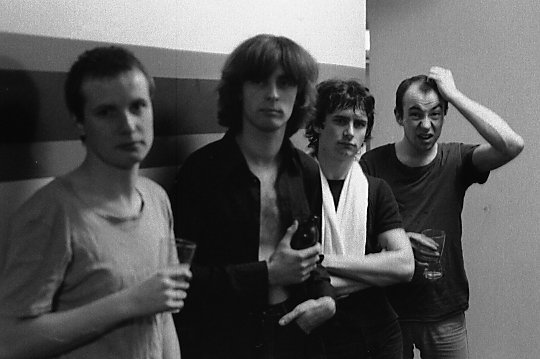
The name came from Partridge himself. He derived “XTC” from Jimmy Durante’s exclamation upon discovering the lost chord: “That’s it! I’m in ecstasy!” The name was chosen mainly for its emphatic appearance in print.
The early years were frantic. In August 1977, XTC made their first commercially released studio recordings with producer John Leckie at Abbey Road, which appeared on their debut release, the 3D EP, in October. Their first full-length record, White Music, was recorded in less than two weeks and released in January 1978, reaching No. 38 on the UK Albums Chart. Partridge later characterised the album as “Captain Beefheart meets the Archies.” Its follow-up single, “Statue of Liberty”, was banned on BBC Radio due to the lyric “I sail beneath her skirt.”
Go 2, a more experimental record, was released in October 1978 and reached No. 21. Keyboardist Barry Andrews left the band that December, and Dave Gregory — the guitarist from the Bon Marché record shop — was invited to join as a second guitarist.
The band’s commercial breakthrough came with “Making Plans for Nigel” in 1979, a Moulding composition that showed the group using innovative production techniques. Between 1979 and 1992, XTC had a total of 10 albums and 6 singles that reached the UK top 40, including “Sgt. Rock (Is Going to Help Me)” (1980) and “Senses Working Overtime” (1982). Partridge’s early songs were marked by his distinct singing style, which he jokingly described as a “walrus” or “seal bark” — an amalgamation, he said, of Buddy Holly’s “hiccup”, Elvis Presley’s vibrato and “the howled mannerisms of Steve Harley.”
While XTC were a formative punk group, Partridge’s music drew heavily from British Invasion songwriters, and his style gradually shifted to more traditional pop, often with pastoral themes. Music critic John Harris later said Partridge exemplified “a very English genre: rock music uprooted from the glamour and dazzle of the city, and recast as the soundtrack to life in suburbs, small towns, and the kind of places — like Swindon — that may be more sizeable, but are still held up as bywords for broken hopes and limited horizons.”
Senses Working Overtime — and the Tour That Never Happened
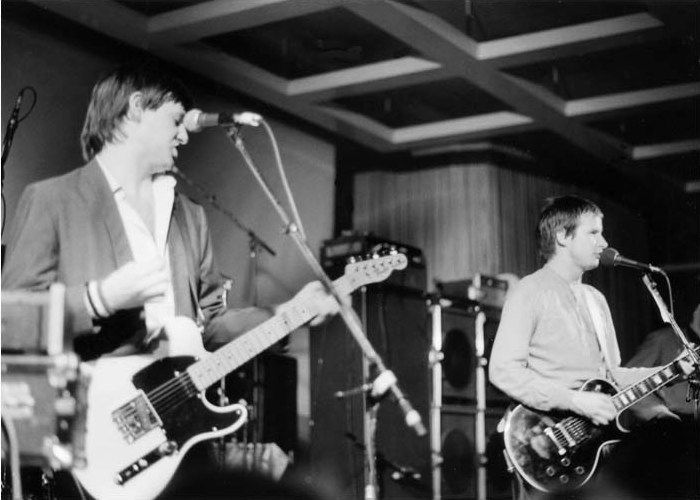
In 1982, XTC released English Settlement, the album that contained Partridge’s “Senses Working Overtime” — the band’s only UK top 10 hit. It should have been the start of their biggest years. Instead, it was the end of XTC as a live band.
As XTC were about to headline a tour of the United States in support of English Settlement, they permanently withdrew from concert touring after Partridge suffered an onstage breakdown of some sort, and XTC remained a studio-only band from then on. For a period afterward, it was rumoured among fans and industry insiders that the group had stopped performing because Partridge had died, and some American bands put on XTC tribute shows in his remembrance.
The truth was less dramatic and more human. Partridge had been diagnosed with hyperactivity at the age of 12 and prescribed Valium; he later formed a dependency on the drug, and after disposing of it in 1981 he experienced severe withdrawal effects that led to XTC’s withdrawal from touring. The pressures of the road, the growing impersonality of playing to ever-larger crowds, and the breakdown itself had finished the job.
The band ran into more problems once it was discovered that poor management had left them owing hundreds of thousands of pounds in unpaid value-added taxes. Partridge later said he was eventually left with “about £300 in the bank, which is really heavy when you’ve got a family and everyone thinks you’re ‘Mr Rich and Famous’.”
XTC never toured again. What followed was one of the most remarkable second acts in British pop: a band that made some of its greatest records without ever leaving the studio.
The Dukes and the Studio Years

In December 1984, Partridge formed the Dukes of Stratosphear, a neo-psychedelic XTC offshoot that he envisioned as a pastiche of “your favourite bands from 1967.” They recorded the mini-album 25 O’Clock (1985) and the LP Psonic Psunspot (1987), both of which outsold XTC’s concurrent studio albums in the UK. Around this time, Partridge also established himself as a producer of other artists.
As XTC’s music evolved, the distinctions between the two bands lessened. The band continued to produce more progressive records, including the albums Skylarking (1986), Oranges & Lemons (1989) and Nonsuch (1992). In the US, “Mayor of Simpleton” (1989) was their highest-charting single, while “Dear God” (1986) — written by Partridge — was controversial for its anti-religious message. Partridge later stated that the song failed to represent his true feelings on religion, as human belief is “such a vast subject.”
Partridge has stated that his favourite XTC album was Nonsuch (1992), and he considered “Rook” and “Wrapped in Grey” from that album, along with “Easter Theatre” from Apple Venus Volume 1 (1999), to be the “perfect songs” of his career.
But the business of music kept getting in the way. Due to poor management, XTC never received a share of profits from record sales — of which there were millions — nor from touring revenue, forcing them into debt throughout the 1980s and 1990s. In 1993, they went on strike against Virgin, citing an unfair recording contract, and soon extricated themselves from the label. Gregory left the band during the making of Apple Venus Volume 1 (1999), after which the XTC name was used by the duo of Partridge and Moulding. They released two more albums on their own label, Idea Records, before going on hiatus in 2006. In July 2008, Partridge wrote in the Swindon Advertiser that XTC had dissolved “for reasons too personal and varied to go into here, but we had a good run as they say and produced some real good work.”
The Producer and the Songwriter for Hire
Since the 1980s, Partridge has worked, written with or produced for many other recording artists. His first job producing another artist was Peter Blegvad’s 1983 album The Naked Shakespeare — and, as Partridge later noted, Blegvad had sought his services partly because he had heard the rumour that Partridge had died in 1982.
In 1992, Partridge produced unreleased recordings for Blur’s album Modern Life Is Rubbish (1993). He was replaced by Stephen Street at the insistence of the band’s record label, Food; three of the tracks he produced were later released on the 2012 box set Blur 21. In 1993, he recorded and produced an album with Martin Newell, The Greatest Living Englishman, which became the most acclaimed of Newell’s career. He also wrote four songs for Disney’s version of James and the Giant Peach (1996), but was replaced by Randy Newman due to creative differences between the director and Disney over the choice of soundtrack composer.
From 2002 to 2006, Partridge released demos of his songs under his own name as part of the Fuzzy Warbles album series on his APE House record label. Eight volumes were made available, along with a collector’s album. Partridge said the impetus for the project was the proliferation of bootleggers selling low-quality copies of the material — and he added that the Fuzzy Warbles set earned him more money than XTC’s back catalogue on Virgin.
In the 2010s and 2020s, the songs kept coming, often for other people. In 2016, he wrote “You Bring the Summer” for the Monkees’ reunion album Good Times!; the 2018 follow-up, Christmas Party, included his “Unwrap You at Christmas” — a neat full circle for a man whose first record purchase had been a Monkees album. In 2019, he and Robyn Hitchcock completed the EP Planet England, thirteen years in the making. On July 23, 2021, he released Volume 1 of My Failed Songwriting Career through Burning Shed Records, followed by Volume 2 and My Failed Christmas Career in 2022. That same year, he gave a rare interview in which he stated he had retired from writing new music. In June 2023, he emerged to release a four-song EP with the 3 Clubmen (Partridge, Jen Olive and Stu Rowe).
In 2016, Partridge and writer Todd Bernhardt released a book, Complicated Game: Inside the Songs of XTC, containing discussions between the two about 29 XTC songs, one Partridge solo track, and an overview of his approach to songwriting.
Why He Still Matters
In the 1990s, Partridge was regarded as the “godfather” of the nascent Britpop movement, thanks to his earlier work with XTC. The label stuck because it was true: the generation of British guitar bands that followed — Blur, whose early sessions he had produced, among them — had grown up on XTC’s clever, melodic, stubbornly English pop.
The list of artists who have specifically cited Partridge as an influence reads like a roll call of modern pop craft: Danny Elfman of Oingo Boingo, John Frusciante of the Red Hot Chili Peppers, Johnny Marr, Steven Wilson of Porcupine Tree, Roger Manning of Jellyfish, David Yazbek and Nick Heyward of Haircut One Hundred, among others.
XTC achieved only sporadic commercial success in the UK and US, but they attracted a considerable cult following — and they have since been recognised for their influence on Britpop and later power pop acts. That is the paradox of Andy Partridge’s career: a songwriter who wrote some of the most accessible pop songs of his generation, for a band that never quite fit into any trend, and who ended up influencing almost everyone who came after.
Andy Partridge: The Swindon Songwriter Who Turned the Suburbs into Pop
To understand Andy Partridge, you have to understand Swindon — and what it means to grow up in a town that the rest of the country treats as a punchline, and to decide that it is worth singing about anyway.
A Childhood in Malta and Swindon
Andy Partridge was born on November 11, 1953, at Mtarfa Royal Navy Hospital in Malta, to English parents, and grew up on the Penhill council estate in Swindon. His father was a navy signalman; his mother worked in a chemist’s shop. He was an only child, and his childhood was not an easy one: when he entered adolescence, it was discovered that his father was having an extramarital affair, and his mother suffered a nervous breakdown and was institutionalised.
Music was his escape. He loved the Beatles and the Monkees, bought Sgt. Pepper’s Lonely Hearts Club Band and the Monkees’ debut as his first records, and taught himself guitar with no formal training. He won a drawing competition in Monkees Monthly with a caricature of Micky Dolenz and spent the £10 prize on a tape recorder. At fifteen, he wrote his first song, “Please Help Me.”
Teaching Himself Guitar
Partridge’s musical education was gloriously undisciplined. He went from the Monkees to a deep immersion in European avant-garde music, the Stooges, the New York Dolls, Alice Cooper and Pink Fairies. He formed band after band — Stiff Beach in August 1970, Star Park in early 1972 — with the stated purpose, as he later admitted, of meeting girls.
What he was really doing was learning to write songs. By the time Star Park became XTC in 1975, he had written hundreds of them, and he had found his collaborators: Colin Moulding on bass, Terry Chambers on drums, and — from the record shop — Dave Gregory on guitar.
The XTC Years
XTC signed to Virgin Records in 1977 and spent the next five years touring relentlessly, releasing White Music (1978), Go 2 (1978), Drums and Wires (1979), Black Sea (1980) and English Settlement (1982). Partridge wrote most of the songs, sang most of them, and — in Moulding’s words — acted as the band’s executive producer.
Then came 1982, the breakdown, and the end of touring. XTC became a studio band, and Partridge became something rarer: a pop songwriter working entirely on his own terms, in a small town in Wiltshire, making records like Skylarking, Oranges & Lemons and Nonsuch that critics now rank among the best British albums of their era.
The band’s only UK top 10 hit, “Senses Working Overtime”, was written by Partridge. So was “Dear God”, the song that scandalised American radio. So were “Sgt. Rock (Is Going to Help Me)”, “Respectable Street” and “Mayor of Simpleton” — songs that turned the suburbs, the seaside and the English class system into pop music.
Life After the Stage
After XTC dissolved, Partridge became the curator of the band’s legacy, overseeing reissues and remasters and maintaining a web presence. He released his demos as the Fuzzy Warbles series, wrote songs for the Monkees, collaborated with Robyn Hitchcock, and — in 2022 — announced that he had retired from writing new music.
Beyond music, he is an illustrator — many of the XTC record sleeves were designed by Partridge, who at one point considered a career as a graphic illustrator — and an avid collector, sculptor and painter of toy soldiers, an obsession he credits to his mother throwing away his toys as a child. He has also designed board games. His songs, fittingly, are full of the things he collects and draws: comic book characters (Sgt. Rock, Supergirl, Brainiac), insects, seafaring, war and ancient rituals.
He has been open about his health: he experiences auditory synesthesia, which he uses in his songwriting; he has had obsessive-compulsive disorder since childhood; and in a 2022 interview he said he believes he is on the autism spectrum, adding, “I think I’m on the spectrum, yes, but it’s all helped me and I wouldn’t have it any other way.” In 2006, during a session for the band Monstrance, some of his hearing was destroyed in a studio mishap, leaving him with severe tinnitus.
The Songs Are Still Working Overtime
Andy Partridge turns 73 on November 11, 2026. He lives in Swindon, the town he has spent fifty years writing about, and he has said he has retired from writing new music. The songs, though, have not retired. They are still there — “Senses Working Overtime” on the radio, “Dear God” on a playlist, “Making Plans for Nigel” in a film or an advert — still clever, still funny, still angry, still unmistakably his.
He once said he did not like the words “punk” or “new wave,” because what XTC played was “blatantly just pop music. We were a new pop group. That’s all.” He was right, and he was wrong. It was pop music — but it was pop music written by a boy from a council estate in Swindon who had taught himself guitar, fallen in love with the Monkees and the avant-garde in the same breath, and decided that the suburbs were worth a symphony.
That is why, forty years after he last walked onto a stage, people are still listening.
Leave a Reply