
On the night of August 26, 1970, a young guitarist in Miami stopped playing in the middle of a solo.
Duane Allman had turned toward the audience during a benefit concert by his band, the Allman Brothers Band.
Sitting on the floor in front of the stage, close enough to touch the monitors, was Eric Clapton.
Allman had admired Clapton’s playing for years, and for one frozen second his hands simply stopped.
Dickey Betts, the other guitarist in the Allman Brothers, leaned into the gap and carried the solo forward.
Clapton had come at the urging of producer Tom Dowd, who was working with both men that summer.
He knew Allman’s work from a Wilson Pickett record and had insisted on seeing him play in person.
After the show, the two guitarists met properly for the first time backstage.
Clapton did not offer polite praise and leave; he issued an invitation instead.
He told Allman to come by Criteria Studios, adding: “Bring your guitar; you got to play!”
Allman arrived at the studio the following night, guitar in hand, expecting only to watch.
Instead, the two men played together until the Miami sun came up.
Dowd later described the pair trading licks, swapping guitars and talking shop without any rivalry at all.
Something had shifted in that room, and everyone present understood that the album had changed.
The singer at the center of it was carrying a love he could not confess to anyone.
He never spoke her name, and the whole world learned it.
A Band Built to Hide In
To understand why Clapton was sitting on that floor, it helps to know what he was running from.
By 1970, Eric Clapton had already been famous in three different bands.
Cream and Blind Faith had made him a superstar, and superstardom had begun to feel like a trap.
He had found relief touring as an ordinary sideman with the American revue Delaney & Bonnie and Friends.
In that loose, soulful caravan, nobody billed him as a god of the guitar.
When the revue broke apart, its rhythm section and keyboard player suddenly needed a new home.
Bobby Whitlock, the revue’s young singer and keyboardist, turned up at Clapton’s house in Surrey in April 1970.
The two men spent weeks writing songs together, simply to have something of their own to play.
Bassist Carl Radle and drummer Jim Gordon arrived from a tour with Joe Cocker to complete the four.

All four had learned their trade backing other singers rather than headlining themselves.
What Clapton wanted, and what they built, was a real band rather than a celebrity vehicle.
He was determined that his name and reputation would not smother the music this time.
The new group would let him hide in plain sight, one musician among equals.
The Name That Was Almost an Accident
The band made its official debut at London’s Lyceum Theatre on June 14, 1970.
The posters for that night billed them, vaguely, as Eric Clapton and Friends.
Backstage, with George Harrison among the company, the musicians finally tried to settle on a name.
Accounts of what happened next have never quite agreed with one another.
Whitlock later maintained that pianist Tony Ashton mispronounced the chosen name, the Dynamics, when introducing them.
Clapton remembered Ashton suggesting the name outright, built on Ashton’s tour nickname for him, Derek.
The compere that night, Jeff Dexter, insisted the name was settled before the band took the stage.
However it happened, Derek and the Dominos walked onstage that night and kept the name.
The three Americans in the band reportedly worried that audiences would mistake them for a doo-wop act.
Clapton, by every account, loved the disguise from the first moment.
That August, the Dominos toured small British clubs, playing rooms that often had no idea who Derek was.
South to Miami
When the club tour ended, the band flew to Florida to record at Criteria Studios in Miami.
Criteria was a working musician’s studio, famous in soul and pop circles rather than rock mythology.
Waiting for them was Tom Dowd, one of the most trusted producers and engineers in American music.

Dowd had recorded Ray Charles, Aretha Franklin and Otis Redding, and he spoke fluent musician.
He was also, that same summer, producing the Allman Brothers Band’s second album in the same building.
The Dominos set up to record the way they played live, chasing feel rather than polish.
Clapton, the supposed guitar hero, plugged into a tiny five-watt Fender Champ amplifier.
The little amp, pushed hard, gave his guitar a singing, wounded tone that suited the songs.
Sessions ran from late August into the first days of October 1970.
The plan was a modest album by an unknown band, made quickly and without ceremony.
Then Duane Allman walked in, and the plan quietly caught fire.
Eleven of Fourteen
Allman was supposed to be an observer, a fan with a pass to somebody else’s session.
Within days he had become, in effect, the band’s fifth and unofficial member.
He played on eleven of the album’s fourteen tracks, a guest who refused to sound like one.
The first thing they remade together was “Tell the Truth,” a Clapton and Whitlock song with a complicated past.
The band had already cut it in London that June with producer Phil Spector for a single.
Whitlock felt Spector’s wall of sound did not fit the band, and the single was withdrawn.
On August 28, with Allman’s slide guitar woven through it, they recut the song as a slow, rolling jam.
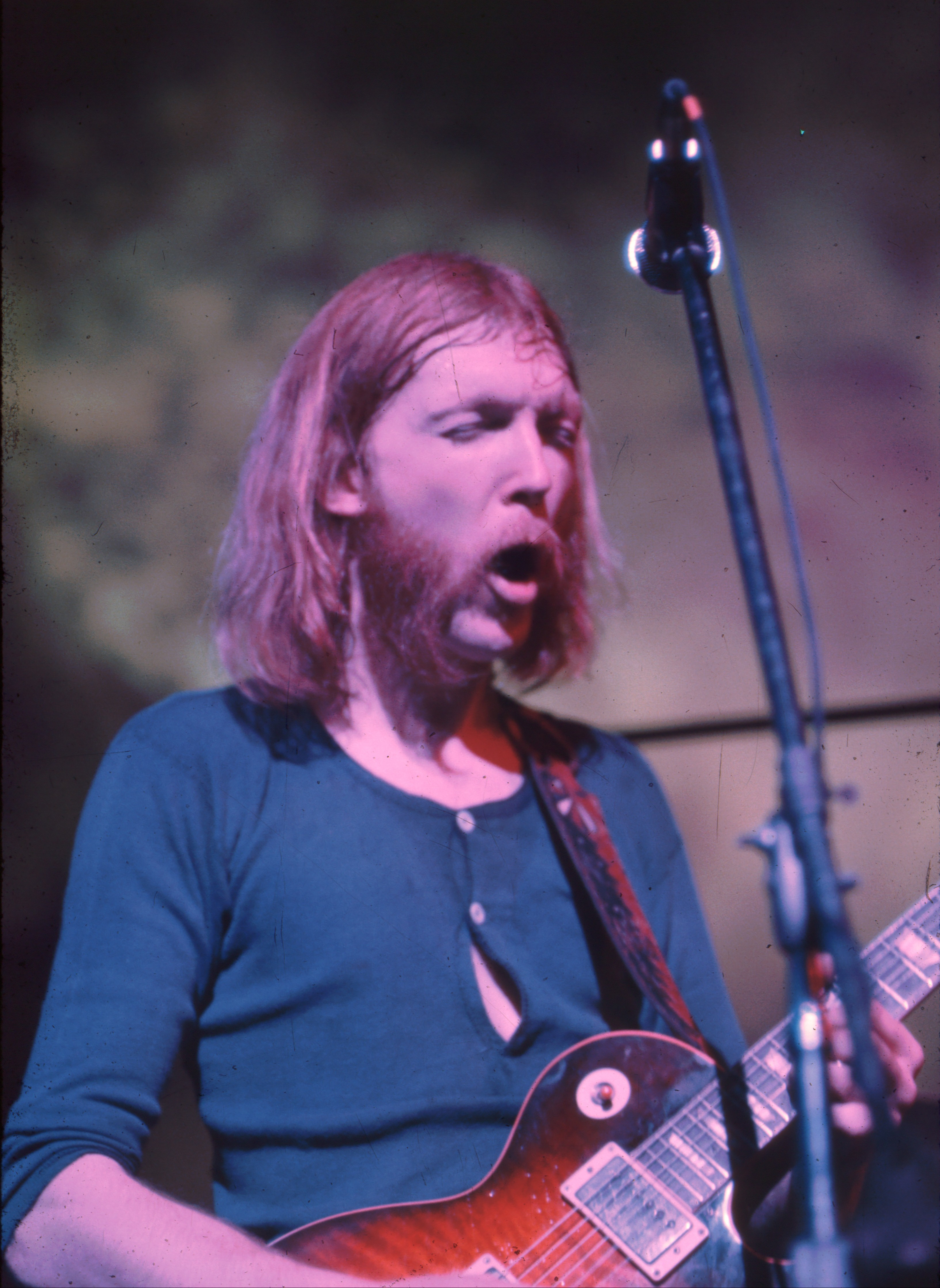
Clapton later wrote that Allman became the musical brother he had always wished for.
The two guitarists pushed each other, trading phrases like sparring partners who trusted each other completely.
Where Clapton’s lines pleaded and cried out, Allman’s slide answered with a keening southern cry.
Dowd rolled tape on everything, including long jams the band played just to hear itself think.
A double album was taking shape almost before anyone admitted it aloud.
A Story Eight Centuries Old
The album’s title song came from a book far older than rock and roll itself.
A friend reportedly gave Clapton a translation of a Persian poem by the twelfth-century poet Nizami.
The poem told of Layla and Majnun, a young man driven half mad by love for a woman he could not have.
Layla’s family kept the lovers apart, and Majnun wandered the desert, singing her name to an empty sky.
Clapton recognized his own situation in the ancient story with uncomfortable precision.
He had fallen deeply in love with Pattie Boyd, a model and photographer he knew well.
Boyd was married to George Harrison, the Beatles’ guitarist and one of Clapton’s closest friends.
The friendship made the feeling impossible to declare and impossible to bury.
He poured it instead into a song, and he gave her the borrowed name of Layla.
Another song, “I Am Yours,” drew its words from Nizami’s poetry as well.
The whole album, in time, would be heard as one long letter he could never send.
Layla
“Layla” itself arrived in two distinct halves that seem to argue with each other.
The first half is all urgency, built on a guitar figure that Clapton credited to Allman.
The figure reportedly began as Allman’s sped-up echo of a vocal line by bluesman Albert King.
Over it, Clapton sang like a man arguing with a locked door.
His voice, never his proudest instrument, sounds here like the most honest thing he owned.
Then, just as the pleading peaks, the song changes key, tempo and emotional weather entirely.
A piano enters, stately and calm, and the storm gives way to something like acceptance.
Drummer Jim Gordon had composed that piano coda, and he played it himself in the studio.

Singer Rita Coolidge later maintained that the coda grew from a song she and Gordon had written together, though the credit remained his alone.
Over the piano, Allman’s slide guitar drifts and soars like birdsong above a quiet field.
The coda runs for more than three minutes, and nobody at Criteria wanted to shorten it.
He never spoke her name, and the whole world learned it.
The finished track ran past seven minutes, long for any single and defiant about it.
It sat near the end of the album like a door swinging open instead of shut.
The Blues They Carried In
Around the original songs, the band wrapped five covers drawn from the music that raised them.
“Key to the Highway,” a blues standard, was never supposed to be recorded at all.
The band heard another singer running the song down in a neighbouring room at the studio.
Drifting back to their own room, the Dominos simply started playing it themselves.
Accounts differ on whether the tape was already rolling or Dowd hurried back to start it, which is why the performance fades in.
That accidental fade-in still opens the track, a jam caught in the act of beginning.
“Nobody Knows You When You’re Down and Out” reached back to the older blues the band revered.
On “Have You Ever Loved a Woman,” Clapton sang the blues standard as if it were autobiography.
“It’s Too Late,” a Chuck Willis ballad, gave the album a sway of doo-wop and sorrow.
The covers were not filler; they were the band’s credentials, laid politely on the table.
Little Wing and the Quiet Ending
The most poignant cover was Jimi Hendrix’s “Little Wing,” recorded with open admiration.
Clapton and Hendrix were friends and mutual admirers, guitarists who measured themselves against each other.
Hendrix died in London that September, while the Dominos were still working in Miami.
Their recording, made that same month, became an unintended farewell.
After so much volume, the album ends with its smallest and gentlest performance.
Whitlock’s “Thorn Tree in the Garden” closes the record like a whisper after an argument.
For that track, all five musicians sat in a circle around a single microphone.
There were no overdubs to hide behind, only five men breathing the same air.
It is the sound of the band at its most unified, recorded weeks before it began to split.
A Cover With Nothing Written on It
The album’s sleeve extended the band’s vanishing act to the record shops.
Staying at a house in France that August, the musicians were shown a painting by the owner’s father.
The painting, La Fille au Bouquet, showed a blonde woman holding a spray of flowers.
Clapton saw in the painted woman a strong likeness to Pattie Boyd.
He asked that the painting become the album cover, exactly as it was.
Against every instinct of the record business, the front sleeve carried no words at all.
There was no band name, no album title and no photograph of any musician.
Shoppers who wanted Eric Clapton had to already know that Derek was Eric.
The record labels, concerned, reportedly sent shops badges reading “Derek is Eric.”
Released to a Shrug
Layla and Other Assorted Love Songs was released in the United States on November 9, 1970.
Britain followed in December, with the album issued there by Polydor.
It was a double album by an unknown group, at a double album’s price.
In Britain, remarkably, it failed to appear on the album chart at all.
In America it climbed to number 16, a placing the participants still regarded as failure.
Radio programmers, Dowd later complained, would not touch most of its songs.
Reviewers were divided, some hearing indulgence where later listeners would hear fire.
One prominent magazine dismissed it as pointless, while Rolling Stone heard a real album underneath the sprawl.
The Village Voice’s Robert Christgau, nearly alone, gave it his highest grade.
The band toured America that autumn, but the singer’s heart was not in the road.
A group built to be anonymous had succeeded almost too well.
The album slipped away, marked down in the trade as a noble flop.
The Slow Vindication
The rescue began with the title song, issued as a drastically shortened single in March 1971.
Trimmed to barely three minutes, “Layla” stalled at number 51 in America.
A year later, the full seven-minute version was released behind two popular Clapton compilations.
This time the song climbed to number 10 in America and number 7 in Britain.
The album followed it back onto the charts in 1972, and again in 1974 and 1977.
American sales eventually earned the record a gold certification.
In 1982, British record buyers sent “Layla” to number 4, higher than ever before.
In 2000, the album was inducted into the Grammy Hall of Fame.
Rolling Stone ranked it number 117 among the greatest albums in 2003, and kept it listed in 2020.
Television voters at VH1 named it among the hundred greatest albums ever made.
The double album nobody wanted became the record Clapton could never escape.
A slow beginning is not an ending.
Derek and the Dominos: The Band That Vanished
The Yardbirds Lad
Eric Clapton’s road to Miami began in the blues clubs of early nineteen-sixties London.
Born in 1945 in Ripley, Surrey, he had taught himself guitar from American blues records.
He joined the Yardbirds in 1963, when that band still played the blues he loved.
When the Yardbirds turned toward pop, he walked out rather than follow them.
With John Mayall’s Bluesbreakers, his ferocious tone made him a cult figure among guitarists.
Fans scrawled a famous slogan across London walls, declaring that Clapton was God.
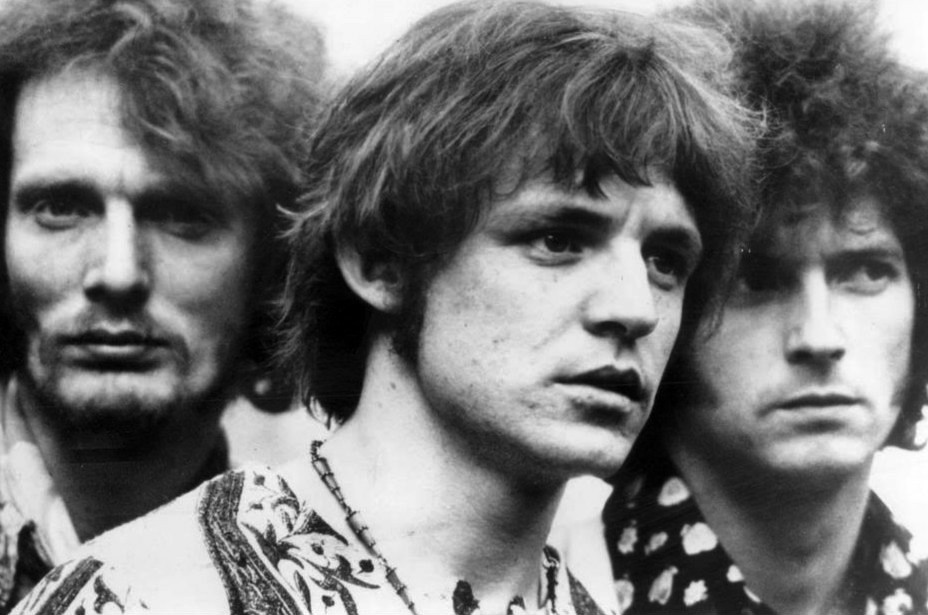
In 1966 he formed Cream with Jack Bruce and Ginger Baker, two formidable musicians.
Cream became one of the biggest bands in the world within two years.
Their concerts stretched songs into long, loud duels of virtuosity.
By 1968 the duelling had worn the three men down, and Cream broke apart.
Supergroups and the Spotlight
Clapton’s next move, Blind Faith, was meant to lower the temperature.
Formed with Steve Winwood in 1969, it was received instead as another supergroup.

Its single album and single American tour collapsed under the weight of expectation.
Clapton began sneaking onstage with other people’s bands just to play unnoticed.
Opening for Blind Faith that summer was the Delaney & Bonnie revue.
Night after night, Clapton watched their loose family of singers and players with envy.
When Blind Faith ended, he joined the revue outright, happily demoted to sideman.
For the first time in years, audiences were listening to the music instead of the myth.
The Dominos were his attempt to bottle that freedom permanently.
Fame, as he had learned, is a poor rehearsal room.
The Friends
Delaney & Bonnie and Friends worked like a travelling school for southern soul.
Its stage crowded with horns, gospel singers and a rhythm section drawn from Oklahoma and Memphis.
Whitlock, Radle and Gordon had all passed through that school together.
George Harrison himself had joined the revue on guitar for a European tour in 1969.
The experience taught Clapton how a band could feel like a household.
Whitlock shared his songwriting gift and his gospel-rooted Hammond organ sound.
Radle played bass with a patience that let the soloists roam.
Gordon, a first-call Los Angeles session drummer, could drive any tempo the band chose.
Together they made the relaxed, muscular sound Clapton had been chasing.
Four Men, One Summer
The Dominos’ public life lasted barely longer than the album’s recording.
After the August club tour came an American tour that autumn.
The band played theatres while the album, still unknown, sat in record shops.
Performances from that tour were later released as the album In Concert.
Allman never became a touring member, but he joined them twice onstage.
He played with the Dominos in Tampa on December 1 and in Syracuse the next night.
The group’s only television appearance came on The Johnny Cash Show.
There they performed “It’s Too Late” and jammed with Cash and Carl Perkins.
It remains a charming sight: a hidden band on American television’s friendliest stage.
By the new year, the four men were already drifting toward separate troubles.
The Second Album That Never Was
In the spring of 1971, the band gathered in London to record a second album.
The sessions at Olympic Studios produced fragments, arguments and long silences.
Drugs had entered the band’s daily life, and the work suffered for it.
The easy trust of the Miami nights could not be summoned on command.
Whitlock later described sessions where the music simply refused to arrive.
By May 1971, the attempt was abandoned and the band quietly dissolved.
There was no farewell tour and no final concert to close the story.
Derek and the Dominos ended the way they had begun, without much ceremony.
They had lasted, all told, a little over a year.
The Empty Chair
The cruellest blow landed that autumn, far from any studio.
Duane Allman died in October 1971, barely a year after the Miami sessions.
Clapton, already fragile, took the loss as a personal devastation.
He withdrew from public life almost completely for the next few years.
Addiction filled much of that silence, a struggle he later discussed openly.
Friends and fellow musicians eventually helped draw him back toward work.
In 1974 he returned with the album 461 Ocean Boulevard and a gentler sound.
The comeback succeeded, and Clapton the solo institution was born.
Yet the Miami album, still half-buried, waited for its second hearing.
Where the Others Went
Carl Radle became the bassist in Clapton’s solo band through most of the nineteen-seventies.
His steady playing underpinned the comeback records that rebuilt Clapton’s career.
Radle died in 1980, still only in his thirties.

Bobby Whitlock recorded solo albums and kept singing the Dominos songs for decades.
His memoir, published in 2010, became a key firsthand account of the band.
He remained the Dominos’ most devoted keeper of the flame.
Jim Gordon spent his final decades in prison, and he died in 2023.
The four men never played together again after 1971.
Only Whitlock, in later years, regularly returned the songs to the stage.
The band existed completely in its recordings, nowhere else.
Layla, Unplugged
Twenty-two years after the album, its title song began a second life.
In January 1992, Clapton performed an acoustic concert for MTV’s Unplugged series.
The set included “Layla,” rebuilt as a slow, shuffling acoustic blues.
Stripped of its famous riff, the song revealed the bruised ballad hiding inside it.
The acoustic “Layla” reached number 12 in America as a single.
It won the Grammy Award for Best Rock Song the following year.
The Unplugged album became one of the best sellers of Clapton’s entire career.
A generation that had missed 1970 met the song first in this gentler, older voice.
Many of those listeners then worked backward to the Miami original.
The song now existed in two lives, electric and acoustic, each feeding the other.
The Riff Every Guitarist Learns
Ask working guitarists about the opening of “Layla” and most will reach for an instrument.
The riff has become a rite of passage, learned in bedrooms and music shops everywhere.
Somewhere tonight, a teenager is alone with a guitar, worrying that famous figure of notes into muscle memory.
Almost everyone has carried a love they could not say out loud, and this record keeps finding those people, year after year.
In 2006, Clapton toured with young guitarist Derek Trucks playing the Allman role beside him.
He said the experience felt like being in Derek and the Dominos again.
In 2019, the Tedeschi Trucks Band performed the entire album live at a festival, with guests sitting in.
Classic-rock radio, meanwhile, never really let the title song leave the air.
The album that failed in 1970 now anchors lists of the greatest records ever made.
Its makers got one summer, one autumn and one masterpiece out of the bargain.
The band disappeared; the longing stayed.
Return, finally, to that Miami concert hall in August 1970.
A guitarist is mid-solo, and his eyes have just found the man sitting in front of the stage.
For one suspended second, Duane Allman could not play at all.
Everything on the album flows out of the hours that followed that second.
There was the invitation backstage, a guitar fetched, and tape rolling until sunrise.
Two guitarists, each in some way the other’s missing half, traded everything they knew.
The band they made lasted a year, and its album was ignored on arrival.
He never spoke her name, and the whole world learned it.
Fifty-six years on, the frozen second is long over, and the solo has never really stopped.
Leave a Reply