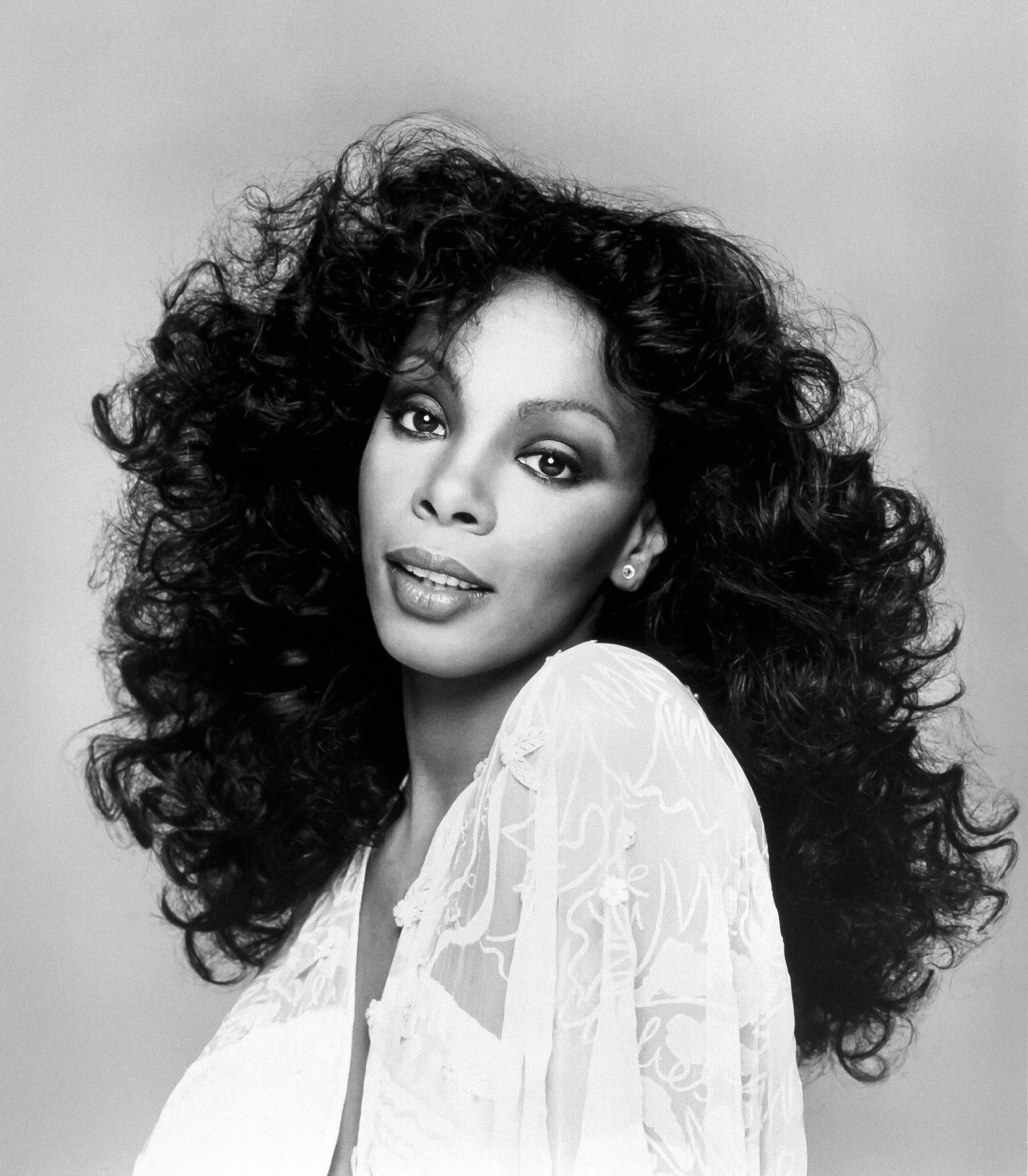
Giorgio Moroder was driving down the Hollywood Freeway when the radio played him his next hit.
It was 1978, and Moroder — the Italian producer who had turned Donna Summer into the queen of disco — had spent almost a year looking for the right song. He and his partner, Pete Bellotte, had an idea: take a hit from the 1960s and rebuild it as a dance record. They just could not find the one.
Then, through the car speakers, came a voice he recognized. It was the Irish actor Richard Harris, singing a strange, sweeping ballad from ten years earlier. A song about a park in Los Angeles. A song about a cake left out in the rain.
“I thought: ‘That’s it — that’s the song we’ve been looking for for almost a year.’”
That is how Moroder later remembered the moment. He called Neil Bogart, the president of Casablanca Records, and asked for a copy of the record. Bogart sent him an eight-track tape. Moroder went out and bought an eight-track player, just so he could hear it properly.
He already knew who should sing it.
“MacArthur Park” was the last song anyone expected to become a disco hit. It was long, complicated, and full of images that made no sense at all — unless you knew the broken heart behind them. But Moroder heard something in it that nobody else had: a song built for a big voice, a big arrangement, and a dance floor.
A few months later, it would give Donna Summer the first No. 1 single of her career. It would also give its songwriter, Jimmy Webb, the only No. 1 of his life.
This is the story of how a cake left out in the rain became the biggest dance record in America.
The Strangest Lyrics Ever to Top the Charts
To understand “MacArthur Park,” you have to start with the lyrics, because they have confused listeners for more than half a century.
The song is full of pictures that seem to belong to different stories. There are old men playing checkers by the trees. There is a cake — a beautiful cake — left out in the rain. There is a love affair that falls apart and can never be put back together again, no matter how hard you try.
Radio listeners in 1968 did not know what to make of it. Some thought it was nonsense. Some thought it was a riddle. Some were sure it had to be a drug song, though it was nothing of the kind.
Jimmy Webb, the man who wrote it, has spent decades explaining that there was no riddle at all. The images were real. He had seen every one of them himself, in a real park in Los Angeles, during a real love affair that was ending.
A Love Affair in a Los Angeles Park
Jimmy Webb wrote “MacArthur Park” in 1967, when he was just twenty years old. Born in Elk City, Oklahoma, in 1946, he was already one of the most gifted young songwriters in Los Angeles. But this song began as something even more ambitious than a pop single: part of a cantata, a classical-style piece built from several movements, that he wanted to stretch across half of an album.
The inspiration was personal. Webb had been in a relationship with a woman named Susie Horton. The two of them used to meet for lunch at MacArthur Park in Los Angeles, a real park in the Westlake neighborhood, not far from downtown. In the middle of 1965, Horton worked for the Aetna insurance company, whose offices stood across the street from the park.
When the relationship ended, Webb poured the ending into the song. Years later, when the interviewer Terry Gross asked him what was going through his mind as he wrote the lyrics, he said the song was meant to be symbolic — a picture of the end of a love affair.
In a 2014 interview with Newsday, he put it even more plainly: “Everything in the song was visible. There’s nothing in it that’s fabricated. The old men playing checkers by the trees, the cake that was left out in the rain, all of the things that are talked about in the song are things I actually saw.”
The breakup left its mark on more than one song. It was also the main inspiration for “By the Time I Get to Phoenix,” another Webb composition that became a classic.
The idea of building a pop song with different movements and changing time signatures came from a challenge. Bones Howe, a producer who worked with the sunshine-pop band the Association, had asked Webb to write something with the structure of a classical piece — something that could still be played on the radio.
Webb took the challenge seriously. Too seriously, as it turned out.
The Band That Turned It Down
Webb brought the whole cantata to the Association, the group behind the No. 1 hits “Cherish” and “Windy.” He delivered exactly what Howe had asked for: a song with movements, shifting rhythms, and lyrics unlike anything on the radio.
Howe did not like it. He did not care for the ambitious arrangement or the unorthodox lyrics. The group rejected the song.
For most songs, that would have been the end. But “MacArthur Park” was too big, too strange, and too beautiful to stay unheard. It just needed someone brave enough — or unlikely enough — to sing it.
That person turned out to be an actor.

The Actor Who Sang It First
Richard Harris was an Irish actor with a big voice and a bigger personality. In late 1967, he met Jimmy Webb at a fundraiser in East Los Angeles, where Webb had been invited to play piano. Harris had just starred in the film Camelot, and he had sung several musical numbers in it. Out of nowhere, he told Webb he wanted to make a record.
Webb did not take him seriously at first. Then a telegram arrived from Harris, asking Webb to “come to London and make a record.” Webb flew to London and played Harris a number of songs for the project. None of them seemed right. The last song he played was “MacArthur Park.”
The track was recorded on December 21, 1967, at Sound Recorders in Hollywood, with string, woodwind, and brass overdubs added on December 29 and 30. The musicians included members of the Wrecking Crew, the legendary group of Los Angeles studio players: Hal Blaine on drums, Larry Knechtel on keyboards, Joe Osborn on bass, and Tommy Tedesco and Mike Deasy on guitars. Webb himself produced the session and played harpsichord.
The result ran seven minutes and twenty-one seconds — an absurd length for a pop single in 1968. The record company released it anyway, in April 1968, as part of Harris’s album A Tramp Shining.
Radio stations played it. Listeners were puzzled, then fascinated, then hooked. The song entered the Billboard Hot 100 at No. 79 on May 11, 1968, and climbed all the way to No. 2 on June 22, held off the top only by Herb Alpert’s “This Guy’s in Love with You.” It reached No. 1 in Australia and Canada, and No. 4 in Britain.
The following year, Webb won the Grammy Award for Best Arrangement Accompanying Vocalist(s) for the record.
Harris, who would later become known to a new generation as Albus Dumbledore in the first two Harry Potter films, had made an unlikely pop classic. But “MacArthur Park” was not finished yet. It was waiting for someone to hear it in a completely different way.
A Song Reborn on the Dance Floor
Ten years later, Donna Summer was the biggest female star of disco, and Giorgio Moroder was the producer who had built her sound. When he heard Harris’s version on the freeway that day, he did not hear a strange old ballad. He heard a song waiting for a second life.
Moroder said he knew at once that it was “a great song for Donna — with all those high notes, it was perfect [for her].” The first job was to find the right key, one where Summer could sing very high and still keep the full power of her voice. That alone took an hour or two at the piano, with Summer singing along to his accompaniment.
Then came the arrangement, written by Greg Mathieson. Moroder later admitted the truth about it: “To be honest, it was a very difficult song to arrange, especially the brass, but we had the best musicians in town.”
He also added something nobody else could have thought of. Behind Summer’s voice on the chorus, there is a choir — and the choir is Moroder himself. He recorded about twenty seconds of every note he could sing onto a 24-track tape, made a loop of those notes, and fed the loop through the mixing desk. By moving the track, he could form eight different chords from the same few seconds of his own voice.
It was the kind of studio trick that only Moroder would try. And it worked.

The Suite That Filled a Whole Side of the Album
Summer’s recording of “MacArthur Park” appeared on her double album Live and More, released in 1978. It was her first live album, and three quarters of it was made up of live disco recordings. The fourth side was something else entirely: a nearly eighteen-minute medley called the “MacArthur Park Suite.”
The suite ran 17 minutes and 47 seconds. It opened with an eight-and-a-half-minute version of “MacArthur Park,” then moved into two original songs, “One of a Kind” and “Heaven Knows,” the second featuring the group Brooklyn Dreams, and closed with a short reprise of “MacArthur Park.” “Heaven Knows” would soon become a hit single of its own.
The twelve-inch single of the suite stayed at No. 1 on Billboard’s Hot Dance Club Songs chart for five weeks in 1978. But the version that conquered the radio was much shorter. The seven-inch single, released on August 28, 1978, on Casablanca Records, cut the song down to 3 minutes and 59 seconds, leaving out its balladic second movement entirely.
There was one small, curious change: where Harris had sung about old men playing checkers, Summer’s version added a single word — they were playing Chinese checkers.
Number One — on the Single Chart and the Album Chart at Once
The short version climbed the charts through the autumn of 1978. In the week of November 11, 1978, it reached No. 1 on the Billboard Hot 100, pushing Anne Murray’s “You Needed Me” out of the top spot. It stayed there for three weeks, until Barbra Streisand and Neil Diamond’s duet “You Don’t Bring Me Flowers” took over.
It was Donna Summer’s first No. 1 single. It was also the only No. 1 of Jimmy Webb’s songwriting career — the last of seven Webb compositions to reach the Top 10, and the only one to climb all the way to the top.
The same week the single reached No. 1, Live and More topped the Billboard 200, Summer’s first No. 1 album. She became just the second solo Black female artist ever to hold the No. 1 single and the No. 1 album in America at the same time.
The record earned Summer her first Grammy nomination for Best Female Pop Vocal Performance. The Grammy itself that year went to another Summer record — “Last Dance,” which won Best R&B Vocal Performance, Female, her first Grammy.
“MacArthur Park” sold two million copies in the United States and was certified Platinum. It also reached No. 1 in Canada and No. 5 in Britain.
Nobody had expected any of this. A seven-minute ballad about a ruined cake, written by a heartbroken twenty-year-old, rejected by the band it was written for, had become the biggest dance record in the country.
Why the Song Still Works
Part of the secret is the contrast at the heart of the record. The lyrics are about loss — a love affair that cannot be repaired, a beautiful thing ruined by the rain. The music, in Summer’s version, is pure celebration: a driving beat, soaring strings, and a voice that sounds as if it could lift the roof off any club in America.
That tension is what makes the record last. It is a sad song you can dance to, and a dance record with a real story inside it.
The Pet Shop Boys sampled Summer’s version in their 1999 song “New York City Boy.” VH1 ranked it No. 89 on its list of the “100 Greatest Dance Songs” in 2000. Slant Magazine placed it at No. 28 on its “100 Best Dance Songs of All Time” in 2020, and Billboard ranked it No. 73 on its own all-time dance list in 2025.
In 2013, a remix by Laidback Luke took the song back to No. 1 on the Dance Club Songs chart — Summer’s first posthumous No. 1, and the twentieth of her career.
And in February 2026, at the Winter Olympics in Milan Cortina, American figure skater Alysa Liu skated her free program to an edited version of Summer’s “MacArthur Park Suite” — and won the gold medal, the first for the United States in the event since 2002. Streams of the song rose by more than 1,000 percent in the days that followed.
Nearly fifty years after it topped the charts, the cake is still out in the rain. And people are still dancing to it.
Donna Summer: The Girl From Mission Hill Who Became the Queen of Disco
A Church Voice in Boston
Donna Adrian Gaines was born on December 31, 1948, in Boston, Massachusetts. She was the third of seven children, raised in the Mission Hill neighborhood. Her father was a butcher, and her mother was a schoolteacher.
Her first public performance came at church, when she was ten years old. A vocalist failed to appear, and young Donna stepped in to replace her. She attended Boston’s Jeremiah E. Burke High School, where she performed in school musicals and was considered popular.
In 1967, she joined a blues-rock band called Crow as its lead singer. Weeks before she was due to graduate from high school, she traveled with the band to New York to look for a record deal. A label passed on the group — but only because it was interested in Summer alone. The band agreed to break up, and Summer stayed in New York.
Munich, Hair, and a New Name
In New York, Summer auditioned for the counterculture musical Hair. She won the part of Sheila and agreed to take the role in the show’s Munich production, moving to Germany in August 1968 with her parents’ reluctant approval.
She stayed in Europe for years. She became fluent in German, sang in German, and appeared in the musicals Ich bin ich, Godspell, and Show Boat, later joining the Vienna Volksoper in Austria.
While working as a model and backing singer in Munich, she met producers Giorgio Moroder and Pete Bellotte during a recording session for Three Dog Night at Musicland Studios. The three of them formed a working partnership, and Summer signed to Moroder’s Oasis label in 1974. Her first album, Lady of the Night, was released that year in Europe only.
It was around this time that her name changed. She had married Helmuth Sommer, and the name “Donna Sommer” appeared on a record cover with a spelling error: “Donna Summer.” The mistake stuck, and she kept it for the rest of her life.
“Love to Love You Baby” and the Sound of a Scandal
In 1975, Moroder and Bellotte began working on a disco song that had no words yet. Summer suggested an idea she had been carrying around: a song called “Love to Love You,” inspired by the Jane Birkin and Serge Gainsbourg hit “Je t’aime… moi non plus.” She recorded a demo in a breathy, Marilyn Monroe-style voice. When Moroder heard the playback, he changed his mind about giving the song to another artist and decided Summer should release it herself.
Neil Bogart, the president of Casablanca Records, heard the song at one of his extravagant industry parties, where it was played over and over all night. He demanded a longer version for the discotheques. A sixteen-minute version was sent over, and Bogart changed the title to “Love to Love You Baby.”
The single became Summer’s first entry on the Billboard Hot 100, peaking at No. 2 in February 1976 and becoming her first gold single. It also caused a scandal: Summer’s moans on the record sounded like lovemaking, and some American stations refused to play it. The BBC banned it in Britain, where it still reached the Top 5.
The controversy only made her more famous. Her first three Casablanca albums all went gold in the United States, and the music press began calling her the “First Lady of Love.”

“I Feel Love” Changes Everything
In 1977, Summer released the concept album I Remember Yesterday. Its futuristic single, “I Feel Love,” returned her to the Top 10 of the Hot 100, peaking at No. 6, and became her first and only No. 1 single in Britain.
The record sounded like nothing else on the radio: a fully electronic backing track, built from synthesizers, with Summer’s voice floating above it. Moroder later described her work on the song as “really the start of electronic dance music.”
By 1978, Summer had resettled in the United States. She took her first film role in the disco-themed movie Thank God It’s Friday and contributed three songs to its soundtrack, including “Last Dance.” The Paul Jabara composition returned her to the Top 10, peaking at No. 3, and won her first Grammy Award, for Best Female R&B Vocal Performance.
She was ready for the biggest year of her life.
The Year of Three Number Ones
At the end of 1978, Summer, Moroder, and Bellotte began work on her seventh studio album, Bad Girls. Released on April 25, 1979, it became an immediate success. The first single, “Hot Stuff,” became her second No. 1 on the Hot 100. The title track followed it to the top and stayed there for five weeks.
Then came “No More Tears (Enough Is Enough),” her duet with Barbra Streisand. It gave Summer her third No. 1 single of 1979 — making her the first female artist ever to have three No. 1 singles in a single calendar year.
Bad Girls went on to sell more than two million copies in the United States and became the most successful album by a Black female artist in history up to that time. “Hot Stuff” won Summer the first Grammy Award ever given for Best Female Rock Vocal Performance.
But success brought trouble. Summer grew angry that Casablanca’s president, Neil Bogart, refused to promote her own composition, “Dim All the Lights,” as strongly as the Streisand duet. The rift led her to leave Casablanca in 1980 and sign with David Geffen’s new Geffen label.
After the Disco Backlash
By the time Summer signed with Geffen, disco was facing a fierce backlash from American radio. Some stations had begun banning disco-sounding records altogether. Summer used the moment to change direction. Her first Geffen album, The Wanderer, mixed rock, new wave, and inspirational music.
The hits came more slowly after that, but they still came. In 1983, “She Works Hard for the Money,” released on Mercury Records, returned her to the Top 5 of the Hot 100, peaking at No. 3. Its video, directed by Brian Grant, was one of the first by a Black female artist to play in heavy rotation on MTV.
Summer kept recording until the end of her life. She died of lung cancer at her home in Naples, Florida, on May 17, 2012. She was 63 years old. In her obituary, The Times of London called her “the undisputed queen of the Seventies disco boom.”
A year after her death, she was inducted into the Rock and Roll Hall of Fame. In 2025, she was inducted into the Songwriters Hall of Fame.

The Cake, the Rain, and the Dance Floor
“MacArthur Park” should never have worked. It was too long. It was too strange. Its lyrics read like a dream. A band turned it down, and the man who wrote it was twenty years old and writing about a girlfriend who had left him.
And yet the song refused to die. It survived rejection. It survived a decade. It survived being turned into a disco record — the one thing nobody thought it could become — and it came out the other side as the biggest hit of Donna Summer’s life.
The cake in the rain is a picture of something beautiful that has been ruined. But the record itself is a picture of the opposite: a broken heart, rebuilt into something people could dance to.
Jimmy Webb wrote the song about a love affair that could never be put back together. Donna Summer sang it as if it could. And every time someone presses play, the cake is back on the table, the rain is falling, and the dance floor is full again.
Leave a Reply