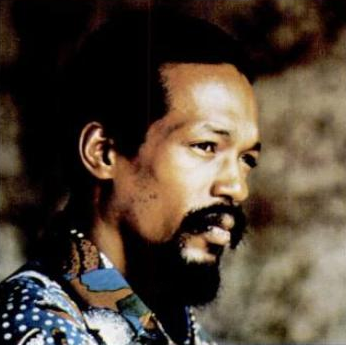
On November 10, 1973, the No. 1 song in America belonged to a man who had walked away from the most successful vocal group in the country.
Two years earlier, Eddie Kendricks had been one of the Temptations — the falsetto voice gliding over “The Way You Do the Things You Do,” “Get Ready,” and “Just My Imagination.” He had the fame, the hits, and the finest harmonies in popular music. He gave it all up because he wanted to sing his own songs, his own way.
The music business is full of singers who leave famous groups and disappear. Kendricks did the opposite. He came back with a record that sounded like nothing the Temptations had ever made: eight minutes of rolling funk, a clavinet riff that would not sit still, and a voice floating above it all like it had nowhere else to be.
The song was called “Keep On Truckin’.”
It reached No. 1 on the Billboard Hot 100 on November 10, 1973, and stayed there for two weeks. It was Kendricks’ only solo No. 1 — and the only time any former Temptation ever topped the pop chart on his own. Some people call it the first disco record ever to reach No. 1. Others say that goes too far. Either way, it was the sound of a new era arriving, carried by a voice from the old one.
This is the story of how the quietest Temptation made the loudest record of his life.
The Voice Motown Couldn’t Keep
To understand why “Keep On Truckin’” mattered, you have to understand what Eddie Kendricks gave up to make it.
Kendricks was a founding member of the Temptations and one of their lead singers from 1960 to 1971. He was technically the group’s first tenor, but he sang most often in a light, soaring falsetto that became one of the most recognizable sounds in soul music. When the Temptations sang “The Way You Do the Things You Do” in 1964, it was Kendricks’ voice that carried the melody. When they sang “Get Ready” in 1966, it was Kendricks again. When they recorded “Just My Imagination (Running Away with Me)” in 1971, it was Kendricks who sang the dream.
But by the late 1960s, Kendricks was unhappy. The Temptations’ sound had moved toward the harder, socially conscious psychedelic soul of producer Norman Whitfield — songs like “Cloud Nine” and “Ball of Confusion.” Kendricks loved the group’s earlier, romantic style and felt pushed aside. He also had frustrations over money and creative control that had been building for years.
The end came in November 1970, during a run at the Copacabana nightclub in New York. After one final argument with Otis Williams and Melvin Franklin, Kendricks walked off after the first night and did not return. It was mutually decided that he would leave the group.
He was still working on his first solo album when “Just My Imagination” — the last hit he had recorded with the Temptations — reached No. 1 on the pop charts in April 1971. Kendricks had already gone. He signed a solo deal with Motown’s Tamla label and started over, alone, at the age of 31.
Starting Over, Twice
The fresh start did not come easily. Kendricks’ first two solo albums, All by Myself (1971) and People…Hold On (1972), earned respect but no big hits. The second album did produce one record that pointed the way forward: “Girl You Need a Change of Mind,” a long, hypnotic track that found an audience in dance clubs and on the R&B chart. It was the first sign that Kendricks’ future might be on the dance floor, not in the ballad style he had been known for.
For his third album, Kendricks worked closely with Frank Wilson, the songwriter and producer who had guided most of his solo work. Wilson understood what Kendricks needed: not another gentle ballad, but a record built for movement. Working with fellow songwriter and producer Leonard Caston Jr. and songwriter Anita Poree, Wilson created a song that aimed straight at the dance floor.
The result was “Keep On Truckin’.” It was everything Kendricks’ Temptations ballads were not: long, loose, rhythmic, and built on a groove that seemed to go on forever.
Eight Minutes That Wouldn’t End
The album version of “Keep On Truckin’” runs for eight minutes. On the self-titled album Eddie Kendricks, released on May 18, 1973, it takes up a whole side of the record’s second half — a rolling, open-ended jam that sounds less like a pop single and more like a band that has found a groove and refuses to let it go.
The ingredients are simple, and that is the point. Leonard Caston plays clavinet, the sharp, percussive keyboard that gives the record its bite, and piano. A wah-wah guitar curls around the rhythm. The bass and drums lock into a steady four-on-the-floor pulse — the beat that would soon define disco. And above it all floats Kendricks’ falsetto, cool and unhurried, as if the groove were carrying him along.
The song was recorded at Motown’s Los Angeles studios. Motown had moved its operations from Detroit to Los Angeles the year before, and Kendricks’ record has the feel of that new city in it: looser, sunnier, and less bound to the old Hitsville formula.
When Tamla issued the song as a single in the summer of 1973, it faced an obvious problem. Radio stations in 1973 did not play eight-minute records. So the single was split in two: “Keep On Truckin’ (Part 1)” on the A-side, “Keep On Truckin’ (Part 2)” on the B-side. The groove survived the cut. In the clubs, DJs played the full album version, and the song became a favorite on dance floors. It was later remixed by Tom Moulton, the pioneering DJ whose extended remixes helped invent the 12-inch single.
The phrase itself was older than the record. “Keep on truckin’” came from 1930s blues — Blind Boy Fuller sang about “truckin’ my blues away” — and it had been revived by Robert Crumb’s famous 1968 underground comic of the same name. Kendricks’ record gave the old phrase a new meaning: not just survival, but momentum. Keep moving, and the world will move with you.

The Climb
“Keep On Truckin’ (Part 1)” entered the Billboard Hot 100 at No. 79 on the chart dated August 25, 1973. It was a modest start. For weeks, it climbed slowly — the kind of steady, week-by-week rise that usually means a record is winning over radio stations one city at a time.
By October, it was already No. 1 on Billboard’s soul chart. The pop chart took a little longer. Then, on the chart dated November 10, 1973, “Keep On Truckin’” reached No. 1 on the Billboard Hot 100. It stayed there for a second week, on November 17, before beginning its long way down. In total, the single spent nineteen weeks on the Hot 100.
It was also No. 1 on the R&B chart and reached No. 18 in the United Kingdom. The album Eddie Kendricks became his only solo album to reach the pop chart, peaking at No. 18 on the Billboard 200 and No. 5 on the R&B albums chart.
For Kendricks, the numbers told a story that no argument at the Copacabana ever could. He had bet his career on the idea that he could succeed without the Temptations. Two years after walking out, he was standing at the top of the charts alone — the only former Temptation ever to have a No. 1 pop hit as a solo artist.
The First Disco Record?
Ask ten music historians whether “Keep On Truckin’” was the first disco record, and you will get ten different answers. The song is often described as arguably the first disco record ever to reach No. 1 — and just as often, that claim is disputed.
What nobody disputes is that the record pointed the way. Its long, hypnotic groove, its four-on-the-floor beat, its extended instrumental passages, and its life on the dance floor were all central to disco, which was still two years away from exploding into the mainstream. In 1973, the word “disco” barely existed as a description of music. Kendricks, Wilson, and Caston were not trying to invent a genre. They were trying to make a record people could dance to for eight minutes without getting bored.
That they succeeded so completely is why the song still matters. It sits at the hinge between two eras: the last great flowering of Motown soul and the first pulse of the dance music that would dominate the rest of the decade. The falsetto that once sang “The Way You Do the Things You Do” was now riding a groove that belonged to the future.
The Only Temptation to Do It Alone
The success of “Keep On Truckin’” made Kendricks the most successful solo Temptation — a title he still holds. His follow-up single, “Boogie Down,” co-written with Anita Poree, reached No. 2 on the Hot 100 and No. 1 on the R&B chart in early 1974, proving that the first hit was no accident. Later singles like “Shoeshine Boy” kept him on the charts through the middle of the decade.
But the moment at the top was brief. As the 1970s went on, Kendricks’ voice — worn by years of smoking — began to lose the effortless falsetto that had made him famous, and his solo career slowed. In 1978, frustrated by a lack of creative and financial control, he left Motown altogether, having to sign away the rights to his royalties to do so. He recorded for Arista and later Atlantic, but the hits did not return.
In 1982, Kendricks and fellow former Temptation David Ruffin briefly rejoined the group for a reunion tour, a moment that thrilled old fans. In 1989, the Temptations were inducted into the Rock and Roll Hall of Fame, and Kendricks was there to take his place in history.
Eddie Kendricks: The Falsetto From Union Springs
A Boy From Alabama
Edward James Kendrick was born on December 17, 1939, in Union Springs, Alabama, the son of Johnny and Lee Bell Kendrick. He was one of five children. The family later moved to Birmingham, where Kendricks grew up in the Ensley neighborhood and sang in church, as so many great soul singers did.
As a teenager, he formed a vocal group called the Primes with his close childhood friend Paul Williams and Kell Osborne. The Primes moved to Detroit, where they met another vocal group, the Distants, led by Otis Williams and Melvin Franklin. In 1960, the two groups merged. The new group called itself the Elgins, signed with Motown, and soon changed its name to the Temptations.
The Temptations Years

The Temptations struggled at first. Their early singles went nowhere, and the group sang background for other Motown acts, including Mary Wells, while they waited for their break. It came in 1964, when Smokey Robinson wrote and produced “The Way You Do the Things You Do.” Kendricks sang lead, and the record reached No. 11 on the pop charts — the group’s first major hit.
More followed. “Get Ready” in 1966. “You’re My Everything” in 1967. “Just My Imagination (Running Away with Me)” in 1971 — a wistful, romantic ballad that became the group’s third No. 1 pop hit and Kendricks’ farewell to the group he had helped build.
Kendricks was the group’s first tenor, but his gift was his falsetto: a clear, sweet, floating sound that gave the Temptations’ harmonies their lift. He called himself a “roaming tenor,” but audiences knew the sound. When Kendricks sang lead, the song seemed to rise off the ground.
Between 1963 and 1971, he was featured on twenty of the group’s pop and R&B hits. He was there for the Temptations’ transformation from a smooth vocal group into the vehicle for Norman Whitfield’s psychedelic soul. And he was the one who felt, more than anyone, that something precious had been lost in the change.
Going Solo
Kendricks’ solo career began with a Tamla contract and two albums that showed a singer searching for his sound. All by Myself (1971) and People…Hold On (1972) were thoughtful, mature records, but they sold modestly. “Girl You Need a Change of Mind,” from the second album, hinted at the answer: a long, groove-driven track that clubs embraced.
“Keep On Truckin’” was the answer in full. It gave Kendricks the biggest hit of his life and proved that his voice — the lightest instrument in the Temptations’ arsenal — could carry a dance record all by itself.
The Long Goodbye
The years after the hits were hard. Kendricks’ voice faded as his health declined, and the record business moved on to younger voices. He toured with other former Temptations — the Ruffin/Kendrick/Edwards project of the late 1980s reunited him with David Ruffin and Dennis Edwards — but the work grew harder.
In 1991, Kendricks was diagnosed with lung cancer. He underwent surgery to have one of his lungs removed, hoping to stop the cancer from spreading. He believed his illness was caused by thirty years of smoking. The surgery helped for a time, and he returned to touring. But by the summer of 1992, his health had deteriorated again.
Eddie Kendricks died of lung cancer in Birmingham, Alabama, on October 5, 1992. He was 52 years old. He is buried in Elmwood Cemetery in Birmingham.

The Song That Says It All
Eddie Kendricks recorded many songs that are more famous than “Keep On Truckin’.” But very few capture him as completely.
It has the falsetto that made him a star. It has the groove that made him a solo artist. And underneath all of it, there is the quiet determination of a man who walked away from the most successful group in America because he believed he had more to say — and then proved it, one dance floor at a time.
That is why, more than fifty years later, the record still works. The first notes of the clavinet are enough to fill a room. The voice floats in, calm and certain. And the message is the same one Kendricks lived by after he left the Temptations: whatever has happened, whatever you have lost, you keep on moving.
Some singers chase the charts. Eddie Kendricks walked away from the surest thing in soul music, trusted a groove, and danced his way to the top on his own. Every time someone presses play on “Keep On Truckin’,” he does it all over again.
Leave a Reply