
It was the night of November 9, 2015, and the Teatro Lara in Madrid was full.
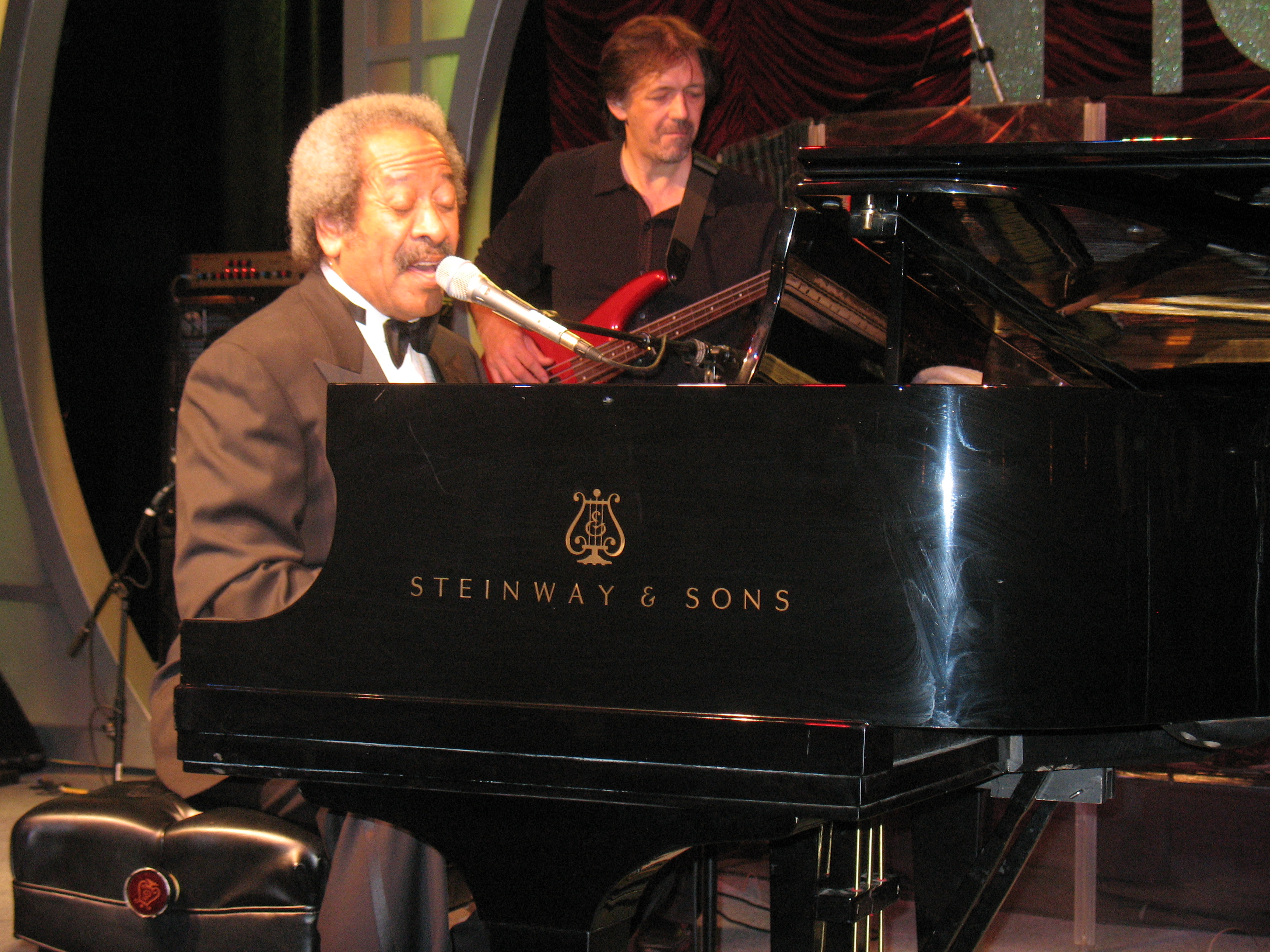
Allen Toussaint sat at the piano, as he had done ten thousand times before, and played the songs he had written over more than five decades: the hits other people had made famous, the New Orleans rhythms he had helped to invent, the melodies that had lived in his fingers since he was a boy in a shotgun house in Gert Town. He was seventy-seven years old, still touring, still playing, still the most elegant man in any room he entered. The audience applauded. He took his bow. He went back to his hotel.
In the early hours of November 10, 2015, he had a heart attack at the hotel and was pronounced dead on his arrival at the hospital. He was seventy-seven.
Instead, the music world spent that week discovering just how many of the songs it loved had been written by the quiet, smiling man at the piano.
Eleven years later, the songs are still everywhere. “Lady Marmalade” still fills dance floors. “Southern Nights” still drifts out of radios. “Working in the Coal Mine” still makes people move. And the name on the credits, when anyone bothers to look, is almost always the same: Allen Toussaint.
The Man Behind the Hits
Allen Toussaint has been described as “one of popular music’s great backroom figures”, and the description fits him perfectly. He was a musician, songwriter, arranger and record producer, and an influential figure in New Orleans rhythm and blues from the 1950s to the end of the century — but for most of his career, his name was known to musicians long before it was known to the public.
That is because his greatest songs were usually hits for somebody else. Ernie K-Doe took “Mother-in-Law” to the top of the charts. Lee Dorsey made “Working in the Coal Mine”, “Ride Your Pony” and “Holy Cow” into classics. Labelle turned “Lady Marmalade” into a number one hit. Dr. John scored with “Right Place, Wrong Time”. Glen Campbell took “Southern Nights” to number one on the pop, country and adult contemporary charts. The Pointer Sisters introduced themselves to popular culture with “Yes We Can Can”.
He was a producer for hundreds of recordings, and many musicians recorded his compositions. And yet he spent most of his life out of the spotlight, happiest behind the scenes. Interviewed in 2014 by The Guardian’s Richard Williams, he said it plainly: “I never thought of myself as a performer…. My comfort zone is behind the scenes.”
It was a strange thing to hear from a man who could hold a concert hall alone at a piano. But it was the truth. Toussaint’s genius was not in showing off. It was in writing the song, arranging the horns, choosing the groove, and then stepping back to let someone else take the applause. He had written so many songs, over more than five decades, that he admitted to forgetting quite a few of them.
The Songs Everybody Knows
Start with the list, because the list is astonishing.
In the early 1960s, working as an A&R man and producer for Minit Records and later Instant Records, Toussaint played piano, wrote, arranged and produced a string of hits for New Orleans R&B artists: Ernie K-Doe, Chris Kenner, Irma Thomas, Art and Aaron Neville, The Showmen, and Lee Dorsey, whose first hit, “Ya Ya”, he produced in 1961. The early to mid-1960s are regarded as his most creatively successful period, and the evidence is in the songs: Jessie Hill’s “Ooh Poo Pah Doo”, which Toussaint arranged and produced; K-Doe’s “Mother-in-Law”; Kenner’s “I Like It Like That”.
Then there is Benny Spellman’s two-sided 1962 hit: “Lipstick Traces (on a Cigarette)”, later covered by The O’Jays, Ringo Starr and Alex Chilton, and “Fortune Teller”, covered by various 1960s rock groups including The Rolling Stones, The Nashville Teens, The Who and The Hollies — and, decades later, by Alison Krauss and Robert Plant on their 2007 album Raising Sand.
And then there is “Ruler of My Heart”, written under his pseudonym Naomi Neville — his mother’s name, which he adopted for some of his works — and first recorded by Irma Thomas for the Minit label in 1963. Otis Redding adapted it later that year under the title “Pain in My Heart”, prompting Toussaint to file a lawsuit against Redding and his record company, Stax. The claim was settled out of court, with Stax agreeing to credit Naomi Neville as the songwriter. Redding’s version was also recorded by The Rolling Stones on their second album and was in the Grateful Dead’s early repertoire.
Toussaint credited about twenty songs to his parents, Clarence and Naomi, sometimes using the pseudonym “Naomi Neville”. They include “Fortune Teller”, first recorded by Benny Spellman in 1961, “Pain in My Heart”, first a hit for Otis Redding in 1963, and “Work, Work, Work”, recorded by The Artwoods in 1966.
In 1964, “A Certain Girl”, originally by Ernie K-Doe, was the B-side of the first single release by The Yardbirds. The song was released again in 1980 by Warren Zevon, as the single from the album Bad Luck Streak in Dancing School, and it reached number 57 on the Billboard Hot 100.
The Sound of Sansu and the Meters
If the early 1960s made Toussaint a hitmaker, the late 1960s made him an inventor.
Toussaint was drafted into the United States Army in 1963 but continued to record when on leave. After his discharge in 1965, he joined forces with Marshall Sehorn to form Sansu Enterprises, which included a record label, Sansu, and recorded Lee Dorsey, Chris Kenner, Betty Harris and others. Dorsey had hits with several of Toussaint’s songs, including “Ride Your Pony” (1965), “Working in the Coal Mine” (1966) and “Holy Cow” (1966).
The core players of the rhythm section used on many of the Sansu recordings from the mid- to late 1960s consisted of Art Neville on keyboards, Leo Nocentelli on guitar, George Porter Jr. on bass and Zigaboo Modeliste on drums. They later became known as The Meters, and their backing can be heard in songs such as Dorsey’s “Ride Your Pony” and “Working in the Coal Mine”, sometimes augmented by horns, which were usually arranged by Toussaint.
The Toussaint-produced records of these years, backed by the members of the Meters, with their increasing use of syncopation and electric instrumentation, built on the influences of Professor Longhair and others before them, but updated these strands — effectively paving the way for the development of a modern New Orleans funk sound.
Toussaint continued to produce The Meters when they began releasing records under their own name in 1969. As part of a process begun at Sansu and reaching fruition in the 1970s, he developed a funkier sound, writing and producing for a host of artists, such as Dr. John — backed by the Meters, on the 1973 album In the Right Place, which contained the hit “Right Place, Wrong Time” — and an album by The Wild Tchoupitoulas, a New Orleans Mardi Gras Indians tribe led by “Big Chief Jolly” (George Landry), backed by the Meters and several of his nephews, including Art and Cyril Neville and their brothers Charles and Aaron, who later performed and recorded as The Neville Brothers.
The Seventies: From New Orleans to the World
In the 1970s, Toussaint began to work with artists from beyond New Orleans, such as B. J. Thomas, Robert Palmer, Willy DeVille, Sandy Denny, Elkie Brooks, Solomon Burke, Scottish soul singer Frankie Miller and southern rocker Mylon LeFevre. He arranged horn music for The Band’s albums Cahoots (1971) and Rock of Ages (1972), as well as for the documentary film The Last Waltz (1978).
Boz Scaggs recorded Toussaint’s “Freedom for the Stallion” on his 1972 album My Time, as well as “What Do You Want the Girl to Do?” on his 1976 album Silk Degrees, which reached number two on the U.S. pop albums chart. The song was also recorded by Bonnie Raitt for her 1975 album Home Plate and by Lowell George, Vince Gill and Elvis Costello, among others.
In 1973, Toussaint and Sehorn created the Sea-Saint recording studio in the Gentilly section of eastern New Orleans. Toussaint began recording under his own name, contributing vocals as well as piano, and his solo career peaked in the mid-1970s with the albums From a Whisper to a Scream and Southern Nights.
During this time, he teamed with Labelle and produced their acclaimed 1974 album Nightbirds, which contained the number one hit “Lady Marmalade”. The next year, Toussaint collaborated with Paul McCartney and Wings for their hit album Venus and Mars and played on the song “Rock Show”. In 1973, his “Yes We Can Can” was covered by The Pointer Sisters for their self-titled debut album; released as a single, it became both a pop and R&B hit and served as the group’s introduction to popular culture. Two years later, Glen Campbell covered Toussaint’s “Southern Nights” and carried the song to number one on the pop, country and adult contemporary charts. His song “I’ll Take A Melody” figured permanently in the repertoire of the Jerry Garcia Band.
In 1987, Toussaint was the musical director of an off-Broadway show, Staggerlee, with a score composed of songs from his catalogue, which ran for 150 performances. Like many of his contemporaries, he found that interest in his compositions was rekindled when his work began to be sampled by hip-hop artists in the 1980s and 1990s.
Katrina, and the Return
Most of Toussaint’s possessions, including his home and recording studio, Sea-Saint Studios, were lost during Hurricane Katrina in 2005. He initially sought shelter at the Astor Crowne Plaza Hotel on Canal Street. Following the hurricane, whose aftermath left most of the city flooded, he left New Orleans for Baton Rouge, Louisiana, and for several years settled in New York City.
His first television appearance after the hurricane was on the September 7, 2005, episode of the Late Show with David Letterman, sitting in with Paul Shaffer and his CBS Orchestra. Toussaint performed regularly at Joe’s Pub in New York City through 2009. He eventually returned to New Orleans and lived there for the rest of his life.
The return produced some of the finest work of his later years. The River in Reverse, his collaborative album with Elvis Costello, was released on May 29, 2006. It was recorded in Hollywood and at the Piety Street Studio in the Bywater, as the first major studio session to take place after Hurricane Katrina. In 2007, Toussaint performed a duet with Paul McCartney of a song by Fats Domino, “I Want to Walk You Home”, as their contribution to Goin’ Home: A Tribute to Fats Domino.
He appeared in the 2005 documentary film Make It Funky!, which presents a history of New Orleans music and its influence on rhythm and blues, rock and roll, funk and jazz. In the film he performed a medley of his own compositions and accompanied Irma Thomas, Lloyd Price and Bonnie Raitt.
He performed instrumentals from his album The Bright Mississippi and many of his older songs for a taping of the PBS series Austin City Limits, which aired on January 9, 2015. In 2010 he appeared on Eric Clapton’s album Clapton, in two Fats Waller covers, “My Very Good Friend the Milkman” and “When Somebody Thinks You’re Wonderful”.
His late-blooming career as a performer began when he accepted an offer to play a regular Sunday brunch session at an East Village pub. In 2013 he collaborated on a ballet with the choreographer Twyla Tharp, and in 2014 he collaborated on another ballet with David Parsons and The Parsons Dance Company along with The New Orleans Ballet. He was a musical mentor to Swedish-born New Orleans songwriter and performer Theresa Andersson.
The Last Night in Madrid
Toussaint died in the early hours of November 10, 2015, in Madrid, Spain, while on tour. Following a concert at the Teatro Lara on Calle Corredera Baja de San Pablo, he had a heart attack at his hotel and was pronounced dead on his arrival at the hospital. He was seventy-seven.
His final recording, American Tunes, titled after the Paul Simon song, which he sings on the album, was released by Nonesuch Records on June 10, 2016.
The tributes that followed said the same thing in different ways. Writing in The New York Times, Ben Sisario quoted Quint Davis, producer of the New Orleans Jazz and Heritage Festival: “In the pantheon of New Orleans music people, from Jelly Roll Morton to Mahalia Jackson to Fats — that’s the place where Allen Toussaint is…” Paul Simon said, “We were friends and colleagues for almost 40 years…. We played together at the New Orleans jazz festival. We played the benefits for Katrina relief. We were about to perform together on December 8. I was just beginning to think about it; now I’ll have to think about his memorial. I am so sad.”
The Daily Telegraph described Toussaint as “a master of New Orleans soul and R&B, and one of America’s most successful songwriters and producers”, adding that the self-effacing Toussaint “played a crucial role in countless classic songs popularised by other artists.”
Why He Still Matters
Eleven years after his death, Allen Toussaint’s place in American music is no longer a secret kept among musicians. It is written on the map of the city he loved.
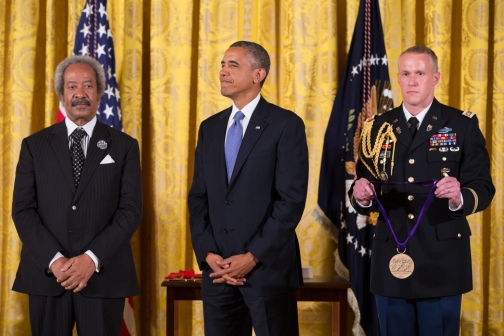
Toussaint was inducted into the Rock and Roll Hall of Fame in 1998, the Louisiana Music Hall of Fame in 2009, the Songwriters Hall of Fame, and the Blues Hall of Fame in 2011. In 2013, he was awarded the National Medal of Arts by President Barack Obama. In 2016, he posthumously won the Pinetop Perkins Piano Player title at the Blues Music Awards. In January 2022, the New Orleans City Council voted unanimously to rename one of the city’s thoroughfares, Robert E. Lee Boulevard, to Allen Toussaint Boulevard in his honour. In January 2025, the United States Postal Service released a forever stamp honouring Toussaint as part of its Black Heritage series.
A boulevard. A stamp. A National Medal of Arts. These are the honours of a man the public is finally catching up with — a man who spent a lifetime writing the songs other people became famous for, and who was content to sit at the piano, in his elegant suit, and let the music speak for him.
Listen to New Orleans music today — the second-line rhythms, the syncopated piano, the funk that grew out of R&B — and you are listening to Allen Toussaint, whether the record says his name or not. He was, as the Telegraph put it, a master of New Orleans soul and R&B. But he was more than that. He was the man who wrote the soundtrack of a city, and then stayed to play it, night after night, until the very last night in Madrid.
Allen Toussaint: The Boy from Gert Town Who Wrote New Orleans
To understand the songwriter, you have to understand where he came from. Allen Toussaint did not learn music in a conservatory. He learned it in a shotgun house in Gert Town, where his mother fed every musician who came through the door, and in the clubs of New Orleans, where the piano was the centre of everything.
A Shotgun House in Gert Town
Allen Richard Toussaint was born on January 14, 1938, in New Orleans, the youngest of three children. He grew up in a shotgun house in the Gert Town neighbourhood, where his mother, Naomi Neville — whose name he later adopted pseudonymously for some of his works — welcomed and fed all manner of musicians as they practised and recorded with her son. His father, Clarence, worked on the railway and played trumpet.
Toussaint learned piano as a child and took informal music lessons from an elderly neighbour, Ernest Pinn. In his teens he played in a band, the Flamingos, with the guitarist Snooks Eaglin, before dropping out of school. A significant early influence on Toussaint was the syncopated “second-line” piano style of Professor Longhair. Toussaint was raised Catholic.
The Dew Drop Inn
After a lucky break at the age of seventeen, when he stood in for Huey “Piano” Smith at a performance with Earl King’s band in Prichard, Alabama, Toussaint was introduced to a group of local musicians led by Dave Bartholomew, who performed regularly at the Dew Drop Inn, a nightclub on Lasalle Street in Uptown New Orleans.
His first recording was in 1957 as a stand-in for Fats Domino on Domino’s record “I Want You to Know”, on which Toussaint played piano and Domino overdubbed his vocals. His first success as a producer came in 1957 with Lee Allen’s “Walking with Mr. Lee”. He began performing regularly in Bartholomew’s band, and he recorded with Fats Domino, Smiley Lewis, Lee Allen and other leading New Orleans performers.
After being spotted as a sideman by the A&R man Danny Kessler, he initially recorded for RCA Records as Al Tousan. In early 1958 he recorded an album of instrumentals, The Wild Sound of New Orleans, with a band including Alvin “Red” Tyler on baritone sax, Frank Fields on bass and Charles “Hungry” Williams on drums. The recordings included Toussaint and Tyler’s composition “Java”, which first charted for Floyd Cramer in 1962 and became a number four pop hit for Al Hirt in 1964.
The Hit Factory
In 1960, Joe Banashak, of Minit Records and later Instant Records, hired Toussaint as an A&R man and record producer. He did freelance work for other labels, such as Fury. Toussaint played piano, wrote, arranged and produced a string of hits in the early and mid-1960s for New Orleans R&B artists such as Ernie K-Doe, Chris Kenner, Irma Thomas, Art and Aaron Neville, The Showmen, and Lee Dorsey.
It was the most creatively successful period of his life, and it established a pattern that would hold for the next fifty years: Toussaint in the studio, at the piano, writing the song, arranging the horns, shaping the sound — and someone else’s name on the label.
Sansu, the Meters, and the Invention of Funk
After his discharge from the Army in 1965, Toussaint joined forces with Marshall Sehorn to form Sansu Enterprises, and the records they made with the young rhythm section that became The Meters effectively paved the way for the development of a modern New Orleans funk sound.
In 1973, Toussaint and Sehorn created the Sea-Saint recording studio in the Gentilly section of eastern New Orleans — the studio that would be lost, along with his home, in Hurricane Katrina thirty-two years later.
The Final Decade
Toussaint’s last decade was, in many ways, his most visible. After Katrina drove him from New Orleans to New York, he became a regular at Joe’s Pub, a familiar face on television, and a collaborator sought out by the biggest names in music: Elvis Costello, Paul McCartney, Eric Clapton. He recorded The Bright Mississippi in 2009, performed on Austin City Limits, and toured the world as a solo artist — the backroom figure, finally, front and centre.
He had three children with his former wife Betty Dell Weber, and his children had managed his career in his last years. His two marriages ended in divorce.
He died as he had lived: on tour, at the piano, with a concert still to play. His final recording, American Tunes, was released seven months after his death. It is a quiet, beautiful record — mostly solo piano and voice, standards and songs by his friends, including Paul Simon’s “American Tune”, which gives the album its title. It sounds like a man saying goodbye in the only way he knew how: by playing.
Leave a Reply