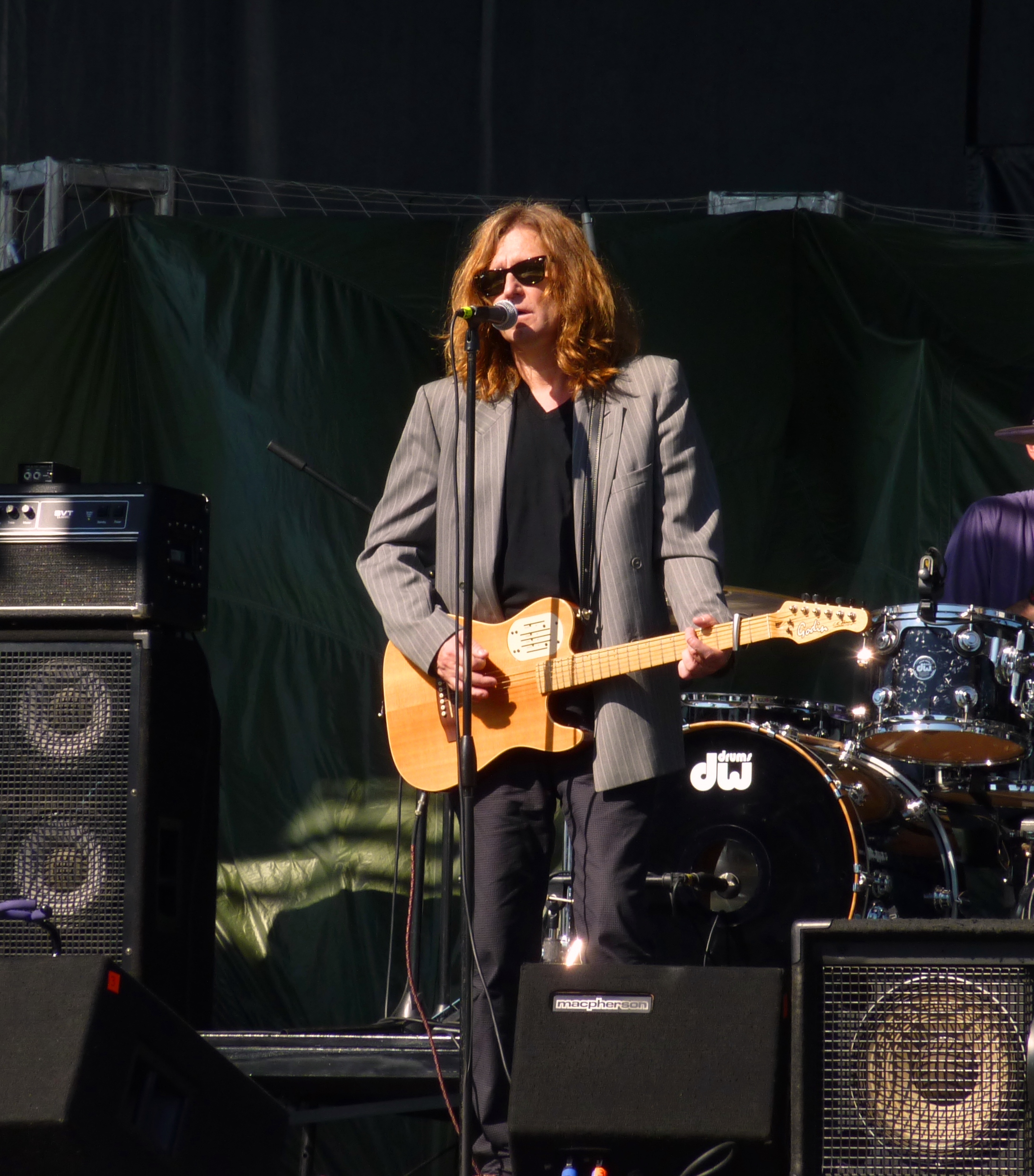
In the week of November 11, 1989, the No. 1 song in America was a power ballad by a band almost nobody had heard of.
The band was called Bad English. They had released their first album only a few months earlier. They had never had a hit. And yet, when “When I See You Smile” reached the top of the Billboard Hot 100, it stayed there for two weeks — ahead of Roxette, ahead of New Kids on the Block, ahead of Milli Vanilli and Paula Abdul.
The strange part was that every member of the band was already famous. The singer had already topped the charts on his own. The guitarist and the keyboard player had been in one of the biggest rock bands in the world. The bass player had played with the singer for more than a decade.
They were a supergroup in every sense except one: nobody knew their name yet.
“When I See You Smile” changed that in a matter of weeks. It also became the biggest hit any of them would ever have together — and, in the end, the only No. 1 of the band’s short life.
This is the story of five famous musicians, one borrowed song, and a smile that ruled the radio at the end of the 1980s.
The Number One Nobody Saw Coming
The song entered the Billboard Hot 100 on September 16, 1989, at No. 72. It was the second single from Bad English’s debut album, and it climbed steadily through the autumn — past the rock bands, past the dance acts, past the pop stars.
On the chart dated November 11, 1989, it reached No. 1. It stayed there for two weeks. It spent twenty-two weeks on the Hot 100 altogether and finished 1989 as the year’s No. 34 song.
It was also No. 1 in Canada, No. 4 in Australia, and a Top 10 hit on Billboard’s Mainstream Rock chart. In the United States it sold more than half a million copies and was certified Gold. In Australia it went Platinum.
For a brand-new band, it was a dream start. What nobody knew yet was that the dream would not last.
A Supergroup Built From Two Famous Bands
Bad English was formed in Los Angeles in 1987, and its lineup read like a rock fan’s fantasy team.
The guitarist was Neal Schon and the keyboard player was Jonathan Cain, both members of Journey — one of the most successful American rock bands of the 1980s. Journey had broken up, and Schon and Cain were looking for something new.
The singer was John Waite, and the bass player was Ricky Phillips. The two of them had played together years earlier in the Babys, the British rock band Waite had fronted through the late 1970s. Cain had played in the Babys too, before joining Journey.
The drummer was Deen Castronovo, the youngest of the five and the only member without a famous band on his résumé.
The band got its name in the most ordinary way possible: during a game of pool. Waite missed a shot, and Cain made a joke about how bad his “english” was — “english” being the spin a player puts on a cue ball. The phrase stuck, and the band decided to use it.
It was a good name for a band that was, in every way, a second act. Four of its five members had already been famous once. Now they were betting they could be famous again — together.
The Voice, the Guitar, and the Keyboard
The heart of Bad English was its singer. John Waite was born on July 4, 1952, in Lancaster, England, and he had one of the most recognizable voices in rock: warm, rough-edged, and completely sincere.
With the Babys, he had scored hits with “Isn’t It Time” and “Every Time I Think of You” in the late 1970s. Then he went solo. His second solo album, No Brakes, released in 1984, contained a song that became one of the defining ballads of the decade: “Missing You.”
“Missing You” reached No. 1 on the Billboard Hot 100 on September 22, 1984, knocking Tina Turner’s “What’s Love Got to Do with It” off the top spot. It was Waite’s biggest hit, and it made him a star in his own right.
Five years later, he was starting over again in Bad English — and he brought the same voice with him.
Behind him stood two musicians who knew exactly how to build a hit. Neal Schon was Journey’s guitarist, a player famous for solos that could fill an arena. Jonathan Cain was Journey’s keyboardist, and the sound of his synthesizer would open “When I See You Smile” — a soft, shimmering introduction that listeners recognized within seconds.
Ricky Phillips held down the bass, and Deen Castronovo drove the drums. Together, they were a band that could play anything: hard rock, pop, ballads. The problem, as it turned out, was deciding which one they wanted to be.
The Song That Almost Went to Someone Else
“When I See You Smile” was not written by anyone in the band. It was written by Diane Warren, the most successful songwriter of power ballads in America.
Warren had first intended the song for someone else. The Canadian band Sheriff had scored a surprise No. 1 in early 1989 with their six-year-old single “When I’m With You,” and Warren’s song was meant for them as a follow-up. But Sheriff’s singer, Freddie Curci, had started a new band called Alias, and he wanted to push his own ballad instead. The song slipped away from Sheriff — and fell to John Waite.
Epic Records’ A&R man, Don Grierson, suggested it to Bad English. The band had already recorded seven tracks they liked for their debut album, and they agreed to cut one more. “When I See You Smile” became the eighth.
According to Songfacts, Warren wrote the song as a tribute to her father, who had always supported her songwriting career. Whether or not that is the whole story, the song itself is simple and direct: life is hard, the world is hard, but seeing the person you love smile makes it possible to face all of it.
It was the only song on the Bad English album written entirely by an outside writer, without help from a single member of the band. It was also the biggest hit on the record.
The Sound of 1989
The record was produced by Richie Zito, and it was built the way the great power ballads of the 1980s were built: slowly, and then all at once.
It opens with Jonathan Cain’s synthesizer, soft and spacious. John Waite comes in quietly, almost whispering, singing about wondering how he would ever make it through the world without the person he loves. Then Deen Castronovo’s drums pick up the tempo, Neal Schon’s guitar enters, and Waite’s voice rises with it — more urgent, more certain — until the chorus arrives like a promise: when I see you smile, I can face the world.
The music video, directed by Jonathan Cain himself, was filmed at one of the band’s arena concerts. It shows the band on stage, with close-ups of each member, and it moves the way the song moves: from soft to loud, from quiet to overwhelming.
The single was released on August 30, 1989, on Epic Records, as the second single from the band’s self-titled debut album. The first single, “Forget Me Not,” had stalled outside the Top 40, peaking at No. 45 — though it reached No. 2 on the Mainstream Rock chart.
“When I See You Smile” did what the first single could not. It crossed over everywhere: pop radio, rock radio, adult contemporary. It was the sound of 1989 in four minutes and seventeen seconds.
The Week Diane Warren Owned the Chart

The success of “When I See You Smile” was part of a much bigger story: the rise of Diane Warren.
Warren was born on September 7, 1956, in Van Nuys, California, the youngest of three daughters. Her father, David, an insurance salesman, encouraged her songwriting when almost nobody else did. He bought her a twelve-string guitar and built a metal shed in the backyard so she would have a private place to practice.
She began writing songs at eleven years old and got serious about it at fourteen. She graduated from California State University, Northridge, in 1978, and her first major hit came in 1983, when Laura Branigan took her song “Solitaire” to No. 7.
By 1989, Warren was the most in-demand ballad writer in pop music. She had already written Cher’s “If I Could Turn Back Time” that same year, and she would go on to write Celine Dion’s “Because You Loved Me” and Aerosmith’s “I Don’t Want to Miss a Thing.”
In November 1989, she achieved something no songwriter had ever done at that scale: she held the No. 1 and No. 2 songs on the Billboard Hot 100 at the same time. “When I See You Smile” was at No. 1. At No. 2 was “Blame It on the Rain” by Milli Vanilli — also written by Diane Warren.
Over her career, Warren has written nine No. 1 songs on the Hot 100, all by different artists, and more than thirty Top 10 hits. She was the first songwriter in Billboard history to have seven hits, all by different artists, on the singles chart at the same time. She has won a Grammy Award, an Emmy Award, and two Golden Globe Awards, and received an honorary Academy Award in 2022.
Bad English gave her one of her biggest hits. She gave them the only No. 1 they would ever have.
The Rest of the Album — and the Fall
The debut album Bad English was released in June 1989 and became a big seller. It peaked at No. 21 on the Billboard 200 and was certified Platinum in the United States.
It contained three Top 40 hit singles. After “When I See You Smile,” the band released “Price of Love,” which reached No. 5 on the Hot 100, and “Possession,” which reached No. 21. A promotional single, “Best of What I Got,” reached the Top 10 on the rock charts and played over the closing credits of the 1989 film Tango & Cash.
In the summer of 1989, Bad English toured as the support act for Bon Jovi on the band’s huge Jersey Syndicate world tour. From March to June 1990, they toured the United States with Whitesnake. On stage, they looked like a band that would be around for years.
Behind the scenes, the band was already coming apart. Neal Schon and Ricky Phillips wanted a harder edge. They were frustrated with the “pop” side of the band’s music — the ballads, the polish, the radio-friendly sound that had given them their biggest hit. Waite and Cain were more comfortable with the pop direction.
The second album, Backlash, released in August 1991, came and went without any fanfare. Its only single, “Straight to Your Heart,” missed the Top 40, peaking at No. 42. Ricky Phillips later wrote that the group had already parted company before the second album had even been mixed.
In the end, the tensions that had made the band interesting were the same ones that ended it. Everyone left to pursue other projects.
Where They Went Next
John Waite went back to his solo career. He later said that although he had loved playing to stadium-sized audiences, he had been uncomfortable with the corporate rock image he felt the band had presented.
Neal Schon and Deen Castronovo joined the new band Hardline in 1991, but both left not long after its debut album. In the mid-1990s, Schon rejoined Jonathan Cain in a reformed Journey. Castronovo joined Journey in 1998, eventually leaving in 2015, and later returned to the band in 2021.

Ricky Phillips went back to session work, recording with artists including Coverdale/Page, Bobby Kimball, and Eddie Money, before joining Styx in the early 2000s.
Bad English lasted four years, made two albums, and scored one No. 1. It was a short career. But the band’s members went on to play in some of the biggest rock bands of the next three decades — and every one of them carried a piece of Bad English with them.
Why the Song Endures
“When I See You Smile” is, in many ways, the perfect power ballad. It is not complicated. It does not try to be clever. It says one simple thing: the world is hard, and love makes it bearable.
That is why it worked in 1989, and why it still works now. The hair is gone. The synthesizers sound dated. The band that recorded it broke up more than thirty years ago. But the feeling in the song has not changed at all.
It is the sound of five famous musicians, briefly in the same room, singing about the one thing that made all of them famous in the first place: a song that says exactly what it means.
Bad English: The Supergroup That Burned Bright and Fast
Bad English was never meant to be a footnote. For a few months in 1989, it looked like the band might become one of the biggest rock acts in America. To understand why it did not, you have to understand the five people who made it — and the woman who wrote its biggest hit.
John Waite: From the Babys to “Missing You”
John Charles Waite was born on July 4, 1952, in Lancaster, Lancashire, England. He became the lead vocalist of the Babys, the British rock band that scored hits in the late 1970s with “Isn’t It Time” and “Every Time I Think of You.”
When the Babys broke up, Waite moved to New York and launched a solo career. His first solo album, Ignition, arrived in 1982 and produced the rock radio hit “Change.” His second, No Brakes, released in 1984, contained “Missing You” — a song that reached No. 1 on the Billboard Hot 100 on September 22, 1984, and became one of the defining ballads of the decade.
The opening line of “Missing You” — “Every time I think of you” — was borrowed from the Babys song of the same name. It was a small link between Waite’s past and his future.
By 1987, he was ready for a band again. He found one in Bad English. And two years later, he had his second No. 1 — this time with four other famous musicians standing behind him.
Neal Schon and Jonathan Cain: The Journey Men
Neal Schon and Jonathan Cain came to Bad English from Journey, one of the most successful American rock bands of the 1980s. Schon was the band’s guitarist, and Cain was its keyboardist. When Journey broke up, the two of them decided to start something new — and they called Waite.
Schon was the band’s guitar hero, the player whose solos could fill an arena. Cain was its musical anchor, the keyboardist whose synthesizer introduction opens “When I See You Smile” and sets the whole mood of the record.
After Bad English ended, both men returned to Journey when the band reformed in the mid-1990s. Schon remains with Journey to this day. Cain stayed with the band for many years as well.
Ricky Phillips and Deen Castronovo: The Rhythm Section
Ricky Phillips had played bass on two albums with Waite and Cain in the Babys, so Bad English was a reunion for him as much as for anyone. After the band split, he returned to session work and later joined Styx in the early 2000s, where he has played ever since.
Deen Castronovo was the youngest member of the band and its drummer. His playing gave “When I See You Smile” its lift — the moment when the song stops whispering and starts to soar. After Bad English, he played with Hardline and Ozzy Osbourne before joining Journey in 1998.

Diane Warren: The Woman Who Wrote the Hit
Diane Eve Warren was born on September 7, 1956, in Van Nuys, California. She was the youngest of three daughters, and she grew up feeling misunderstood — a girl who loved Top 40 radio and wrote songs in her bedroom.
Her father believed in her when others did not. He bought her a twelve-string Martin guitar and built a metal shed in the backyard where she could practice in private. She started writing songs at eleven and became obsessed with the craft at fourteen.
Warren’s first major hit was Laura Branigan’s “Solitaire” in 1983. She founded her own publishing company, Realsongs, and kept control of her work — a rare thing for a songwriter, and a decision that made her one of the most powerful figures in the music business.
Her songbook defined the sound of adult pop in the late 1980s and the 1990s: Starship’s “Nothing’s Gonna Stop Us Now,” Chicago’s “Look Away,” Cher’s “If I Could Turn Back Time,” Toni Braxton’s “Un-Break My Heart,” Celine Dion’s “Because You Loved Me,” and Aerosmith’s “I Don’t Want to Miss a Thing.”
She has been nominated for seventeen Academy Awards, more than any person without a competitive win, and received an honorary Oscar in 2022. She has won a Grammy, an Emmy, and two Golden Globes, and she holds a star on the Hollywood Walk of Fame.
“When I See You Smile” was one of her early masterpieces — a song she wrote for one band, lost to another, and watched climb to No. 1 anyway.
A Smile That Outlasted the Band
Bad English made two albums and lasted four years. Its members went on to bigger things, and its name faded from the radio. But “When I See You Smile” did not fade.
It is still played on 1980s radio stations and streaming playlists. It is still the song people remember when they hear the name Bad English — if they remember the name at all. The band is gone, but the smile is still there.
That is the strange luck of a power ballad. It was written by a woman who never joined the band, sung by a man who had already been famous twice, and played by four musicians who would all go on to other bands. It belonged to no one, and it belonged to everyone who heard it.
For two weeks in November 1989, it was the most popular song in America. More than thirty-five years later, it still sounds like the moment it was written for: a hard world, made bearable by a smile.
Leave a Reply