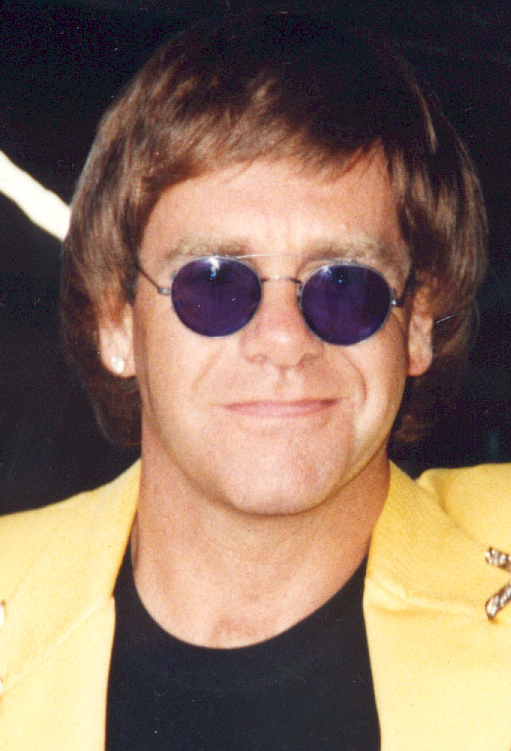
It is the most beloved album of Elton John’s career — seventeen songs, two LPs, a string of hits that have never left the radio, and sales in excess of thirty million copies. But “Goodbye Yellow Brick Road” almost didn’t happen at all. In January 1973, Elton John flew to Jamaica to record his seventh album, walked into a disaster, and fled. Four months later, in a French château, he turned the wreckage into a masterpiece — in about three weeks. This is the story of how the greatest album of Elton John’s career was born from the worst recording sessions of his life.
The Stones’ Studio
The plan sounded perfect. When the time came to record his seventh studio album, Elton John had a fabulous idea: why not make the record at Dynamic Sound Studio in Kingston, Jamaica, where the Rolling Stones had just recorded “Goats Head Soup”? The facility looked appealing for all kinds of reasons — exotic, isolated, steeped in rock and roll mystique.
“In Jamaica I hope to be cut off and uninterrupted,” Elton explained at the time. His producer, Gus Dudgeon, had gone to scout the studio and reported back encouragingly. The studio’s owner promised they would appreciate the feel of the place once they arrived. So in late January 1973, Elton flew to Kingston with lyricist Bernie Taupin, Dudgeon, engineer Ken Scott, and the band — guitarist Davey Johnstone, bassist Dee Murray, and drummer Nigel Olsson. They were at the absolute peak of their powers: Elton’s sixth album, “Don’t Shoot Me I’m Only the Piano Player,” was on its way to topping the charts on both sides of the Atlantic, and “Crocodile Rock” was becoming his first American number one.
They checked in. The Stones, as it happened, were checking out — leaving behind a studio, a legend, and, as it turned out, some very unwelcome roommates. And within days, Elton’s fabulous idea revealed itself as a catastrophe.
The Fight and the Cockroaches
Kingston in January 1973 was not the paradise the brochures promised. The city was in the throes of hosting the Joe Frazier versus George Foreman heavyweight championship fight — imagine Times Square on New Year’s Eve, stretched over a week — and the atmosphere was tense and volatile. Elton, by his own admission, was too frightened to leave his hotel room.
The studio was worse. Dynamic Sound fell far short of professional standards, and Dudgeon couldn’t get a decent sound out of it no matter what he tried. The Stones, on their way out, left behind some cheerful warnings — including the advice not to open the piano lid too fast, lest they disturb the cockroaches living inside. It took Dudgeon three days just to get a usable drum sound. The band attempted a version of “Saturday Night’s Alright for Fighting” that, in Ken Scott’s memorable phrase, sounded like “a bunch of angry bees.” It sounded terrible.
After a few days of trying to overcome the setbacks, the decision was made: abort the sessions entirely and try again elsewhere, later. But the trip wasn’t a total loss. Holed up in his hotel room, cut off from everything, Elton had done what he always did when the world closed in — he wrote. Taupin had brought lyrics, there was a piano, and Elton was, as Dudgeon later put it, “in a roaring mood.” He wrote song after song after song, stacking up material at a pace that would prove fateful.
The Château
Four months later, the team reconvened — this time at the Château d’Hérouville in France, an eighteenth-century building thirty miles outside Paris where Elton had already recorded “Honky Château” and “Don’t Shoot Me I’m Only the Piano Player.” Engineer Ken Scott wasn’t available, so David Hentschel got the call. They began on May 7, 1973, working on an album they thought would be called “Silent Movies and Talking Pictures,” after the cinematic sweep of Taupin’s lyrics.
The château was a residential studio, which meant the band lived together, ate together, and recorded together with almost no distractions. Bernie would bring down a fresh batch of lyrics in the morning; Elton would sit at the piano and write the music, sometimes in minutes; and then they’d all go into the studio and record it. It was the John-Taupin method at its most refined — the lyricist and the composer working in the same building, at the same speed, with total trust.
And Elton was still in that roaring mood from Jamaica. He was so used to sitting down at the piano and writing songs before sessions began that he just kept writing — new songs on top of the Jamaican batch, piling up faster than anyone could record them. Within about three weeks, they had far more material than a single album could hold.
The Breakfast Song
The most famous writing session of those three weeks happened over breakfast. There was a big room where everyone ate together, with a piano in the corner. Bernie had brought down fresh lyrics. Engineer David Hentschel watched as Elton sat down at the piano, looked at the words, and started writing — right there, between bites, while the band ate around him.
“I remember Elton sitting down and writing,” Hentschel recalled. “I was watching him doing it as we were eating breakfast — and then we all went in and recorded it — and I’m pretty damn sure it was ‘Candle in the Wind.’”
Think about that. One of the most famous songs of the twentieth century — a song that would eventually become the best-selling single of all time in its rewritten form — was composed over breakfast, in minutes, while the toast got cold. It was the John-Taupin partnership in miniature: Taupin’s lyric, Elton’s melody, no agonizing, no second-guessing. The song appeared on the album as a gentle, elegiac tribute to Marilyn Monroe. Nobody in that breakfast room could have imagined what it would become.
The Double Album Nobody Planned
Here’s the twist: “Goodbye Yellow Brick Road” was never supposed to be a double album. The plan was a single LP — seventeen songs would have been unthinkable. But Elton had written so much material, in Jamaica and then in France, that Dudgeon and the team realized they had two albums’ worth of keepers.
“We probably would never have made a double album if it wasn’t for the fact that we went to Jamaica and Elton was in a roaring mood,” Dudgeon said in a 1993 interview. “He just wrote song after song after song. Then when we went to France he was so used to sitting down at the piano and writing songs before sessions began that he wrote some more. Suddenly, we had two albums’ worth.”
The disaster in Jamaica had become a blessing in disguise. If the Kingston sessions had gone smoothly, Elton would have recorded a normal single album and gone home. Instead, the aborted trip left him with a backlog of songs and a head full of melodies — and the château sessions turned that backlog into the most generous, wide-ranging record of his career. Seventeen tracks. Every one of them a keeper.
The Hits
The album’s hit parade is almost absurd. The title track, “Goodbye Yellow Brick Road” — Taupin’s Wizard of Oz allegory about escaping the trappings of fame — became one of Elton’s signature ballads. “Bennie and the Jets,” with its fake-live audience and glam-rock stomp, gave him one of his funkiest singles. “Candle in the Wind” became a standard. “Saturday Night’s Alright for Fighting” — the song that had sounded like angry bees in Jamaica — became a rock and roll anthem.
And those were just the singles. The album opened with the eleven-minute “Funeral for a Friend / Love Lies Bleeding,” a prog-rock overture of synthesizers and guitar that announced this was no ordinary pop record. It closed with “Harmony,” a benediction. In between: “Grey Seal,” “I’ve Seen That Movie Too,” “Sweet Painted Lady” — a gallery of characters, fantasies, and myths, all wrapped in Elton’s gospel-chorded piano and Taupin’s cinematic lyrics. The cover art, a fantasy painting by illustrator Ian Beck, showed Elton stepping into a poster-covered world of his own imagination. It was the perfect image for the music inside.
The public responded like it had been waiting for this record all its life. “Goodbye Yellow Brick Road” was released on October 5, 1973. It reached number one on the Billboard album chart and stayed there for eight weeks. It has sold more than thirty million copies worldwide, making it the best-selling studio album of Elton John’s career. Rolling Stone has ranked it among the 500 greatest albums of all time.
The Peak
Ask Elton John fans to name his best album, and most will say this one. Not “Honky Château,” not “Captain Fantastic” — “Goodbye Yellow Brick Road.” It’s the record where everything aligned: the songs, the band, the production, the moment. Davey Johnstone’s guitar, Dee Murray’s bass, Nigel Olsson’s drums, Dudgeon’s widescreen production, Taupin’s most vivid lyrics, and Elton — twenty-six years old, at the absolute summit of his powers, writing melodies over breakfast like other people write shopping lists.
The album’s fiftieth anniversary, in 2023, brought deluxe reissues and a fresh wave of appreciation — new generations discovering, through remastered sound and unearthed session material, just how much music Elton packed into those three weeks in France. Critics who had grown up with the record wrote about it like an old friend; younger listeners heard it like a revelation. Fifty years on, the songs haven’t aged a day. “Bennie and the Jets” still struts. “Candle in the Wind” still aches. The title track still sounds like the most beautiful goodbye ever written. And “Funeral for a Friend” still opens the show like a curtain rising on something enormous.
“Goodbye Yellow Brick Road” is the great what-if that became the great what-is. What if Elton had never gone to Jamaica? What if the studio had worked, the fight hadn’t happened, the cockroaches had stayed in the piano? He would have made a good album, probably — he was incapable of making a bad one in 1973. But he wouldn’t have made this one: the double album nobody planned, written in a roaring mood in a Kingston hotel room and a French château breakfast room, seventeen songs deep and not a wasted note. Sometimes the disaster is the plan. Sometimes you have to lose the studio to find the masterpiece. And sometimes, holed up in a hotel room in Kingston with nothing to do but write, a twenty-six-year-old piano player from Pinner accidentally writes the greatest album of his life — twice over, on two LPs, with seventeen songs to spare.
Leave a Reply