
The Girl Who Looked Straight Back
On a Paris street in the spring of 1960, a young American woman in a striped shirt stood selling newspapers and looked straight into the camera. She did not smile for the lens, or soften herself, or turn away. She simply looked back, calm and curious and entirely her own, and in that look a whole generation recognised itself.
That woman was Jean Seberg, and the film was Breathless. She was twenty-one. Within months, her short blonde hair, her striped shirt and that steady stare were copied in Paris, London and New York, and studied by young directors who wanted to make films the way Jean-Luc Godard had just made his. She had become, almost overnight, the face of a new kind of cinema.
Jean Seberg would have turned eighty-eight on November 13, 2026. She did not live to see old age, or the festivals held in her name, or the actresses who would borrow her haircut. She died in Paris on August 30, 1979, at forty, and the Paris police ruled her death a probable suicide. That fact belongs at the beginning, not hidden at the end, because it is impossible to understand the brightness of her fame without the shadow that followed it. She was a small-town girl from Iowa, lifted almost before she knew how to act to the centre of the world’s attention — and then, when the attention turned cruel, she found a second home in France, a second kind of fame, and finally a persecution that no talent could outrun.
This is the story of how that happened: a pixie cut, a stare, and a whole new cinema.
Marshalltown, Iowa: A Pharmacist’s Daughter Who Loved the Movies
Jean Dorothy Seberg was born on November 13, 1938, in Marshalltown, Iowa, a prairie town a long way from Paris and a longer way still from Hollywood. Her father, Edward Waldemar Seberg, was a pharmacist, and her mother, Dorothy Arline Benson Seberg, was a substitute teacher. The family was Lutheran, of Swedish, English and German ancestry. Jean grew up with a sister, Mary-Ann, and two brothers, Kurt and David; David would be killed in a car accident at eighteen in 1968. In Marshalltown she babysat a neighbour’s little girl, Mary Supinger, some eight years her junior, who would grow up to become the actress Mary Beth Hurt.
After Marshalltown High School, Jean enrolled at the University of Iowa to study dramatic arts, but she took up filmmaking instead. She was not, by any ordinary measure, a trained actress. She had a love of the cinema, a striking face, and a directness that people remembered. What she did not have was experience: when the moment came that changed her life, her entire acting history amounted to a single season of summer stock.
That moment arrived because of a neighbour.
Eighteen Thousand Hopefuls and One Joan of Arc
In 1956, the director Otto Preminger was searching for an unknown young woman to play Joan of Arc in Saint Joan, his film of George Bernard Shaw’s play. The search was enormous and enormously publicised: a talent hunt costing a reported $150,000, drawing eighteen thousand hopefuls. A neighbour entered Jean Seberg’s name.
Preminger chose her. She was cast on October 21, 1956, at seventeen, with one season of summer stock behind her and the weight of a famous play, a famous director and a famous saint on her shoulders. The publicity arrived before the film did: newspapers treated the search as a modern fairy tale, a Pygmalion experiment in which a great director would shape a small-town girl into a star. Jean later said she was embarrassed by all the attention — she knew, better than the headline writers, how little she had done to earn it yet.
When Saint Joan opened in 1957, the fairy tale collapsed. The film and its young star received poor reviews, and the criticism was harsh and personal. Jean would later describe the experience in her own vivid way, saying she had been burned at the stake twice — once in the film, as Joan, and once by the reviewers. The second burning, she said, hurt more. She had been frightened, she admitted, like a rabbit, and the fear showed on the screen.
Preminger, to his credit, did not abandon her. He promised her a second chance, and he gave her one.
Bonjour Tristesse: The Second Chance That Almost Ended Everything
Preminger’s next film was Bonjour Tristesse (1958), filmed in France, in which Seberg played Cécile. Preminger told the press he had faith in her — she still had things to learn, but so had Kim Novak when she started — and that choosing Audrey Hepburn instead would have been less of a risk, but he preferred to take the risk.
The risk did not pay off, at least not then. Seberg again received negative reviews, and the film nearly ended her career. She was nineteen, she had made two films for one of the most feared directors in Hollywood, and both had been badly received. In Hollywood terms, she was finished before she had begun. The great talent search, the headlines, the Pygmalion story — all of it now looked like a mistake, and she was the one left holding it.
It was during Bonjour Tristesse that she met François Moreuil, a French lawyer, who became her first husband. They married on September 5, 1958, in Marshalltown, when she was nineteen and he was twenty-three; the marriage lasted only until 1960. The meeting mattered for another reason: it anchored her to France. She based herself there, and France, unlike Hollywood, was ready to look at her with fresh eyes.
She renegotiated her contract with Preminger and signed a long-term contract with Columbia Pictures. Her first Columbia film, the comedy The Mouse That Roared (1959) starring Peter Sellers, was a success, and it showed a side of her the Joan of Arc role never had: she could be funny. The filmmaker Jack Arnold, who directed her in it, later recalled that Preminger had been a screamer, waiting until he had worked her into hysterics before turning the camera on, and that she sometimes needed twenty takes to find her footing with a director who did not yell. She went on, he said, to be quite a good actress — a modest verdict, and exactly the kind she needed.
Breathless: Twenty-Three Days in Paris
Then came the film that changed everything.
Jean-Luc Godard’s Breathless — in French, À bout de souffle — was released on March 16, 1960. It was Godard’s first feature film, made from a story by François Truffaut, with a budget of only 400,000 francs, about $80,000. Jean-Paul Belmondo played Michel, a wandering criminal who steals a car in Marseille, shoots a motorcycle policeman on the road to Paris, and hides out with his American girlfriend, Patricia. Seberg played Patricia: an American student and aspiring journalist in Paris, selling the New York Herald Tribune on the Champs-Élysées, uncertain whether she wants to protect Michel or destroy him.
Godard had sought a prominent leading lady who would work in his low-budget film, and he came to Seberg through her husband François Moreuil. In June 1959 she agreed to appear for $15,000, one-sixth of the film’s entire budget. Filming ran for just twenty-three days, from August 17 to September 12, 1959, on the streets of Paris with a handheld camera, almost no lighting, no permits, and dialogue Godard wrote as he went along. Nearly the whole film had to be dubbed afterwards, because the camera was too noisy for synchronised sound.
What showed on screen was freedom. Breathless used jump cuts — sudden leaps forward in time within a single scene — that broke the smooth rules of Hollywood editing and made the film feel restless, modern and alive. It used real locations instead of sets and real Paris light instead of studio light. It attracted more than two million viewers in France, and it brought international attention to a new style of French filmmaking. Pauline Kael called it the most important New Wave film to reach the United States, and it has since been counted among the best films ever made, appearing again and again in the decennial Sight & Sound polls of filmmakers and critics.
And at the centre of it was Jean Seberg. As Patricia she wore a striped shirt, black capri pants and ballet flats, her blonde hair cut short in the pixie style that would become her signature. She looked directly into the camera in the film’s final moments and touched her lips, mirroring Michel’s familiar gesture. She was not asking for sympathy. She was asking to be seen as she was: a young woman making her own choices, even when those choices were cruel.
The critics praised her performance, and François Truffaut — director of The 400 Blows, and one of the fathers of the New Wave — hailed her as the best actress in Europe. It was an extraordinary reversal: three years earlier she had been burned by the critics for Saint Joan. She had not become a different person. She had found the right film, the right director, and the right country.
Seberg herself was more clear-eyed about it than the praise suggested. She later said she did not identify with her characters or the plots of the French films she was making. She never pretended that Breathless had made her wise, or that playing Patricia had made her French. She was an American in Paris, playing an American in Paris, and that distance was part of what made the performance so watchable.
The French Years: Working, Learning, Becoming

After Breathless, Seberg worked steadily in France. She made Time Out for Love (1961), Five Day Lover (1962), Congo vivo (1962), In the French Style (1963) and Backfire (1964), which reunited her with Jean-Paul Belmondo. She was, in the phrase of the time, the free-love heroine of French New Wave films — not a starlet waiting for Hollywood to call, but a working actress in a cinema that valued youth, spontaneity and nerve.
Her personal life moved as quickly as her career. In 1961 she met Romain Gary, the French aviator, Resistance member, novelist and diplomat, twenty-four years her senior. She gave birth to their son, Alexandre Diego Gary, in Barcelona on July 17, 1962; the child’s birth and first year were hidden, even from close friends. Gary married Seberg secretly on October 6, 1962, in Corsica. She filed for divorce in September 1968, and it was finalised on July 1, 1970.
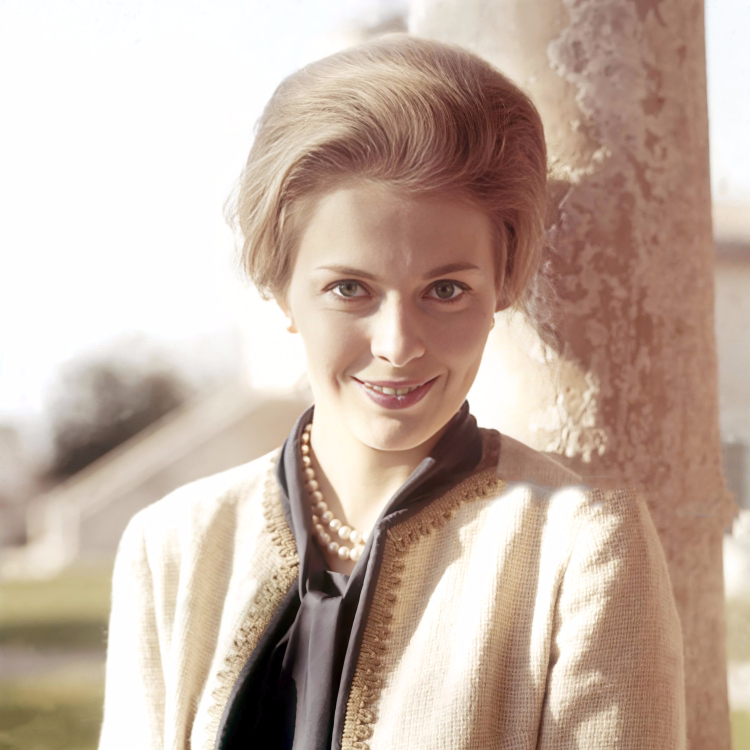
It was in America that she made the film that finally made critics take her seriously as a dramatic actress. Lilith (1964), in which she starred with Warren Beatty, prompted critics to acknowledge her as a serious actress, not merely a beautiful face. The girl frightened on the set of Saint Joan had learned, film by film, how to hold a camera’s attention without flinching.
She also worked with Claude Chabrol in Line of Demarcation (1966) and The Road to Corinth (1967), made Moment to Moment (1965) and A Fine Madness (1966) with Sean Connery, and was, by the late 1960s, increasingly based in Hollywood again — a different Hollywood from the one that had rejected her, and she a different actress.
Back in Hollywood: Musicals, Westerns and a Disaster

The late 1960s brought Seberg back to American screens in large, commercial films. After the crime drama Pendulum with George Peppard in 1969, she appeared in her only musical, Paint Your Wagon (1969), co-starring Lee Marvin and Clint Eastwood. She played Elizabeth, and her singing voice was dubbed by Anita Gordon — a reminder that even in a musical, Seberg’s gift was presence rather than polish.
Then came Airport (1970), the ensemble disaster film in which she played Tanya Livingston. It drew mixed reviews but was a huge success at the box office. For a moment, it looked as if the second act of her American career might be the lasting one: the Iowa girl who had failed in Hollywood at seventeen, triumphed in Paris at twenty-one, and returned at thirty to star in a blockbuster.
She acted in Macho Callahan (1970) and Kill! Kill! Kill! Kill! (1971), but both failed. In 1972 she appeared in Gang War in Naples, successful in Europe but not in the United States. Her last American film appearance was in the television movie Mousey (1974), though she remained active in European films through Die Wildente (1976), based on Ibsen’s The Wild Duck.

In all, she appeared in thirty-four films in the United States and Europe, working for twenty-two years, from 1957 to 1979, in English, French and Italian, in comedies and crime dramas, in musicals and westerns, in art films and blockbusters. The pixie cut was real, and the stare was real, but behind them was a working actress who kept showing up.
She had married the director Dennis Berry on March 12, 1972; the couple separated in May 1976 but never divorced. François Truffaut had wanted her for the central role of Julie in Day for Night (1973), but after several fruitless attempts to contact her, he gave up and cast Jacqueline Bisset instead — a small detail, but a telling one: even the directors who admired her most were beginning to find her hard to reach.
The FBI Years: When a Government Decided She Was Dangerous

The hardest part of Jean Seberg’s story is also the part that must be told plainly. In the late 1960s, Seberg gave money to groups supporting civil rights: the NAACP, and Native American school groups such as the Meskwaki Bucks at the Tama settlement near Marshalltown, for whom she purchased $500 worth of basketball uniforms. She also gave money to the Black Panther Party, totalling an estimated $10,500 according to FBI documents later declassified and released to the public.
That generosity made her a target. As part of its COINTELPRO campaign — the FBI’s programme to smear and discredit the Black power and anti-Vietnam War movements, begun in 1968 — the Bureau turned its attention to Seberg. The operation was directly overseen by J. Edgar Hoover, and its stated goal was the unspecified “neutralisation” of Seberg, with a subsidiary objective to cause her embarrassment and cheapen her image with the public. Those words are the FBI’s own, preserved in its inter-office memos.
The campaign went far beyond surveillance, though there was plenty of that: friends described years of aggressive in-person surveillance, amounting to constant stalking, as well as burglaries and intimidation. FBI files show she was wiretapped, and the Bureau shared files on her with the CIA, the Secret Service and military intelligence so she could be monitored abroad. Hoover kept President Richard Nixon informed through his domestic affairs chief, John Ehrlichman.
The cruellest part of the campaign was a lie. In 1970, the FBI created a false story, from a San Francisco-based informant, that the child Seberg was carrying was fathered not by her ex-husband Romain Gary, as claimed, but by Raymond Hewitt, a member of the Black Panther Party. The story was reported by the gossip columnist Joyce Haber of the Los Angeles Times as a blind item, and printed by Newsweek, in which Seberg was directly named.
Seberg went into premature labour and, on August 23, 1970, gave birth to a baby girl weighing four pounds. The child died two days later, on August 25. Seberg held a funeral in her hometown, with an open casket that allowed reporters to see the infant’s white skin and disprove the rumours, though she later acknowledged that a Mexican student revolutionary, Carlos Navarra, was the actual father. She and Gary sued Newsweek for libel, asking for $200,000; a Paris court ordered the magazine to pay $10,800 in damages and to print the judgment in its publication and in eight other newspapers.
It was not enough. Gary would later say she repeatedly attempted suicide on the anniversary of the child’s death, August 25. Experts on COINTELPRO have suggested Seberg was effectively blacklisted from Hollywood films: at the peak of her career she suddenly stopped acting in Hollywood, and was not offered any great Hollywood roles, regardless of their size.
Two weeks after Seberg’s death in 1979, the FBI acknowledged what it had done nine years earlier, releasing documents admitting its defamation of her. The case was examined by the Church Committee of the United States Senate, and Time magazine ran a front-page article titled “The FBI vs. Jean Seberg.” Joyce Haber, by then no longer writing a column, said she could not disclose her source, and that if she had been used by the FBI, she had not known it.
Her father, back in Iowa, asked why they had not just shot her, instead of putting her through all that travail — and said he had a flag he used to put out every morning, and had not put it out since.
The Last Years and a Death in Paris
At the time of her death, Seberg was working on the French film Operation Leopard (1980). She had filmed scenes in French Guiana and returned to Paris for additional work; after her death, her scenes were reshot with Mimsy Farmer.
On August 30, 1979, Seberg disappeared from her Paris apartment. Ahmed Hasni, the twenty-nine-year-old Algerian man with whom she had gone through a form of marriage that year, told police the couple had gone to see a film, and that when he awoke the next morning, she was gone.
On September 8, nine days after her disappearance, her body was found wrapped in a blanket in the back seat of her Renault, parked close to her apartment in the 16th arrondissement of Paris. Police found a bottle of barbiturates, an empty mineral water bottle, and a note written in French by Seberg addressed to her son, asking his forgiveness and saying she could no longer live with her nerves. In 1979, her death was ruled a probable suicide by the Paris police. The following year, charges were filed against persons unknown for non-assistance of a person in danger, after police said she had so much alcohol in her system that she would have been unable to enter her car without assistance, and no alcohol was found in the car.
She was forty years old, and she is interred at Montparnasse Cemetery in Paris. In December 1980, her former husband Romain Gary died by suicide; his note said he had not killed himself over the loss of Seberg, but because he could no longer produce literary works.
There is no way to make this part of the story gentle, and it should not be made gentle. A woman who had given money to buy basketball uniforms, who believed generosity was a private matter, was followed, wiretapped, lied about in print, and driven to a place where she could no longer live with her nerves. The FBI admitted it. The Senate examined it. The damage, by then, was done.
The Legacy: A Haircut That Never Went Away

And yet the other half of the story is still true. Jean Seberg did not disappear. The look she created in Breathless never went away.
In 1986, Madonna recreated Seberg’s Breathless look in her music video for “Papa Don’t Preach,” with a pixie blonde haircut, a French striped jersey shirt and black capri pants. In 1991, Jodie Foster, a fan of her performance in Breathless, purchased the film rights to David Richards’ biography Played Out: The Jean Seberg Story, intending to produce and star, though the project was cancelled two years later. In 1995, Mark Rappaport made the documentary From the Journals of Jean Seberg, with Mary Beth Hurt — the little girl Jean had once babysat in Marshalltown — as Seberg’s voice.
Since 2011, Marshalltown has held an annual Jean Seberg International Film Festival. In 2019, Amazon released Seberg, a film about her battle against the FBI, with Kristen Stewart in the title role. In 2025, Zoey Deutch portrayed Seberg in Richard Linklater’s Nouvelle Vague, a film about the making of Breathless itself.
That is the measure of what she left behind. Not just a haircut, though the haircut endures, and not just a stare, though the stare still stops people when they first see Breathless. What she left was proof that cinema could be made differently: on real streets, with real light, with young people who had not been polished into statues, with jump cuts and handheld cameras and dialogue written on the day. She was not the director of that revolution, and she would have been the first to say so. She was its face, and its nerve, and its American accent in a French film.
On November 13, 2026, Jean Seberg would have turned eighty-eight. She lived forty years, made thirty-four films, and left an image that has outlasted almost everything else from 1960. Watch Breathless again, or for the first time, and you will see her on the Champs-Élysées, selling newspapers, looking straight back at you. She is twenty-one, and she is not afraid. That is the gift she gave cinema: a moment, held forever, in which a girl from Marshalltown, Iowa, looked into the camera — and cinema was never the same.
Leave a Reply