
Credit: Anonymous, 1963. Public domain. Source: Wikimedia Commons.
He was born in a small town in eastern Finland on 13 November 1921, and he died on 2 October 1996, aged 74. Today Joonas Kokkonen would have turned 105. In the seventy-four years between those dates he became, in the words of his Wikipedia biography, “one of the most internationally famous Finnish composers of the 20th century after Sibelius” — a sentence that carries the weight of a whole nation’s musical history. Finland is a country that measures its composers against Sibelius the way other countries measure theirs against Beethoven, and to be named as the most famous after him is to be named as the voice of a century. Kokkonen earned that place the hard way: through a war, through decades of teaching and organising, through three distinct musical lives, and through one opera that took him sixteen years to write and that has since been performed more than five hundred times around the world.
The Last Temptations, his opera about the Finnish revivalist preacher Paavo Ruotsalainen, is considered by many to be Finland’s most distinguished national opera. It was staged at the Metropolitan Opera in New York in 1983. It is still performed today, in opera houses and in churches and on the very ground where Ruotsalainen himself once lived. Kokkonen never wrote a fifth symphony, though he planned one for years. He did not need to. The four symphonies, the Requiem, the chamber music and the opera were enough — enough to make a boy from Iisalmi into the composer Finland turned to when it wanted to hear itself.
A boy from Iisalmi

Credit: Erkki Voutilainen / Maaseudun Tulevaisuus, 1963. Public domain. Source: Wikimedia Commons.
Joonas Kokkonen was born in Iisalmi, a town in the province of North Savo in eastern Finland, on 13 November 1921. Finland itself was a young country then: it had declared independence from Russia only four years earlier, in December 1917, and it was still finding its voice — politically, culturally and musically. Sibelius, the towering figure of Finnish music, was in his mid-fifties and had largely stopped composing. The question of who would speak for Finnish music next was an open one, and it would remain open for decades.
Kokkonen’s youth was shaped by war. He served in the Finnish army during the Second World War, and his biography records that he served “with great distinction”. Finland fought two wars against the Soviet Union during those years — the Winter War of 1939–40 and the Continuation War of 1941–44 — and the experience marked a whole generation of Finnish men. For Kokkonen, as for many of his contemporaries, the war was a dividing line: there was the life before it, and there was the life after, and the music came from the life after.
He received his education at the University of Helsinki, and later at the Sibelius Academy, the conservatory in Helsinki that is Finland’s most important school of music. But although he studied there, he was, in the words of his biography, “mainly self-taught in composition”. That is a remarkable thing to say about a composer who would go on to teach composition at the same academy. It speaks to a particular kind of musician: not one who learned his craft by following a teacher’s method, but one who worked it out for himself, listening, reading scores, trying and failing and trying again. The self-taught composer has a different relationship with tradition from the trained one. He does not inherit a style; he chooses one, and then he chooses another, and the choices themselves become the story of his music.
The teacher and the builder

Credit: Finnish Heritage Agency. CC BY 4.0. Source: Wikimedia Commons.
Kokkonen did not only compose. He taught, and he organised, and he built. After his own studies, he taught composition at the Sibelius Academy, and his students there included Aulis Sallinen, who would himself become one of Finland’s most important composers. To teach composition is to pass on more than technique: it is to pass on a way of hearing, a way of deciding what matters in a piece of music. Sallinen’s own career — operas, symphonies, a long and honoured life in Finnish music — is part of Kokkonen’s legacy, the part that does not appear in a list of works.
Beyond the academy, Kokkonen made what his biography calls “a significant and powerful impact on Finnish cultural life, serving as a chairman and organizer, heading organizations such as Society of Finnish Composers, the Board of the Concert Centre, and others”. The Society of Finnish Composers is the professional body that represents composers in Finland; the Concert Centre organises concerts across the country. To chair such bodies is unglamorous work — meetings, budgets, negotiations with ministries — but it is the work that makes a musical culture possible. Kokkonen’s purpose, his biography says, “was always to improve music education, as well as the status and appreciation of classical music as well as Finnish music”. He was not content to write music and leave the rest to others. He wanted the country to hear it, to teach it, to value it.
In the 1960s and early 1970s he won numerous prizes for his work, and he was appointed to the Finnish Academy upon the death of Uuno Klami — Klami being another of the great Finnish composers of the generation before Kokkonen’s, a man whose own music had wrestled with the shadow of Sibelius. To be appointed to the Academy in Klami’s place was a formal recognition of what the musical world already knew: that Kokkonen had become one of the central figures of Finnish music.
Three lives in music

Credit: Anonymous, 1959. Public domain. Source: Wikimedia Commons.
Kokkonen’s compositions are usually divided into three style periods, and the division is unusually clean — as if he lived three musical lives in one lifetime, each with its own language, each with its own set of works.
The first period, from 1948 to 1958, was neoclassical. Most of his early music is chamber music, and it includes a Piano Trio from 1948 and a Piano Quintet from 1951–53. The style is contrapuntal — built on the interweaving of independent melodic lines — and it was influenced by the works of Béla Bartók, the great Hungarian composer, as well as by Renaissance and Baroque music. This was a young composer finding his voice in the oldest materials: counterpoint, the craft of Bach and Palestrina, filtered through the sharp, folk-inflected modernism of Bartók. The Piano Trio of 1948 was his first mature statement; the Piano Quintet, written over two years, showed a composer who could sustain a large argument across a long span.
The second period, from 1959 to 1966, was his twelve-tone period — relatively short, but decisive. In these years he wrote the first two of his four symphonies: Symphony No. 1 in 1960 and Symphony No. 2 in 1960–61. Twelve-tone technique, the method devised by Arnold Schoenberg in which all twelve notes of the chromatic scale are treated as equal, was the great modernist orthodoxy of the post-war years, and many composers adopted it as a matter of duty. Kokkonen adopted it on his own terms. Although he used twelve-tone technique, his biography notes, he “avoided orthodoxy by occasionally using triads and octaves” — the consonant sounds the system was supposed to exclude — and he “also liked to use the row melodically, giving the successive pitches in the same tone color”, where many other composers of twelve-tone music split the row between different voices. In other words, he took the system and bent it toward melody, toward the singing line. He was never a doctrinaire modernist. Even at his most experimental, he wanted the music to sing.
The third period began in 1967 and lasted for the rest of his life: a late “neo-Romantic” style of free tonality, which also used aspects of his earlier style periods. It was in this third period that Kokkonen composed the music that earned him international recognition: the last two symphonies — Symphony No. 3 in 1967 and Symphony No. 4 in 1971 — the work …durch einen Spiegel, for twelve solo strings, from 1977, the Requiem of 1979–81, and the opera The Last Temptations, completed in 1975. The Cello Concerto of 1969 belongs to this period too, as do the Wind Quintet of 1973, the Cello Sonata of 1975–76 and the Third String Quartet of 1976. The early chamber music had been contrapuntal and cool; the middle symphonies had been rigorous and systematic; the late music was warmer, freer, more openly expressive — a composer who had mastered the systems and no longer needed them, writing in a free tonality that could reach back to the triads of his youth and forward to the dissonances of his middle years, as the moment required.
The opera that took sixteen years
The Last Temptations — in Finnish, Viimeiset kiusaukset — is an opera in two acts by Joonas Kokkonen, to a libretto by Lauri Kokkonen. It deals with the life of Paavo Ruotsalainen, a Finnish farmer and folk preacher of the late eighteenth and early nineteenth centuries who became the leader of a religious revival movement. Kokkonen worked on the opera for sixteen years before finishing it. It was premiered in Helsinki by the Finnish National Opera in 1975.
Sixteen years is a long time to live with one story. It is the span of a childhood. And the story Kokkonen chose was not an easy one: Ruotsalainen was not a king or a hero or a lover, but a preacher — a man whose life was a long argument with God, with his family and with himself. The opera is built in two acts divided into fourteen scenes, and its combining element is a hymn: number 382 in the current Finnish hymnal of the Evangelical Lutheran Church of Finland, “My Lord, my God in all distress” — in Finnish, “Sinuhun turvaan Jumala” — which recurs as a theme throughout the opera, and a chorus containing the whole hymn concludes the work. The hymn is the thread that holds the fourteen scenes together, the way a refrain holds a song together. It is also, in a sense, the point of the opera: that a man’s life, however broken, can be gathered up into a single act of trust.
The opera’s chorales refer back to Johann Sebastian Bach, and they are also reminiscent of the African-American spirituals used for a similar purpose in Michael Tippett’s oratorio A Child of Our Time. That comparison is telling. Tippett’s oratorio, written in 1939–41, used spirituals — “Steal Away”, “Nobody Knows the Trouble I’ve Seen”, “Go Down, Moses”, “Deep River” — as choruses that comment on the action, the way Bach’s chorales comment on the action in the St Matthew Passion. Kokkonen does the same thing with the Finnish hymn: the chorale is the voice of the community, the voice of faith, speaking over and against the turmoil of one man’s life.
The story itself is harrowing. Act One opens on a stormy winter night, with Paavo tossing on his deathbed in fever, calling for Riitta, his deceased first wife. His second wife Anna Loviisa and the servant Albertiina enter and try to comfort him by singing his favourite hymn. In his hallucinations Paavo relives the key events of his life: meeting Riitta at a dance in his youth, while three men and three women mock him and warn her not to go with him; visiting the blacksmith Jaakko Högman, the smith who had instilled faith in him in his youth, while Riitta accuses the smith of compelling Paavo to wander from revivalist meeting to revivalist meeting, leaving his family behind to starve; the frost that rises suddenly and threatens the crop, while Riitta and Paavo fight it together and trample their baby underfoot in the struggle; his son Juhana, longing to get away from the dreary existence to a wider world; the last loaf, with Riitta threatening to kill Paavo to spare him the shame of starving his family, hurling an axe at him and missing; the village women arriving to tell Riitta, in a roundabout way, that Juhana has been murdered; and finally Riitta herself dying, three years later, calm at last, seeing the barrier of Heaven open in front of her.
Act Two follows Paavo through his public trials: the Assizes, where three men try to confound him at the place where he once had to defend himself against charges of undermining the authority of the Church; the graduation ceremony at the University, where three men and three women stop him and tell him he is an uneducated idiot who has no business at an academic ceremony, and Paavo retorts that he has read religious tracts since he was a boy; and at last the call to the Island, Riitta’s voice calling him home, which he resists and doubts and finally yields to. In the final scene Paavo lies on his bed in the cottage, surrounded by family, and the three men and three women who have tormented him turn out to be his daughters and their husbands. He makes sure his will is in order, and tells his family to plant a prickly tree on his grave, “for he has been the prickliest of men”. He asks the servant to read to him from his favourite tract, and begins to sing his hymn. Everyone gradually joins in. Paavo goes quiet and listens. He hears Riitta in the distance, calling him to the Island. He praises God. He knows that he has overcome.
It is a story about a man who hurt everyone he loved and who was himself hurt by the faith that drove him — and about the possibility that such a life can end in peace. It is also, unmistakably, a Finnish story: the frost, the backwoods homestead, the revivalist meetings, the hymn. Along with Leevi Madetoja’s Pohjalaisia and Aarre Merikanto’s Juha, The Last Temptations is considered one of the most important Finnish operas, and it is the one that has travelled furthest. After the premiere, the Finnish National Opera toured with the work in seven cities abroad, including New York’s Metropolitan Opera, where it was staged in 1983. At the Finnish National Opera there have been three productions: 1975–1983, directed by Sakari Puurunen, and 1994, directed by Paavo Liski, and 2001, directed by Jussi Tapola. The Savonlinna Opera Festival performed it for several years, from 1977 to 1980. In Helsinki and Savonlinna the most famous singers in the role of Paavo were the basses Martti Talvela and Jaakko Ryhänen. In 2007 the opera was performed as a half-staged production in the Temppeliaukio church in Helsinki, the church carved into solid rock. The Finnish film director Åke Lindman directed it on the original homestead of Paavo Ruotsalainen in Aholansaari, Nilsiä, during four summers from 2000 to 2003. And in July 2025 the Savonlinna festival presented a new production, directed by Mika Kouki and conducted by Ville Matvejeff, with Mika Kares leading the cast. Fifty years after its premiere, the opera is still being staged, still being reimagined, still finding new audiences. It has received over five hundred performances worldwide.
The house by the lake

Credit: Flickr. CC BY 2.0. Source: Wikimedia Commons.
Kokkonen spent the latter part of his life in Järvenpää, a town some thirty kilometres north of Helsinki, at his home, which was known as Villa Kokkonen. The house was designed by the architect Alvar Aalto — Finland’s most famous architect, the man who had designed the Finlandia Hall and the Paimio Sanatorium and the Savoy Vase — and it was completed in 1969. To have a house designed by Aalto was, in Finland, a kind of honour in itself: Aalto designed for people he respected, and he designed houses as total works of art, in which the architecture, the furniture, the light and the landscape were all part of one idea. Villa Kokkonen stands in Järvenpää, near the lake, in the same town where Sibelius himself had lived at Ainola — a coincidence that cannot have been lost on Kokkonen, the composer who was always measured against Sibelius. He lived there, in the house Aalto built for him, and he worked there, and the late music — the Third and Fourth Symphonies, …durch einen Spiegel, the Requiem — came out of that house.
But the last years were not easy. His composition activity slowed down greatly after the death of his wife, and his alcohol consumption increased. A long-planned Fifth Symphony was never written down. It is one of the sad facts of his biography, and it is also one of the most human: that a composer who had written four symphonies, an opera and a Requiem, who had taught a generation and chaired the institutions of Finnish music, should in the end be stopped not by a lack of ideas but by grief and by drink. The Fifth Symphony exists only as an absence, a silence where a work should have been.
Kokkonen died on 2 October 1996, according to his biographer Pekka Hako, in the early morning hours of that day. His date of death has been variously reported as 1, 2 or 20 October, but Hako’s account — the early morning of 2 October — is the one his biography gives. He was 74 years old. He had spent nearly fifty years composing, from the Impromptu of 1938, written when he was seventeen, to Il passagio of 1987, one of his last works. He left behind four symphonies, an opera, a Requiem, three string quartets, a cello concerto, a body of chamber music and songs, and a country that knew how to listen to its own music a little better because he had taught it to.
What remains
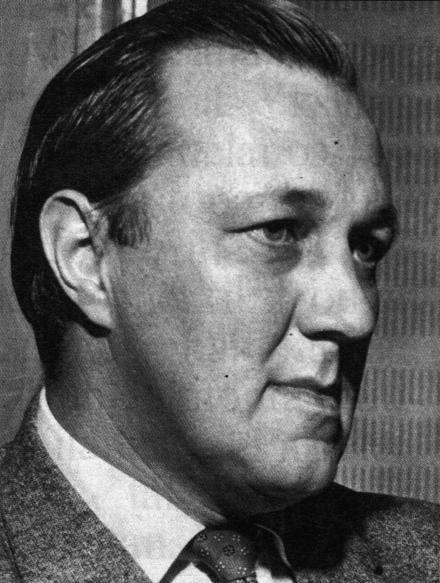
Credit: Anonymous. Public domain. Source: Wikimedia Commons.
One hundred and five years after his birth, what remains of Joonas Kokkonen is not a single famous tune. He wrote no Finlandia, no national anthem, no melody that every Finn can hum. What remains is something quieter and more durable: a body of work that traces the whole arc of twentieth-century Finnish music, from the neoclassical chamber music of the late 1940s, through the twelve-tone rigour of the early 1960s, to the free, singing tonality of the late symphonies and the opera. What remains is a student, Aulis Sallinen, and the students of that student. What remains is a house in Järvenpää, designed by Aalto, where a composer lived and worked within sight of the lake. And what remains, above all, is The Last Temptations: an opera about a difficult, prickly, faithful man, built around a hymn, that has now been performed more than five hundred times, in Helsinki and New York and Savonlinna and on a farm in Nilsiä, because it tells a story that Finland recognises as its own.
Kokkonen once said, through his music if not in words, that a composer does not need to shout to be heard. He wrote in three styles, and each of them was his own. He taught, he organised, he chaired committees, he fought for music education, and then he went home to Järvenpää and wrote the music that made all of it matter. On the day he would have turned 105, the best way to remember him is the simplest: to listen. Put on the Fourth Symphony, or the Requiem, or the final chorus of The Last Temptations, with its hymn sung whole by the full chorus — and hear a composer who spent his life learning how to make Finland sing, and who, in the end, did.
Leave a Reply