
It is 1991, and a Spanish film director has a problem. Pedro Almodóvar is making Tacones lejanos — High Heels — a melodrama about a famous singer returning to Madrid, a daughter who resents her, and a murder. He needs a voice for the film’s great musical moments: a voice that can carry a bolero, the slow, aching Latin ballad form, and make it sound like a confession.
When she sings “Piensa en mí” — “Think of Me” — the old bolero by the Mexican composer Agustín Lara, the film stops being a melodrama and becomes something else: a love letter to a whole tradition of Spanish song. Audiences across Europe who had never heard of Luz Casal suddenly knew her voice. In France especially, the film made her a star.
She was 33 years old, and she had already been working for fourteen years.
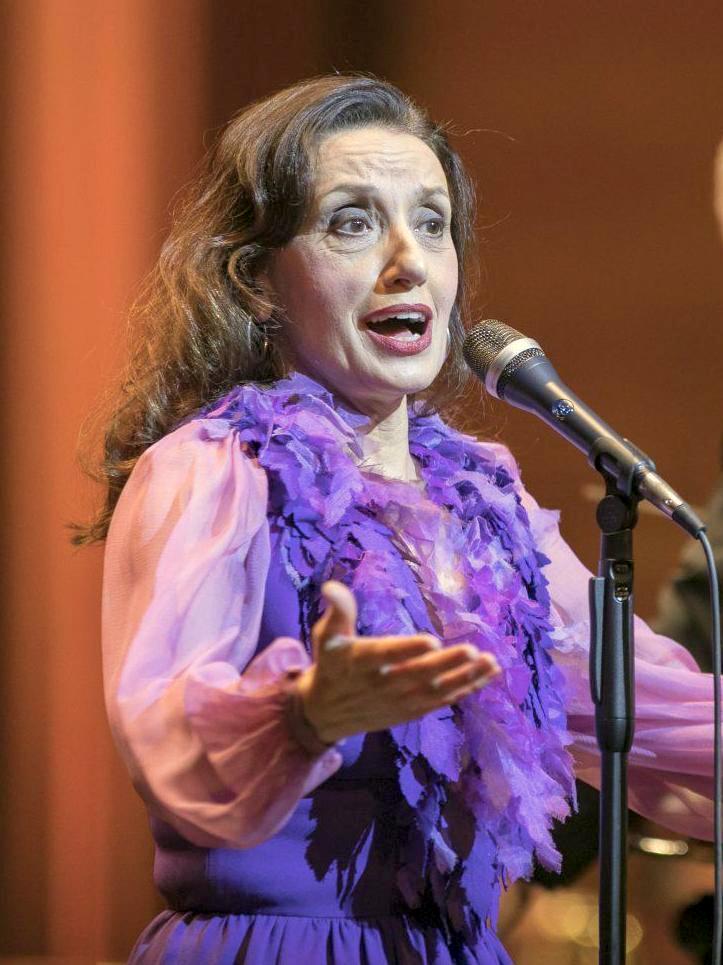
This is the story of Luz Casal — the girl from a small village in Galicia who moved to Madrid with nothing but a voice, spent a decade climbing, and became one of the defining singers of Spanish pop. On 11 November 2026, she turns 68. She has sold more than five million albums, sung for Almodóvar and Alejandro Amenábar, survived cancer twice, and kept singing through all of it.
From Boimorto to Madrid
María Luz Casal Paz was born on 11 November 1958 in Boimorto, a small village in Galicia, in north-western Spain. She was the daughter of José Casal and Matilde Paz. The family moved to Avilés, in the neighbouring region of Asturias, where she first took singing, piano and ballet classes. She studied at the Paula Frassinetti School, founded by the Dorotean Sisters of Charity. The family later moved to Gijón, where she performed for the first time in front of fifty people, and where she formed part of a rock group called Los Fannys, who performed versions of other artists’ songs.
Even then, she always wanted to be a solo singer.
In 1977, at the age of 18, she convinced her parents to let her go to Madrid to start a career on the music scene. She made her first recording, a song called “La guapa” (“The Beautiful”), and began contacting record labels. An independent production company gave her an audition as a backing singer, and that was how she entered the world of professional music. She sang backing vocals on many artists’ recordings and accompanied the singer Juan Pardo in his live performances. From that moment on, she started composing her first songs — ten of them, though they were never released.
In those years she also made her only appearance in the theatre, playing the role of Raquel Meller in the musical Las Divinas (“The Divines”), performed at the Reina Victoria Theatre in Madrid.
It was a slow start. Madrid in the late 1970s was full of young singers trying to be heard, and Casal was one of many. But she kept working, kept studying — piano, chorus, performance — and kept looking for the break that would let her sing her own songs.
The First Records: “El ascensor” and the Long Climb
The break came, gradually, in 1980. Casal released her first single with a multinational company, “El ascensor” (“The Elevator”), a song with a strong reggae flavour, written as a tribute to Bob Marley. She presented the song on Tocata, a popular music show on RTVE, Spain’s public broadcaster. After that she took part in many festivals in different countries and took dance classes with Karen Taft, Arnold Taraborelli, Lindsay Kemp, Merche Esmeralda and Goyo Montero.
In 1981, seeking less control over her private life, Casal joined the company Zafiro and took part in the live album published by the group Leño. The following year she began recording her first solo album, in Madrid, Brussels and Amsterdam. It was released in September 1982, produced by Carlos Narea, and named simply Luz. It included songs composed by herself and by Roque Navaja.
The second album, Los ojos del gato (“The Eyes of the Cat”), followed in 1984, recorded in Spain, Belgium and Germany. Some of its songs, written by Ramoncín and Hilario Camacho, gained listeners throughout Europe. Luz III came in 1985, and it contains a very popular track called “Rufino”, written by Carmen Santonja of the band Vainica Doble. That year, Casal performed at a festival in Czechoslovakia, and she still remembers the impact of hearing “No aguanto más” and “Ciudad sin ley” (“Lawless City”) being played by an orchestra with wind instruments. In 1986, she gave more than 90 concerts, performed again for Czech television, and recorded the song “The Water Is Life” in Germany for an environmental campaign, alongside artists such as Mark Knopfler.
She was building a career, city by city, concert by concert. What she did not yet have was a hit big enough to make her a star.
“Te dejé marchar”: The Breakthrough
That hit arrived in 1989, with her fifth album.
Released with her new label Hispavox, the album Luz V was produced by Paco Trinidad and Chucho Merchán, a regular collaborator with Eurythmics. It sold over 300,000 copies and was her definitive leap to stardom. It includes two of the most important songs of her career: “Te dejé marchar” (“I Let You Go”) and “No me importa nada” (“Nothing Matters to Me”).
“Te dejé marchar” is a ballad of letting go — a lover releasing someone, not in anger but in sorrow. Casal’s voice, by now fully mature, carries the song with a control that makes the emotion land harder: she does not oversing it. She lets the melody do the work, and the restraint is what makes it devastating. It became one of the signature songs of Spanish pop of the late 1980s, and it remains the song most associated with her name.
The year before, in 1987, she had already begun moving in that direction. Her album Quiéreme aunque te duela (“Love Me Even If It Hurts You”), released in May 1987, marked the moment she started to be less of a rocker and discovered herself as a performer of ballads — and the ballads were the greatest hits of that release. The album included “A cada paso” (“With Every Step”), which became her breakout hit in Latin America, climbing to No. 1 in Argentina, Chile, Uruguay and Mexico. The Mexican pop group Flans covered the song in 1990, and that version also became a big hit in Mexico.
By the end of the 1980s, Luz Casal was no longer a promising singer from Galicia. She was a star.

“Piensa en mí” and Pedro Almodóvar
Then came the film that changed everything.
In 1991, Casal released A contraluz (“Backlight”), which sold over 400,000 copies. The album contains the bolero “Piensa en mí” (“Think of Me”), composed by Agustín Lara, and the song “Un año de amor” (“A Year of Love”). Pedro Almodóvar chose both songs for his film Tacones lejanos (High Heels), released the same year. Almodóvar translated “Un año de amor” from the Italian hit version by Mina — the song was originally by the French singer Nino Ferrer.
The two songs made Casal well known across Europe, especially in France. “Piensa en mí” is a song of longing — a plea to a lover to remember the singer even after they have gone. In the film, it is performed as a moment of pure emotion, and Casal’s voice, warm and slightly rough at the edges, gives the old bolero a new life. It is not a museum piece; it sounds like something a woman would actually sing to a man who has left her.
The film’s success gave Casal an audience she had never had before: French listeners, European festival crowds, and a whole generation of filmgoers who discovered her through Almodóvar. She took a four-year break from recording after that, a period in which she thought about her career in the light of her success, but she kept performing in Spain, Latin America, France and other European countries.
The Biggest Album: “Como la flor prometida”
In early 1995, Casal travelled to London with producer Paco Trinidad to work with the Eurythmics engineer Darren Allison and members of Paul McCartney’s band — Paul “Wix” Wickens and Robbie McIntosh — on her next album, Como la flor prometida (“Like the Promised Flower”). It was released later that year, four years after her previous album, and it sold over 800,000 copies, making it the most successful album of her career.
The album’s success confirmed what A contraluz had suggested: Casal’s voice had grown into something that could carry any kind of song, from rock to bolero to soft adult pop. Her sound had gradually matured across the decade, from the reggae-flavoured energy of her first single towards the warm, controlled pop that defined her best work.
In 1996 she released a compilation album, Pequeños y grandes éxitos (“Hits, Great and Small”). Two years later she released another compilation only in France, Luz Casal, which sold more than 400,000 copies and included two songs in French — “Tu ne l’emporteras pas” and “Entre mes souvenirs”, versions of “No me importa nada” and “Entre mis recuerdos”. She performed those songs at the Olympia Theatre in Paris and became the first Spanish pop singer to perform at the Cigale Theatre.
Illness, Comeback, and “Vida tóxica”
In 1999, four years after her last studio album and following the death of her father, Casal recorded Un mar de confianza (“A Sea of Trust”), which sold over 600,000 copies. The song “Mi confianza” (“My Trust”) won the Ondas Award for Best Song that year. She then started a European tour, performing in France, Italy, Switzerland and Belgium. In 2001, she received the Goya Award for Best Original Song from the soundtrack of the animated film El bosque animado (“The Living Forest”).
In November 2002 she released Con otra mirada (“With Another Look”), which sold 150,000 copies, and in October 2004 she released Sencilla alegría (“Simple Happiness”), recorded at Du Manoir Studio with production by Javier Limón. The album, which sold over 150,000 copies, includes influences from flamenco to jazz and features collaborators including Chris Barron of the Spin Doctors, Jerry González, Niño Josele and Quique González. It also includes “Negra sombra” (“Black Shadow”), a poem by Rosalía de Castro set to music by Juan Montes Capón, which was on the soundtrack to Mar adentro, the film by Alejandro Amenábar.
Then, in January 2007, Casal was diagnosed with breast cancer and underwent an operation at the Ruber Clinic in Madrid. Seven months later, she told the Spanish media that she had overcome the disease. In May 2010, she announced that she had been diagnosed with cancer in her other breast and had to cancel her current tour to be operated on.
She turned the experience into music. Having overcome breast cancer, on 12 October 2007 she released the single “Sé feliz” (“Be Happy”) from her new album, Vida tóxica (“Toxic Life”), inspired by her experience with chemotherapy. The album was recorded and mixed in London once again, with Darren Allison and the same team of musicians who had performed on Como la flor prometida, with the addition of bass guitarist Pino Palladino. Vida tóxica appeared in November 2007.
It is a remarkable record — not a record about illness, but a record about living after it. The title is ironic: a “toxic life” that turns out to be full of life.
The Bolero Years and the Voice That Endures
On 29 September 2009, Casal released La pasión (“The Passion”), an album in which she paid homage to the most important bolero singers from the 1940s to the 1960s. In it she recorded versions of songs such as “Alma mía” (“My Soul”), “Cenizas” (“Ashes”) and “Historia de un amor” (“The History of a Love”). The album went gold in Spain and platinum in France. Alongside the release, she was awarded the Medal of Arts and Culture of France.
In 2011 she released Un ramo de rosas, a compilation of all the love songs and boleros she had recorded during her career. Two years later, in 2013, she launched the studio album Almas gemelas (“Twin Souls”). After a long hiatus, in 2017 she released in France a covers album of songs by Dalida, the French singer who inspired many of Casal’s songs. One year later, back in Spain, she launched Que corra el aire (“Let the Air Flow”), which was well received critically.
Across more than four decades, she has sold over five million albums. Her middle name, Luz, means “light” in Spanish — and in June 2025 she was granted the title of Marchioness of Luz y Paz, “Light and Peace”, a name that suits her well.

Luz Casal: The Girl from Boimorto Who Became Spain’s Voice
To understand Luz Casal, you have to understand where she came from — and how long the road was.
A Childhood in Asturias
María Luz Casal Paz was born on 11 November 1958 in Boimorto, Galicia, the daughter of José Casal and Matilde Paz. She grew up in the Asturian city of Avilés, where she first took singing, piano and ballet classes, and the family later lived in Gijón, where she performed for the first time in front of fifty people. She studied at the Paula Frassinetti School, founded by the Dorotean Sisters of Charity, and formed part of a rock group called Los Fannys, performing versions of other artists’ songs. She also formed part of another band that performed in Asturias, León and Galicia. But she always wanted to be a solo singer.
That ambition took her to Madrid in 1977, at eighteen, to start her career. She made her first recording, “La guapa”, and worked her way into professional music as a backing singer, singing on many artists’ recordings and accompanying Juan Pardo in his live performances. She composed her first songs — ten of them — but they were not released. It was, by any measure, a slow beginning.
The Long Climb of the 1980s
The 1980s were Casal’s apprenticeship. Her first single with a multinational company, “El ascensor”, came in 1980 — a reggae-flavoured tribute to Bob Marley that she presented on RTVE’s Tocata. Her first solo album, Luz, was released in September 1982, produced by Carlos Narea, and recorded in Madrid, Brussels and Amsterdam. Los ojos del gato followed in 1984, Luz III in 1985, and Quiéreme aunque te duela in May 1987.
The 1987 album was the turning point. In it, she started to be less of a rocker and discovered herself as a performer of ballads — and the ballads were the album’s greatest hits. “A cada paso” became her breakout hit in Latin America, reaching No. 1 in Argentina, Chile, Uruguay and Mexico. In 1986, she had given more than 90 concerts in a single year. She was no longer a newcomer; she was a working singer with an audience, waiting for the song that would make her a star.
Stardom, Cinema, and the World Beyond Spain
That song was “Te dejé marchar”, from Luz V in 1989 — an album that sold over 300,000 copies and was her definitive leap to stardom. And then came the cinema. A contraluz in 1991, with “Piensa en mí” and “Un año de amor”, chosen by Pedro Almodóvar for High Heels, made her known across Europe, especially in France. Como la flor prometida in 1995, recorded in London with members of Paul McCartney’s band, sold over 800,000 copies — the most successful album of her career. She became the first Spanish pop singer to perform at the Cigale Theatre in Paris.
What is striking about this period is how naturally Casal moved between worlds: rock clubs and bolero, Spanish pop and French chanson, the recording studio and the cinema. She never belonged to one genre, and that is why her career lasted. A rocker can age out of rock; a ballad singer with a voice like hers only gets better.
Illness and the Second Act
The second act of her career began with loss. Her father died before Un mar de confianza in 1999, an album that sold over 600,000 copies and won her the Ondas Award for Best Song. Then came the cancer — first diagnosed in January 2007, then again in May 2010, in her other breast. Each time, she was operated on; each time, she came back to work. Vida tóxica, inspired by her experience with chemotherapy, was released in November 2007, between the two diagnoses, and it remains one of the most personal albums of her career.
She did not make her illness a brand. She made a record about living, and then she went on living — and singing. La pasión in 2009, Almas gemelas in 2013, the Dalida tribute in 2017, Que corra el aire in 2018: each one a reminder that the voice from Boimorto was still there, still warm, still unmistakable.
Sixty-Eight and Still Singing
Luz Casal turns 68 on 11 November 2026. She has been active since 1980 — more than four and a half decades of recording and performing. She has sold over five million albums. She has sung for Almodóvar and Amenábar, won a Goya and an Ondas Award, been awarded the Medal of Arts and Culture of France, and, in 2025, been granted the title of Marchioness of Luz y Paz.
But the numbers are not the point. The point is the voice: a voice that can sing a bolero written in the 1940s and make it sound like it was written yesterday; a voice that can carry a rock song, a ballad, a song about letting go, and a song about being happy after surviving the worst. It is a voice that sounds like Spain — not the Spain of postcards, but the Spain of real people, singing about love and loss in a language everyone understands.
From a village in Galicia to the Olympia in Paris, from fifty people in Gijón to millions of listeners around the world, Luz Casal got there the slow way: one song at a time, one concert at a time, one year at a time. Sixty-eight years after she was born, she is still singing. And the light — luz — is still on.
Leave a Reply