
It is a night in March 1971, and the Fillmore East in New York City is packed to the rafters.
On stage, six men are playing as though the song might never end. Two drummers lock into a groove that rolls like a freight train. Two guitarists trade lines back and forth, one of them sliding a glass bottle along the strings of his Les Paul. And underneath it all — holding it all together, pushing it forward, answering every guitar phrase with one of his own — is the bass.
The bass player is tall, long-haired, and almost still compared with the storm around him. But what comes out of his instrument is anything but still. His bass lines do not just keep time. They sing. They climb up the neck of the instrument, they weave around the guitars, they carry whole melodies of their own. When the band stretches a song out for twenty minutes, it is the bass that gives the journey its shape.
The bass player’s name is Berry Oakley. He is twenty-two years old, and he is playing in one of the greatest live bands America has ever produced. Nobody in that room knows that he has less than two years left to live — or that the band on that stage will never sound the same without him.
This is the story of Berry Oakley: the founding bassist of the Allman Brothers Band, the quiet anchor of one of the loudest and freest bands of his generation, and a musician whose death, at twenty-four, cut short one of the most distinctive bass voices in rock.
The Bass That Sang Like a Lead Guitar
Berry Oakley did not play the bass the way most bass players played it. In most rock bands of the late nineteen-sixties, the bass was a supporting instrument: it kept the beat, it outlined the chords, and it stayed out of the way. Oakley refused to stay out of the way.
His playing was built on long, melodic bass runs — lines that moved, sang and answered the guitars rather than simply following them. In a band with two lead guitarists and two drummers, that was not a luxury. It was a necessity. The Allman Brothers Band’s sound was built on improvisation, on long jams in which six musicians listened to each other and built something new every night. Oakley’s bass was the bridge between the rhythm and the melody, the instrument that kept the band’s wildest flights tethered to the song.
His peers noticed. Bass Player magazine later ranked him number 46 on its list of “The 100 Greatest Bass Players of All Time” — a remarkable placing for a musician whose entire recorded career lasted barely three years. It was a tribute not to how much he recorded, but to how much he changed what the bass could do in a rock band.
His instrument was as distinctive as his playing. Oakley’s bass guitar, nicknamed “the Tractor Bass,” was a Fender Jazz Bass fitted with a Guild Bisonic bass pickup, manufactured by the Swedish company Hagström. It gave him a thick, growling tone that could cut through two guitars and two drum kits — and it became as much a part of his identity as the long, melodic lines he played on it.
From Chicago to Jacksonville
Raymond Berry Oakley III was born in Chicago, Illinois, on 4 April 1948, and raised in the suburb of Park Forest. He attended Rich East High School. Like so many young American musicians of his generation, he found his way south — to Florida, where the music was loud, the clubs were open late, and a working musician could make a living.
In Florida he met Dickey Betts and joined Betts’s band, the Blues Messengers, later called the Second Coming. It was there that he learned to play in a band where the guitars led and the bass had to be strong enough to hold its own — a lesson that would define everything he did next.
The next step came through Duane Allman. Duane, then working as a session guitarist in Muscle Shoals, Alabama, had met Oakley in a club in Macon, Georgia, some time earlier, and the two had become fast friends. When Duane began putting together a new band — a band with two lead guitarists and two drummers, something nobody had tried before — he invited Oakley to come and jam with the group he was assembling.
Oakley came. So did Betts, as the second lead guitarist, and Butch Trucks as the second drummer. Jai Johanny “Jaimoe” Johanson, a drummer Duane had recruited at Muscle Shoals, was already there. The group held open jam sessions in Jacksonville, Florida, in early March 1969, playing free shows in Willow Branch Park with a rotating cast of musicians. Duane was determined that his brother Gregg should be the band’s singer and keyboard player, and Gregg arrived from Los Angeles to join rehearsals on 26 March 1969. Four days later, the group made its debut at the Jacksonville Armory. They called themselves the Allman Brothers Band.
Oakley was twenty years old. He was a founding member of the band, and he would be its bass player for every note it recorded in the next three years.
Three Albums and a Breakthrough
The Allman Brothers Band moved to Macon, Georgia, by 1 May 1969, where their manager Phil Walden was establishing Capricorn Records. Their first paid performance was on 2 May, at the College Discotheque in Macon. Oakley’s wife rented a large Tudor Revival house at 2321 Vineville Avenue in Macon, and in March 1970 the band moved into the home they nicknamed “the Big House.”
The band’s first two studio albums, The Allman Brothers Band (1969) and Idlewild South (1970), both released by Capricorn Records, were not commercially successful. The debut sold fewer than 35,000 copies on its initial release. But the band was building something else: a reputation as a live act without equal. They played more than 300 dates in 1970 alone, travelling in a Ford Econoline van and later a Winnebago, and word of mouth spread with every show.
The breakthrough came in 1971. At Fillmore East, recorded at the Fillmore East in New York in March 1971, captured the band at its peak: extended versions of “In Memory of Elizabeth Reed” and “Whipping Post” that showed off the group’s jamming style at its very best. It was a critical and commercial breakthrough, and it remains one of the most celebrated live albums in rock history. Oakley’s bass is all over it — listen to “In Memory of Elizabeth Reed” and you can hear him carrying the melody, answering Duane’s slide guitar note for note, holding the long improvisations together.
By then, too, Duane’s session work had made the band’s name known far beyond the South. Duane had played on Wilson Pickett’s version of “Hey Jude” and on sessions with Aretha Franklin and King Curtis, and he had contributed to Derek and the Dominos’ Layla and Other Assorted Love Songs (1970), jamming through the night with Eric Clapton in Miami. The Allman Brothers Band was no longer a Southern secret. It was, in the words of Rolling Stone’s George Kimball in 1971, “the best damn rock and roll band this country has produced in the past five years.”

Eat a Peach — and the Year Everything Changed
On 29 October 1971, while the band was on a break from touring and recording, Duane Allman was killed in a motorcycle accident in Macon. He was twenty-four years old. The band’s leader, its founder, its driving force, was gone — barely seven months after the Fillmore East shows that had made them stars.
The band did not break up. They carried on, and in 1972 they released Eat a Peach, a double album of studio and live material that cemented their popularity and featured Gregg’s “Melissa” and Betts’s “Blue Sky.” It was a record made in grief, and it showed the band at its most tender and its most defiant. Oakley’s bass on Eat a Peach is the sound of a musician holding a band together through the worst year of its life.
But the loss of Duane changed Oakley. Those close to the band have described him as devastated by his friend’s death, and the year that followed was a hard one for the group. They kept playing, kept recording, kept touring — but the band that had been built around Duane’s vision was now trying to find its way without him.
It was a little more than a year after Duane’s death that the band lost its second founding member.
November 11, 1972
On 11 November 1972, Berry Oakley was involved in a motorcycle accident in Macon, Georgia, just three blocks from where Duane Allman had his fatal accident the year before. Oakley was riding around a sharp right bend on Napier Avenue at Inverness when he crossed the road’s centre line and collided at an angle with a city bus coming around the bend from the opposite direction. He was thrown from his motorcycle and struck his head.
Oakley declined medical treatment at the scene and caught a ride home. Three hours later, he was rushed to hospital, delirious and in pain, and died of cerebral swelling caused by a fractured skull. The doctors said that even if he had gone straight to hospital from the scene, his injuries were so serious that he could not have been saved. He was twenty-four years old — the same age as Duane Allman.
The symmetry was almost unbearable. Two founding members of the same band, both twenty-four, both killed on motorcycles in the same small Georgia city, barely a year apart, within three blocks of each other. The Allman Brothers Band had lost its leader and its anchor in the space of thirteen months.
The Bridge and the Boulevard
The band went on. They recruited the keyboardist Chuck Leavell and the bassist Lamar Williams for 1973’s Brothers and Sisters, which included Betts’s hit single “Ramblin’ Man” and the instrumental “Jessica” — both of which became classic rock radio staples and placed the group at the forefront of 1970s rock. Later bassists for the band included David Goldflies, Allen Woody and Oteil Burbridge. The group dissolved in 1976, re-formed in 1978 and again in 1989, and played on until retiring in October 2014 after a final show at New York’s Beacon Theatre.
But Oakley was never forgotten in Macon. In 1998, the Georgia State Legislature passed a resolution designating a bridge on State Highway 19/U.S. Route 41 in Macon as the “Raymond Berry Oakley III Bridge.” At the same time, the road carried by the bridge was named Duane Allman Boulevard. The resolution said the names were designated “in honor and remembrance of the late founding members of the Allman Brothers Band.” Drive through Macon today and you cross the Oakley bridge on Duane Allman Boulevard — the two friends, remembered together, on the roads where they died.
In 1995, Oakley was posthumously inducted into the Rock and Roll Hall of Fame as a member of the Allman Brothers Band, alongside Duane and the rest of the original lineup. The band was awarded seven Gold and four Platinum albums by the Recording Industry Association of America, and in 2010 Rolling Stone ranked the group 52nd on its list of the “100 Greatest Artists of All Time.” All of it rests, in part, on the three years of music that Berry Oakley played.
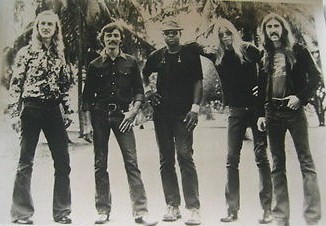
Why He Still Matters
Fifty-four years after his death, Berry Oakley’s playing still sounds startling. Put on At Fillmore East and listen past the guitars — past Duane’s slide, past Betts’s bright, singing lead — and you will hear the bass doing something that basses in rock bands were not supposed to do in 1971. It is leading. It is singing. It is carrying the melody through twenty minutes of improvisation without ever losing the thread.
That is Oakley’s legacy: he showed that the bass could be a voice, not just a foundation. In a band with two lead guitarists and two drummers, he carved out a space that nobody else could fill, and the band never sounded quite the same after he was gone. Listen to the records he played on — the debut, Idlewild South, At Fillmore East, Eat a Peach — and you are hearing a musician who understood, at twenty-two years old, that the job of the bass was not to stay out of the way. It was to lead from underneath.
He played for only three years as a recording artist. He was twenty-four when he died. And yet, more than half a century later, bass players still study his lines, the bridge in Macon still bears his name, and the band he helped to found is still remembered as one of the greatest live acts America ever produced. Berry Oakley held that band together — and the music he made is still holding it up.
Raymond Berry Oakley III: The Quiet Founder Who Held the Band Together
To understand Berry Oakley, you have to understand what he was inside the Allman Brothers Band. He was not its frontman. He was not its loudest voice or its most famous face. He was its foundation — the musician the others built on, the friend Duane Allman trusted to help invent a band that had never existed before.
A Chicago Childhood
Raymond Berry Oakley III was born in Chicago, Illinois, on 4 April 1948, and raised in Park Forest, a suburb of the city. He attended Rich East High School. Little is recorded about his earliest years, but the move that shaped his life came when he left Illinois for Florida — a state whose clubs and bars were full of working blues and rock bands, and where a young bass player could learn his trade night after night.
Florida and the Second Coming
In Florida, Oakley met Dickey Betts and joined Betts’s band, the Blues Messengers, later renamed the Second Coming. It was a working band, playing the circuit, and it taught Oakley how to play in a group built around strong guitarists — how to be heard, how to lead from the bottom end, and how to hold a band together through long nights on stage.
It was also in the Second Coming that he met the musicians who would become his bandmates for the rest of his short life. When Duane Allman began assembling his new band in Jacksonville in early 1969, Betts came as the second lead guitarist — and Oakley came as the bass player. The two men arrived together, already a unit, already knowing how each other played.
The Big House Years
In Macon, Oakley was at the centre of the band’s communal life. It was his wife who rented the large Tudor Revival house at 2321 Vineville Avenue that became “the Big House,” the band’s home from March 1970. The house was where the band lived, rehearsed, argued and wrote songs — and Oakley, steady and unshowy, was part of its fabric.
Those years in Macon were the happiest and the hardest of his life. They were the years of the breakthrough — At Fillmore East, the endless touring, the sense that the band was becoming something historic. And they were the years of loss: first Duane, in October 1971, and then, thirteen months later, Oakley himself.
The Man Behind the Bass
Oakley was not a showman. In photographs of the band he is usually the quiet one, standing a little apart, letting the guitars take the spotlight. But the musicians who played with him knew better. In the early Jacksonville jam sessions, Duane, Oakley and Betts all shared vocal duties — Oakley was a singer as well as a bass player, part of the band’s sound in more ways than one. And on stage, it was his bass that gave the band its shape: the long melodic runs that turned the rhythm section into a second lead instrument, the lines that listeners still hum along to half a century later.
He was, in every sense that matters, a founder — not just of the band’s lineup, but of its sound. The Allman Brothers Band’s music was built on the idea that every instrument could sing, and Berry Oakley’s bass was the proof of it.


Leave a Reply