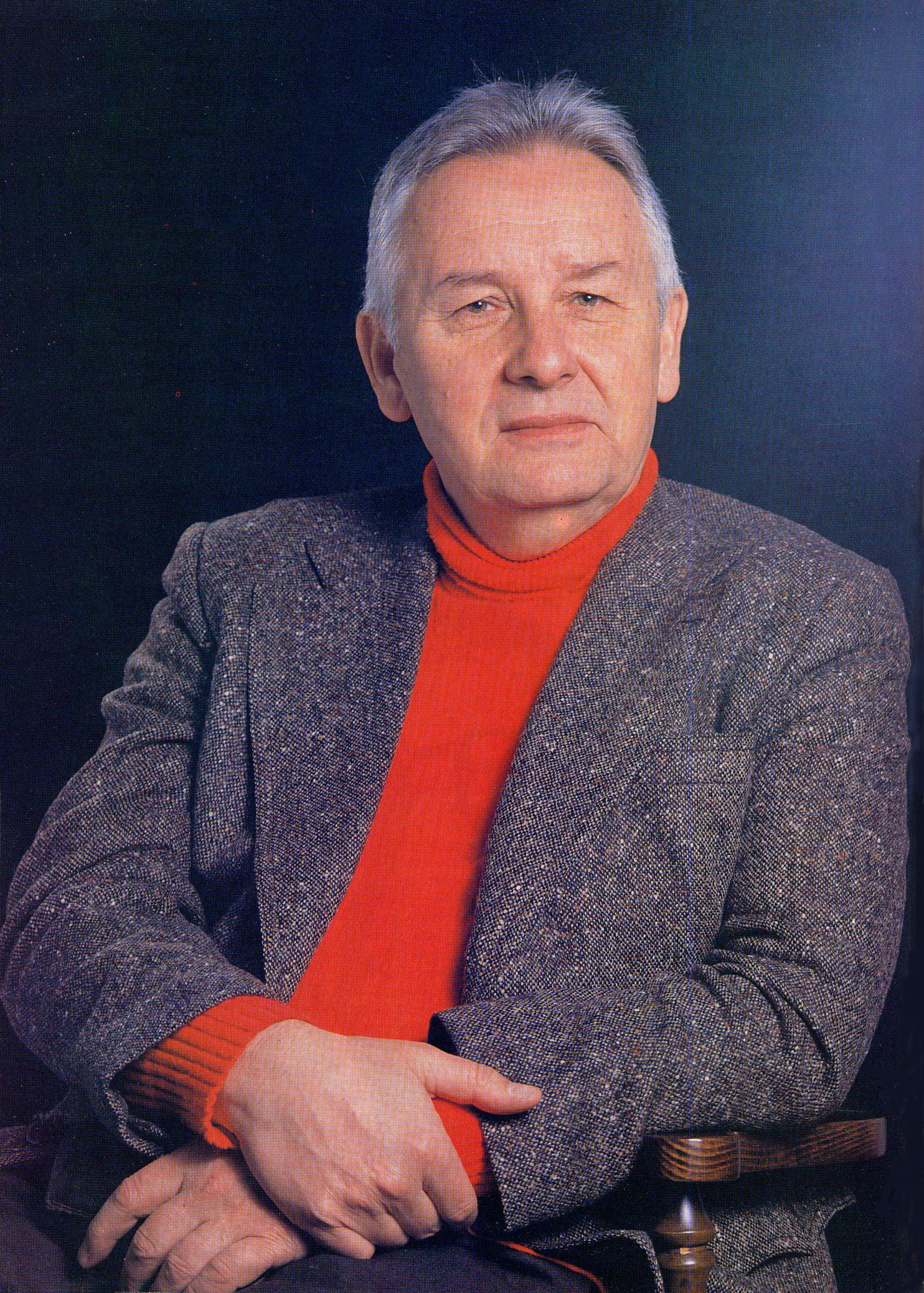
The Record Nobody Expected
In 1992, something happened in classical music that nobody — least of all the composer himself — had seen coming. A symphony written sixteen years earlier, by a man most listeners outside Poland had never heard of, began to sell in numbers that belonged to pop stars. More than a million copies. The work was Henryk Mikołaj Górecki’s Symphony No. 3, the “Symphony of Sorrowful Songs,” and the recording, with soprano Dawn Upshaw and conductor David Zinman, became a worldwide commercial and critical success, vastly exceeding the typical lifetime sales of a recording of symphonic music by a twentieth-century composer. Critic Alex Ross would later observe that no recent classical composer had enjoyed commercial success to rival Górecki’s.
Yet Górecki was the opposite of a commercial figure. He was a private man from Silesia who lived with constant pain, taught in Katowice, argued with Communist officials, and wrote music first for his own conscience. When fame arrived, late and all at once, he did not chase it. He kept writing the music he believed in, and he pointedly resisted the temptation to repeat his success or compose for commercial reward. To understand how a symphony of sorrow became a bestseller, we must go back to a small village in Silesia, to a mother who died too young, to a childhood accident that shaped a whole life, and to a young composer who first conquered the avant-garde and then walked away from it.
A Childhood in Silesia
Henryk Górecki was born on 6 December 1933, in the village of Czernica, in what is now the Silesian Voivodeship in south-west Poland. He grew up in a modest household, but one in which music mattered. His father, Roman, worked at the goods office of a local railway station and played music as an amateur. His mother, Otylia, played the piano. Górecki later described his birthplace with pride in its mixed heritage: “I was born in Silesia…. It is old Polish land. But there were always three cultures present: Polish, Czech, and German.”
His mother died when he was just two years old. Otylia had been born in 1909 and died in 1935, and many of his early works were dedicated to her memory. A child who lost his mother before he could properly remember her spent the rest of his composing life writing music that reached back toward her. When, decades later, he wrote a symphony whose dominant themes were motherhood and separation, listeners did not need to know his biography to feel it.
The second break came when he was four. In 1937, while playing in a neighbour’s yard, he fell and dislocated his hip. A local doctor misdiagnosed the injury, and the delay allowed tubercular complications to develop in the bone. The illness went largely untreated for two years, by which time permanent damage had been done. He spent the following twenty months in a hospital in Germany, where he underwent four operations. He continued to suffer ill health throughout his life, and as a result he said he had “talked with death often.” His most famous music moves slowly because, in a sense, he did. It waits. It does not hurry past grief.
After his mother’s death, his father remarried, and both his father and his new stepmother discouraged the boy’s interest in music, to the extent that he was not allowed to play his mother’s old piano. He persisted anyway. In 1943, he was allowed to take violin lessons with Paweł Hajduga, a local amateur musician who was also an instrument maker, sculptor, painter, poet and peasant philosopher. It was a modest beginning, but it was a beginning made by stubbornness, and stubbornness would become one of Górecki’s defining qualities.
Learning Music the Hard Way
Between 1951 and 1953, Górecki taught ten- and eleven-year-olds at a school in a suburb of Rydułtowy, in southern Poland. In 1952, he began a teacher training course at the Intermediate School of Music in Rybnik, where he studied clarinet, violin, piano and music theory, finishing the four-year course in just under three years. During this time, he began to compose his own pieces, mostly songs and piano miniatures, and in 1952 he adapted the Adam Mickiewicz ballad Świtezianka, though it was left unfinished.
Life during this period was often difficult. Teaching posts were generally badly paid, while the shortage economy made manuscript paper at times difficult and expensive to acquire. With no access to radio, Górecki kept up to date by weekly purchases of periodicals such as Ruch muzyczny and Muzyka, and by purchasing at least one score a week.
In the early 1950s, he studied at the Szafrankowie Brothers State School of Music in Rybnik. Between 1955 and 1960, he studied at the State Higher School of Music in Katowice, under the composer Bolesław Szabelski, a former student of Karol Szymanowski. He graduated with honours in 1960. The Katowice academy would remain the centre of his professional life. In 1965, he joined its faculty, was made a lecturer in 1968, was promoted to assistant professor in 1972 and to professor of composition in 1975, and rose to provost before resigning in 1979. His students included Eugeniusz Knapik, Andrzej Krzanowski, Rafał Augustyn, and his own son, Mikołaj. According to Rafał Augustyn, “When I began to study under Górecki it felt as if someone had dumped a pail of ice-cold water over my head.”
Górecki gave his students a test that was less about technique than about necessity. “If you can live without music for 2 or 3 days, then don’t write,” he told them. “It might be better to spend time with a girl or with a beer… If you cannot live without music, then write.” Music was not a career to be chosen lightly. It was something you did only if you could not live without it. He, plainly, could not.

The Young Avant-Garde Leader
Górecki’s first works, dating from the last half of the 1950s, were in the avant-garde style of Anton Webern and other serialists of that time, including Epitaph (1958), the First Symphony (1959), and Scontri (1960). He became a leading figure of the Polish avant-garde during the post-Stalin cultural thaw, and his Webern-influenced serialist works of the 1950s and 1960s were characterised by dissonant modernism, influenced by Luigi Nono, Karlheinz Stockhausen, Krzysztof Penderecki and Kazimierz Serocki.
The breakthrough came quickly. The first public performances of his music in Katowice in February 1958 programmed works clearly displaying the influence of Szymanowski and Bartók. The Silesian State Philharmonic in Katowice held a concert devoted entirely to the twenty-four-year-old Górecki’s music. The event led to a commission to write for the Warsaw Autumn Festival. The Epitafium (Epitaph) he submitted was said to represent “the most colourful and vibrant expression of the new Polish wave.” The festival announced his arrival on the international scene.
At the 1960 Warsaw Autumn Festival, his Scontri for orchestra caused a sensation with its sharp contrasts and harsh articulations. By 1961, Górecki was at the forefront of the Polish avant-garde, having absorbed the modernism of Webern, Iannis Xenakis and Pierre Boulez, and his Symphony No. 1 gained international acclaim at the Paris Biennial Festival of Youth. He moved to Paris to continue his studies, influenced there by Olivier Messiaen, Roman Palester, and Karlheinz Stockhausen. Even until 1962, he was regarded by the Warsaw Autumn public as a leader of the Polish Modern School, alongside Penderecki.
Apart from two brief periods studying in Paris and a short time living in Berlin, Górecki spent most of his life in southern Poland. He stayed in Silesia and Katowice, taught there, raised a family there, and wrote there. He was married to Jadwiga, a piano teacher; his daughter Anna is a pianist, and his son Mikołaj is a composer. Yet even at the height of his avant-garde success, something was shifting. By the early 1970s, he had begun to move away from radical modernism, toward a more traditional mode of expression dominated by the human voice. His change of style was viewed as an affront to the avant-garde establishment, and by the mid-1970s Górecki was no longer regarded as a composer of importance. That judgement would look, in hindsight, like one of the great misreadings in modern music. Górecki was not fading. He was turning.
The Turning Point
During the mid-1960s and early 1970s, Górecki progressively moved away from radical modernism, and began to compose in a more traditional, romantic mode of expression. He rejected the dissonance, serialism and sonorism that had brought him early recognition, and pared and simplified his work, favouring large slow gestures and the repetition of small motifs. His music tends towards relative harmonic and rhythmical simplicity, and he is considered a founder of the New Polish School.
The transitional work was his Symphony No. 2, “Copernican”, written in 1972 to celebrate the 500th anniversary of the birth of the astronomer Nicolaus Copernicus. Written in a monumental style for solo soprano, baritone, choir and orchestra, it features text from Psalms no. 145, 6 and 135 as well as an excerpt from Copernicus’s De revolutionibus orbium coelestium. It is in two movements, and a typical performance lasts 35 minutes. It was commissioned by the Kosciuszko Foundation in New York, and presented an early opportunity for Górecki to reach an audience outside Poland.
Then, in the mid-1970s, the change became complete. He had changed to a less complex sacred minimalist sound, exemplified by the Symphony No. 2 “Copernican” and the Symphony No. 3 “Symphony of Sorrowful Songs.” This later style developed through such works as his 1979 Beatus Vir, the 1981 choral hymn Miserere, and the 1993 Kleines Requiem für eine Polka. Since he moved away from serialism in the 1970s, he is frequently compared to Arvo Pärt, John Tavener and Giya Kancheli, grouped under the term holy minimalism for their shared simplified approach to texture, tonality and melody, often reflecting deeply held religious beliefs. Górecki did not simplify because he had run out of ideas. He simplified because the complicated language of the avant-garde no longer said what he needed to say. The human voice, plain melody, slow repetition, sacred texts: these were not a retreat. They were a decision to speak directly, even if the musical establishment stopped listening. And for a time, it did.
The Symphony of Sorrowful Songs
Górecki’s most popular piece is his Third Symphony, also known as the “Symphony of Sorrowful Songs” (Symfonia pieśni żałosnych). He wrote it in 1976. The work is slow and contemplative, and each of its three movements is for orchestra and solo soprano. This is not a symphony that argues or dazzles. It is a symphony that sings, and that listens.
Each movement carries a different text, and each text is a voice of sorrow. The first movement uses a 15th-century lament, while the second uses the words of a teenage girl, Helena Błażusiakówna, which she wrote on the wall of a Gestapo prison cell in Zakopane to invoke the protection of the Virgin Mary. The third uses a Silesian folk song about a mother searching for a son killed in the Silesian Uprisings. The symphony’s dominant themes are motherhood and separation through war. While the first and third movements are written from the perspective of a parent who has lost a child, the second is from that of a child separated from a parent.
Read those three sources together and the design becomes clear. A medieval mother mourning her son. A teenage girl in a Gestapo cell, writing a prayer on the wall. A Silesian mother searching for a son killed in an uprising. Three centuries, three voices, one grief: a parent and a child torn apart. It is the grief Górecki had known since the age of two, when his own mother died, and since the age of four, when pain entered his body and never left. It is also the grief of Poland itself, whose twentieth century was marked by occupation, uprising and loss. That is why the piece could wait fifteen years and still feel immediate: it was written not for a moment, but for the condition of losing someone you love and having to go on living. The musical world barely noticed when the symphony was written in 1976.
1992: The World Finally Listens
Górecki was largely unknown outside Poland until the late 1980s. By the mid-1980s, he began to attract a more international audience, and in 1989 the London Sinfonietta held a weekend of concerts in which his work was played alongside that of Alfred Schnittke. In 1990, the American Kronos Quartet commissioned and recorded his First String Quartet, Already It Is Dusk, Op. 62, beginning a long relationship between the quartet and Górecki.
Then, in 1992, fifteen years after it was composed, the recording with soprano Dawn Upshaw and conductor David Zinman became a worldwide commercial and critical success, selling more than a million copies. A slow, sacred, Polish symphony from 1976, sung in Polish, had become one of the best-selling classical records of all time. Commenting on its popularity, Górecki said, “Perhaps people find something they need in this piece of music … somehow I hit the right note, something they were missing. Something somewhere had been lost to them. I feel that I instinctively knew what they needed.” He claimed only to have hit the right note — instinctively — and to have given people something they had lost and did not know how to name.
He was baffled and moved in equal measure. The success did not generate wide interest in his other works, and he pointedly resisted the temptation to repeat earlier success, or compose for commercial reward. According to AllMusic, he continued to work, not to further his career or reputation, but largely “in response to inner creative dictates.” Many composers, handed a once-in-a-lifetime hit, would have written a dozen imitations. Górecki wrote what he believed in. Discussing his audience in a 1994 interview, he said: “I do not choose my listeners. What I mean is, I never write for my listeners.” That is not the voice of a man chasing fame. The fact that, in 1992, so many listeners took it remains one of the most hopeful stories in modern classical music: proof that a quiet, sorrowful, uncompromising piece could still find a million listeners, without compromising at all.

Faith, Solidarity and Standing Up
The turn toward sacred music was not only a musical choice. It was also a moral and political one, made in a Poland ruled by a Communist government. Around the time he was promoted to professor of composition in 1975, Górecki came to believe the Polish Communist authorities were interfering too much in the academy’s activities, and called them “little dogs always yapping.” As a senior administrator but not a member of the Party, he was in almost perpetual conflict with the authorities as he tried to protect his school, staff and students from political influence. In 1979, he resigned in protest at the government’s refusal to allow Pope John Paul II to visit Katowice, and formed a local branch of the “Catholic Intellectuals Club,” devoted to the struggle against the Communist Party.
Two years later, in 1981, he composed his Miserere for a large choir in remembrance of police violence against the Solidarity movement. In 1987, he composed Totus Tuus for John Paul II’s visit to Poland. And his Beatus Vir, written in 1979, was composed to celebrate Karol Wojtyła’s appointment as Pope. These works belong together. After the avant-garde years, Górecki’s music became music of faith, of remembrance, of solidarity with people who were suffering. The sacred minimalism of his later style was not an escape from the world. It was a way of standing in it — quietly, stubbornly — and saying that grief and faith and human dignity deserve to be sung slowly and plainly.

The Later Works and the Unfinished Fourth
Fame, when it came, did not change the pattern of his working life. In February 1994, the Kronos Quartet performed at the Brooklyn Academy of Music four concerts honouring a postmodern revival of interest in new music, featuring string quartets by three living composers: two Americans (Philip Glass and George Crumb) and one Pole (Górecki). His later work includes a 1992 commission for the Kronos Quartet, Songs are Sung; Concerto-Cantata (written in 1992 for flute and orchestra); and Kleines Requiem für eine Polka (1993 for piano and 13 instruments). Songs are Sung is his third string quartet, inspired by a poem by Velimir Khlebnikov. When asked why it took almost 13 years to finish, he replied, “I continued to hold back from releasing it to the world. I don’t know why.”
The completion of his Fourth Symphony, subtitled “Tansman Episodes,” was delayed for many years, partly by Górecki’s unease at his newfound fame. It had not even been orchestrated when he died in 2010, and his son Mikołaj completed it after his death from the piano score and notes left behind by his father. Its opening consists of very loud, repeated cells that spell out the name of the composer Alexandre Tansman via a musical cryptogram, punctuated with heavy strokes on the bass drum and clashing bitonality between the chords of A and E-flat. His Symphony No. 4 (Op. 85, 2006) was due to be premiered in London in 2010 by the London Philharmonic Orchestra, but the event was cancelled due to the composer’s ill health. The world premiere took place on 12 April 2014, by the London Philharmonic Orchestra at the Royal Festival Hall, London, with Andrey Boreyko conducting instead of Marin Alsop. Symphony No. 4 is an extensive, 37-minute composition for an approximately 100-person orchestra with piano and organ obbligato. There is something fitting in that: a son finishing his father’s last symphony, a premiere delayed by four years, a work that finally sounded after the composer who wrote it was gone. Górecki’s music had always been about waiting. His Fourth Symphony waited, too.
The Last Years and a Final Honour
During the last decade of his life, Górecki suffered from frequent illnesses. The body that had been damaged in childhood never stopped reminding him of that damage. He died on 12 November 2010, in his home city of Katowice, from complications arising from a lung infection. He was seventy-six.
Reacting to his death, the head of the Karol Szymanowski Academy of Music, Professor Eugeniusz Knapik, said “Górecki’s work is like a huge boulder that lies in our path and forces us to make a spiritual and emotional effort.” Adrian Thomas, professor of music at Cardiff University, said Górecki was “an intensely private man, sometimes impossible, with a strong belief in family, a great sense of humour, a physical courage in the face of unrelenting illness, and a capacity for firm friendship.” President Bronisław Komorowski awarded Górecki the Order of the White Eagle, Poland’s highest honour, a month before his death. The Order was presented by Komorowski’s wife in Górecki’s hospital bed. Earlier, Górecki received the Order of Polonia Restituta II class and III class and the Order of St. Gregory the Great. In 2007, he claimed 32nd place on the list of Top 100 Living Geniuses compiled by The Daily Telegraph. He also received an honorary doctorate from Concordia University, in Montreal, Canada.

Why the Saddest Song Still Sings
Fragments of his Symphony of Sorrowful Songs have been used in films including Peter Weir’s Fearless (1993), Julian Schnabel’s Basquiat (1996), Paolo Sorrentino’s The Great Beauty (2013) and Terrence Malick’s A Hidden Life (2019), and on television in The Sopranos and The Crown. In 2017, choreographer Crystal Pite set its first movement as a ballet, Flight Pattern, and in 2022 she set the whole symphony as Light of Passage. There is also a lighter footnote: a 1997 trip-hop single by Lamb, “Górecki,” which sampled the symphony.
But the films, the ballet, the sample — these are not the reason the symphony matters. They are signs that it matters. The reason is simpler, and it is the reason Górecki himself gave: people found something they needed in this piece of music. Something had been lost to them, and the music gave it back, or at least gave them a place to feel the loss. Górecki’s symphony does not offer easy comfort. It sits with sorrow, quietly and patiently. In a world that moves fast and speaks loudly, that patience is rare. In 1992, a million people recognised it. Sixteen years after his death, listeners are still recognising it.
Henryk Górecki was born in a village in Silesia, lost his mother at two, lived with pain from the age of four, conquered the avant-garde and then left it behind, wrote a symphony of sorrow that the world ignored for fifteen years, and then watched, baffled and moved, as that symphony became one of the best-selling classical records of all time. He refused to repeat the trick. He kept writing the music he believed in until his body, which had talked with death often, finally gave way on 12 November 2010. He is gone sixteen years now. The saddest song in the world is still singing. Sorrow, sung plainly and honestly, does not end. It stays, it waits, and it reminds us of what we have lost — and of what, in the music, we can still find.

Leave a Reply