
He was seven years old when his father took him to hear Big Bill Broonzy, and he never really left that room. John Paul Hammond was born in New York City on 13 November 1942, and he died on 28 February 2026, aged 83. Today he would have turned 84. His career spanned six decades, and in that time he became something rare in American music: a bridge. He was the son of the most famous talent scout in jazz history, the godson of Paul Robeson, a descendant of Cornelius Vanderbilt — and he spent his life playing the blues of poor black men from the Mississippi Delta, on a steel-bodied guitar older than he was, in a passionate barrelhouse style, mostly alone. He was the only artist who ever had both Jimi Hendrix and Eric Clapton in his band in the same week. He helped connect Bob Dylan with the musicians who became The Band. He won a Grammy, was nominated for six more, and entered the Blues Hall of Fame in 2011. And he did it all by listening first. “Solo is, for me, where the art belongs,” he said. “If you could pull it off solo, you were really doing it.” This is the story of John P. Hammond: the blues never belonged to one generation. It belonged to whoever listened hardest.
A Vanderbilt who heard the blues

John Hammond was the oldest son of the record producer and talent scout John Henry Hammond and his first wife, the actress Jemison McBride. His father was one of the most important figures in twentieth-century American music — the man who discovered Billie Holiday, Count Basie, Aretha Franklin, Bob Dylan and Bruce Springsteen, among others. Through his paternal grandmother, Emily Vanderbilt Sloane Hammond, young John was a descendant of William Henry Vanderbilt, the eldest son of Cornelius Vanderbilt, the founder of the Vanderbilt family fortune. He was the fourth and last generation of John Hammonds descended from General John Henry Hammond, a Union army officer. He had a brother, Jason, and a stepsister, Rosita Sarnoff, the daughter of his father’s second wife. His middle name, Paul, was given in honour of his godfather, the singer, actor and civil rights activist Paul Robeson, a friend of his father.
He saw his father only a few times a year while growing up in the West Village of Manhattan with his mother. But those few visits changed his life. In February 2009, Hammond told the magazine Blue Ridge Country: “I first became aware of blues music when my father brought me to hear Big Bill Broonzy in 1949. I was seven years old, and it made a big impression on me. I remember the music and the man. He was a friend of my father’s so I was introduced to him, and he was just this huge guy, with a very gentle spirit and a fantastic guitar player… I always gravitated towards blues music for whatever reason. By the time I was in my early teens, I was a blues fanatic. I never thought that I would ever play an instrument or be a professional player but, I mean, I loved the music. When I got a guitar, that was it.”
His teenage tastes ran deep. “I eventually began to buy records and become aware of this music that was so compelling to me,” he said. “During the ’50s I was a teenager and beginning to form my tastes and blues was at the forefront. I was into artists like Sonny Terry and Brownie McGee and Josh White, Big Bill Broonzy, of course, Leon Bibb and Lead Belly. When rock and roll hit the scene in the mid-’50s I liked artists like Bo Diddly and Chuck Berry, Little Richard, Eddie Cochran, Gene Vincent and the Blue Cats. All of these fantastic players that were, you know, into the music… It was — for the first time you were hearing black and white artists together and, I don’t know, I was just very excited by the music and the way it made me feel.”
He began playing guitar in high school, partly inspired by the album Jimmy Reed at Carnegie Hall. He attended Antioch College in Yellow Springs, Ohio, for a year, then dropped out to pursue a career in music. By the mid-1960s he was on national tours and living in Greenwich Village, and he befriended and recorded with many electric blues musicians in New York, including Jimi Hendrix, Eric Clapton, Levon Helm’s New Hawks — later known as The Band — Mike Bloomfield, Dr. John and Duane Allman. The boy who had been taken to hear Big Bill Broonzy was now playing with the men who would define the next generation of the blues.
Newport, 1963

Hammond sang and played in a passionate barrelhouse style and moved easily between acoustic and electric guitars, primarily playing acoustic guitars and favouring a steel-bodied National Reso-Phonic guitar which was older than he was. In 1963, he made his debut recording on Vanguard Records. The album, John Hammond, was one of the first blues albums by a white artist during the folk boom years, along with one by Koerner, Ray and Glover, both of which had been preceded by Dave Van Ronk. It was a brave record to make: a twenty-year-old from a wealthy family, singing the songs of men who had lived lives he could only imagine, and doing it with enough respect and feeling that the folk world took him seriously.
In July 1963, he played at the Newport Folk Festival and was featured in the blues workshop there alongside John Lee Hooker, Mississippi John Hurt, Dave Van Ronk and Sonny Terry. He returned in July 1964 as part of a line-up that included Muddy Waters, Skip James, Mississippi John Hurt, Sleepy John Estes, Son House, Reverend Robert Wilkins and Mississippi Fred McDowell. To share a stage with those names, at twenty-one years old, was an education no school could give. He was learning the blues from the men who had made it, in person, on the same bills, in the same workshops — and he never forgot the lesson. Listening first was not a pose. It was the whole method.

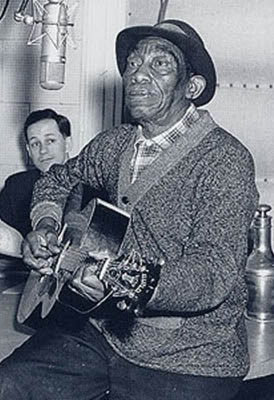
His early albums came quickly after that: Big City Blues in 1964, which included the first blues-rock cover of Willie Dixon’s “Back Door Man”; So Many Roads and Country Blues in 1965; Mirrors and I Can Tell in 1967; Sooner or Later in 1968; Southern Fried in 1969. Later in his career he received critical acclaim while having only modest commercial success, and some of the greatest names in the music played on his records: John Lee Hooker, Roosevelt Sykes, Duane Allman, Rory Gallagher, Willy DeVille, Robbie Robertson, Mike Bloomfield and Charlie Musselwhite. The list reads like a roll call of the blues and rock worlds, and every one of them played with Hammond because they respected what he did.
One week at the Gaslight
The most famous week of Hammond’s life happened in 1968, at the Gaslight Cafe in Greenwich Village. He was the only artist who ever had both Eric Clapton and Jimi Hendrix in his band at the same time, and the story of how it happened has been told by his longtime booking agent, Mike Kappus. “When Jimi was performing as Jimi James and was suddenly out of work in New York,” Kappus said, “John lined up a gig with his band, inviting Jimi to join them. During the week-long stint, Chas Chandler, of the Animals fame, was at the show and, being impressed, brought Jimi to London where his career was launched. Jimi stopped back to see John after his first US tour, opening for the Monkees, and once again sat in with John. Eric Clapton was also in New York at that time, having just finished a US tour with Cream, and he too sat in for the rest of the gig. John had both Jimi and Eric in his band that week.”
Think about that for a moment. In a single week, in a small Greenwich Village cafe, the two guitarists who would define rock guitar for the next half century both played in John Hammond’s band. Hendrix was still calling himself Jimi James and looking for work. Clapton had just finished touring with Cream. And the man holding the stage together was a twenty-five-year-old blues singer with a steel guitar. Hammond did not make a fuss about it afterwards. He never built his career on that week. But the week is part of the reason his name is spoken with such respect: he was the musician other musicians trusted, the one who could hold a band together while history walked in and out of the room.
He figured prominently in another piece of history, too. According to Kappus, “John figured prominently with The Band connecting with Bob Dylan after Bob visited one of John’s recording sessions, which included Levon Helm and The Hawks backing John. After touring with Dylan they went on to become The Band.” Dylan came to watch Hammond record with Levon Helm’s New Hawks, and the connection that formed in that room led, after a famed and tumultuous world tour with Dylan, to the Hawks becoming The Band — one of the most important groups in American music. Hammond was there at the beginning of that story, too, not as a star but as a catalyst: the man whose sessions brought the right people into the same room.
Films, Grammys and the long road
In 1970, Hammond created the soundtrack for the film Little Big Man, starring Dustin Hoffman, which was nominated by the British Academy of Film and Television Arts for the Award for Best Original Music, formerly known as the Anthony Asquith Award for Film Music. He recorded all the musical tracks himself. In 1971, two Chuck Berry tunes, “Maybellene” and “No Money Down”, tracks from his first two albums, made it onto the soundtrack of the film Two-Lane Blacktop. His albums kept coming through the 1970s — Source Point in 1971, I’m Satisfied in 1972, Triumvirate in 1973 with Mike Bloomfield and Dr. John, Can’t Beat the Kid in 1975, John Hammond: Solo in 1976, Footwork in 1978, Hot Tracks with the Nighthawks in 1979, Mileage in 1980, Frogs for Snakes in 1982 — a steady, working musician’s catalogue, built one record at a time.
In 1985, he earned a Grammy Award for his performance on the album Blues Explosion, and he was nominated for six more Grammy Awards between 1993 and 2006. In the early 1990s he began recording for the Pointblank Records label, and his album Got Love If You Want It, with his cover of the Slim Harpo title track, was a 1993 Grammy nominee. He hosted the 1991 Bravo UK television documentary The Search for Robert Johnson, detailing the life of the legendary Delta bluesman — a fitting job for a man who had spent his life searching for the roots of the music he loved.
He had a longstanding friendship with the songwriter Tom Waits, and performed Waits’s songs on occasion. In 2001 he released Wicked Grin, an album consisting of Waits’s compositions and the traditional spiritual “I Know I’ve Been Changed”. Waits played guitar and sang backing vocals on the album and was also its producer. In 2001 he was back in the movies with Waits’s song “Get Behind the Mule” for the soundtrack of the film The Last Castle. In 2003 his album Ready for Love was released, produced by David Hidalgo of Los Lobos. Also in 2003, the Blues Foundation voted him the Blues Music Award winner for Best Acoustic Blues Artist, which is among the highest honours a blues artist can receive. His 2009 album, Rough & Tough, was nominated for the Grammy Award for Best Traditional Blues Album in 2010. In 2011 he was the Blues Music Award winner for Acoustic Artist of the Year and was inducted into the Blues Hall of Fame. He was honoured with two awards at the Hall of Fame induction and awards ceremony in Memphis in 2015, for Best Acoustic Blues Album for Timeless and for Best Acoustic Blues Artist.
The catalogue: thirty albums of staying power
If there is a single number that explains John P. Hammond, it is not a chart position. It is the size of his catalogue. Across six decades he released dozens of albums, and the list reads like a map of the blues itself. The 1960s run on Vanguard set the pattern: John Hammond in 1963, Big City Blues in 1964, So Many Roads and Country Blues in 1965, Mirrors and I Can Tell in 1967, Sooner or Later in 1968, Southern Fried in 1969. The 1970s moved through Columbia, Capricorn and Rounder: Source Point in 1971, the Little Big Man soundtrack the same year, I’m Satisfied in 1972, Triumvirate in 1973 with Mike Bloomfield and Dr. John, Can’t Beat the Kid in 1975, John Hammond: Solo in 1976, Footwork in 1978, Hot Tracks with the Nighthawks in 1979, Mileage in 1980, Frogs for Snakes in 1982, Nobody but You in 1988.
The 1990s brought his most decorated run. After signing with Pointblank Records in the early 1990s, he released Got Love If You Want It in 1992, then three albums in a row that each earned Grammy nominations: Trouble No More in 1994, Found True Love in 1996 and Long As I Have You in 1998. Wicked Grin followed in 2001 and won the Blues Music Award for Best Acoustic Album. Ready for Love came in 2003, In Your Arms Again in 2005 — another Grammy nominee — Push Comes to Shove in 2007, and Rough & Tough in 2009. His live albums tell the same story of endurance: John Hammond Live in 1983, Live in Greece in 2006, recorded in 1983, and Timeless in 2014, the live album that won him two Blues Music Awards in Memphis in 2015. Even in his eighties, new releases kept coming from the archive: Birthday Blues Bash in 2024, recorded in Italy on 13 November 2001 — his 59th birthday — and Bear’s Sonic Journals: You’re Doin’ Fine, a three-CD set recorded on 2 and 3 June 1973 and released in 2024. In 2019 he even released a single, “You Know That’s Cold” backed with “Come To Find Out”, on translucent blue seven-inch vinyl. His compilations include The Best of John Hammond in 1970, Spoonful in 1984, You Can’t Judge a Book by the Cover in 1993 — itself a Grammy nominee — The Best of the Vanguard Years in 2000, and At the Crossroads: The Blues of Robert Johnson in 2003, a tribute to the Delta bluesman whose life he had explored in his 1991 documentary.
What the catalogue proves is that Hammond never chased a trend. He recorded the same way he played: one man, one guitar, the song in front of him. The labels changed — Vanguard, Atlantic, Columbia, Capricorn, Rounder, Pointblank, Back Porch, Chesky, Palmetto — and the rooms changed, from the Gaslight Cafe to the Newport Folk Festival to concert halls around the world. The music did not change. It was the blues, played the way he had heard it as a seven-year-old boy, and it stayed honest for sixty years because he never asked it to be anything else.
The man who stayed
Hammond married three times: his first wife, Dana McDevitt, in 1967; his second wife, Peggy Spoerri, in 1981; and his third wife, Marla, in 1993. He died from cardiac arrest at a hospital in Jersey City, New Jersey, on 28 February 2026, at the age of 83. He was survived by his wife; his son, Paul, from his first marriage; a daughter, Amy, from his second marriage; his brother, Jason; and his stepsister, Rosita Sarnoff.
He left behind a catalogue that runs to dozens of albums, a Grammy Award and six more nominations, a Blues Hall of Fame induction, and a reputation that no award can measure. He was the rich kid who fell in love with the poor man’s music and spent sixty years proving he meant it. He was the singer who could hold a stage alone with a steel guitar older than he was, and the bandleader who could hold a stage with Hendrix and Clapton in the same week. He was the man whose recording session helped give the world The Band. And he was the man who, at seven years old, was taken to hear Big Bill Broonzy and never really left that room.
One man, one guitar
There is a reason Hammond’s favourite instrument was a steel-bodied National Reso-Phonic guitar that was older than he was. It was the kind of guitar the Delta bluesmen he worshipped had played, and Hammond played it in his passionate barrelhouse style, moving easily between acoustic and electric guitars but always coming back to the acoustic, and always coming back to playing alone. His 1976 album was even called John Hammond: Solo, as if to make the point plain. He had said it himself in 2009: solo was where the art belonged, and if you could pull it off solo, you were really doing it. When he recorded the soundtrack for Little Big Man in 1970, he recorded all the musical tracks himself — one man, one guitar, carrying a whole film. That was his art in miniature: no band to hide behind, no production to soften the edges, just a voice and a steel guitar and a song that had to stand on its own. For sixty years, it always did.
Eighty-four years on from his birth, the blues still belongs to whoever listens hardest. John P. Hammond listened harder than almost anyone, for longer than almost anyone, and the music he made is the proof. Which blues record first stopped you in your tracks? That is the question he spent his life asking with his guitar — and the answer, for him, was always the same: the one that found you before you were ready for it.
Leave a Reply