
The Night the Rocker Slowed Down and Won
On November 12, 1966, the most famous chart in American music belonged, for one shining week, to a man nobody had expected to be there. Johnny Rivers was the loudest room in Los Angeles, the guitar in the sweat and the smoke of the Whisky a Go Go, the voice that had turned Chuck Berry’s “Memphis” into a runaway hit and a television spy theme into a Top 3 single. He was speed, twang, and Saturday night. He was not, by any reputation he had earned, a ballad singer.
And yet there it was, printed in black and white in Billboard magazine: “Poor Side of Town,” a slow, string-swept love song about a man with nothing to offer but his heart, sitting at No. 1 on the Billboard Hot 100. It had pushed aside the debut single of the Monkees, the freshest pop sensation in the country. It would be the only No. 1 single of Johnny Rivers’ entire career. And it would change, permanently, the way the world heard him.
Sixty years later, the record still sounds like a small miracle of timing: a rough-edged rocker from the clubs deciding, at the very height of his fame, to sing softly — and discovering that softness was what the whole country had been waiting to hear.
A Brooklyn Boy on the Banks of the Mississippi
Johnny Rivers was born John Henry Ramistella on November 7, 1942, in New York City. He was a city boy for only the first five years of his life. In the late 1940s, his father moved the family south to Baton Rouge, Louisiana, where work awaited, and it was on the banks of the Mississippi River that the boy who would become Johnny Rivers grew up and learned to play.
Music was in the house from the start. His father played mandolin and guitar, and together with an uncle filled the home with Italian folk songs. Young John watched, listened, and learned. His father taught him the guitar when he was eight years old, and the boy proved a natural, quick-fingered and hungry for every sound he could get his hands on. Baton Rouge in the 1950s was a crossroads of sounds — country, blues, rhythm and blues, and the new rock and roll pouring out of radios and jukeboxes — and Rivers soaked it all in.
While still a student at Baton Rouge High School, he formed his own band, the Spades, and made his first record at the age of fourteen. It was the beginning of a long apprenticeship. He played dances and clubs across the American South, sometimes sharing bills with the comedian Brother Dave Gardner, learning the craft that no classroom could teach: how to hold a room, how to read a crowd, how to make a song land.
Then, in 1958, came the meeting that changed his name. On a trip to New York City, the teenage Ramistella managed to get an audience with Alan Freed, the most influential disc jockey in the country, the man who had helped put the very words “rock and roll” on the map. Freed listened, and he advised the young singer to change his name. Ramistella took the advice, and a Baton Rouge attorney made it official: he became Johnny Rivers, taking “Rivers” from the great Mississippi River that flowed through his adopted hometown. The name was a tribute to the place that had raised him, and it would follow him all the way to the top of the charts.
The Loudest Room in Los Angeles
By the early 1960s, Rivers had made his way west to Los Angeles, and there his luck, his talent, and his work ethic finally collided. Late in 1963, Elmer Valentine, the proprietor of a brand-new club on the Sunset Strip in West Hollywood called the Whisky a Go Go, approached Rivers about moving his act to the venue. Rivers opened there on January 15, 1964, on a one-year contract, becoming the club’s first great house attraction. The Whisky had been open only a matter of days. Within weeks, the Beatles arrived in America, and the British Invasion began knocking almost every American artist off the charts.
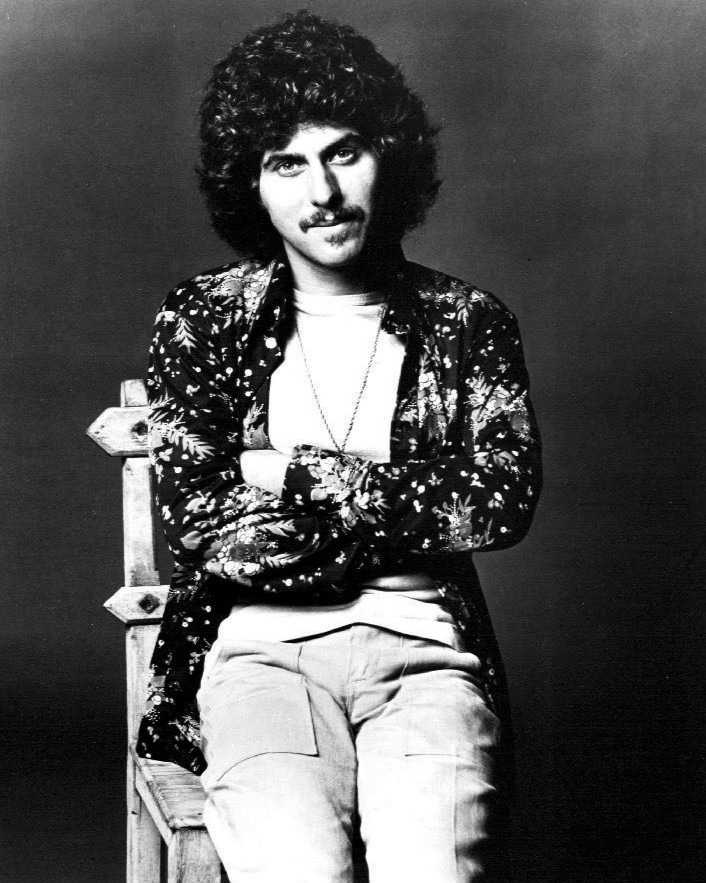
Rivers, remarkably, survived the invasion — and then some. He was so popular at the Whisky that his producer, Lou Adler, decided to record him live there, crowd noise and all, and release the tapes as an album. The tape had been turned down by every record company in Los Angeles until Adler got it to Liberty Records, whose president, Al Bennett, agreed to release it on the Imperial label, which he had recently acquired. In February 1964, “Johnny Rivers at the Whisky a Go Go” began finding its way to the record-buying public.

It did not take off at once. But when Imperial pulled the opening track — Rivers’ driving, sweaty cover of Chuck Berry’s “Memphis” — and released it as a single, everything changed. The record began its climb on May 30, 1964, and by July 11 it had reached No. 2 on the Billboard Hot 100. It sold more than a million copies and earned a gold disc. Rivers’ version far outsold Berry’s own original from 1959, which had stalled at No. 87 in the United States. The live album, meanwhile, picked up steam of its own, eventually peaking at No. 12 on the Billboard album chart in a chart run of forty-five weeks. Rivers later recalled that “Memphis” was his most requested live song in those days, and it is easy to hear why: the record bottled the whole Whisky experience — the beat, the twang, the Southern drawl in the vocal, the roar of the room.
Imperial repeated the formula. Another Chuck Berry cover, “Maybellene,” taken from the follow-up live album “Here We a Go Go Again!,” reached No. 12. “Mountain of Love,” a 1960 hit by fellow Southerner Harold Dorman, climbed into the Top 10. Rivers recorded mostly live performances throughout 1964 and 1965, and the Whisky remained his home base and his favourite concert venue for years. He had become, in effect, the first great discotheque star: the man who made the go-go club sound into a national chart force.
Then, in 1966, came the spy. The American version of the British television series “Danger Man,” starring Patrick McGoohan, had gone on the air in the United States in the spring of 1965 under the title “Secret Agent,” and it needed a theme song. Adler and Rivers turned to the songwriting team of P.F. Sloan and Steve Barri — the same pair who had written “Eve of Destruction” for Barry McGuire — and Rivers recorded their theme. The public wanted a longer version, and the full single of “Secret Agent Man” raced up the charts to No. 3 on the Billboard Hot 100 in 1966. It, too, sold a million copies and won a gold disc. By the middle of 1966, Johnny Rivers had collected nine Top 10 hits on the American charts, with seventeen Top 40 entries to his name between 1964 and 1977, and sales of well over thirty million records over the course of his career. He was one of the hardest-working rockers in Los Angeles, and everything he touched seemed to turn to gold.
Everything, that is, except the one thing he had never tried: a ballad.
The Turning Point: A Rocker Decides to Sing Softly

In 1966, Johnny Rivers began to think differently about his own voice. The go-go records had made him a star, but they had also put him in a box. He was the fast one, the loud one, the guitar man. The ballad — the slow song, the love song, the record that asked a singer to stand still and simply feel — was territory he had never claimed.
So he sat down with Lou Adler, his producer, his manager, and by then one of the most powerful figures in California pop. Adler was no stranger to risk. Born Lester Louis Adler on December 13, 1933, he had managed Jan and Dean, founded Dunhill Records in 1964, and produced Barry McGuire’s “Eve of Destruction,” which had topped the charts in the fall of 1965. Through McGuire he had been introduced to the Mamas and the Papas, signed them to Dunhill, and produced their run of hits, including “California Dreamin’.” Adler understood the Los Angeles sound as well as anyone alive — and he understood Rivers.
Together, the two men wrote a song. It was called “Poor Side of Town,” and it was unlike anything Rivers had attempted before: a lush, orchestral love song, a soulful ballad in the emerging California pop style, with strong folk feeling underneath it. Its story was simple and devastating. A man who has nothing — no money, no fine things, nothing the world counts as wealth — tells the woman he loves that his heart is all he has to give. And in the song’s quiet twist, she comes back to him: the woman who left him for a richer man returns, having learned that riches were not what she wanted after all. It was a song about pride and poverty, about love measured not in dollars but in devotion — and it asked its singer to carry all of that feeling without raising his voice.
The recording matched the ambition of the writing. Where the Whisky records had been built on guitar, bass, and drums, “Poor Side of Town” was dressed in strings and brass, arranged by Marty Paich, the veteran orchestrator who had recently arranged Top 5 hits for the Mamas and the Papas. The parent album, “Changes” — Rivers’ third studio album, released in 1966 on Imperial and produced by Adler — marked the shift in full: the singer moving away from his earlier rock and roll style toward orchestral pop, with background vocalists softening and sweetening the sound. The album also included his version of a brand-new song by a young, unknown songwriter named Jimmy Webb, “By the Time I Get to Phoenix” — a song Rivers liked so much he wanted to release it as a single, until he decided it sounded too much like “Poor Side of Town.” That is how fully the new sound had taken hold of him.
The single of “Poor Side of Town” was released in August 1966 on Imperial. It was a gamble in every sense. Rivers was known for speed and sweat, not strings and violins. Radio programmers knew him as the Whisky man. His fans knew him as the rocker. A slow ballad could have vanished without a trace.
The Song Itself: What “Poor Side of Town” Is Really About
Listen to “Poor Side of Town” today and the first thing you notice is how unhurried it is. Rivers does not push the song; he lets it breathe. The orchestra swells gently around him, the background voices lift the chorus, and his vocal — that familiar Southern-toned instrument, so often used to shout over a crowd — turns tender, almost confessional.
The story the song tells is an old one, and that is its power. The singer is a poor man, a man from the wrong side of the tracks, and he knows exactly what he cannot give the woman he loves. He cannot give her fine clothes or a fine house or the easy life. What he can give her is himself: his love, his loyalty, his heart. It is the oldest bargain in popular song, and the song tells it without bitterness. The twist is what makes it linger: she had left him for a man with money, and now she has come back. She has seen what money buys, and she has decided it is not enough. She would rather have the poor side of town, if the poor side of town is where he is.
There is no anger in the telling, only a kind of quiet triumph — the triumph of being chosen, at last, for who you are rather than what you own. That was the emotional gamble of the record, and it was a brave one for a singer whose whole image was built on energy and bravado. Rivers was asking his audience to meet a different man: not the showman with the red Gibson guitar, but a singer willing to be vulnerable on the radio, in three minutes, in front of millions.
It is worth remembering where Rivers was when he made this record. In March 1966, just months before the single came out, he had been in An Khê, Vietnam, performing at a USO show for the 1st Air Cavalry Division, headlining a bill with Ann-Margret. He had sung for young soldiers a long way from home, men for whom a love song about coming back and being chosen meant more than any chart position ever could. The photograph of him on that stage, guitar in hand, in the spring of 1966, catches him at the exact moment his career was turning — the rocker from the Whisky, about to become something more.
The Slow Climb: Nine Weeks Up the Mountain
“Poor Side of Town” entered the Billboard Hot 100 at No. 90 on September 17, 1966. It was a modest start, the kind of debut that promises nothing. But then the record began to move, and it did not stop. Week after week, it climbed — slowly, steadily, the way a song climbs when people are not just hearing it but seeking it out, requesting it, buying it for someone they love.
By October 22, it had entered the Top 10. By the chart dated November 5, it had reached No. 3, sitting just behind the Monkees and the Supremes on a chart that showed, in one snapshot, everything American pop was in the autumn of 1966: a television-born pop group, the queens of Motown, and a rocker from Louisiana singing a ballad with strings.
And then, on November 12, 1966, it reached the top. “Poor Side of Town” was No. 1 on the Billboard Hot 100, pushing the Monkees’ “Last Train to Clarksville” off the summit after a single week there. It was the ninth straight week of climbing, from No. 90 all the way to No. 1 — a rise built on patience rather than explosion, on listeners falling in love with a record one play at a time.
The numbers tell the rest of the story. The single stayed one week at No. 1 and spent fifteen weeks on the Hot 100 altogether, including seven weeks in the Top 10. It also topped the chart in Canada, reaching No. 1 on the RPM chart in the week of November 21, 1966. And it was, as the record books would confirm again and again, the only No. 1 single of Johnny Rivers’ whole career — the peak of a career that had already given him nine Top 10 hits and would go on giving him more, but never another week at the very top.
One Week at the Top: The Monkees Before, the Supremes After
There is something fitting about the company “Poor Side of Town” kept at the summit. The record it replaced, “Last Train to Clarksville,” was the debut single of the Monkees, a band put together for the NBC television comedy series “The Monkees,” which had begun airing in September 1966. The song had reached No. 1 on November 5, the group’s first chart-topper, and it held the crown for exactly one week before Rivers took it away. The Monkees would be back — their second No. 1, “I’m a Believer,” arrived in December, making them one of only three acts, along with the Beatles and the Supremes, to score two chart-toppers in 1966.
The record that replaced Rivers, in turn, was one of the great Motown singles of all time. On November 19, 1966, the Supremes took the crown with “You Keep Me Hangin’ On,” and held it for two weeks. Twenty-seven different singles reached No. 1 on the Billboard Hot 100 in 1966, a year crowded with giants, and Johnny Rivers’ single week among them was no small thing. It meant that for seven days in November, the loudest voice in American pop belonged to a ballad — a slow song about a poor man and his heart, standing between a television pop group and the queens of Motown, and holding its own against both.
The parent album, “Changes,” rode the single’s success as well, eventually peaking at No. 33 on the Billboard album chart in February 1967 — and, by one later measure, it rode the charts longer than any other Johnny Rivers album. The ballad had not only topped the singles chart; it had given Rivers an album with staying power, a record people kept coming back to.
Aftermath and Legacy: The Ballad Singer Remains
“Poor Side of Town” changed what Johnny Rivers was allowed to be. Before it, he was the rocker from the Whisky a Go Go, the man with the fast guitar and the live albums. After it, he was also — permanently — a singer who could hold a ballad against the biggest voices in pop. The song marked the turning point in his career, the moment he moved away from his earlier rock and roll style toward pop ballads, and he never fully went back.
The years that followed proved that the change was real and lasting. In 1967, his version of “Baby I Need Your Lovin’” reached No. 3, and the hits kept coming into the 1970s: “Rockin’ Pneumonia — Boogie Woogie Flu” reached No. 6 in 1972, and “Swayin’ to the Music (Slow Dancin’)” reached No. 10 in 1977, his last Top 10 hit. Across the whole span from 1964 to 1977, he placed nine singles in the Top 10 and seventeen in the Top 40, and sold well over thirty million records.
He also became a builder of other people’s careers. Around this same period, Rivers founded his own label, Soul City Records, which became the home of the 5th Dimension, one of the defining vocal groups of the late 1960s. The man who had once been turned down by every record company in Los Angeles was now running one of his own, and using it to launch other artists.
The honours came, too, in time. On June 12, 2009, Johnny Rivers was inducted into the Louisiana Music Hall of Fame — the state that had raised him, the state whose river had given him his name, claiming him at last as one of its own. And in 2019, after more than six decades on stage, Rivers announced that he was giving up touring, bringing to a close one of the longest performing careers in American rock and roll.
But the song itself never retired. “Poor Side of Town” remains the record by which Johnny Rivers is measured, the one that proved a ballad could be braver than a rocker, and that a man with nothing to offer but his heart could, for one week in November 1966, offer it to the whole country — and have the whole country say yes.

Closing: Why It Still Matters
There are faster records from 1966, louder records, records that sold more and stayed at No. 1 longer. “Poor Side of Town” was none of those things. It was one week at the top, fifteen weeks on the chart, and a lifetime of proof that an artist can change.
That is the story worth remembering. A boy from Brooklyn, raised in Baton Rouge, taught guitar by his father at eight, renamed by Alan Freed after the Mississippi, made a star in a club on the Sunset Strip, decided one day that he wanted to sing a love song — and wrote one, with his producer, that climbed for nine straight weeks from No. 90 to No. 1.
The poor side of town, the song tells us, is not a place of defeat. It is the place where love is the only currency, and where being chosen for yourself is the richest thing there is. Johnny Rivers sang that, softly, in 1966 — and sixty years later, we are still listening.
Leave a Reply