Oldies Music Timeline

Lionel Richie, August 10, 1984. Photo: Penni Gladstone, Los Angeles Times (UCLA Library) / Wikimedia Commons, CC BY 4.0
Some records arrive like a polite knock on the door. Others arrive like a crowd spilling out of a house at midnight, laughing, clapping, pulling strangers into the dance. “All Night Long (All Night)” belongs to the second kind. It does not ask for permission to be joyful. It opens with a groove that feels warm and sunlit, a rhythm that seems to have travelled a long way to reach the radio, and a voice that sounds as if it is smiling while it sings. For more than forty years, that opening has worked the same way in wedding halls and kitchen radios, in cars with the windows down and in stadiums filled with tens of thousands of people. The song turns a room into a gathering, and a gathering into a memory.
Yet the record almost never found the words that made it work. Its verses were ready long before its chorus was. Its most famous chant means nothing at all, in any language. And its title came not from a notebook or a moment of inspiration at the piano, but from an ordinary farewell spoken at two o’clock in the morning, on a friend’s doorstep, by a man who was simply tired and still had work to do. This is the story of a song that set out to bring the whole world onto one dance floor, and of the small, accidental moments that carried it there.
From Tuskegee to the Commodores
Lionel Brockman Richie Jr. was born on June 20, 1949, in Tuskegee, Alabama, and grew up on the campus of the Tuskegee Institute, where his family had worked for two generations. His grandmother Adelaide Mary Brown was a pianist who played classical music. As a young man, Richie was a star tennis player, and he accepted a tennis scholarship to attend Tuskegee Institute, where he joined the marching band and graduated with a Bachelor of Science degree in economics, with a minor in accounting. He even considered studying divinity to become a priest in the Episcopal Church, in which he had been baptised, before deciding that he was not “priest material” and that music was the path he would follow, even though he did not know how to read or write music.
At Tuskegee, in the mid-1960s, Richie formed a succession of rhythm-and-blues groups. In 1968, he became a singer and saxophonist with the Commodores. The group signed a recording contract with Atlantic Records in 1968 for one record before moving to Motown Records, initially as a support act to the Jackson 5. Their first several albums had a danceable, funky sound, heard in tracks such as “Machine Gun” and “Brick House”. Over time, Richie wrote and sang more romantic, easy-listening ballads, among them “Easy”, “Three Times a Lady”, “Still” and the breakup ballad “Sail On”. Richie’s gift for that kind of writing reached beyond his own group. In 1974, he achieved his first commercial success as a songwriter with “Happy People”, which he co-wrote with Jeffrey Bowen and Donald Baldwin. Originally intended as a Commodores track, it was recorded by the Temptations, who took it to No. 1 on the rhythm-and-blues chart. He wrote “Lady” for Kenny Rogers, which hit No. 1 in 1980, and in 1981 he sang the title theme song for the film Endless Love, a duet with Diana Ross. Issued as a single, the song topped the pop charts in Canada, Brazil, Australia, Japan, New Zealand and the United States, and became one of Motown’s biggest hits. It remains among the top twenty bestselling singles of all time, and the biggest career hit for both artists. By then, the question was no longer whether Richie could write a hit for someone else. It was whether he would step out on his own.

A Solo Star Finds His Feet
In 1982, Richie officially launched his solo career with the album Lionel Richie. It contained three hit singles: the United States number-one song “Truly”, which continued the style of his ballads with the Commodores and launched his career as one of the most successful balladeers of the 1980s, and the top-five hits “You Are” and “My Love”. The album reached No. 3 on the music charts and sold over four million copies. It proved something important. Richie did not need the Commodores behind him to reach an audience.
But a debut built on ballads also set a kind of trap. A singer known for slow songs can find it hard to be heard in any other way. Richie understood that, and his second solo album was his answer. He wanted to show that the man who could make a room fall silent with “Truly” could also make that same room get up and move. That was the ambition behind Can’t Slow Down, the album he was building in 1983, and behind its opening single.
Can’t Slow Down was released on October 14, 1983, by Motown. It was recorded between March and September 1983 at Sunset Sound Recorders and Ocean Way Recording in Hollywood, California, and at Motown and Hitsville U.S.A. Recording Studios in Los Angeles, California. Richie produced the album with James Anthony Carmichael, with David Foster producing one track. The album went on to reach No. 1 on the Billboard album chart and to spend fifty-nine consecutive weeks inside the top ten, including the entire year of 1984. It has been certified Diamond by the Recording Industry Association of America, selling over ten million copies in the United States and over twenty million copies worldwide, making it Richie’s best-selling album and one of the best-selling albums of the 1980s. Five singles were released from the album, all of which reached the top ten of the Billboard Hot 100, including two that reached No. 1: “All Night Long (All Night)” and “Hello”. The album subsequently won the Grammy Award for Album of the Year at the 27th Annual Grammy Awards in 1985. None of that was known in the spring of 1983, when Richie was still searching for the song that would lead the record.
A Party Without an Invitation
To build that song, Richie reached back to where he had come from and outward to sounds he had not used in quite this way before. He mixed the soulful Commodores sound he came from with Caribbean colour, with reggae and calypso rhythms running through the groove. The result was a new, more dance-music and pop-inspired approach, a rhythm that felt like a street party at midnight, bright and open and impossible to stand still to. It was soul music with its windows thrown open, letting in sea air and sunlight and the sound of drums that seemed to come from somewhere further south than Detroit or Los Angeles. The verses came easily. Richie had the melody, the feeling and the movement. He had, in effect, built the party. What he did not have was the invitation, the single line that would make a whole room sing back.
That line would not come. For a month, Richie walked around his house repeating “come on and sing along”, trying to find the phrase that would turn a listener into a participant. The music was there. The words were almost there. A month is a long time to live with a song that is nearly finished, and Richie knew the difference.
Two in the Morning
Late one night, Richie was visiting Dr. Lloyd Byron Greig, a friend from Jamaica. The visit ran long, as visits between old friends do, and by the time Richie was ready to leave, it was two in the morning. He still had work waiting for him. He was heading back to the studio, and the night was far from over. As he said goodbye, he spoke the way tired people speak when they are being honest about the hours ahead of them. “Hey man, I got to go back and work all night long, man.”
There it was. The words were sitting in the middle of an ordinary sentence, in the middle of an ordinary goodbye, and they were exactly what the song had been missing. All night long. All night long. The phrase did more than name the hours. It was an invitation and a promise at the same time, a way of saying that the music would not stop and that everyone listening was welcome to stay in it for as long as it lasted. Richie had spent a month looking for a line that would make a whole room sing back. He found it in a sentence he had spoken without thinking, to a friend, on a doorstep, at two in the morning.
The album’s own credits keep a trace of that friendship. Dr. Lloyd Byron Greig is listed among the voices in the chant on “All Night Long”, alongside Richie himself, James Anthony Carmichael, David Cochrane, Brenda Harvey-Richie, Richard Marx and others. He is also part of the long roll call of “Hoopa Hollers” on the track, a crowd of friends, family and studio colleagues whose voices help to make the record sound like a room full of people rather than a single singer in a booth. That is a fitting detail. The song began with a friend’s visit, and it ended with friends’ voices in the mix, singing along to a line that had first been spoken to one of them.
The Words That Meant Nothing
With the hook in place, the song still had one more problem to solve, and its solution became one of the most famous details in all of pop music. The chorus of “All Night Long (All Night)” contains a chant that sounds, to many listeners, like an African language. The lines “Tam bo li de say de moi ya” and “Jambo jumbo” roll off the tongue with a rhythm of their own, and for years listeners assumed they were words from a real language, carrying a real meaning, perhaps a greeting or a blessing, perhaps a call to dance. They are not. Richie later admitted that they were gibberish, words he had invented, sounds chosen because they felt right in the mouth and in the groove, not because they meant anything at all.
Richie has described these portions of the song as a “wonderful joke”, written because he had run out of time to hire a translator. He had wanted to include genuine foreign-language lyrics, words that would carry the song’s invitation across languages and borders, and he discovered that he lacked the time to hire a translator to contribute them. The deadline was coming. The record had to be finished. So he did what songwriters have done for as long as songs have existed when a sound is needed and a word is not: he made the sound himself. The result was a chant that feels ancient and familiar and that means nothing, a piece of pure music dressed up as language.
Building the Record
“All Night Long (All Night)” was written by Lionel Richie and produced by Richie and James Anthony Carmichael, his longtime collaborator from the Commodores years. The album version runs six minutes and twenty-five seconds. The radio version runs four minutes and twenty seconds, and the video version runs three minutes and forty-nine seconds.
The album’s credits place a fine group of musicians on the track. Greg Phillinganes played the Yamaha GS-1 synthesiser, John Robinson played drums, Paulinho da Costa played percussion, Abraham Laboriel played bass guitar, and Darrell Jones and Tim May played guitar. Richard Marx, Deborah Thomas and Kin Vassy were among the backing vocalists, and James Anthony Carmichael sang backing vocals as well. The credits also list a large chant and a still larger group of “Hoopa Hollers”, the friends and studio family whose voices give the record its crowded, celebratory sound. The song does not sound like a solo performance. It sounds like a gathering, and that was the point.
Release and the Climb to No. 1
“All Night Long (All Night)” was released on August 31, 1983, as the first single from Can’t Slow Down. The single reached No. 1 on three Billboard charts: pop, rhythm-and-blues and adult contemporary. It reached No. 1 on the Billboard Hot 100 on November 12, 1983, and stayed at the top for four weeks. It did not simply arrive and disappear. It settled in, and it became the record that defined the sound of the autumn of 1983.
In Britain, the song stopped at No. 2, held off the top by Billy Joel’s “Uptown Girl”. Around the world, it reached No. 1 in Australia, Belgium, Brazil, Canada, Finland, the Netherlands, South Africa and Venezuela, and No. 5 on the United States Dance Club Songs chart. It finished 1984 at No. 12 on the Billboard Hot 100 year-end chart, and it stands at No. 96 on the Billboard Hot 100 all-time chart for 1958 to 2018. A song about a night that never ends turned out to be a song that never quite ended, either.
The Video
An accompanying music video for “All Night Long (All Night)” was produced by former Monkee and television video pioneer Michael Nesmith and directed by Bob Rafelson. That pairing mattered. Nesmith was one of the early figures who understood that music on television could be a small film in its own right, and Rafelson was a film director, not a maker of three-minute promotional clips. Together, they gave the song a visual life that matched its sound: colourful, warm, crowded with movement, and built around the idea of a celebration that keeps growing.
Los Angeles, 1984
A year after its release, “All Night Long (All Night)” was given a stage that no record can buy and no marketing campaign can arrange. Richie performed the song at the closing ceremonies of the 1984 Summer Olympics in Los Angeles. Nine months after the song had reached No. 1, it was sung in front of the world, at the end of a global gathering, as athletes and audiences said goodbye to one another and to the city that had hosted them.
It is hard to think of a more fitting place for the song to be heard. The Olympic Games are, at their best, a version of what Richie had been trying to build in the studio: people from many countries, speaking many languages, gathered in one place for a shared experience. The gibberish chant, which belonged to no language, belonged suddenly to every language at once.
Aftermath and Legacy
The success of “All Night Long (All Night)” did not end with its four weeks at No. 1. It changed the shape of Richie’s career. The balladeer who had given the world “Truly” was now also the man who had given it a dance record that topped the pop, rhythm-and-blues and adult contemporary charts at the same time. Can’t Slow Down went on to give him two No. 1 singles, “All Night Long (All Night)” and “Hello”, and three more top-ten hits: “Stuck on You” at No. 3, “Running with the Night” at No. 7 and “Penny Lover” at No. 8. Every single released from the album reached the top ten of the Billboard Hot 100. In 1985, the album won the Grammy Award for Album of the Year. In the same year, Richie co-wrote the charity single “We Are the World” with Michael Jackson, which sold over twenty million copies. The songwriter who had once walked around his house looking for a hook was now writing songs that the whole world was singing.

The song itself never left him. In 2011, Richie returned to Australia, where he and guest artist Guy Sebastian toured the country and New Zealand, and the two recorded “All Night Long” together to raise money for Australian flood and New Zealand earthquake relief. The record that had begun as a party song became, for a moment, a song of help and solidarity, and the chorus that had once been a farewell on a doorstep became a way of saying that people were still standing together. On June 28, 2015, Richie played to an audience of between one hundred thousand and one hundred and twenty thousand people at the Glastonbury Festival in England. His show was described as “triumphant” by the BBC. Decades after its release, the song still did what it had always done. It turned a field full of strangers into a single crowd, singing the same words at the same time.
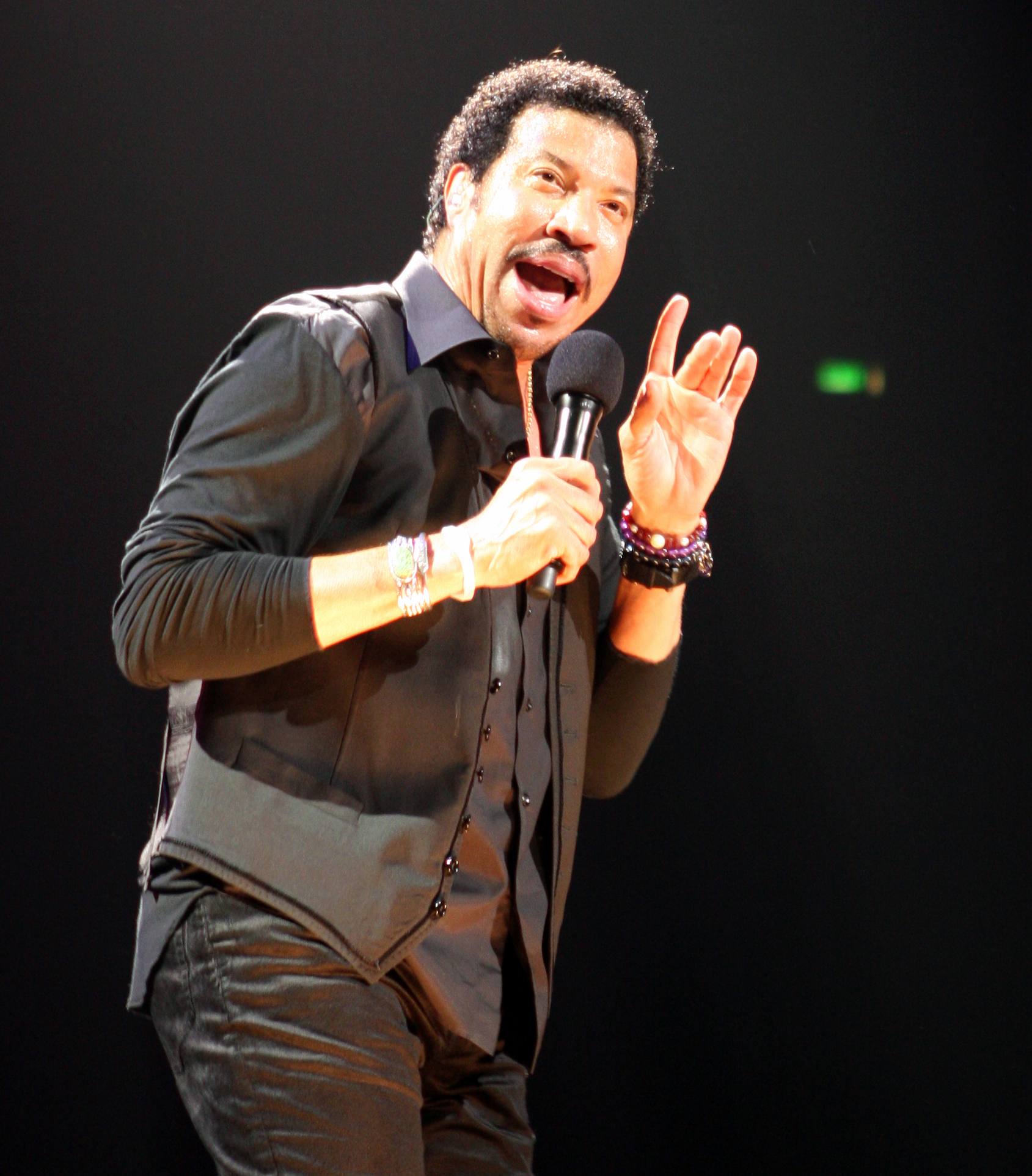
In 2016, Richie received the Songwriters Hall of Fame’s highest honour, the Johnny Mercer Award. In 2022, he received the Gershwin Prize for Popular Song from the Library of Congress, and he was inducted into the Rock and Roll Hall of Fame. He has won four Grammy Awards, including Song of the Year for “We Are the World” and Album of the Year for Can’t Slow Down, and he has sold over ninety million records worldwide. He has served as a judge on American Idol since its sixteenth season in 2018. In September 2025, he released his memoir, Truly, which reached No. 3 on the New York Times Best Seller list for Hardcover Nonfiction. None of those honours belongs to one song alone. But “All Night Long (All Night)” is the record that sits at the centre of them.
Closing: The Night Goes On
There is a reason the song still works, and it is not only the groove or the chorus or the memory of 1983. It is the feeling the record was built to carry. Richie set out to write a song that could bring the whole world onto one dance floor, and he did it with a melody that came easily, a hook that came late, a chant that meant nothing, and a farewell spoken at two in the morning. The pieces should not have fitted together. A soul singer, a Caribbean rhythm, a made-up language, a title borrowed from an ordinary goodbye: on paper, it sounds like a gamble. On record, it sounds like the most natural thing in the world.

That is the gift of the song, and it is the gift of the man who wrote it. Richie understood that a dance floor is not a place for cleverness or for showing off. It is a place for welcome. The best party songs do not ask the listener to understand them. They ask the listener to join them. “All Night Long (All Night)” asks in the plainest way possible, with a title that is also an invitation, a chorus that anyone can sing, and a rhythm that leaves no one standing still. Play it now, forty years on, and the room still answers. The night, it turns out, really does go on.
Leave a Reply