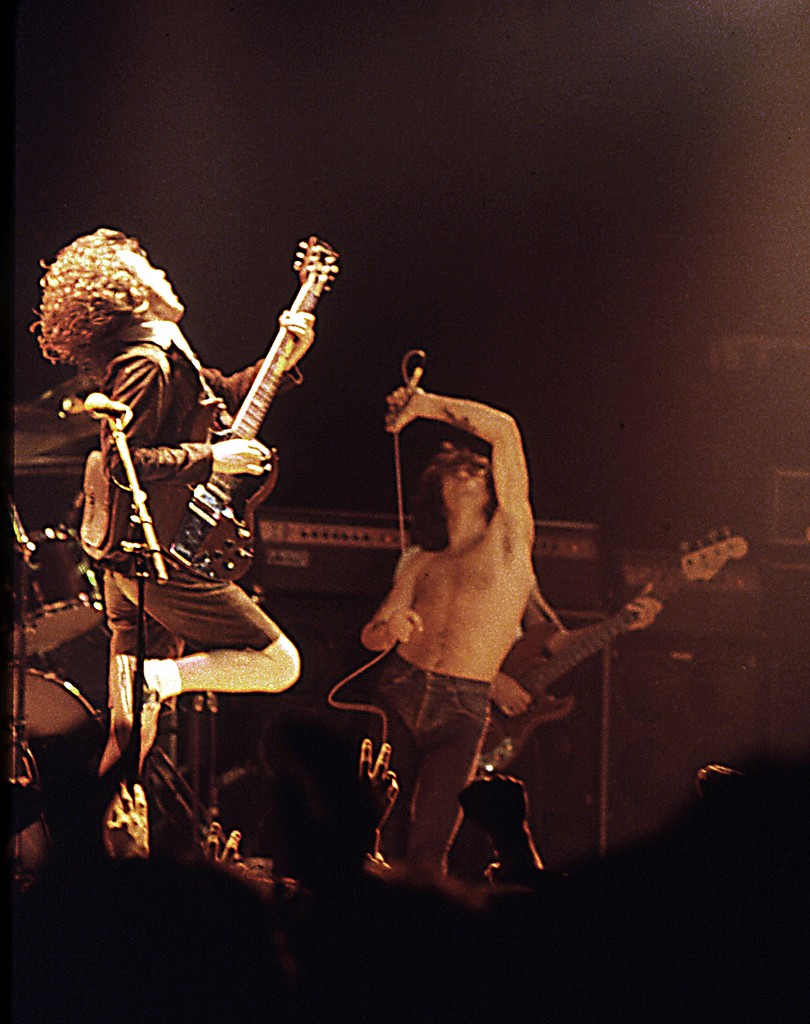
In the summer of 1980, the biggest rock album in the world was made by a band that had just lost its singer — and produced by a man almost nobody had ever seen.
AC/DC’s Back in Black was recorded in the Bahamas, in a studio plagued by tropical storms, with a brand-new singer, Brian Johnson, who had never made a record with the band before. It went on to become the second-best-selling album of all time.
The man behind the mixing desk was Robert John “Mutt” Lange. He had already made Highway to Hell with the same band. He would go on to make Pyromania and Hysteria with Def Leppard, “(Everything I Do) I Do It for You” with Bryan Adams, and Come On Over with Shania Twain — the best-selling country album ever made, and the best-selling album of the entire 1990s.
He has won five Grammy Awards. He has produced records that have sold hundreds of millions of copies. And he has not given an interview in decades.
This is the story of the most successful record producer you have never seen.
Highway to Hell
Lange’s first major hits came in October 1978, when the Boomtown Rats’ “Rat Trap” — which he produced — reached No. 1 in the United Kingdom. But the record that made his name came the following summer.
AC/DC were a hard-living Australian band with a big sound and a singer, Bon Scott, whose voice sounded like gravel soaked in whisky. Their albums sold well, but they had never broken through to the very top. In July 1979, Lange produced Highway to Hell.
It was a harder, cleaner, bigger-sounding AC/DC record than anything the band had made before. The title track became one of the most famous rock songs ever written. The album reached No. 8 in the UK and No. 17 in the United States — the band’s best showing yet.
Then, in February 1980, Bon Scott died. The band nearly broke up. Instead, they found a new singer, Brian Johnson, a former frontman from Newcastle who had once sung in a band called Geordie. And they went back into the studio with Lange.
Back in Black was released in July 1980. It was a tribute to Scott — the black cover, the bell that opens “Hells Bells” — and it was also a perfect record: ten songs, no filler, every one of them built like a machine. It became, as of 2026, the second-best-selling album of all time, behind only Michael Jackson’s Thriller.
Lange produced one more AC/DC album, For Those About to Rock We Salute You (1981). Then he moved on — as he always did, to the next band that needed him.
The Def Leppard Machine
If AC/DC was about power, Def Leppard was about precision — and nobody in rock understood precision like Mutt Lange.
He produced High ‘n’ Dry (1981) for the young Sheffield band, then Pyromania (1983), co-writing most of the songs with the band. Pyromania sold millions, driven by “Photograph” and “Rock of Ages,” and turned Def Leppard from a British metal band into an American arena act.
Then came Hysteria (1987). It took more than three years to make. The band’s drummer, Rick Allen, lost his left arm in a car accident in 1984 and had to learn to play a specially built electronic drum kit. Lange, who co-wrote every song on the album, pushed the band to build the record layer by layer — hundreds of vocal harmonies, guitars stacked like bricks, a drum sound that hit like a cannon.
Hysteria sold more than 25 million copies worldwide. It produced seven hit singles, including “Pour Some Sugar on Me,” “Love Bites,” and “Animal.” It is still the definitive record of 1980s arena rock — and it sounds the way it does because Lange would not let the band stop until every note was exactly where he wanted it.
After Hysteria, Lange stepped away from Def Leppard. He returned in a smaller role in 1999, co-writing three songs for the album Euphoria, including “Promises,” which became a No. 1 hit on the mainstream rock charts.
Sixteen Weeks at Number One
In 1991, Lange produced Bryan Adams’s album Waking Up the Neighbours — and co-wrote its most famous song, “(Everything I Do) I Do It for You,” for the film Robin Hood: Prince of Thieves.
The song spent 16 consecutive weeks at No. 1 in the United Kingdom, from July 7 to October 26, 1991 — a record for the longest run at the top of the British singles chart that still stands. It won Lange a Grammy Award for Best Song Written for a Motion Picture.
It was the same trick he had pulled off again and again: a huge, emotional chorus, sung with total conviction, built on a production so polished that every instrument seems to shine. Lange’s records do not sound like they were recorded. They sound like they were engineered.
The Shania Twain Years
Lange’s most unlikely transformation came in the 1990s, when he turned his attention to country music.
He had heard the music of a young Canadian singer named Shania Twain and got in touch with her. They spent hours talking on the phone before they ever met in person. Six months after their first contact, they met — and on December 28, 1993, they married.
Together, they made three albums: The Woman in Me (1995), Come On Over (1997), and Up! (2002). Lange co-wrote nearly every song on all three.
Come On Over became the best-selling country music album of all time, the best-selling studio album by a female artist, the best-selling album of the 1990s, and the ninth best-selling album ever released in the United States. Songs like “You’re Still the One,” “Man! I Feel Like a Woman!,” and “That Don’t Impress Me Much” turned Twain into a global superstar — and made Lange, a rock producer from South Africa, the most successful country producer in history.
The marriage ended in divorce in 2010. Lange has said almost nothing about it in public — which is how he handles almost everything in public.
The Disappearing Act
By any measure, Robert John Lange is one of the most successful record producers who ever lived. He has produced albums for AC/DC, Def Leppard, Foreigner, the Cars, Bryan Adams, Michael Bolton, Heart, Billy Ocean, Huey Lewis and the News, the Corrs, Nickelback, Maroon 5, and Muse — whose 2015 album Drones won him his fifth Grammy, for Best Rock Album.
And yet almost nobody knows what he looks like. He is a strict vegetarian and a follower of the egalitarian teachings of Sant Mat. He has not given an interview in decades. He lives a secluded life in La Tour-de-Peilz, Switzerland, and in New Zealand, where in 2011 he bought Coronet Peak Station, a vast high-country farm near Queenstown. In 2014, he placed 53,000 hectares of that land under a conservation covenant — the largest private conservation covenant in New Zealand’s history.
He does not do award shows. He does not do documentaries. He does not explain himself.
In a business built on fame, Mutt Lange built the biggest career of all by staying invisible — and letting the records speak for him.
Five Grammys and a Hundred Records
The awards tell the story in shorthand. Lange has won five Grammy Awards: in 1991 for “(Everything I Do) I Do It for You,” as Best Song Written for a Motion Picture; in 1995 for Shania Twain’s The Woman in Me, as Best Country Album; in 1998 for “You’re Still the One,” as Best Country Song; in 1999 for Come On Over, as Best Country Song; and in 2016 for Muse’s Drones, as Best Rock Album.
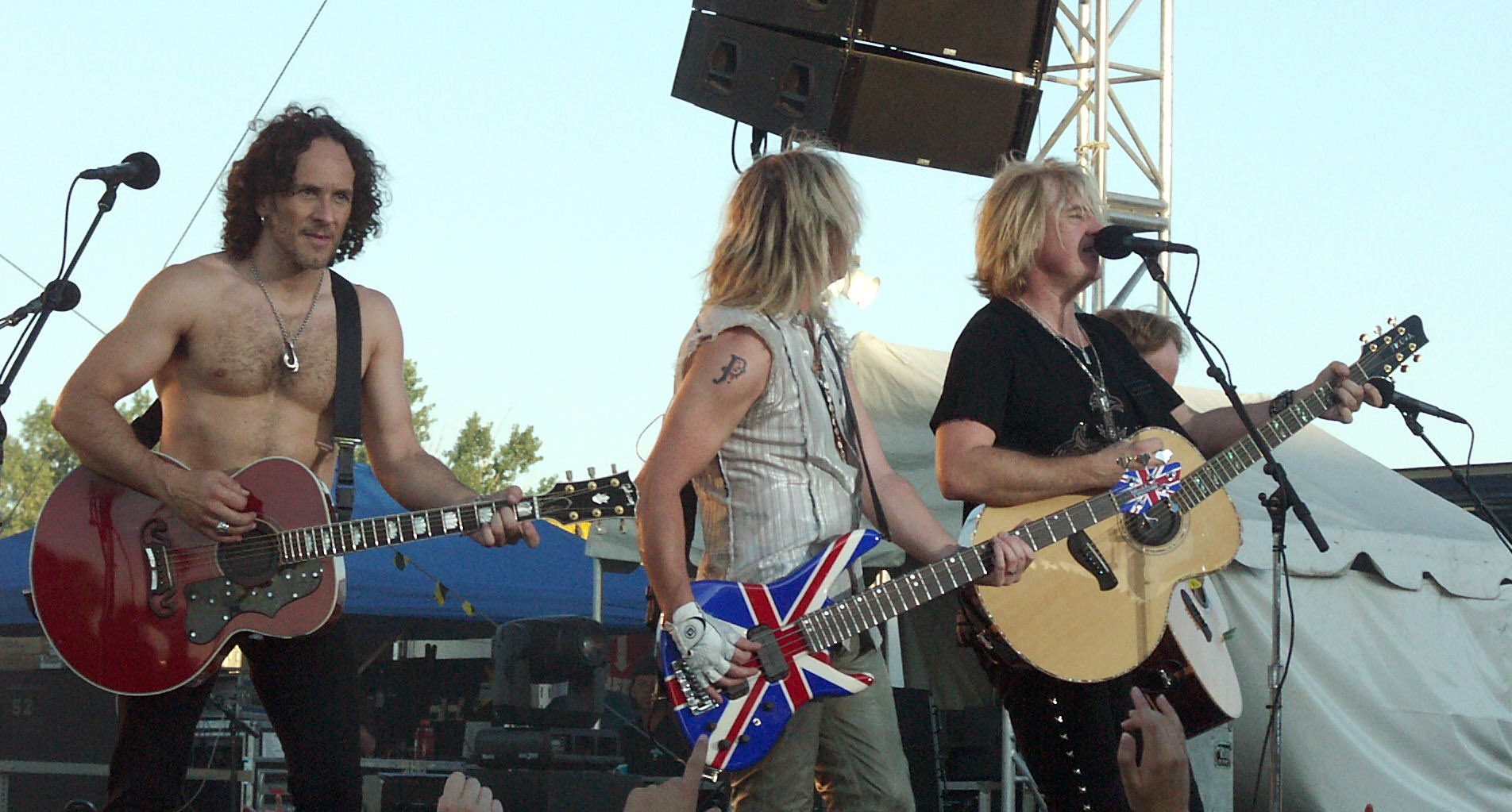
The full list of records he has produced reads like a history of popular music from 1978 to the present day. Beyond the famous ones, there is Foreigner’s 4 (1981), the Cars’ Heartbeat City (1984), Billy Ocean’s Tear Down These Walls (1988), Heart’s Brigade (1990), Bryan Adams’s 18 til I Die (1996), the Corrs’ In Blue (2000), Nickelback’s Dark Horse (2008), and Maroon 5’s Hands All Over (2010). He produced five albums for the British band City Boy between 1976 and 1979, and worked early in his career with Graham Parker, the Motors, Clover, the Rumour, and Savoy Brown.
He also wrote or co-wrote songs for artists he never produced as albums — Britney Spears’s “Don’t Let Me Be the Last to Know,” the Backstreet Boys’ “It’s Gotta Be You,” Heart’s “All I Wanna Do Is Make Love to You,” and “All for Love,” the 1993 hit by Bryan Adams, Rod Stewart, and Sting for The Three Musketeers.
No other producer has crossed so many genres — hard rock, pop, country, glam metal — and dominated all of them. AC/DC, Def Leppard, Bryan Adams, Shania Twain, Muse: five different worlds, one pair of ears.
Robert John Lange: The Boy from Northern Rhodesia Who Never Wanted to Be Seen
To understand the producer, you have to understand where he came from — because almost nothing about his background suggested the career he would have.
Growing Up in Durban
Robert John Lange was born on November 11, 1948, in Mufulira, in Northern Rhodesia — the country now known as Zambia. He grew up in Durban, South Africa. His parents were German; his father was a mining engineer.
He was nicknamed “Mutt” at an early age. Growing up, he was a fan of country music — in particular the singer Slim Whitman, whose yodelling ballads were hugely popular in South Africa. While studying at Belfast High School in what is now Mpumalanga province, he started a band in which he played rhythm guitar and sang harmonies.
After his national service in 1966 and 1967, he formed a band called Sound Reason in 1969, with the South African actor James Borthwick. In 1971, he began a group called Hocus, which recorded one album and released five singles. He married his school friend Stevie Vann, and the two of them emigrated to the United Kingdom in the 1970s, where Lange began working as a producer.
The Long Climb
Lange’s production career began in 1976, and it was a slow climb. He produced five albums for the British band City Boy between 1976 and 1979, and worked with Graham Parker, the Motors, Clover, the Rumour, and Savoy Brown. He wrote and produced Ipswich Town’s FA Cup Final single, “Ipswich Get That Goal,” in 1978.
Then came “Rat Trap” and Highway to Hell — and suddenly, every rock band in the world wanted the man who could make them sound that big.
What set him apart was patience. Where other producers worked fast, Lange worked slowly, obsessively, sometimes for years on a single album. He stacked harmonies until a chorus sounded like a choir. He tuned drums until they sounded like gunshots. He made singers record a line fifty times until the feeling was right. Bands sometimes hated the process. They almost always loved the result.
The Recluse of La Tour-de-Peilz
Lange’s private life has always been exactly that — private. He married the actress Olga Anthony in 1979, and later Shania Twain, with whom he had a son, born in August 2001. After the marriage ended, he married Marie-Anne Thiébaud and settled in Switzerland.
He is a teetotaler. He does not give interviews. He does not attend his own album launches. The few photographs of him that exist are decades old. In an industry where producers now brand themselves like pop stars, Lange remains a ghost — a name in the small print of the biggest-selling records ever made.

The Producer Who Let the Records Speak
On November 11, 2026, Mutt Lange turns 78. There will be no party, no interview, no social media post. He will almost certainly spend the day the way he spends most days: out of sight.
That is the strangest thing about his career. In popular music, the people who make the sound are usually the people who want to be heard. Lange wanted the opposite. He wanted to disappear into the work — and the work turned out to be some of the most-heard music ever recorded.
Put on Back in Black. Put on Hysteria. Put on Come On Over. The guitars are huge, the choruses are enormous, and every note lands exactly where it is supposed to. That is not an accident. That is Mutt Lange — the invisible man behind the biggest sound in music.
Leave a Reply