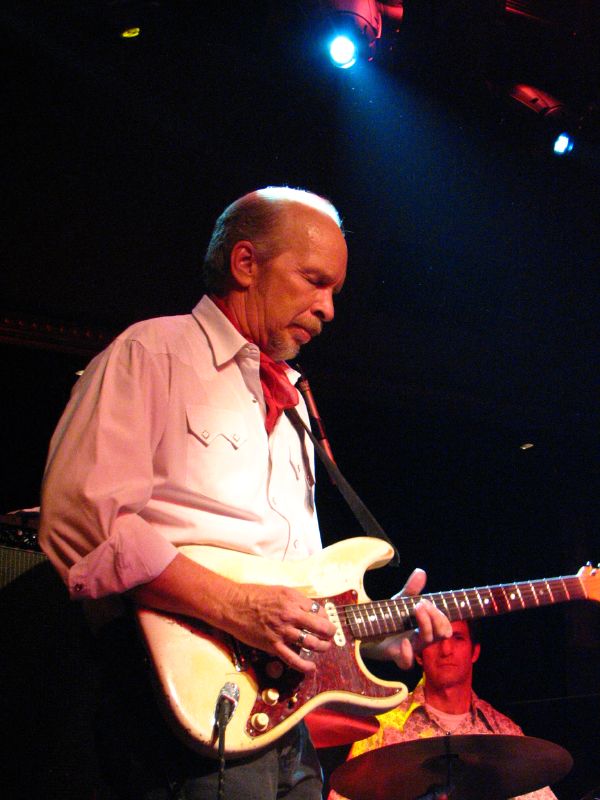
It is a night in Los Angeles in the late 1960s, and two teenage brothers from Downey are standing in a crowded blues club, a long way from home.
They are not supposed to be there. They are too young, and the room is full of smoke and grown men and the smell of beer. But on the stage in front of them is the real thing: a bluesman playing guitar the way it was meant to be played, singing songs that are older than the boys watching him. The older brother, Phil, is already learning to sing like that. The younger one, Dave, is watching the guitar player’s hands.
They have come to hear men like Joe Turner and T-Bone Walker — the giants of rhythm and blues and the electric blues — and they are learning firsthand, the way musicians used to learn: by standing close enough to see how it is done.
Dave Alvin never really left that room. For more than forty-five years, through the Blasters, through X, through a solo career that has taken him from punk clubs to the Grammy Awards, he has played the music he heard in those Los Angeles clubs as a teenager: rockabilly, blues, country and rock and roll, mixed together and played loud. He calls it American music. On November 11, 2026, he turns 71 — still playing, still writing, still telling stories between the songs.
This is the story of how a kid from Downey became one of the great keepers of the American songbook.
Two Brothers from Downey
David Albert Alvin was born on November 11, 1955, in Downey, California, a working-class suburb of Los Angeles. He grew up in a household filled with music, where his parents exposed their sons to all kinds of American music. Dave and his older brother Phil spent their teenage years haunting the blues, rockabilly and country music venues of Los Angeles, watching the musicians they idolised. Dave later attended Long Beach State University.
The brothers made friends with bassist John Bazz and drummer Bill Bateman, two more Downey boys, and the four of them were brave enough — or foolish enough — to go into Los Angeles blues clubs to watch their idols. They learned firsthand from the likes of Joe Turner and T-Bone Walker. Phil’s mother would drive the boys anywhere, and around 1965 or 1966 she took Phil to see Sonny Terry and Brownie McGhee; at Phil’s request, Big Joe Williams introduced him to Terry, and Phil wound up taking harmonica lessons from him. Another mentor was tenor saxophonist Lee Allen, who later joined the Blasters.
It was an education no school could offer: the sound of the blues, played live, by the men who had invented it.
The Blasters: American Music, Played Loud
In 1979, Dave and Phil Alvin formed the Blasters with Bazz and Bateman. Dave was the group’s lead guitarist and chief songwriter. Their self-described “American Music” was a blend of rockabilly, early rock and roll, punk rock, mountain music, rhythm and blues and country — the whole noisy history of American popular music, played by a band that had grown up listening to all of it at once.
The band’s name came from Phil. As he later explained, he thought Joe Turner’s backup band on his Atlantic records — the 78s he owned — were called the Blues Blasters. In fact, it was Jimmy McCracklin’s band. But when Phil told Joe Turner about the mistake, Turner told him he had his permission to steal the name. Phil just took the “Blues” off.
The Blasters released their debut album, American Music, in 1980, followed by the self-titled The Blasters in 1981, Non Fiction in 1983 and Hard Line in 1985. Gene Taylor joined on boogie-woogie piano after the first album, and Steve Berlin joined on baritone sax, forming a horn tandem with Lee Allen. The band’s energetic live performances won them a devoted local following, and they became fixtures of the early 1980s Los Angeles punk rock scene, performing alongside X, Black Flag, the Gun Club and the Screamers.
The Rough Guide to Rock noted the ever-increasing numbers of original songs Dave Alvin wrote for the Blasters — songs about cars, girls, the working man and road dreams — and how he matured into a great songwriter. Other artists noticed too. His song “Marie Marie” became a British-German top 20 hit in 1980 for Shakin’ Stevens, and Dwight Yoakam recorded Dave’s “Long White Cadillac” in 1989, putting it at the front of his album Just Lookin’ for a Hit.
The Blasters toured almost continuously. The notes for The Blasters Collection observed that in one particular month, they toured with the all-girl band the Go-Go’s, psychobilly pioneers the Cramps, western swing revivalists Asleep at the Wheel — and on a leg of Queen’s west coast tour. They also helped other bands along the way: they toured with country singer Dwight Yoakam in 1985 and helped him get established, and they invited the young East Los Angeles band Los Lobos to open for them, helping them land their first record deal.
The band even made it to the movies. They appeared as themselves in Walter Hill’s film Streets of Fire (1984), performing two songs, “One Bad Stud” and “Blue Shadows.” Their song “Dark Night” was featured in a 1985 episode of Miami Vice, and later played over the opening sequence of the film From Dusk till Dawn.

Leaving the Band He Built
Like many pairs of rock and roll siblings, the Alvins fought with each other. The tension came to a head on October 23, 1985, during a gig in Montreal at the Spectrum, when pianist Gene Taylor quit that night. Dave Alvin quit too, joining X for a brief stint — though he returned briefly in early 1986 amid plans to record a new album with Nick Lowe as producer. That did not work out, and Dave left the Blasters for good, save for occasional reunions.
As Dave later explained, the internal tension in the band extended beyond his tumultuous relationship with Phil. Ultimately, he wanted to sing his own songs, while his brother Phil was the established lead vocalist of the group. He had spent seven years writing the songs and playing lead guitar; now he wanted to be the one standing at the microphone.
His time with X was brief. He served as the Los Angeles alternative rock band’s lead guitarist, and left in 1987 after the group recorded their album See How We Are. He was also a member of the Knitters, the country-folk offshoot of X, appearing on their 1985 album Poor Little Critter on the Road and their 2005 follow-up, The Modern Sounds of the Knitters. And in the early 1980s, Dave, along with fellow Blasters members Bill Bateman and Steve Berlin, had performed on A Minute to Pray, A Second to Die by the Los Angeles punk band the Flesh Eaters — a lineup that reunited for shows in 2006 and 2015, and issued a new album, I Used to Be Pretty, in 2019.
The Solo Years: From Romeo’s Escape to a Grammy
Dave Alvin’s first solo album, Romeo’s Escape — released in England as Every Night About This Time — came out in 1987. It was well received by critics but did not sell well, and Columbia Records terminated his recording contract. He toured with Mojo Nixon and Country Dick Montana, billed as the Pleasure Barons; an album recorded live on their 1993 tour was later released.
His second solo album, Blue Blvd, was released by Hightone Records in 1991. It received positive reviews and had moderate sales. Museum of Heart followed in 1993, and in 1994 he recorded King of California, an album of acoustic music. In 1998 came Blackjack David, the album and song that gave him the nickname he still uses for himself: “Blackjack Dave.”
Then, in 2000, he recorded Public Domain: Songs From the Wild Land, a collection of traditional folk and blues classics. The album earned him a Grammy Award for Best Contemporary Folk Album — the highest honour of his career, and a recognition that the music he had learned in those Los Angeles clubs as a teenager was, in fact, the foundation of American popular music.
He kept recording through the 2000s and beyond: Ashgrove in 2004, West of the West in 2006, Dave Alvin and the Guilty Women in 2009. In 2011, he recorded the album Eleven Eleven, released by Yep Roc Records, which marked his return to his rock roots. Rolling Stone magazine, in a review of the album, called Alvin “an underrecognized guitar hero.”

Brothers Again
For all the years apart, the Alvin brothers never stopped being brothers. In 2014, Dave and Phil Alvin, as a duo, released the album Common Ground, consisting of their versions of songs by Big Bill Broonzy. It was the first studio collaboration of the brothers since the mid-1980s. In 2015 they released Lost Time, a collection of covers including four songs by Big Joe Turner — the very singer whose records had given the Blasters their name.
In live performance, Dave assumed the role of emcee and storyteller, and the brothers worked Blasters tunes into the set list. The shows were a reminder of what the two of them had always been together: two Downey kids who had learned American music at the feet of the masters, and who could still play it like they meant it.
Dave also teamed up with Texas singer-songwriter Jimmie Dale Gilmore on the 2018 album Downey to Lubbock — the title a reference to where each man grew up — and the two recorded a follow-up, TexiCali, in 2024. As in his live performances with his brother Phil, Dave’s stories between songs were a notable part of the stage shows with Gilmore.
In April 2022, Dave announced his return to public performance after a gruelling two-year battle with different forms of cancer that had started in May 2020. He chose to do so with Gilmore, scheduling nine dates in California for late June and early July 2022. He had, as Rolling Stone put it, a story to tell about surviving — and he told it the way he always had: on stage, with a guitar in his hands.
The Producer, the Poet and the Actor
Beyond his own records, Dave Alvin has spent decades helping other musicians make theirs. He has produced records for Chris Gaffney, Tom Russell, the Derailers, Big Sandy & His Fly-Rite Boys and Red Meat, and collaborated with the rockabilly musician Sonny Burgess. He has worked as a studio session musician accompanying Ramblin’ Jack Elliott, Little Milton, Katy Moffatt and Syd Straw, and lent his guitar to other artists’ albums — including two songs on the Gun Club’s 1984 album The Las Vegas Story.
He has also appeared on screen: in the movies Border Radio and Floundering, in Streets of Fire with the Blasters, and on the FX television series Justified in 2011.
And he writes. Dave has published two books of poetry, Any Rough Times Are Now Behind You and Nana, Big Joe & the Fourth of July, and his poetry has appeared in literary magazines and anthologies of Los Angeles poets. A collection of his writing, New Highway: Selected Lyrics, Poems, Prose, Essays, Eulogies and Blues, was published in 2022. In the 2020s he has also recorded with the band the Third Mind, releasing their debut album in 2020.
Why He Still Matters
Dave Alvin never had a hit single of his own. He never became a household name. What he became instead is something rarer: a musician other musicians trust with the music itself.
His songs have been recorded by Shakin’ Stevens, Dwight Yoakam and Buckwheat Zydeco. His guitar has backed Ramblin’ Jack Elliott and Little Milton. His records have been praised by critics for decades, and his Grammy sits on the shelf as proof that the establishment eventually caught up with what the clubs of Los Angeles already knew.
He is, in the end, what he set out to be in that blues club as a teenager: a man who learned American music from the people who made it, and who has spent his life passing it on — one song, one story, one guitar solo at a time.
Dave Alvin: The Downey Kid Who Carried American Music on His Guitar
To understand Dave Alvin, you have to understand where he came from — and what he was listening to before he ever picked up a guitar of his own.
A House Full of Music
Dave Alvin grew up in Downey, California, in a household filled with music. His parents exposed their sons to all kinds of American music, and as teenagers Dave and his older brother Phil frequented the blues, rockabilly and country music venues of Los Angeles. They were not just fans; they were students. They watched Joe Turner and T-Bone Walker up close, and Phil took harmonica lessons from Sonny Terry after being introduced by Big Joe Williams.
Dave attended Long Beach State University, but his real education happened after dark, in the clubs. It was there that he absorbed the sounds that would define his entire career: the twang of rockabilly, the swing of rhythm and blues, the ache of country music, the fire of the blues.
The Blasters Years
In 1979, the Alvin brothers formed the Blasters with John Bazz and Bill Bateman. Dave was the lead guitarist and chief songwriter, and the band’s blend of rockabilly, early rock and roll, punk, mountain music, rhythm and blues and country made them one of the most exciting live bands in Los Angeles.
They released four studio albums in six years — American Music (1980), The Blasters (1981), Non Fiction (1983) and Hard Line (1985) — and toured relentlessly, sharing bills with everyone from the Go-Go’s to Queen. Critic Mark Deming later wrote of the Blasters that they were “a supremely tight and tactful band with enough fire, smarts, and passion for two or three groups.”
But the brothers fought, as brothers do, and in 1985 and 1986 Dave walked away — first to X, then to the Knitters, then to a solo career of his own.

Going Solo
The solo years were not easy at first. His debut, Romeo’s Escape (1987), was praised by critics and ignored by buyers, and Columbia dropped him. But he rebuilt his career album by album on independent labels — Blue Blvd (1991), Museum of Heart (1993), King of California (1994) — until Public Domain (2000) won him the Grammy for Best Contemporary Folk Album.
Along the way he became a producer, a session musician, a poet and an actor, and he gave himself the nickname “Blackjack Dave” after his 1998 album Blackjack David. He was, by then, exactly what Rolling Stone would later call him: an underrecognized guitar hero.
The Later Years
The 2010s brought the brothers back together. Common Ground (2014) and Lost Time (2015) were the first studio collaborations between Dave and Phil Alvin since the mid-1980s, and their live shows together — with Dave as emcee and storyteller — were warm, funny and full of Blasters songs.
Then came the cancer diagnosis in May 2020, and two hard years away from the stage. His return in the summer of 2022, playing nine California dates with Jimmie Dale Gilmore, was a quiet triumph: the Downey kid, back where he belonged, doing what he had always done.
He has kept going since — recording TexiCali with Gilmore in 2024, publishing New Highway in 2022, and playing the music he first heard in those Los Angeles clubs more than fifty years ago.
The Man Who Never Left the Blues Behind
Dave Alvin turns 71 on November 11, 2026. He is still touring, still recording, still writing songs about cars, girls, the working man and road dreams — the subjects the Rough Guide to Rock noted in his Blasters songs all those years ago.
Other musicians have had bigger hits. Few have had a longer, truer relationship with the music itself. Dave Alvin learned American music from the people who invented it, carried it through punk rock and into the present day, and handed it on to everyone who was listening. That is a life’s work. And it is still going.
Leave a Reply