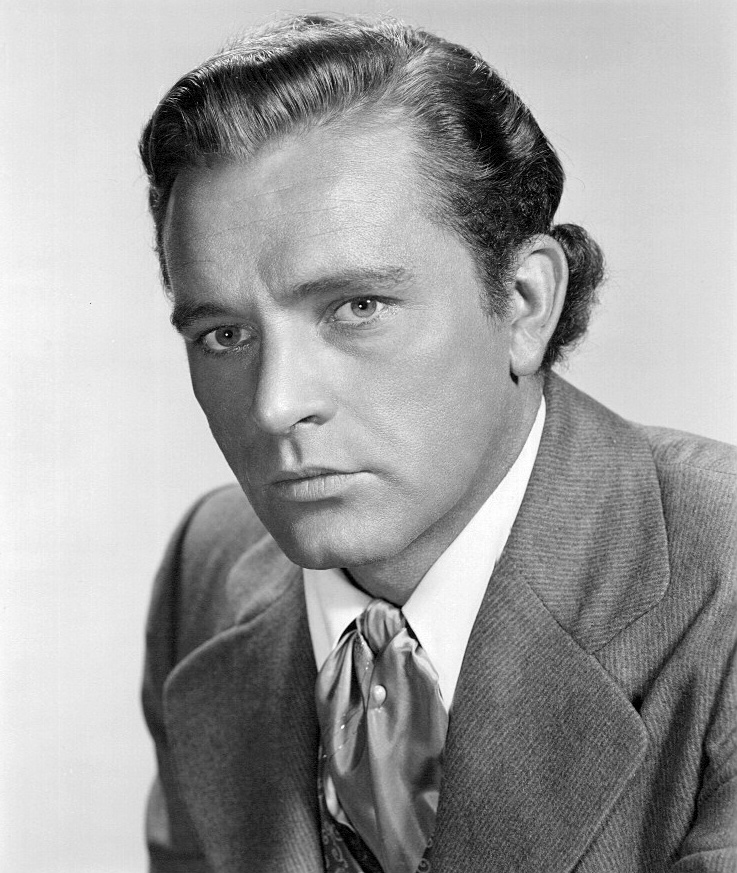
It is a cold morning in November 1925, in a small Welsh mining village tucked between steep green hills.
Inside a terraced house at 2 Dan-y-bont in Pontrhydyfen, a baby is born — the twelfth of thirteen children in a Welsh-speaking family that has almost nothing except its language, its chapel, its rugby, and its voices.
Nobody in that house could have guessed what that voice would become.
People would call it the finest speaking voice of its century. They would say it could sing like a violin and shake the floor like a bass. They would call its owner the natural successor to Laurence Olivier — and then, in the same breath, that he had wasted the greatest talent of his generation.
He was Richard Walter Jenkins Jr. — the world would know him as Richard Burton.
This is the story of how a coal-miner’s son from Pontrhydyfen became one of the most famous actors on earth — and why, a hundred and one years after his birth on 10 November 1925, his voice still has not faded.
The Voice from the Valleys
To understand Richard Burton, you have to start with the place that made him — and with what it took from him before he was old enough to remember it.
Pontrhydyfen, in Glamorgan, Wales, was a mining village. His father, Richard Walter Jenkins Sr., was a coal miner, a man his son later described as a heavy drinker who sometimes went off on drinking and gambling sprees for weeks. His mother, Edith Maude Jenkins, worked as a barmaid at the Miners Arms, the village pub where she had met her husband.
Burton was not quite two years old when his mother died, on 31 October 1927, six days after giving birth to Graham Jenkins, the family’s thirteenth child. Her death was a result of postpartum infections. He would later describe her as a very strong woman, a religious soul with fair hair and a beautiful face — a woman he barely had time to know.
After Edith’s death, Richard’s elder sister Cecilia — “Cis” to the family — and her husband Elfed James, also a miner, took him under their care. He lived with them until he was seventeen, in their three-bedroom terraced cottage at 73 Caradoc Street, Taibach, a district of Port Talbot. Burton remained grateful to Cis for the rest of his life. When his mother died, he later said, his sister had become his mother, and more than any mother could ever have been.
Another important figure was his brother Ifor, nineteen years his senior. A miner and a rugby union player, Ifor ruled the household with a firm hand — and he gave the young Richard a lifelong passion for rugby. Richard played cricket, tennis and table tennis too, but rugby was his greatest interest. He once said he would rather have played for Wales at Cardiff Arms Park than Hamlet at the Old Vic. The Welsh centre Bleddyn Williams believed the young Richard had distinct possibilities as a player.
But there was another gift, obvious even in childhood. Richard had an excellent speaking and singing voice from boyhood, winning an eisteddfod prize as a boy soprano. At Port Talbot Secondary School, which he entered after passing a scholarship exam in March 1937 — the first member of his family to go to secondary school — he showed an immense interest in reading poetry and in English and Welsh literature.

Philip Burton and the Name Change
In 1939, Richard won a certificate at an eisteddfod at Maesteg Town Hall and wanted to repeat his success. He chose to sing Sir Arthur Sullivan’s “Orpheus with his Lute”, a difficult composition, and asked his schoolmaster, Philip Burton, for help. His voice cracked during their practice sessions. That small failure marked the beginning of the most important relationship of his life.
Philip later recalled that Richard’s voice was tough to begin with, but with constant practice it became memorably beautiful. Richard made his first foray into theatre with a minor role in his school’s production of George Bernard Shaw’s The Apple Cart. He decided to leave school by the end of 1941 and work as a miner like Elfed. Instead, he ended up with a job he came to dislike intensely, as a draper’s assistant in the menswear department of the local Taibach Co-operative store, limited at the time by wartime rationing. He also considered other professions — boxing, the religious ministry, singing — and he took up smoking and drinking despite being underage.
When he joined the Port Talbot Squadron of the Air Training Corps as a cadet, he re-encountered Philip, who was the squadron commander. He also joined the Taibach Youth Centre, a youth drama group, where a steel worker and amateur thespian named Leo Lloyd taught him the fundamentals of acting. Philip gave him a part in a radio adaptation of his play for BBC Radio, Youth at the Helm, in 1942, and Philip and the youth centre’s founder re-admitted him to school on 5 October 1942.
Philip tutored him intensely — in school subjects and in the acting voice, including outdoor voice drills that improved his projection. Richard called it the most hardworking and painful period of his life. Philip called Richard his son to all intents and purposes. Burton later wrote of Philip: “I owe him everything.”
In March 1943, aged seventeen, Richard left his sister’s home after his brother-in-law resented supporting his resumed education. Philip arranged his transfer to the home of Elizabeth “Ma” Smith, where Philip himself lodged. Philip had planned to adopt Richard, but he was twenty days too young to be twenty-one years older than his adoptee, a legal requirement. Instead, with his father’s consent, Richard became Philip’s legal ward and, just aged eighteen, changed his surname by deed poll on 26 November 1943 to “Burton”, after Philip’s own surname.
Richard Walter Jenkins Jr. was gone. Richard Burton had arrived.
Oxford, the RAF, and the First Stage Steps
It was also in 1943 that Richard qualified for admission to university after excelling in the School Certificate Examination. Philip asked him to study at Exeter College, Oxford, as part of a six-month scholarship programme offered by the RAF for qualified cadets before active service.
In 1943, Burton played Professor Henry Higgins in a school production of another Shaw play, Pygmalion, directed by Philip. The role won him favourable reviews and caught the attention of the dramatist Emlyn Williams, who offered Burton a small role as Glan, the lead character’s elder brother, in his play The Druid’s Rest. The play debuted at the Royal Court Theatre, Liverpool, on 22 November 1943, and later premiered at St Martin’s Theatre, London, in January 1944. Burton thought the role was a nothing part and that he hardly spoke at all. He was paid ten pounds a week — three times what the miners got. One sentence from a critic, James Redfern of the New Statesman, changed his life: “In a wretched part, Richard Burton showed exceptional ability.”
While an undergraduate at Exeter College, Burton played Angelo in the Oxford University Dramatic Society’s 1944 production of Shakespeare’s Measure for Measure, directed by his English literature professor Nevill Coghill. John Gielgud, Terence Rattigan and the producer Binkie Beaumont were in the audience. The actor Robert Hardy, a friend, recalled that there were moments when Burton totally commanded the audience by his stillness — and by a voice which would sing like a violin and with a bass that could shake the floor.
In late 1944, Burton completed his six-month scholarship at Exeter College and went to RAF classification examinations in Torquay to train as a pilot. He was disqualified for pilot training because his eyesight was below par, and was classified as a navigator trainee. He had a short posting for training at a temporary RCAF base in Carberry, Manitoba, Canada. He served in the RAF for three years, assigned as an Aircraftman 1st Class to an administrative role in a Wiltshire-based RAF hospital, RAF Wroughton. His habits of drinking and smoking increased during this period.
He had been to Oxford. He had been on a London stage. He had been praised by the greatest names in British theatre. He was still only nineteen.
The Natural Successor to Olivier
On stage, Burton established himself as a Shakespearean actor of the first rank. In 1951 alone he played Prince Hal in Henry IV, Part 1 and Henry IV, Part 2, Henry V in Henry V, and Ferdinand in The Tempest. In 1953 he played Prince Hamlet in Hamlet, Sir Toby Belch in Twelfth Night, and Coriolanus in Coriolanus. In 1955 he played Othello in Othello.
The critic Kenneth Tynan called him “the natural successor to Olivier”. It was the highest praise in British theatre — and, in time, a burden. Burton’s perceived failure to live up to those expectations disappointed some critics and colleagues. His heavy drinking added to his reputation as a great performer who had wasted his talent. That judgement, fair or not, would follow him for the rest of his life.
Yet the stage never let him go, and he never quite let it go either. In 1960 he won the Tony Award for Best Actor in a Musical for his portrayal of King Arthur in the Lerner and Loewe musical Camelot. In 1964 he played Hamlet on Broadway — the role that had defined him as a young Shakespearean, now carried to the biggest commercial stage in the English-speaking world. The production made him a theatrical star in America as well as in Britain, and it confirmed what audiences had heard since Oxford: no actor of his generation could fill a theatre with sound the way Burton could.
That voice — powerful, musical, unmistakably Welsh — was his signature. It was noted for its presence and its baritone richness, and it became the thing people remembered even when they forgot the play or the film. Burton could make ordinary lines sound like poetry, and poetry sound like something spoken for the first time.
Hollywood Comes Calling
Burton made his feature film debut in the British drama The Last Days of Dolwyn in 1949. He gained attention for his role as Philip Ashley, the protagonist in the romantic mystery My Cousin Rachel, earning his first Academy Award nomination, for Best Supporting Actor.
Hollywood took notice. His second Oscar nomination came for The Robe (1953), and he was a leading man now — dark, intense, and in demand on both sides of the Atlantic.
What followed was one of the most remarkable runs of screen acting of the 1960s. Burton was nominated for the Academy Award for Best Actor for Becket (1964), for The Spy Who Came In from the Cold (1965), and for Who’s Afraid of Virginia Woolf? (1966). He was nominated again for Anne of the Thousand Days (1969) and, in his final nomination, for Equus (1977). Seven Academy Award nominations in all. He never won an Oscar.
That fact has become part of his legend — the great actor without the great prize. But the nominations themselves tell the story of his range. In Becket he was Thomas Becket, the Archbishop of Canterbury, opposite Peter O’Toole’s Henry II. In The Spy Who Came In from the Cold he was Alec Leamas, a weary British intelligence officer in a grey, rain-soaked world of betrayal. In Who’s Afraid of Virginia Woolf? he was George, a history professor locked in a long night of savage, funny, heartbreaking verbal combat with his wife Martha.
Those three performances, in three consecutive years, showed three different Burtons: the saint, the spy, and the husband at war.
Along the way he also received a BAFTA Award, a Golden Globe Award and a Grammy Award, and he was appointed CBE. The honours came. The Oscar did not.
Cleopatra and the Storm
No single film shaped Burton’s public life more than Cleopatra (1963).
On Cleopatra he starred opposite Elizabeth Taylor, playing Mark Antony to her Queen of Egypt. The film became one of the most famous productions of its era, and the two stars became the most famous couple on earth. Burton has remained closely associated in the public mind with Taylor, his second and third wife, because of their publicly turbulent relationship, in which they married and divorced twice — and starred in eleven films together.

Their first marriage lasted from 1964 to 1974. They married again in 1975, and divorced again in 1976. It was a love story conducted in front of the world’s cameras — glamorous, furious, tender, exhausting — and it made Burton a tabloid figure as well as a serious actor. For the rest of his life, many people who had never seen him play Hamlet or Becket knew him first as Elizabeth Taylor’s husband.
That fame had a price. The attention that followed the couple everywhere made it harder to see the actor behind the headlines, and it fed the other reputation that trailed Burton: the drinking, and the sense of a man who had been given everything and was spending it too fast. Critics who had once called him Olivier’s successor now wrote about wasted talent.
And yet the work continued. Who’s Afraid of Virginia Woolf? — made with Taylor — is still regarded as one of the great screen performances by a married couple, and one of the great films of the 1960s. Whatever the chaos around them, on screen Burton and Taylor could still hold an audience without letting go.

The Voice
If there is one thing to take from Richard Burton’s life, it is the voice.
It was the voice that won him the eisteddfod prize as a boy soprano in Wales. It was the voice Philip Burton drilled outdoors until it could fill a theatre without strain. It was the voice Robert Hardy heard at Oxford, singing like a violin and shaking the floor like a bass. It was the voice that made Hamlet and Henry V and Othello feel inevitable, and that made film audiences lean forward even in the quietest scenes.
Burton’s voice was not just loud. It was musical, precise, and full of feeling — a baritone that could be tender one moment and terrifying the next. Long after the films fade and the gossip is forgotten, recordings of that voice still stop listeners in their tracks.

Later Life and Final Years
Burton’s later years were quieter than the storm of the 1960s, but he kept working. His seventh and final Academy Award nomination, for Equus in 1977, came more than twenty-five years after his first, for My Cousin Rachel — a span that few actors of any generation can match. It was proof that, whatever the headlines said, directors and the Academy still believed in his power as an actor.
He died on 5 August 1984, aged fifty-eight, in Céligny, Switzerland, where he is buried in the Old Cemetery — the Vieux Cimetière — of Céligny. He had been active as an actor from 1943 to 1984, a career of more than forty years that began on a school stage in Wales and ended as one of the most recognisable faces in world cinema.
He left four children, a shelf of honours, seven Oscar nominations without a win, and a reputation that still divides opinion: the greatest actor of his generation, or the greatest waste of talent. Perhaps he was both.
Richard Burton: The Coal-Miner’s Son Who Became a Star
To understand the films and the fame, you have to understand the man — and his story begins in a place about as far from fame as you could imagine.
Born in a Mining Village
Richard Walter Jenkins Jr. was born on 10 November 1925 at 2 Dan-y-bont in Pontrhydyfen, Glamorgan, Wales, the twelfth of thirteen children of coal miner Richard Walter Jenkins Sr. and Edith Maude Jenkins, a former barmaid at the Miners Arms. His mother died when he was not yet two. His sister Cis and her husband Elfed raised him in Port Talbot, and his brother Ifor, a miner and rugby player, gave him a love of rugby so strong that Burton once said he would rather have played for Wales at Cardiff Arms Park than Hamlet at the Old Vic.
Schooldays and the Teacher Who Changed Everything
In March 1937 he passed a scholarship exam for Port Talbot Secondary School, the first member of his family to go to secondary school. His schoolmaster Philip Burton trained his voice after it cracked while he was practising Sullivan’s “Orpheus with his Lute” for an eisteddfod in 1939, brought him back to school in 1942, and took him in as his legal ward. On 26 November 1943, aged eighteen, Richard changed his surname by deed poll to Burton. He later wrote that he owed Philip everything.
War, Oxford and the Stage
Burton studied at Exeter College, Oxford, on a six-month RAF scholarship, playing Angelo in Measure for Measure in 1944, then served in the RAF for three years. After the war he built his reputation in Shakespeare — Prince Hal, Henry V, Ferdinand, Hamlet, Sir Toby Belch, Coriolanus and Othello — and Kenneth Tynan called him the natural successor to Olivier. In 1960 he won the Tony Award for Best Actor in a Musical for Camelot, as King Arthur, and in 1964 he carried Hamlet to Broadway.
Hollywood and the Taylor Years
His film debut was The Last Days of Dolwyn in 1949. My Cousin Rachel brought his first Oscar nomination, and The Robe (1953) his second, followed by Becket (1964), The Spy Who Came In from the Cold (1965), Who’s Afraid of Virginia Woolf? (1966), Anne of the Thousand Days (1969) and Equus (1977) — seven nominations, no wins, plus a BAFTA, a Golden Globe and a Grammy. Cleopatra (1963) made him and Elizabeth Taylor the most famous couple in the world; they married in 1964, divorced in 1974, married again in 1975, and divorced again in 1976, starring in eleven films together. Before Taylor, Burton had been married to Sybil Williams (1949–1963), with whom he had four children including Kate Burton. After Taylor, he married Suzy Miller (1976–1982) and then Sally Hay in 1983.
The Final Chapter
Burton died on 5 August 1984, aged fifty-eight, in Céligny, Switzerland, and is buried in the Old Cemetery there. His career had lasted from 1943 to 1984 — a body of work that still defines what a great stage and screen actor could be, and a voice that, a century after his birth, has not been forgotten.
A Voice That Still Fills the Room
A hundred and one years after a baby was born in a mining village in Wales, it is easy to remember Richard Burton for the headlines: the marriages, the drinking, the money, the fame. It is easy, too, to repeat the old judgement — that he wasted his talent.
But listen to the voice, and the judgement sounds thinner. Listen to Hamlet, or Becket, or George in Who’s Afraid of Virginia Woolf?, or Alec Leamas in The Spy Who Came In from the Cold, and you hear what the fuss was about. You hear a man who could hold a theatre in stillness, who could make a line of Shakespeare or a line of film dialogue sound as if it had never been spoken before.
A teacher heard something in that voice and refused to let it go. It carried him to Oxford, to the Old Vic, to Broadway, to Hollywood, and into the homes of millions of people who had never been to Wales and never seen a Shakespeare play.
On 10 November 1925, nobody in Pontrhydyfen could have known. A hundred and one years later, we still can hear it. The boy from the valleys became a king — not on a throne, but on a stage, with nothing but his voice.
And that voice has not faded yet.
Leave a Reply