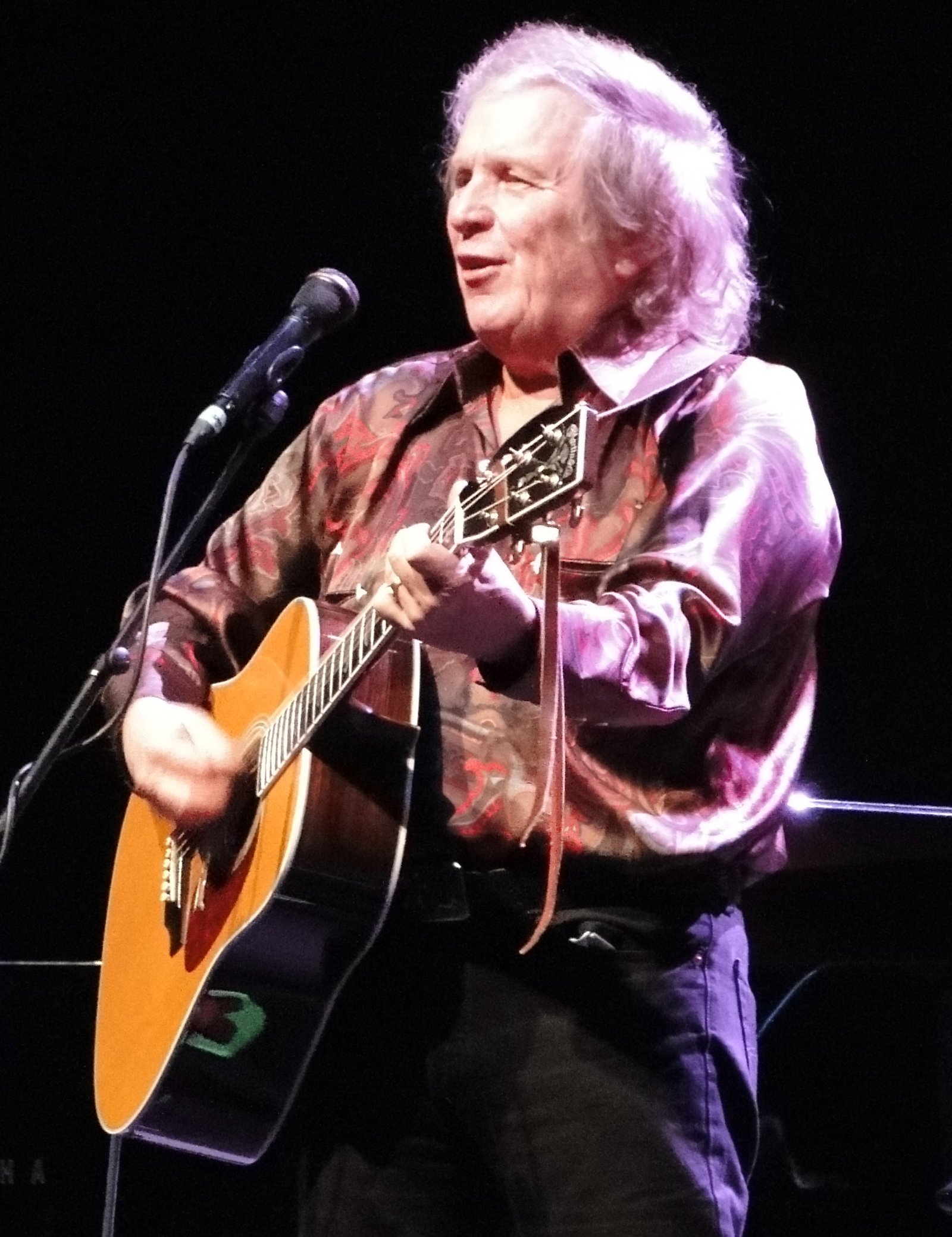
For a man who wrote one of the most famous songs in history about the day the music died, Don McLean has always been obsessed with the places where music lives on: small towns, front porches, quiet rooms. It’s no accident that he ended up in Camden, Maine — a postcard of a coastal town, all white clapboard and lobster boats — living in a house called Lakeview, running a charitable foundation, and trying, in his own complicated way, to be something more than the “American Pie” guy.
But the quiet life has never been simple for Don McLean. Behind the troubadour’s gentle image lies a family story marked by love, rupture, and a very public reckoning — one that has forced fans to hold two truths at once: the beauty of the songs, and the flaws of the man who wrote them.
Lakeview
McLean’s Maine residence, Lakeview, is more than a house. It’s the headquarters of the Don McLean Foundation, a charity he set up to be funded by his income in perpetuity — serving as a center for fundraisers and conferences, as well as a nature preserve. It’s the act of a man thinking about legacy: not just the songs, but the land, the community, the causes.
Camden suited him. After decades in the music industry’s glare — the fame, the lawsuits, the endless questions about what “American Pie” means — Maine offered what New Rochelle never could: anonymity, or something close to it. He could walk the harbor, sail the coast, and be just another older guy in a windbreaker. The troubadour had found his village.
But Lakeview would also become the setting for the darkest chapter of his personal life — proof that geography can’t outrun character.
Two Marriages
McLean has been married twice, and both marriages ended in divorce. The first was to Carol Sauvion, a Philadelphia sculptor, in 1969 — right as his career was beginning. They divorced in 1972, just as “American Pie” was conquering the world. There were no children. Sauvion went on to win Emmy and Peabody Awards for her PBS series “Craft in America,” building a distinguished career entirely outside her ex-husband’s shadow.
The second marriage was the big one: to Patrisha Shnier McLean, a Montreal native, in 1987. It lasted nearly thirty years. They raised two children — Jackie and Wyatt — in Camden, in what McLean later described as “an environment of laughter, music and literature.” For a long time, it looked like the folk singer had finally found his harbor.
It ended in January 2016, in the worst possible way.
Jackie and Wyatt
Jackie McLean, the elder child, grew up to be a singer-songwriter herself — half of the indie folk duo Roan Yellowthorn, making the same kind of intimate, literate music her father pioneered. Wyatt, her younger brother, is also a talented singer-songwriter. The children inherited the gift, if not the peace that should come with it.
McLean has two grandchildren, Rosa and Mya, through Jackie. In interviews, he spoke of wanting to make sure “the grandkids had everything they wanted” — supporting his daughter for years, by his account, to the tune of tens of thousands of dollars annually. Family, for all its fractures, was clearly the center of his world. Which is what made the fracture so devastating.
The Night in Camden
On January 18, 2016, police were called to the McLean home in Camden, Maine. Don McLean was arrested and charged with misdemeanor domestic violence. His wife Patrisha told police she had been “terrorized” for hours. McLean eventually pleaded guilty as part of a plea arrangement, paid a $3,660 fine that settled the case in July 2017, and avoided jail time. Patrisha was granted a ten-year order of protection. She filed for divorce, citing adultery, cruel and abusive treatment, and irreconcilable differences. The marriage was over.
There is no way to tell this story honestly without sitting with those facts. The man who wrote “Vincent” — the tenderest song ever written about a tortured soul — pleaded guilty to domestic violence against his wife of nearly three decades. Fans who had loved him for fifty years had to reckon with a mugshot from the Knox County Jail.
McLean’s response, in the months that followed, was defiant rather than contrite. “My wife has chosen divorce,” he wrote. “She has chosen to characterize our thirty-year relationship in a completely distorted and untrue manner. We raised two gentle, highly educated children in an environment of laughter, music and literature.” He has maintained that position ever since.
The Family Fracture
The story didn’t end with the divorce. In 2021, daughter Jackie gave a bombshell interview to Rolling Stone, describing a childhood marked by what she called her father’s mental and emotional abuse — “a constant state of fear,” “psychological warfare,” a household run through intimidation. She wrote about it on her album “Another Life.” She provided the magazine with emails, texts, and recordings. She said she no longer had any contact with her father.
McLean’s response was swift and severe: he cut Jackie out of his will, disinheriting her from a trust fund worth nearly three million dollars. “I stopped supporting my daughter last year,” he told the Daily Mail. “I said to my daughter, ‘If you speak out about me and trash me, I’m going to disinherit you.’” He denied the abuse allegations — “I don’t understand what mental and emotional abuse is,” he told Rolling Stone — while conceding, “I would snap sometimes; I did have a temper.”
It is an ugly, unresolved chapter, and there is no tidy moral to draw from it. What can be said is this: the fracture is real, the pain on all sides is real, and the songs — those beautiful, humane songs about understanding broken people — now carry a weight their writer never intended. “Vincent” is about a genius the world failed. These days, some listeners hear it and wonder about the genius who failed his own family.
Paris Dylan
In 2018, two years after the divorce, McLean confirmed a new relationship: with Paris Dylan, a model and former reality television personality, forty-eight years his junior. She had worked as his social media manager. The tabloids feasted. The age gap — he in his seventies, she in her twenties — drew endless commentary.
Whatever one makes of it, the relationship has endured. In April 2023, McLean brought Dylan — by then going by Paris Dunn — as his date to a White House state dinner honoring South Korea’s president, where the evening’s entertainment included a rendition of “American Pie.” The troubadour from New Rochelle, eighty years old, walking into the White House with a woman half a century younger on his arm: it was either a triumph or a punchline, depending on where you stood. McLean, presumably, didn’t care which.
The Road Goes On
And still, the music continues. McLean never stopped touring — through the scandal, through the family rupture, through it all. In 2022, he mounted a world tour celebrating the fiftieth anniversary of “American Pie,” playing to packed houses across Europe. In 2023, he played twenty-four shows across Australia and New Zealand to glowing reviews. The voice, by all accounts, remains remarkable.
The business of “American Pie” rolls on too. The song earns McLean an estimated three to five hundred thousand dollars a year in royalties — the gift that keeps giving, the eight-minute annuity. Madonna’s cover, the “Weird Al” parody, the Super Bowl commercials, the graduations: the song has long since stopped belonging to him, which may be the only reason he can still stand to sing it.
The Foundation Man
For all the turbulence of his personal life, McLean has thought seriously about what he leaves behind. The Don McLean Foundation, headquartered at Lakeview in Camden, is designed to be funded by his income in perpetuity — a permanent engine for charitable giving, centered on the property itself. The house hosts fundraisers and conferences; the grounds serve as a nature preserve, protected Maine coastline held in trust for the future.
It’s an unusual legacy project for a rock star — no museum, no tribute band, just land and money put to quiet use. But it fits the man. McLean has always been suspicious of the music industry’s machinery, always more comfortable with the tangible than the symbolic. A nature preserve doesn’t lie. A fundraiser for a local cause doesn’t need a publicist. In a career built on questioning American myths, the foundation may be his most honest statement: take care of the place you’re standing.
And he keeps going. In 2022, McLean mounted a world tour celebrating the fiftieth anniversary of “American Pie,” playing to packed houses across Europe — fifty years after the song first topped the charts, audiences still singing every word of all eight minutes. In 2023, he played twenty-four shows across Australia and New Zealand to glowing reviews, the voice remarkably intact at seventy-eight.
There’s something defiant about it. The scandals, the family rupture, the changing industry — none of it has kept him off the stage. He has outlasted the folk boom, the disco era, the MTV years, and the streaming revolution, and he did it the old-fashioned way: by showing up, night after night, with a guitar and a voice and a catalog that won’t quit. Whatever else can be said about Don McLean, no one can say he didn’t work.
The Man Behind the Song
So who is Don McLean, really? The gentle folk poet who wrote “Vincent”? The difficult man his daughter describes? The survivor who keeps touring at eighty? The answer, unsatisfying as it is, is all of them.
This is the bargain every fan of a certain age has had to strike: learning that the people who made the soundtrack of your youth were as flawed, as troubled, as human as anyone else. McLean’s songs preached empathy — for Buddy Holly, for Van Gogh, for the broken and the misunderstood. His life has tested whether that empathy extended to his own home. The record, by the testimony of those closest to him, is mixed at best.
But the songs remain. “American Pie” still makes rooms full of strangers sing together. “Vincent” still makes people cry. Whatever Don McLean is — whatever he has done and failed to do — he made those things, and they are good, and they will outlive all of us, including him.
In Camden, Maine, the harbor still fills with boats. At Lakeview, the foundation still does its work. And somewhere, a guitar is still playing three chords — E, A, and B-seventh, the only three he ever needed — carrying a voice that understood everyone else’s pain better than its owner’s. That is the troubadour’s tragedy, and his gift. The music didn’t die. The man just turned out to be mortal.
Leave a Reply