It began with a mistake. At a soundcheck in November 1983, on the final leg of the War Tour, the Edge led U2 through a series of chord changes and somebody played a wrong one. Instead of stopping, the others followed the error, and the detour opened a new piece of music. That happy accident, worked on for months in a tower, a castle and a Dublin studio, became Pride (In the Name of Love) — a tribute to Martin Luther King Jr. that gave U2 their first American top 40 hit and a song they have carried onto almost every stage since.
Few anthems start so casually, and fewer still survive their own unfinished writing. Bono himself later called the lyric a sketch, a load of vowel sounds ganging up on a great man. Yet the sketch endured, in part because the feeling was finished even when the words were not.
A Wrong Chord on the War Tour
The War Tour had taken U2 through Europe and North America and closed with one show in Honolulu on 16 November 1983 followed by six dates in Japan. Somewhere on that closing leg — accounts differ on whether the soundcheck in question was in Hawaii or Japan — the band improvised the melody and chords of Pride. Historian Niall Stokes describes the Edge steering the changes until a mistake forced the group to change course, supplying the twist that made the improvisation worth keeping.
Back home, the work continued in unlikely rooms. Bono lived in a Martello tower at Bray, County Wicklow, one of the old coastal defence towers south of Dublin, and there the Edge devised the guitar part that drives the finished record. The song therefore arrived at the next album sessions already road-tested in spirit: a ringing, repeating figure, varied through verse and chorus so that, as the band liked to note, no riff is played exactly the same way twice.
From Reagan’s Pride to Dr. King’s
The subject, however, changed completely. Bono had first intended a song about a very different kind of pride: Ronald Reagan’s pride in American military power, at the height of the Cold War. What turned him around was reading. Stephen B. Oates’s biography Let the Trumpet Sound: A Life of Martin Luther King, Jr. and a biography of Malcolm X set him thinking about the two sides of the civil-rights struggle, the violent and the non-violent, and about a man who had answered hatred without returning it.
The finished lyric is built from a chain of solitary figures: one man caught on a barbed-wire fence, one man betrayed with a kiss, one man who came in the name of love. It never names King outright. Instead it points at the date everyone in America knew — April 4 — and at Memphis, and lets the listener complete the picture. That indirection was deliberate in effect if not in design. U2 closed the album The Unforgettable Fire with MLK, a quiet lullaby for the same man, making the record bookended by his memory: the public anthem near the start, the private elegy at the end.
A Castle, Two Producers and the Only Re-Cut
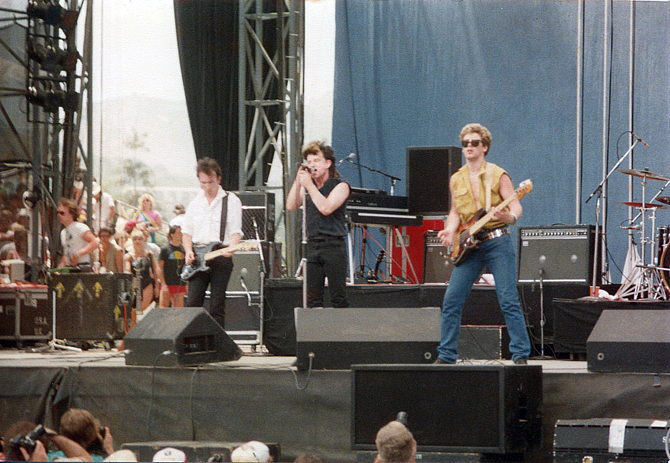
For their fourth album U2 wanted a new sound and new producers to find it with. Out went Steve Lillywhite, who had made their first three albums at Windmill Lane Studios, and in came Brian Eno and Daniel Lanois. Recording began on 7 May 1984 at Slane Castle in County Meath, where the band lived and worked in the ballroom while a film crew documented the sessions for what became The Making of the Unforgettable Fire.
Pride was shaped at Slane, but it did not survive the castle. When the sessions moved back to Windmill Lane in June, the song was re-recorded — the only track on the album to be completely re-cut. The final version runs at 106 beats per minute in the key of B, its chiming guitar and pounding rhythm section pointing a deliberately atmospheric album firmly toward the radio.
One more voice hides in the mix. Chrissie Hynde of the Pretenders sang backing vocals, but she was then married to Jim Kerr of Simple Minds, so the sleeve credits her under her married name, as Christine Kerr. And hovering over the whole record is Bono’s famous dissatisfaction. Eno encouraged him to sing nonsense placeholders for lyrics still to be written; the Edge and the producers then argued that the impressionistic sketches worked, especially for listeners who did not speak English. In U2 by U2, Bono looked back in disbelief: the song was glorious, he said, but emotionally articulate only if you did not understand the words.
Early Morning That Was Really Evening
The lyric contains one plain, checkable error. It places King’s shooting in the early morning of April 4. In fact, King was shot at 6:01 p.m. on 4 April 1968, standing on the balcony of the Lorraine Motel in Memphis, where he had come to support striking sanitation workers. He was pronounced dead at St. Joseph’s Hospital at 7:05 p.m., aged 39.
Bono has never hidden from the mistake. In concert he habitually changes the line to early evening, and the band finally corrected it on record in the reworked version on Songs of Surrender in 2023, which sings, in the evening, April 4. The fix took thirty-nine years, but it tells you something about the song’s life: U2 kept performing it so often that the correction had thousands of chances to be heard.

Three Videos and a First American Hit
Pride was released as the lead single from The Unforgettable Fire on 3 September 1984, with the instrumental Boomerang II on the B-side, a month ahead of the album. It reached No. 3 in the United Kingdom, No. 2 in Ireland and No. 1 in New Zealand — the first time a U2 single had topped any country’s chart. In the United States it peaked at No. 33 on the Billboard Hot 100, the band’s first top 40 hit there, helped by heavy album-rock radio play and an MTV video in heavy rotation.
Even the video took three attempts. Director Donald Cammell shot the first in August 1984, opening and closing on the Dublin docklands; it exists in black-and-white and sepia versions. Dissatisfied, U2 asked photographer Anton Corbijn for an alternative, filmed in a basement near Heathrow Airport, and disliked that too. A third version was compiled from the Slane Castle session footage, showing Eno and Lanois at work. In the end, television mostly used Cammell’s original.
Critics were divided. Cash Box called it a rousing anthem; Kurt Loder in Rolling Stone thought it succeeded on beat and bass rather than its lyrics, and Robert Christgau complained about its moralism. The critics’ poll that mattered, the Pazz & Jop, ranked it the twelfth-best single of 1984 — at the time the highest placing any U2 single would manage until One.
The Song That Would Not Stay in 1984
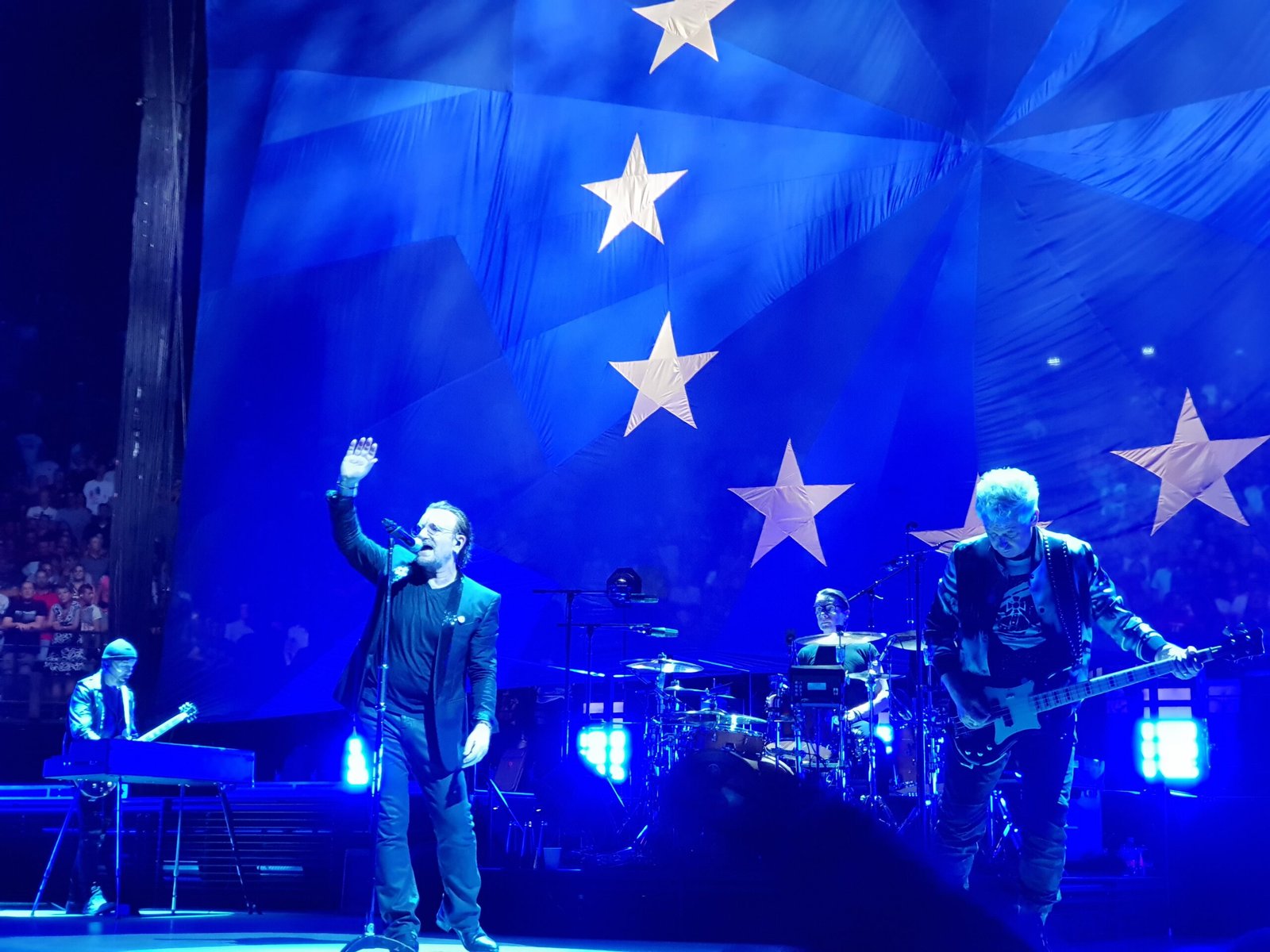
Pride was played live for the first time on 29 August 1984 in Christchurch, New Zealand, opening the Unforgettable Fire Tour, and it has been played at virtually every U2 concert since, usually with clips of King’s speeches on the screens behind the band. By 2009 it was documented as their most performed song, with more than 770 performances.
Its most resonant performance came on 18 January 2009, when U2 played it before some 400,000 people at the Lincoln Memorial in Washington, at the We Are One concert for the inauguration of Barack Obama. Samuel L. Jackson introduced them by recalling how a band from Ireland had been moved by King’s message to write a song in his honour. On this spot, Bono said, 46 years ago Dr. King had a dream — and on Tuesday, he added, that dream comes to pass. He closed the song by quoting King’s I Have a Dream speech: let freedom ring.
That journey — from a wrong chord at a soundcheck, through a castle, to the steps of the Lincoln Memorial — is why Pride sits on the Rock and Roll Hall of Fame’s list of 500 Songs that Shaped Rock and Roll, and why Rolling Stone placed it among the 500 greatest songs of all time. The lyric Bono apologised for turned out to need no apology. A sketch, sung at full stretch in the name of love, was enough.
Leave a Reply