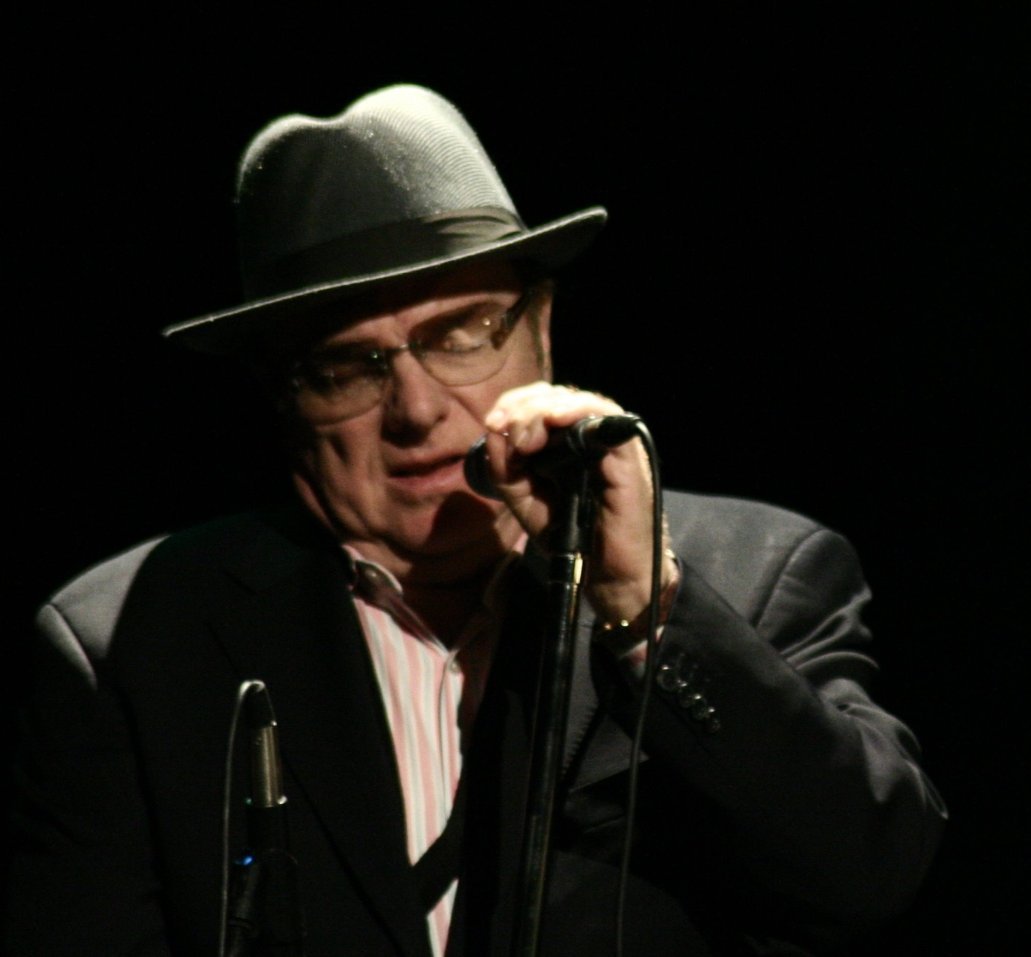
Some songs are written at a desk. “Moondance” was written on a saxophone. In the summer of 1969, Van Morrison was living in Cambridge, Massachusetts, picking up his soprano sax the way other men pick up a newspaper, and one melody kept coming back every time he played. It swung. It smiled. It sounded, as he later put it, sophisticated — the kind of tune Frank Sinatra would not have been out of place singing. Morrison knew he had a song before he had a single word of it. The lyric about a fantabulous night, an October sky and a lover’s eyes arrived afterwards, written to fit a melody that already existed whole. It became the title track of the album that rescued his career, the song he has performed live more than any other, and a standard that entered the Grammy Hall of Fame — and for the first seven and a half years of its life, it was never even released as a single.
A Melody Looking for Words
Morrison has always been clear about the order of events. “With ‘Moondance’ I wrote the melody first,” he recalled. “I played the melody on a soprano sax and I knew I had a song so I wrote lyrics to go with the melody. That’s the way I wrote that one.” The tune had been gestating even earlier. His guitarist at the time, John Sheldon, remembered a rehearsal in the summer of 1968 when the band was fooling around with “Lazy Afternoon,” a Broadway song that saxophonist Grant Green had recorded in a jazz version the year before. Morrison asked for some changes, began singing over the loosened groove, and the bones of “Moondance” started to show.
The lyric, when it came, matched the melody’s ease. Where so much of Morrison’s earlier writing chased visions, this was a song about an autumn evening and a dance in the moonlight — his favorite season, rendered in soft jazz swing. It was, by his own cheerful admission, a sophisticated song, and that was precisely the point.
After Astral Weeks, a Deliberate Turn Toward the Light
The context matters. Morrison’s first album for Warner Bros., Astral Weeks (1968), had been a commercial failure on release, whatever its later reputation. He had relocated with his wife, Janet Planet, to a mountaintop home near Woodstock, New York, and he was candid about the practical problem: an artist has to live. “I had to forget about the artistic thing because it didn’t make sense on a practical level,” he said. Beginning in July 1969, he set out to write a record that people could actually relate to — formally composed songs, built on rhythm and blues, soul and jazz, carried by a working band recruited from the Woodstock area: guitarist John Platania, saxophonist Jack Schroer, bassist John Klingberg and keyboardist Jef Labes among them.
Even the packaging announced the change of weather. Planet wrote the album’s liner notes not as an explanation but as a fairy tale — the story of a young artist in ancient times, gifted and secretive, learning what his gift was for. It was an odd, lovely piece of misdirection for a record whose real story was much simpler: a songwriter who had stared into the abyss on Astral Weeks had decided, deliberately, to write songs that swung, that smiled, that a radio could carry. Morrison himself left Woodstock right after the August 1969 festival flooded the town with pilgrims, but the band — two horns and a rhythm section, exactly the configuration he liked best — was already his.
“Moondance” was the purest expression of that turn. It kept the jazz in Morrison’s blood but dressed it in a song anyone could hum on first hearing.
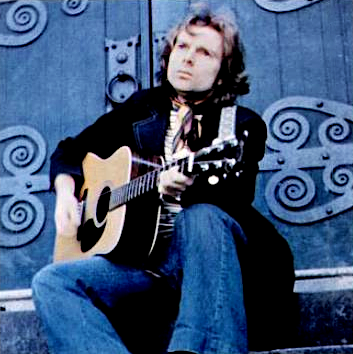
August 1969: A Walking Bass and a Question Mark
The song was recorded in New York in August 1969, produced by Morrison with Lewis Merenstein, during the sessions for the album. Morrison arrived with basic structures and the arrangements in his head — no charts — and the band built the record around him in the room. The finished track is a small masterclass in space: Klingberg’s walking bass line, played on electric bass, carries the whole record on its back, while piano, guitar, saxophones and flute move with a soft jazz swing underneath Morrison’s vocal.
Two solos define it. Jef Labes takes the piano solo first; then Jack Schroer steps in on alto saxophone, playing a solo so perfectly judged — built largely on the A Aeolian scale over the song’s vamp — that it is still cited as one of the most influential saxophone solos in popular music. Near the end, Morrison himself can’t resist joining in, imitating a saxophone with his voice. And then the song dissolves on a flute trill from Collin Tilton, a cadenza that simply fades into the night air the lyric describes. It is worth noting that not everyone in the room was sure. Labes later recalled that “Moondance” itself was “a big question mark” during the sessions — an odd, swinging thing that nobody could quite categorize.
The Hit That Wasn’t a Single
Warner Bros. released the album Moondance in January 1970, and FM radio did the rest. The title track, “Into the Mystic” and “Caravan” became staples of the new album-rock airwaves; the album reached the American Top 30 and established Morrison as a major artist. Critics understood immediately: reviewing it in Rolling Stone, Greil Marcus and Lester Bangs praised its musical invention and lyrical confidence.
Yet the title song itself was not issued as a single until September 1977 — seven and a half years later, backed with “Cold Wind in August” from his then-current album A Period of Transition. It crept to No. 92 on the Billboard Hot 100 and vanished. By then it hardly mattered. “Moondance” had never needed a chart position; it had something more durable, a permanent home on the radio and in the culture. The critics had known from the start: Robert Christgau gave the album an A in The Village Voice and declared that Morrison had finally fulfilled his artistic potential, while Rolling Stone‘s Jon Landau wrote that on Moondance the singer’s overwhelming voice had at last found a home. John Landis threaded the song through the moonlit soundtrack of An American Werewolf in London in 1981, alongside every other moon song he could license, and cover versions accumulated — Ramsey Lewis and Nancy Wilson in 2002, Michael Bublé on his debut album in 2003, and a rendition by Jonathan Rhys Meyers and Chris Botti woven into the 2007 film August Rush. When Warner Bros. issued a deluxe edition in 2013, stuffed with unreleased session outtakes, Morrison promptly disowned it as unauthorized — the magician of the A&R penthouse still insisting, forty-four years on, that nobody knew what he was looking for except him.

A Standard in Spite of Itself
The honors arrived in due course. The 1970 recording was inducted into the Grammy Hall of Fame in 1990. Rolling Stone placed it at No. 226 on its 2004 list of the 500 Greatest Songs of All Time, and it sits among the Rock and Roll Hall of Fame’s 500 Songs That Shaped Rock and Roll. AllMusic’s Tom Maginnis called it “one of those rare songs that manages to implant itself on the collective consciousness of popular music, passing into the hallowed territory of a standard, a classic.”
Above all, it never left the stage. “Moondance” is the song Morrison has played most frequently in concert across six decades — the performance above, filmed in 1973 with the Caledonia Soul Orchestra for It’s Too Late to Stop Now, catches it still young, the horns leaning into that walking bass. A melody he used to noodle on a soprano saxophone in Cambridge, any time he picked up his horn, turned out to be the most durable thing he ever made. Sophisticated, as the man said.
Leave a Reply