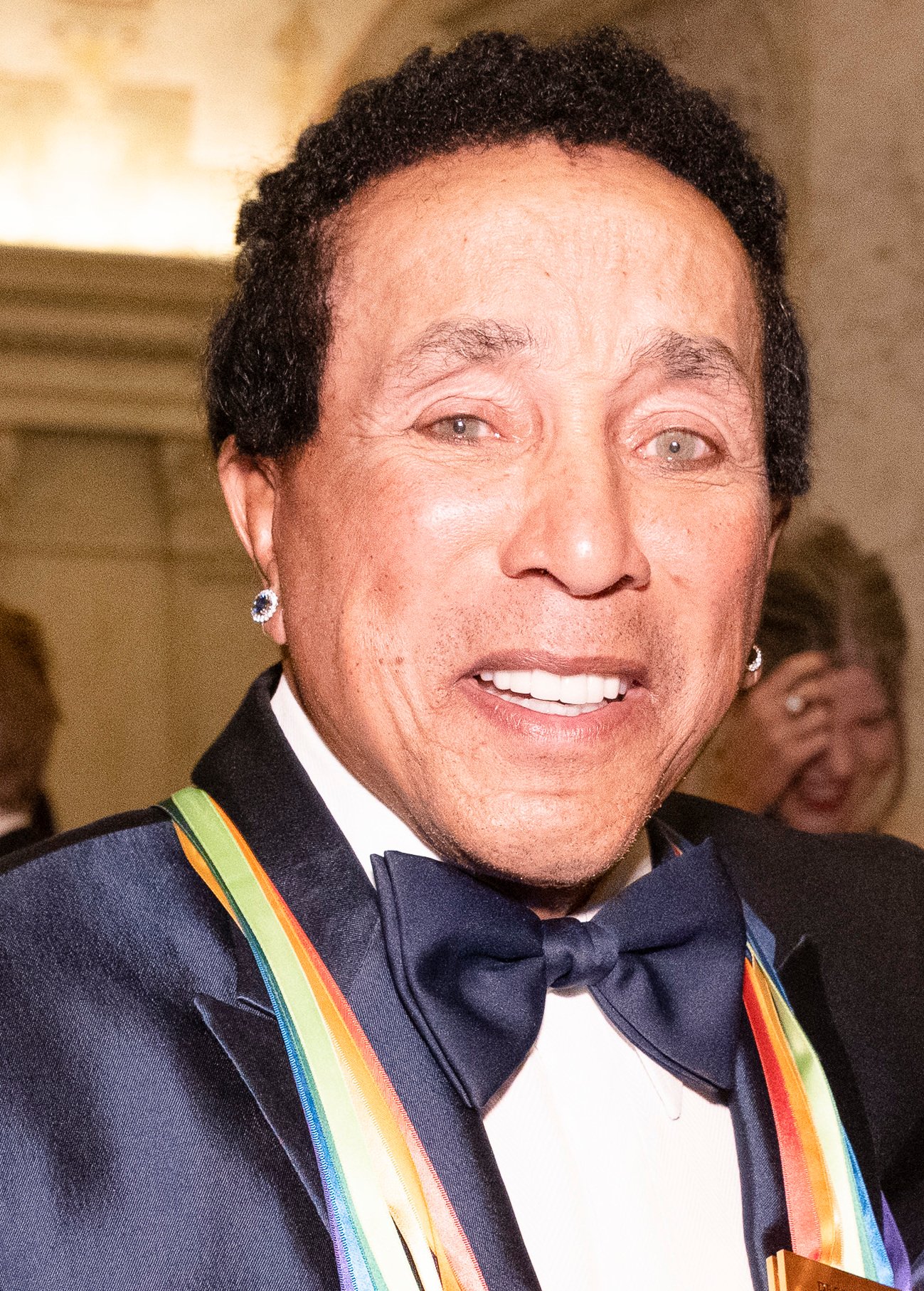
Smokey Robinson calls it his “international anthem” — the most well-known tune he ever wrote, the one that has, in his words, “stood the test of time.” He wrote it about his wife. He meant it for his own group. And then he gave it to five other guys, because he heard something in one of their voices that he couldn’t stop thinking about.
“My Girl” — the Temptations’ signature song, Motown’s first great crossover coronation, the record that plays at every wedding — almost didn’t exist the way we know it. It was written in a week, rehearsed in a theater, recorded in the fall of 1964, and released two days before Christmas. Within three months, it was number one in America, and within a year it had made its singer a star and its writer a legend twice over. This is the story of the sweetest gift in soul music history.
The Sleeping Giant
The whole thing started in a Detroit nightclub called the 20 Grand. The Temptations were Motown’s hardest-working male group — five sharp-dressed singers with sublime harmonies and, as of early 1964, one big problem: they didn’t have a breakout hit. They’d been cutting records since 1961, and only “The Way You Do the Things You Do” (also written by Smokey) had cracked the pop Top 20. What they had was potential, and one underused resource.
That resource was David Ruffin. He’d joined the group in January 1964, replacing Elbridge Bryant, and until then he’d mostly sung background while Eddie Kendricks and Paul Williams took the leads. But on stage at the 20 Grand, the group did a medley of soul standards, and Ruffin got a solo spot on the Drifters’ “Under the Boardwalk.” Smokey Robinson was in the audience. He was astounded — by the way Ruffin handled himself, by the texture of that voice, mellow yet gruff, honey and gravel in the same mouth.
Robinson started calling Ruffin a “sleeping giant.” And he started thinking the thought that would change both their lives: all I need is the right song for that voice, and I’ll have a smash hit.
The Answer Song
Smokey already had the template in his head. The year before, in 1964, he had written “My Guy” for Mary Wells — a bright, devoted love song from a woman’s perspective that became one of Motown’s biggest hits, topping the pop charts and turning Wells into a star. It was the sound of total romantic certainty, and audiences adored it. Now he imagined its mirror image: the same unconditional devotion, sung by a man, with the same sunny confidence but a different kind of tenderness. An answer record, but sweeter, warmer, built for a voice that could make girls swoon.
The lyrics came from the heart — specifically, from his marriage. Robinson was married to Claudette Rogers, his fellow Miracle, and “My Girl” was inspired by her. (He would later say, with characteristic generosity, that he wrote it with all the women in the world in mind — but everyone at Motown knew who the first girl was.) He brought in his childhood friend and fellow Miracle Ronald White as co-writer and co-producer, and the two of them set to work.
He also knew he wasn’t the right one to sing it. “My Girl” was a song for a rougher, more commanding voice than his own honeyed tenor — or rather, as he later told Jimmy Fallon, he deliberately crafted something sweet to balance out Ruffin’s naturally commanding tone. He wanted Ruffin to sing something tender. Something the girls could just swoon over. “David had that voice,” Robinson said. “I used to tell him he demanded the girls to love him because he had that ‘Oh, come on baby!’ kind of voice. But I wanted him to sing something sweet.”
The Apollo Piano
Here’s where the story gets almost too perfect. The Miracles and the Temptations were on a package tour together, playing the Apollo Theater in New York — the most hallowed stage in Black music. Between shows, Robinson was working out the song on a piano at the theater when Ronald White joined him, and the two of them hashed it out together, right there in the Apollo.
The Temptations heard it. And they wanted it — badly. After some persuasion from Ruffin’s bandmates, Robinson agreed to let them record it instead of the Miracles, for whom it had originally been intended. He ran the track down for them at the Apollo and they rehearsed it over the next week. Otis Williams, the group’s founder, remembered his first reaction: “That sounds like it might be something.” It didn’t fully hit him, he said, until they got back to Detroit, recorded it, and Smokey put the strings on. They sat in the studio listening to the playback, and it sounded like a number one.
He was right. It’s very seldom you can tell, Williams added — but this time, you could.
The Session
The recording session, in the fall of 1964 at Hitsville U.S.A., was a masterclass in Motown craft. Robinson and White produced. The signature guitar riff — the two-note figure that opens the record and may be the most recognizable intro in soul music — was played by Robert White of the Funk Brothers. James Jamerson, Motown’s legendary bassist, laid down the warm, rolling bass line. Paul Riser arranged the strings that made Otis Williams’s eyes widen at the playback.
And then there was the vocal arrangement. Robinson, in a move that showed his deep respect for the group, let the Temptations create their own background vocals — “because they were so great at background vocals.” Kendricks’s falsetto floating above, Paul Williams’s baritone anchoring below, Melvin Franklin’s bass rumbling underneath, Otis Williams threading the middle — and Ruffin, for the first time on a Temptations single, out front, tender and commanding at once. It was the classic lineup’s first masterpiece, and you can hear five men realizing, in real time, that they’re making history. Nobody in that room went home thinking they’d cut just another single.
Christmas Comes Early
Motown released “My Girl” on December 21, 1964 — four days before Christmas, on the Gordy label. The timing was perfect: a song about sunshine and devotion landing in the dead of winter, when everybody needed it most.
The climb was swift and sure. When Billboard revived its Hot R&B Singles chart on January 30, 1965, “My Girl” was the first record to top it, and it stayed there through mid-March. On March 6, 1965, it reached number one on the Billboard Hot 100 — the Temptations’ first pop chart-topper, and the first of four. Billboard ranked it the tenth biggest hit of the entire year. The album it anchored, “The Temptations Sing Smokey,” released that March, became an all-time Motown classic.
The rewards were immediate. Berry Gordy handed Smokey Robinson a $1,000 bonus check for the achievement — and told him, according to the story, that David Ruffin would become a star and the song would become a legend. Gordy was right on both counts, and then some. Before “My Girl,” the Temptations had scored exactly one Top 20 pop hit. After it, they scored twenty-three more. Ruffin became the group’s frontman and one of soul music’s immortal voices.
The Album That Bottled Lightning
“My Girl” didn’t arrive alone. It was the centerpiece of “The Temptations Sing Smokey,” released in March 1965 — an entire album of Robinson-written, Robinson-produced Temptations material, and one of the greatest LPs Motown ever released. The concept was simple: Smokey’s songs, the Temps’ voices, Hitsville’s magic. The execution was flawless. The album collected “My Girl” alongside other Robinson gems and presented the classic lineup — Otis, Melvin, Eddie, Paul, and David — as a complete artistic statement, not just a singles act.
It worked because the partnership was real. Robinson had been writing for the Temptations since 1963, and he understood their blend the way a tailor understands cloth. “The Temptations Sing Smokey” is the sound of a songwriter and a group finishing each other’s musical sentences — and “My Girl” is the sentence everyone remembers.
The Thousand-Dollar Check and Everything After
A thousand dollars was a lot of money in 1965, but it turned out to be the worst investment Berry Gordy ever made — for him, anyway. “My Girl” has earned its writers millions many times over, and its cultural dividends are beyond calculating. In 2018, the Library of Congress selected it for preservation in the National Recording Registry as “culturally, historically, or artistically significant” — the United States government declaring, in so many words, that this three-minute love song is a national treasure.
It plays at every wedding. It plays in every movie about the sixties. It is the first song most people think of when they think of Motown, and the song Smokey Robinson himself calls his international anthem. “It has done what I set out to do when I wrote the song,” he says. “It has stood the test of time.”
The Gift
There’s a beautiful symmetry in the story of “My Girl.” Smokey Robinson was Motown’s golden boy — the vice president, the hitmaker, the poet. He could have kept the best song he’d ever written for himself. His group, the Miracles, would have had a smash with it. Nobody would have blamed him.
Instead, he heard a voice in a nightclub and gave the song away. He heard David Ruffin singing “Under the Boardwalk” at the 20 Grand and thought: that giant needs waking. He wrote the sweetest song he knew, tailored it to the roughest voice he knew, and handed five other men the biggest hit of their lives — and one of the biggest hits of all time.
That’s who Smokey Robinson was, at his best: not just a great songwriter, but a generous one. “My Girl” isn’t only a perfect record. It’s a perfect act of faith — in a voice, in a group, in the idea that the right song, given to the right singer, can change everything. Sixty years later, it still does, every time that guitar riff starts and the whole room starts singing along.
And somewhere in that story is the whole of Motown’s golden age: the nightclub epiphany, the piano at the Apollo, the Funk Brothers in the Snakepit, the kid from the North End with a notebook full of rhymes hearing a sleeping giant and writing him awake. Berry Gordy’s thousand-dollar check was the bargain of the century. The song was priceless then. It’s priceless now. It always will be — sunshine you can play on a turntable.
Leave a Reply