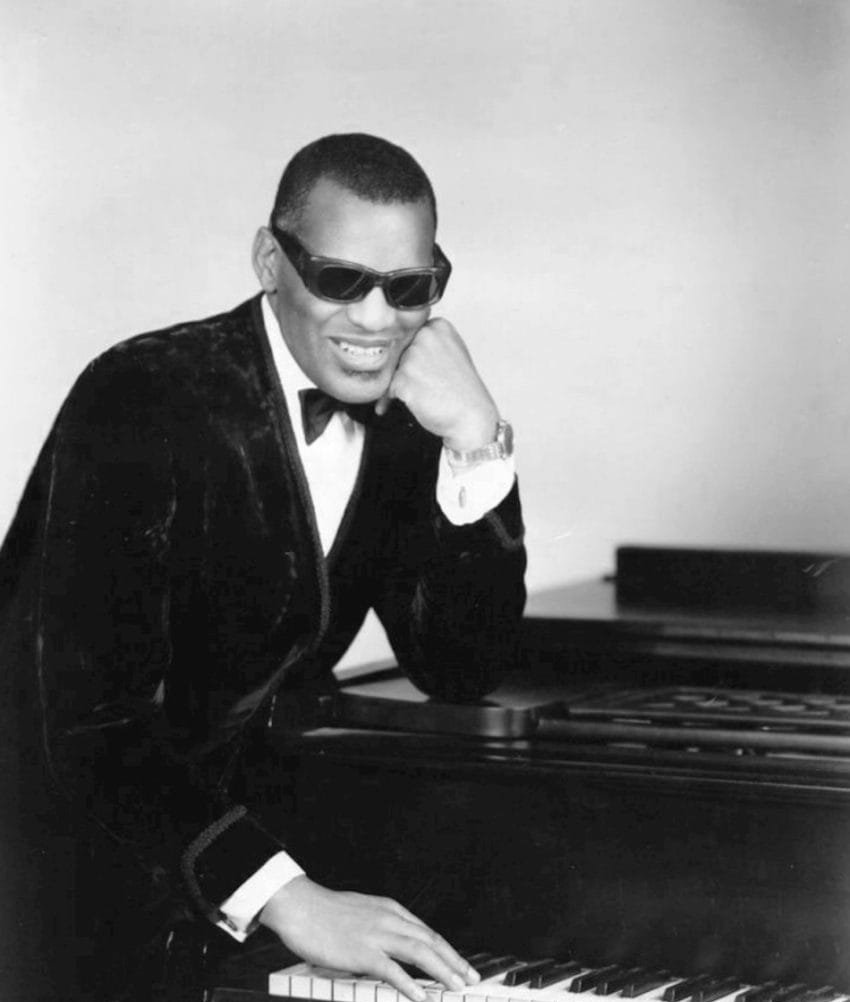
Behind the sunglasses, behind the piano, and behind the nickname The Genius, Ray Charles was a man of deep feeling, fierce independence, and surprising tenderness. His hits sound confident, even joyful, but many of them were born from loss, loneliness, and a determination not to be defined by blindness or by prejudice. To understand Ray Charles, it helps to listen not only to what he sang, but to how he lived: how he loved his mother, how he mourned his brother, how he raised a large family, and how he kept his humour even when life gave him every reason to lose it.
The Mother Who Taught Him to Stand Alone
Ray’s mother, Aretha Robinson, is the hero of his early story. She was poor, hardworking, and unflinching. When Ray began to lose his sight as a small child, she refused to treat him as helpless. She made him chop wood, wash dishes, and find his way around the house and the neighbourhood on his own. She told him that blindness was not an excuse, and that people would respect him if he respected himself. When she sent him to the Florida School for the Deaf and the Blind, she gave him the tools to become a musician. When she died in 1945, Ray was fifteen and utterly alone, but he carried her lessons with him for the rest of his life. Friends say he often spoke of her with a reverence that bordered on awe, and that her voice was the conscience behind his ambition.
The Brother He Never Forgot
Ray’s younger brother, George, drowned when Ray was five, while Ray watched helplessly, already losing his sight. That trauma stayed with him. He rarely spoke about it in public, but those close to him knew it shaped his protectiveness toward children, his fear of helplessness, and his deep empathy for suffering. Some of the tenderness in his singing, the way he lingers on a sad lyric, the way his voice breaks just slightly, comes from that early loss. He understood grief not as an abstract idea, but as a lived experience, and he sang for listeners who understood it too. His music often feels like a hand reaching out to someone who is hurting, because he knew what hurting felt like.
Love, Family, and a Complicated Home Life
Ray Charles’s personal life was complicated, and he did not hide that. He was married twice, first briefly to Eileen Williams, and then from 1955 to 1977 to Della Beatrice Howard Robinson, known as Bea, with whom he had three sons. He also had nine other children from other relationships, and he maintained relationships with many of them throughout his life, providing support and staying in contact. His family life was not a simple, tidy story, but it was a central part of who he was. He loved children, he loved being a father, and he often brought family members on tour or kept them close by phone. Those who knew him describe a man who could be stubborn and demanding at work, yet warm, funny, and affectionate at home, telling jokes, playing chess, and listening to the radio for hours.
Blindness as a Way of Seeing
Ray often said that being blind gave him a different kind of sight. He learned to read people by their voices, their footsteps, and their silences. He could tell when a musician was nervous, when an audience was restless, and when a song was working, purely by listening. He played chess by touch, he loved baseball on the radio, and he insisted on doing everyday things himself, from dressing to travelling, with the help of assistants who treated him as a capable adult, not as a patient. His blindness was not a tragedy he overcame in a single moment; it was a condition he lived with, worked with, and turned into a musical advantage. His piano playing, with its rich, orchestral touch, and his singing, with its extraordinary attention to phrasing, both grew from a lifetime of listening more carefully than most people ever do.
The Addiction He Fought and Beat
For many years, Ray struggled with heroin addiction, a habit that began in his late teens and continued through his early stardom. It cost him money, health, and peace of mind, and it put his career at risk. In 1965, after an arrest, he entered treatment and, with great effort, became clean, remaining so for the rest of his life. He spoke about that struggle with unusual honesty for a star of his era, not to excuse himself, but to warn younger musicians and to show that recovery was possible. That honesty made his later music feel even more credible: when he sang about redemption, about love, and about starting again, listeners knew he was not singing from a textbook. He was singing from experience.
Courage in the Face of Segregation
Ray’s personal courage also showed in his response to segregation. Touring the South in the 1950s and early 1960s, he and his band faced segregated hotels, restaurants, and concert halls. In 1961, he cancelled a concert in Augusta, Georgia, rather than play to a segregated audience, and Georgia banned him from performing there. He accepted the ban rather than compromise, and he continued to speak about equality in interviews. Years later, when “Georgia on My Mind” was adopted as the state song in 1979, the ban was lifted and he performed in the state again, to a standing ovation. It was a quiet, dignified victory, won not by shouting, but by standing firm and by making music that even his critics could not deny.
Humour, Chess, and Everyday Joys
Those who spent time with Ray remember his humour most of all. He loved to joke, to tease his bandmates, and to laugh at himself. He was a keen chess player, a sports fan, and a man who enjoyed good food, good company, and long conversations. On tour, he would sit up late talking about music, about politics, and about life, asking questions and listening intently. He had a mischievous side, too: he liked to surprise audiences with an unexpected song, or to change an arrangement at the last minute just to keep his band on their toes. That playfulness is audible in hits such as “Hit the Road Jack,” where his banter with the Raelettes feels like a real argument between friends, full of wit and warmth.
The Teacher and the Friend
Younger musicians who worked with Ray describe him as a teacher who expected a lot and gave a lot in return. He taught by example: by practising, by listening, by refusing to settle for a mediocre take. He also helped many artists behind the scenes, recommending them for jobs, inviting them to record, and praising them publicly. Stevie Wonder, who was inspired by Ray as a child, called him a musical father. Aretha Franklin, Billy Joel, and countless others have spoken of his influence not only as a sound, but as a standard: be honest, work hard, and never let anyone put your music in a box. Ray’s generosity to other artists was part of his heart, not just his career.
The Final Years at Home
In his final years, Ray lived in Beverly Hills, but he remained a working musician, recording, touring, and planning new projects until his health declined. He founded the Ray Charles Foundation to help young people, especially those with hearing impairments, to get an education. He recorded Genius Loves Company, a duets album, knowing it might be his last, and he poured himself into those collaborations with the same care he had given his first recordings. He died on June 10, 2004, from liver disease, at the age of 73, surrounded by family. The tributes that followed came from every corner of music, because he had touched every corner of music.
What His Heart Still Sings
When we listen to Ray Charles today, we hear more than a great voice. We hear a boy who lost his brother and his sight, a son who never forgot his mother’s lessons, a father who loved his children, a man who fought addiction and prejudice and kept going, and an artist who believed that music could hold all of that at once. His hits endure because they are not just performances; they are pieces of a life, offered with honesty, humour, and heart. That is the heart behind the hits, and it is still beating in every note he left us.
So the next time “Georgia on My Mind” plays, close your eyes for a moment, as Ray did, and listen for the man behind the song. You will hear him: warm, stubborn, funny, and profoundly human, singing his way home.
Leave a Reply