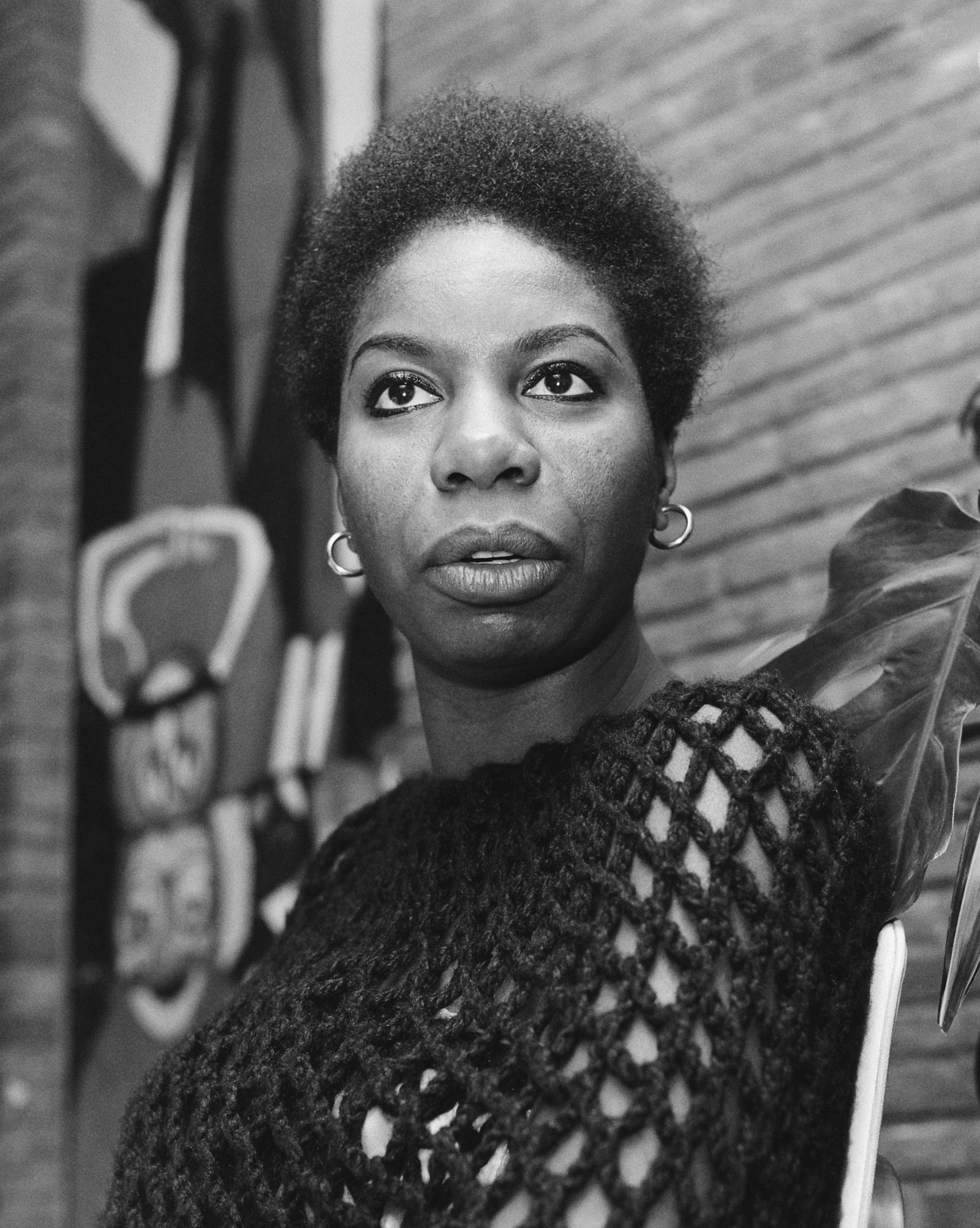

Nina Simone did not set out to write a protest song. In September 1963 she was a successful jazz and cabaret singer, known for her extraordinary piano playing, her classical training, and a voice that could move, within a single song, from a whisper to a shout. She had recorded “I Loves You, Porgy” and “My Baby Just Cares for Me,” she played to sophisticated audiences in New York and Paris, and she was, by the standards of the music business, a rising star with a secure future. Then, on a Sunday morning in Birmingham, Alabama, four girls were killed when a bomb exploded at the 16th Street Baptist Church, and, a few weeks earlier, the civil rights leader Medgar Evers had been murdered in Mississippi. Simone, who had grown up in the segregated South, heard the news and sat down at the piano. The song that came out, “Mississippi Goddam,” was written in less than an hour, and it changed her life.
The song was not a gentle plea for understanding. It was angry, sarcastic, and deliberately shocking, and it named the states where the violence had happened — Alabama, Mississippi, Tennessee — in a chorus that repeated the title with increasing fury. It mocked the slow pace of change, it mocked the idea that Black Americans should wait patiently for freedom, and it used a jaunty, almost show-tune melody to carry lyrics that were, in effect, an indictment. Simone recorded it live at Carnegie Hall in March 1964, and released it on the album Nina Simone in Concert later that year. The reaction was immediate and, for Simone’s career, devastating. Radio stations in the South refused to play it, some returned copies of the record broken in half, and the mainstream success that had seemed within her reach began to slip away. Simone herself later said that the song cost her a career in the commercial sense, and she was right. It also made her immortal, in a way that no hit single could have done.
Tryon, North Carolina, and the classical dream
Nina Simone was born Eunice Kathleen Waymon in Tryon, North Carolina, in February 1933, the sixth of eight children in a poor Black family. Her mother was a Methodist minister and domestic worker, her father a handyman and entertainer, and the young Eunice showed extraordinary musical talent from an early age. She began playing piano at three, and by her teens she was playing for church services and studying classical piano with a local teacher, Muriel Mazzanovich, who recognised her gift and helped arrange further training.
Simone’s dream, from childhood, was to become the first Black classical concert pianist in America. She studied at the Juilliard School in New York for a summer, and then applied to the Curtis Institute of Music in Philadelphia, one of the most prestigious conservatories in the country. She was rejected, and she believed, for the rest of her life, that the rejection was because of her race. Whether or not that was the sole reason, the rejection redirected her life. To support herself, she began playing piano and singing in bars in Atlantic City, and there, almost by accident, she discovered that audiences wanted to hear her sing as much as they wanted to hear her play. She took the stage name Nina Simone — Nina from the Spanish word for “little one,” Simone after the French actress Simone Signoret — and began the career that would make her famous.
The classical training never left her. Simone’s piano playing, even in her most commercial recordings, has a classical musician’s sense of structure, of dynamics, and of space. She could play Bach counterpoint in the middle of a blues song, and she could accompany herself with a complexity that few singer-pianists have ever matched. That training also gave her a particular kind of dignity on stage. She did not perform as an entertainer begging for applause. She performed as an artist who expected to be listened to, and when audiences talked during her performances, she was known to stop playing and wait, in silence, until they paid attention.
The singer before the protest
Before “Mississippi Goddam,” Simone’s career had followed a recognisable path for a jazz singer of her generation. Her debut album, Little Girl Blue, released in 1958, included “I Loves You, Porgy” from Porgy and Bess, which became a hit and established her as a singer of unusual depth. She recorded for Colpix and then for Philips, and her repertoire ranged across jazz, blues, folk, gospel, and European art song. She sang in French, she sang Brecht and Weill, and she sang the songs of the American popular repertoire with a seriousness that set her apart from the cabaret singers of the time.
She was also, from the beginning, a politically aware artist. Simone had grown up under segregation in North Carolina, and she had experienced its humiliations directly, including an incident as a child when her parents were made to stand at the back of a concert hall while she performed at the front. She knew the civil rights movement intimately, and she counted among her friends some of its leading figures, including Lorraine Hansberry, the playwright of A Raisin in the Sun, and James Baldwin, the novelist and essayist. Hansberry, in particular, encouraged Simone to use her art politically, and Simone later credited Hansberry with helping her understand that her music could be a weapon as well as a pleasure.
What changed in 1963 was not Simone’s awareness, but her willingness to sacrifice her commercial career for it. Before “Mississippi Goddam,” she had expressed her politics in her choice of repertoire and in her public statements, but she had not written a song that directly attacked the American racial order by name. The Birmingham bombing and the murder of Medgar Evers removed whatever hesitation remained. Simone later described the song as coming to her in a rush, almost without conscious composition, and that sense of urgency is audible in the recording. The piano part is driving and insistent, the vocal is half-sung and half-spoken, and the sarcasm in the lyric — the repeated suggestion that things are going “too slow” — is not the sarcasm of a comedian. It is the sarcasm of a woman who is furious and who has decided to stop being polite about it.
Carnegie Hall, March 1964
The live recording of “Mississippi Goddam” at Carnegie Hall in March 1964 captures Simone at a turning point. The audience, a sophisticated New York crowd, reacts with a mixture of laughter, applause, and unease, and Simone plays with that reaction, pausing, emphasising a word, letting a line land before moving on. She introduces the song as a show tune, and then, in the same breath, tells the audience that the show has not yet been written, because the story it tells is still happening. The performance is theatrical in the best sense: it uses the tools of the stage — timing, dynamics, direct address — to make a political argument that a speech could not have made as effectively.
The album Nina Simone in Concert, released later in 1964, placed “Mississippi Goddam” alongside other songs that reflected Simone’s new direction, including “Pirate Jenny” from The Threepenny Opera, which Simone sang as a parable of revenge by the oppressed, and “Old Jim Crow,” a song about segregation. The album was a critical success, but its commercial reception, especially in the American South, was hostile. Radio stations refused to play the single, and some distributors returned it. Simone’s record company, Philips, did not drop her, but the path to mainstream pop stardom that had seemed open in the early 1960s began to close. Simone herself was ambivalent about that loss. She had never wanted to be a pop star in the conventional sense, and she was proud of the song. But she also knew, as the years went on, that the price of her outspokenness was real, in lost income, in lost airplay, and in the gradual marginalisation of her career in America.
Exile, and the later career
In the late 1960s Simone became increasingly involved in the civil rights movement, performing at benefits, marching, and speaking out in terms that became more radical as the movement itself changed. She sang at the Selma marches, she recorded songs such as “To Be Young, Gifted and Black,” inspired by Lorraine Hansberry, and she became a voice of Black pride and anger at a time when many mainstream artists were careful to remain neutral. By the early 1970s, disillusioned with America and with the music business, she left the United States and lived for extended periods in Barbados, Liberia, Switzerland, and finally France, where she spent the last years of her life.
The exile years were difficult. Simone’s mental health, which had always been fragile, deteriorated, and her performances became unpredictable. She sometimes stopped in the middle of a song, or argued with audiences, or refused to sing the songs they wanted to hear. At the same time, she continued to record and perform at a high level when she was well, and her influence grew among younger musicians who discovered her records and recognised in them a model of artistic independence. In the 1980s her recording of “My Baby Just Cares for Me” became an unexpected hit in Britain after it was used in a television advertisement, introducing her to a new generation and giving her a late commercial success that she had not sought.
Simone died in France in April 2003, at the age of seventy. By then her reputation had been transformed. The singer who had been marginalised in America in the 1960s and 1970s was now recognised as one of the great artists of the twentieth century, and “Mississippi Goddam” was recognised as one of the great protest songs, not because it was polite or because it was successful, but because it was true. The song’s anger, which had frightened radio programmers in 1964, now sounded like honesty, and its sarcasm, which had seemed shocking, now sounded like clarity.
Why the song still matters
“Mississippi Goddam” matters today for reasons that go beyond its historical importance. It matters because it shows what a song can do when a songwriter stops calculating the commercial consequences and writes what she actually feels. Simone did not write the song to start a career, or to win an award, or to please a record company. She wrote it because she was furious, and because the piano was the instrument through which she expressed fury. That directness is rare in popular music, and it is why the song still shocks listeners who hear it for the first time.
It also matters because it refuses the comforting narrative that progress is inevitable and that patience is always a virtue. Simone’s repeated line about things going too slow is not a complaint about a single policy. It is a challenge to the idea that oppressed people should wait for justice on someone else’s timetable. That challenge remains relevant, not only in the context of American civil rights, but wherever people are told to be patient in the face of injustice. The song’s power lies in its refusal to accept that patience as a moral duty.
Listen to “Mississippi Goddam” today, in the live Carnegie Hall version, and listen for the audience. You can hear them laugh, nervously, at the jokes, and then fall silent as the song’s anger deepens. You can hear Simone, at the piano, controlling that reaction with the discipline of a classical musician and the fury of a woman who has had enough. That combination — discipline and fury, art and anger — is Nina Simone’s legacy, and it is why a song written in less than an hour in 1963 still sounds, more than sixty years later, like it was written yesterday.
Sources / further reading
- Nina Simone, Nina Simone in Concert (Philips, 1964), including the live Carnegie Hall recording of “Mississippi Goddam” from March 1964.
- General biographical record: Simone born Eunice Kathleen Waymon, Tryon, North Carolina, February 1933; childhood piano study; Juilliard summer study; Curtis Institute rejection; Atlantic City bar beginnings and the adoption of the stage name Nina Simone; debut album Little Girl Blue (1958); friendships with Lorraine Hansberry and James Baldwin; the 1963 Birmingham church bombing and the murder of Medgar Evers as the immediate context for “Mississippi Goddam”; later life in Barbados, Liberia, Switzerland and France; death in France, April 2003.
Image credit: Choir of John’s Lane Church, Dublin, by Zairon, via Wikimedia Commons (free licence, attribution required; thematic image)
Leave a Reply