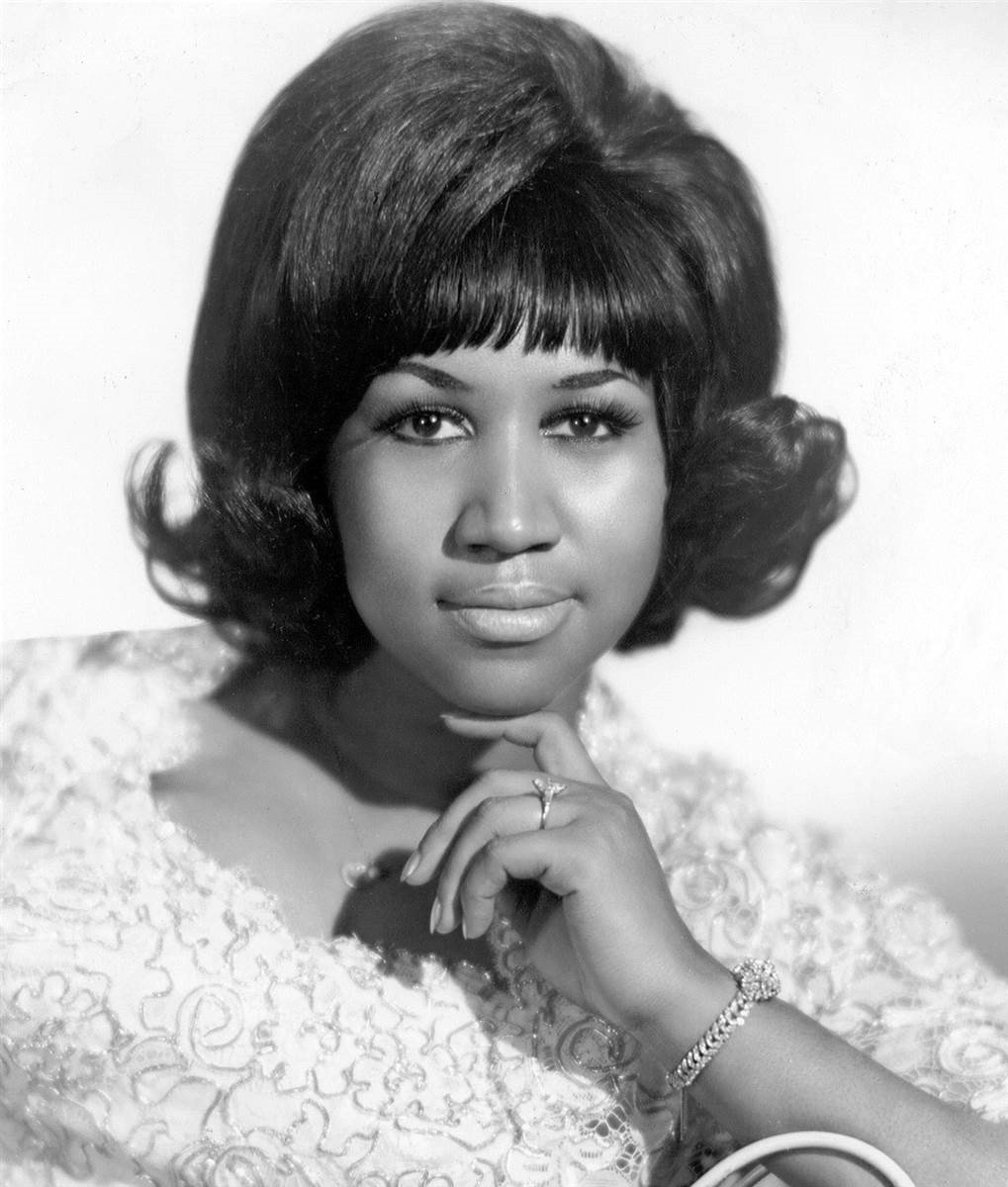
It begins with a guitar that sounds like a warning. Before Aretha Franklin sings a single word on Chain of Fools, Joe South’s tremolo guitar ripples out over a slow, circling groove, and a chorus of voices starts chanting the title — chain, chain, chain — like a verdict being read aloud. Then Franklin enters, and she does not enter as a victim. She enters as a prosecutor. In under three minutes, she builds one of the most quietly devastating performances in soul music: a woman counting up the five years she gave to a man, and discovering that she was never his only woman. She was just a link in his chain.
The strange part is that the song was never meant for her. Chain of Fools was written years earlier by Don Covay, a singer-songwriter who had come up singing gospel with his brothers and sisters. When Atlantic Records producer Jerry Wexler asked Covay to write material for Otis Redding, Covay sent in this song. Wexler listened to the demo and made the decision the song’s whole history turns on: he gave it to Aretha instead. Coming in the same year as Respect and (You Make Me Feel Like) A Natural Woman, it became the third panel of her 1967 breakthrough — and the darkest of the three.
A Gospel Kid With a Song in His Pocket
Don Covay was one of those behind-the-scenes figures on whom rhythm and blues quietly depended. Raised on gospel — he sang with his siblings as a boy — he crossed over into secular music in the 1950s and built a career as both a recording artist and a songwriter for hire. He wrote Pony Time, which Chubby Checker took to No. 1 in 1961. His own Mercy, Mercy, recorded in 1964 at a session that famously featured a young guitarist named Jimi Hendrix, was later covered by the Rolling Stones. Covay knew how to build a song that other singers could live inside.
Chain of Fools had been in his pocket a long time. He wrote it in his youth, back in his gospel-singing days, and its central image carries that upbringing with it. A chain is a biblically heavy metaphor — bondage, judgment, consequence — and in the mouth of a Southern singer it could not help but hold older echoes too: the chain gang, the auction block, every way a person can be held and used by somebody else. Covay folded all of that into a cheating song. The narrator has given a man five long years, believing she was the only one, only to learn she is one link among many. It is a blues lament written with a gospel singer’s sense of moral arithmetic.
The Demo Meant for Otis
In 1967, Jerry Wexler was the most important producer in soul music, and he was stocking Atlantic’s roster with material. He asked Covay to write songs with Otis Redding in mind — a natural assignment, since Redding was the label’s reigning male star and Covay’s earthy, church-rooted style seemed tailored for him. Covay recorded the demo of Chain of Fools essentially alone: his own voice on lead, his own guitar, and his own harmonies overdubbed behind himself, answering his lines the way a congregation answers a preacher.
Wexler heard something in that demo that redirected the song’s life. Redding was a pleader — his genius lay in begging, testifying, reaching up from his knees. But Chain of Fools is not a plea. It is an accounting, delivered by the wronged party, and by mid-1967 Wexler had a singer whose genius lay precisely in delivering accounts. Aretha Franklin had just detonated with Respect that spring, and Wexler was now building the run of records that would confirm her. He handed her the song. Redding, who died in a plane crash that December, never recorded it.
Muscle Shoals, June 1967
Franklin cut Chain of Fools in June 1967 at FAME Studios in Muscle Shoals, Alabama, with the core of the Muscle Shoals Rhythm Section around her: Jimmy Johnson on guitar, Spooner Oldham on Wurlitzer electric piano, Tommy Cogbill on bass and Roger Hawkins on drums. Franklin played piano herself and directed the record from the keyboard, as she preferred. Alongside Johnson, guitarist Joe South supplied the record’s signature sound — that shivering, tremolo-soaked guitar figure that opens the song and keeps prodding it forward, half blues lick, half church bell.
Behind her, the backing vocals were a small summit meeting: the Sweet Inspirations, Atlantic’s house gospel-soul choir, joined by her sisters Carolyn and Erma Franklin and, remarkably, Ellie Greenwich, one of the great Brill Building songwriters. Together they turn the title into a chant — chain, chain, chain — a call-and-response Amen corner for a song about betrayal. The arrangement barely moves in harmony; the band settles into a slow, circling vamp and lets the tension come from Franklin’s phrasing, which starts weary and ends in iron. The full performance ran four minutes and three seconds. Nobody in the room seems to have been in a hurry to stop it.
Cut Down for Radio, Unstoppable Anyway
Atlantic, however, had a single to sell, and singles in 1967 did not run four minutes. The performance was edited down from 4:03 to 2:47 for release — the version heard on the original Lady Soul LP as well as the 45 — and issued in November 1967 with Prove It on the B-side. The unedited take would not surface until 1973, on the quadraphonic edition of The Best of Aretha Franklin, and did not become standard until Rhino’s 1995 remaster of Lady Soul restored it.
The edit did the record no harm at all. Cash Box magazine, reviewing the single in December 1967, called it “a smashing entry that will top both blues and pop charts,” and it very nearly topped both. It spent four weeks at No. 1 on Billboard‘s Hot Rhythm & Blues chart and climbed to No. 2 on the Hot 100 in January 1968, held off the summit only by John Fred & His Playboy Band’s Judy in Disguise (With Glasses) — though Cash Box‘s own chart put it at No. 1, and it reached No. 4 in Canada. In January 1968 the song opened Lady Soul, Franklin’s third Atlantic album, which rose to No. 2 on the Billboard album chart and No. 1 on the R&B chart, confirming that 1967’s breakthrough was a permanent condition.
The Chain Keeps Lengthening
The honors arrived on schedule. Chain of Fools won Franklin the Grammy Award for Best Female R&B Vocal Performance in 1969, and in 2001 the recording was inducted into the Grammy Hall of Fame. Rolling Stone placed it at No. 249 on its 2004 list of the 500 greatest songs of all time. Franklin kept it in her stage act for the rest of her career: a scorching live version appears on Aretha in Paris in 1968, and thirty years later she sang it on the VH1 Divas Live broadcast in duet with Mariah Carey, the most devoted of her inheritors — a passing of the chain, link to link, in front of the cameras.
The song’s meaning kept widening, too. What begins as one woman’s discovery of a faithless man landed, in the late 1960s, in a country full of people who felt used and held fast by forces larger than themselves; the record found a particular resonance among Black servicemen in Vietnam, who heard their own situation in its central image. And when Franklin’s life came to be dramatized, the song was unavoidable: both Cynthia Erivo in the 2021 miniseries Genius: Aretha and Jennifer Hudson in the 2021 film Respect performed it in character, measuring themselves against the original.
There is a final irony in where the song came from. Chain of Fools was written by a gospel kid for the King of Soul, demoed by one man playing and singing every part, and redirected at the last moment to the one singer who could turn it into scripture. Covay wrote the chain. Wexler chose the wrist it would close around. But it was Franklin who made it hold: five long years, three unblinking minutes, and a voice that made being somebody’s fool sound, forever after, like the first step toward being free.
Leave a Reply