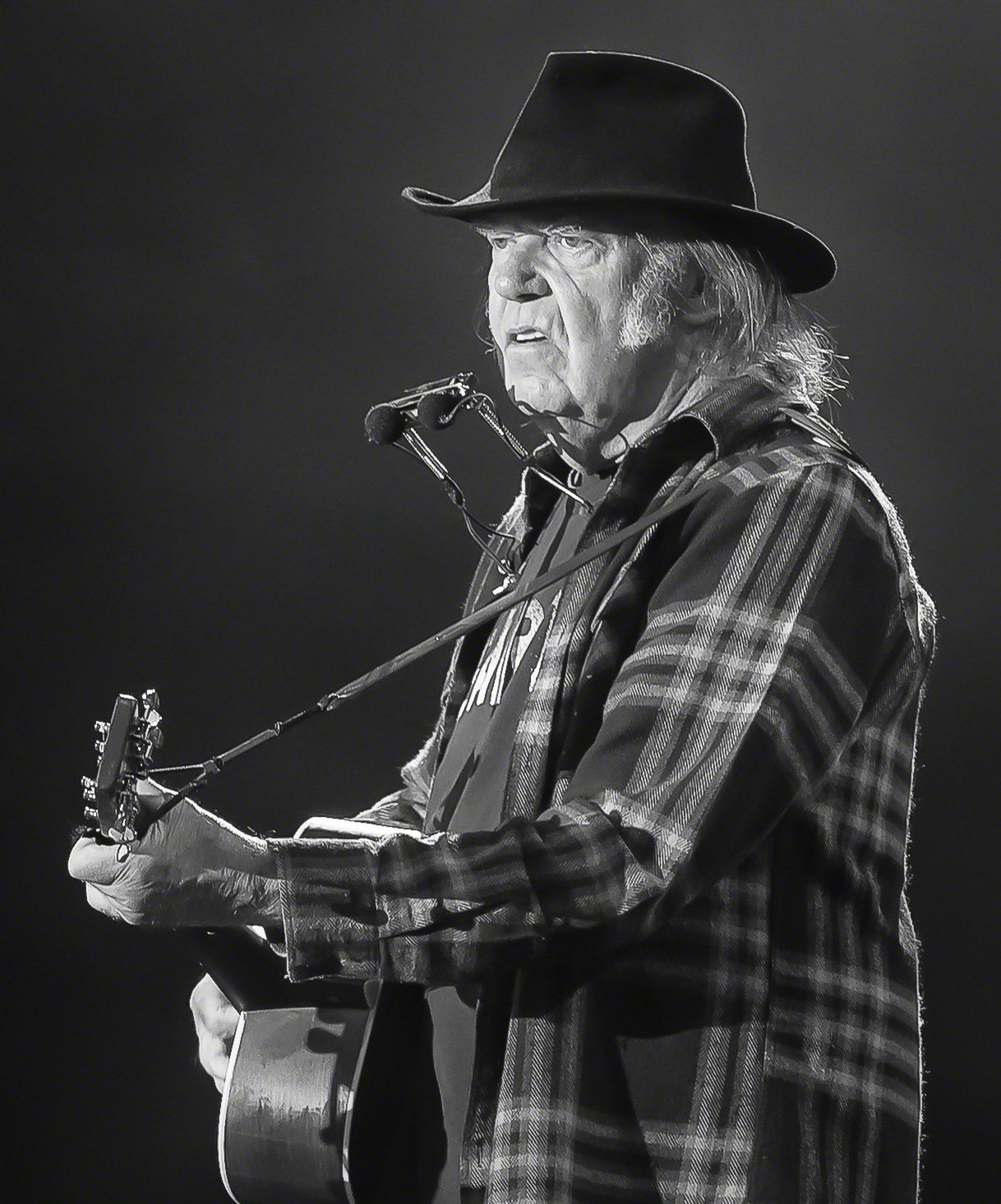

The quiet album that made the loudest noise
There are albums that announce themselves, and there are albums that creep up on a listener. Neil Young’s Harvest, released in February 1972, belongs firmly to the second kind, and that is part of why it has lasted. It does not shout. It does not show off. It opens with a gentle, shuffling rhythm, a harmonica sigh, and a voice that sounds as if it is talking to one person rather than to a crowd. Yet this quiet record became the best-selling album in the United States in 1972, gave Young his only United States number one single to date, and turned a restless band member into a solo star whose name could carry an album on its own.
That transformation is the real story of Harvest. It is not simply the story of ten songs. It is the story of a Canadian musician who had already left one famous band, joined another famous band, and then discovered that the most powerful place for him might be neither of those rooms. It is the story of an album put together in pieces, in Nashville, in London, in a barn in California, and in a concert hall in Los Angeles, by a man who was in pain, in love, in motion, and increasingly sure of his own voice. To understand Harvest, it helps to start not in 1972, but a few years earlier, when Young was still learning how to leave.
Buffalo Springfield: a brilliant band that could not hold together
Neil Young was born in Toronto, Canada, in 1945, and spent formative years in Winnipeg, Manitoba, before moving to Los Angeles in 1966. There he reunited with Stephen Stills, whom he had known in Canada, and together with Richie Furay, Bruce Palmer and Dewey Martin they formed Buffalo Springfield. The band became one of the defining folk-rock acts of its era, blending folk harmony, country feeling, rock energy and psychedelic colour in a way that sounded both polished and unpredictable.
Young’s songwriting was already distinctive inside Buffalo Springfield. Songs such as Expecting to Fly, Broken Arrow, I Am a Child, On the Way Home and Mr. Soul showed a writer who could be tender and strange in the same breath, who could write a melody that felt simple and a lyric that refused to sit still. The band scored a hit with Stills’s For What It’s Worth, and for a brief moment Buffalo Springfield looked like a group that could shape the late nineteen sixties.
It did not last. Young was unhappy in the band and left it more than once, eventually leaving for good to pursue a solo career. The reasons, as with many band breakups, were tangled: strong personalities, different ambitions, the pressure of success, and a young songwriter who wanted more room than a five-person democracy could give him. Buffalo Springfield released three studio albums between 1966 and 1968 before disbanding. That short life gave Young something valuable, though. It gave him a public reputation, a set of songs that proved he could write at the highest level, and a lesson about what he did not want. He did not want to be only one voice in a chorus. He wanted to be able to follow a song wherever it led, even if that meant working alone.
His first solo steps were tentative rather than triumphant. He signed to Reprise Records and released his self-titled debut album in 1968, followed in 1969 by Everybody Knows This Is Nowhere, his first album with Crazy Horse, the band formed from musicians he had recruited from a group called the Rockets: Danny Whitten, Billy Talbot and Ralph Molina. That second album went gold and established a second side of Young: not just the delicate folk writer, but the electric guitarist who could stretch a song out, lean into distortion, and let a groove run until it found its own ending. Even then, though, solo stardom was not yet secure. Young was respected, he was talked about, but he was not yet the household name that Harvest would make him.
Crosby, Stills, Nash and Young: a supergroup, and a detour
Before Harvest, there was another famous room. In 1969 Young joined Crosby, Stills and Nash as a fourth member, turning the trio into Crosby, Stills, Nash and Young. The quartet became one of the first rock supergroups, and their first album together, Deja Vu, released in 1970, topped the charts. Young contributed songs including Helpless, and his abrasive guitar and high, keening voice added tension to the group’s silky harmonies. That tension was part of the appeal. Crosby, Stills, Nash and Young sounded like four strong songwriters trying to share one stage, because that is what they were.
The quartet did not last long in its first incarnation, disbanding in 1970 amid friction among the members. Each member then released a solo album in the period between September 1970 and May 1971, including Young’s After the Gold Rush. That album is often treated as the beginning of Young’s spectacular solo career, and rightly so. It showed that he could make a complete, personal album without a famous band around him. Yet After the Gold Rush, for all its beauty, was still a step on the way, not the arrival itself. Harvest would be the album that took the intimacy of After the Gold Rush, gave it a warmer, more country-shaped sound, and carried it to the centre of popular music.
It is worth pausing on what Young learned from both bands, because Harvest carries both lessons. From Buffalo Springfield he learned how country and rock could live in the same song without either side apologising. From Crosby, Stills, Nash and Young he learned the power of harmony, and also its limits. On Harvest, former bandmates return, but on Young’s terms. David Crosby, Stephen Stills and Graham Nash add backing vocals to some tracks, recorded later, rather than sharing songwriting or leadership. They are guests in Young’s house now, not co-owners. That shift in balance is small on paper and huge in a career. It is the sound of a musician who has stopped auditioning for a band and started building his own.
Nashville, by accident: how Harvest began
Harvest famously began almost by accident. In early February 1971 Young travelled to Nashville to appear on The Johnny Cash Show, a television programme that also featured James Taylor and Linda Ronstadt. After the show, the producer Elliot Mazer, who had recently opened Quadrafonic Sound Studios on Music Row in Nashville, hosted a gathering and struck up a conversation with Young, who was looking for a studio to record new songs. Mazer assembled musicians at short notice: pedal steel guitarist Ben Keith, bassist Tim Drummond and drummer Kenny Buttrey, with Teddy Irwin also involved. The group clicked immediately, playing live in the studio in the way that would define much of the album.
The basic tracks for Old Man were recorded that first night, with Heart of Gold following the next day. Taylor and Ronstadt, who were still in Nashville, added backing vocals to both songs, Taylor also playing banjo on Old Man. The sessions were quick, warm and unforced. Mazer later recalled that Heart of Gold came together in only a couple of takes, with the band playing live and the harmony singers adding their parts in the control room while listening to the studio monitors. That speed matters. Harvest does not sound laboured. It sounds like musicians hearing a song for the first time and finding its shape together, and in Nashville that is more or less what happened.
Those Nashville musicians, together with arranger and pianist Jack Nitzsche, would become known as the Stray Gators. They were not a band Young had rehearsed for months. They were a studio group assembled around a feeling: country instruments played with rock directness, no fuss, no excess, plenty of space for a voice and a harmonica. Ben Keith’s pedal steel, in particular, became one of the defining sounds of Harvest. It does not dominate the songs. It hovers, it sighs, it answers Young’s vocal like a second voice. Tim Drummond’s bass and Kenny Buttrey’s drums keep the songs moving without pushing them. The result is music that feels both grounded and airborne, like a country song remembered from far away.
Young returned to Nashville in April 1971 for further sessions at Quadrafonic Sound, which produced Out on the Weekend, the title track Harvest, and overdubs. But Harvest was never a single-session album. It was assembled over months, in different places, and that patchwork quality is part of its charm. A listener can hear the different rooms in it: the Nashville studio warmth, the London orchestral sweep, the barn-like openness of the California ranch recordings, and the stark intimacy of a live concert hall. Rather than smoothing those differences away, Young let them stand. The album feels like a journey because, quite literally, it was one.
London and the orchestra: ambition at the other end of the scale
If Nashville gave Harvest its warmth, London gave it its ambition. In March 1971 Young travelled to London with Nitzsche to record two songs live with the London Symphony Orchestra: A Man Needs a Maid and There’s a World. The recording location was Barking Town Hall, later described as Barking Assembly Hall, and the arrangements were by Nitzsche, who had worked as a close collaborator of producer Phil Spector. Young sang and played piano while the orchestra played around him, a far cry from the small Nashville group.
These two tracks have always divided listeners, and that division is interesting in itself. Some hear them as overblown, too grand for songs that might have worked better alone with a guitar or a piano. Others hear them as brave, even moving, attempts to give private feelings a large frame. What is not in doubt is that Young wanted to try. After years in bands where other people shaped the sound, he was now willing to put his own voice next to a full orchestra and see what happened. A Man Needs a Maid is a hushed, piano-led reflection on a new relationship and on needing help, written at a time when Young was dealing with a serious back injury and recovery. There’s a World is broader, more philosophical, and the orchestra gives it a sweep that the Nashville tracks deliberately avoid.
The London sessions also show how far Young had come from Buffalo Springfield. In that band, orchestral colour had appeared in songs such as Expecting to Fly and Broken Arrow, but it was part of a group sound. Here, the orchestra is there to serve one songwriter’s vision, and Young is clearly in charge, even when the sound around him is enormous. He did not make a whole album with the orchestra. He made two tracks with it, placed them inside a mostly acoustic, country-flavoured album, and let the contrast do its work. That restraint is part of why Harvest still feels balanced. The grand moments make the quiet moments feel quieter, and the quiet moments make the grand moments feel earned.
The ranch, the barn, and the electric side
Later in 1971 Young invited Keith, Drummond, Buttrey and Nitzsche to his ranch in Northern California, the property he called Broken Arrow, near Half Moon Bay. There, with a remote recording truck backed up to a barn on the property, the group recorded the album’s electric songs: Are You Ready for the Country?, Alabama, and the closing track Words (Between the Lines of Age). Crosby, Stills and Nash later added backing vocals to some of these tracks in New York.
These ranch songs are essential to Harvest, because they stop the album from becoming only a gentle acoustic record. Are You Ready for the Country? is a loose, playful country-rock shuffle. Alabama is harder, more biting, and has often been described as a companion or sequel to Southern Man from After the Gold Rush, with harmonies from Crosby and Stills. Words (Between the Lines of Age) is the album’s long, expansive closer, with backing vocals from Nash and Stills, stretching out past six minutes and letting the band play with a freedom that recalls Crazy Horse at their most unhurried.
Hearing these tracks after the Nashville songs and the London orchestra pieces, a listener understands Young’s range in 1971 and 1972. He could write a three-minute single that would top the charts, a piano ballad with an orchestra, and a long electric jam, and make them all feel like they belonged on the same record. That range had been there in Buffalo Springfield and in his early solo work, but Harvest was the first album to hold it all together with such confidence. It is not a genre exercise. It is a portrait of a musician who refused to choose between folk, country and rock, and who had finally found musicians and settings that let him move between those worlds without losing himself.
A body in pain, and why the album sounds the way it does
One fact explains a great deal about Harvest’s sound, and it is not a musical fact at all. Young had seriously injured his back while working on his ranch property after moving there in August 1970, aggravating weakness linked to childhood polio. He spent time in hospital, took pain medication, and underwent surgery to remove discs from his spine in August 1971. During this period he did not have the strength to stand and play electric guitar for long stretches. That physical limitation pushed him towards the acoustic guitar, towards sitting down, towards songs that could be carried by voice, harmonica and a small group rather than by volume and stamina.
It would be wrong to reduce Harvest to an injury, and Young himself would surely resist that reading. The songs are not hospital songs. They are songs about weekends, about getting older, about love, about the land, about conscience, about drugs and loss. But the injury helps explain the album’s temperature. Harvest is warm rather than hot, close rather than distant, patient rather than frantic. Even the electric songs feel relaxed, as if the band is playing in a barn because that is where everyone feels comfortable, not because they are trying to prove something. The back brace and the surgery are part of the background, not the foreground, and that is how they should be heard: as one reason why a famously restless electric guitarist made his most famous album mostly sitting down, with an acoustic guitar in his hands.
Old Man is the clearest example. The song was inspired by Louis Avila, the previous caretaker of the Broken Arrow Ranch, an older man whose life Young observed with a mixture of respect and recognition. The song does not present age as a tragedy. It presents it as a mirror. A young man looks at an older man and sees both difference and similarity, youth and the future, independence and dependence. Taylor’s banjo and Keith’s pedal steel give the track a country lilt, but the feeling is universal. It is one of the reasons Old Man became Young’s second-highest-charting solo single in the United States, reaching number 31, and one of his most enduring songs. Listeners who have never lived on a ranch, never met a caretaker, still recognise the moment of seeing their future self in someone else.
Heart of Gold: the hit Young did not quite want
Heart of Gold is the centre of Harvest, commercially and emotionally, and it is also the song Young had the most complicated relationship with. It was recorded in Nashville in February 1971, with Taylor and Ronstadt singing harmony, and it became Young’s only United States number one single to date. In March 1972 Harvest spent time at number one on the Billboard 200 albums chart, and in its second week at the top Heart of Gold topped the Hot 100 singles chart. The album became the best-selling album in the United States in 1972, and it remains the best-selling album in Young’s catalogue.
The song itself is disarmingly simple. A gentle acoustic guitar pattern, a harmonica figure, a melody that feels as if it has always existed, and a vocal that searches rather than declares. It is a song about looking for something true and lasting, about growing older while still searching, about the gap between what we hope for and what we find. Its simplicity is its strength, and also, for Young, its problem. In later years he described the song as having put him in the middle of the road, a place he found boring, and said he then headed for the ditch, a rougher but more interesting path. That phrase, the ditch, became shorthand for the darker, rawer albums that followed Harvest, including Time Fades Away, On the Beach and Tonight’s the Night.
That later turn should not make us hear Heart of Gold as a mistake. It was not. It was a genuine song, written and recorded quickly, that happened to connect with millions of people at exactly the right moment. The early nineteen seventies were full of singer-songwriters, but few wrote with Young’s combination of plain language and strange, open-ended imagery. Heart of Gold does not explain itself. It leaves room for the listener. That room is why it still works on radio, in films, in cover versions, and in quiet rooms decades later. Young may have moved on from the middle of the road, but the song remains a perfect example of what the middle of the road can sound like when a truly original writer passes through it.
The other songs: a track-by-track walk through Harvest
Harvest contains ten songs, and each one adds a different shade to the album. Out on the Weekend opens the record with a gentle, melancholic meditation, a traveller’s song that sets the tone without demanding attention. It is a song about being on the road, about relationships that do not quite settle, about the feeling of arriving somewhere and still feeling restless. The title track, Harvest, follows with a similarly unhurried feel, a song that seems to be about work, about the land, and about what we gather from our lives, literal and otherwise.
A Man Needs a Maid, the third track, changes the temperature. With piano and orchestra, it is more exposed, more vulnerable, a song about a new relationship and about needing care. It is followed by Heart of Gold, which brings the album back to its Nashville heart. Are You Ready for the Country? closes the first side with a looser, more playful energy, a reminder that Young could be funny and relaxed as well as serious.
The second side opens with Old Man, one of the album’s twin peaks, followed by There’s a World, the second orchestral track, which broadens the album’s scope. Alabama then brings back the electric band and a sharper political edge, revisiting themes from Southern Man with a harder sound. The Needle and the Damage Done is the album’s starkest moment: a solo live recording, taken from Young’s concert at Royce Hall at the University of California, Los Angeles, on 30 January 1971, before the Nashville sessions began. In just over two minutes, with only voice and acoustic guitar, Young sings about heroin addiction and loss, inspired in large part by the struggles of Crazy Horse guitarist Danny Whitten. It is a devastating song precisely because it is so plain. There is no arrangement to hide behind, no band to soften it, just a man singing about friends who were slipping away.
Words (Between the Lines of Age) closes the album with a long, searching electric performance. After the brevity of The Needle and the Damage Done, Words feels like a release, a song that lets the band stretch out and lets Young sing in longer lines, as if he is thinking aloud. The album ends not with a neat conclusion, but with a feeling of continuation, as if the harvest is gathered but the work is not finished. That open ending fits Young’s career perfectly. Harvest was a peak, but it was not a stopping point.
From solo star to the ditch, and back again
The success of Harvest changed Young’s life, and he did not entirely enjoy the change. Suddenly he was not just a respected songwriter or a former member of famous bands. He was a solo star with a number one album and a number one single, playing to larger audiences, hearing his gentle song everywhere, and being asked to repeat it. His response, as noted above, was to head for the ditch: to make rawer, darker, less commercial records, to tour with a band that sounded ragged rather than polished, to refuse to become a nostalgia act for his own biggest hit.
That refusal is part of why Young is still taken seriously decades later, and why Harvest still matters. Many artists have a big album and then spend years trying to recreate it. Young had a big album and then spent years running away from it, in the best sense. He returned to Crazy Horse, he explored country, rock, folk, punk-influenced noise, film, and activism, he reunited with Crosby, Stills and Nash at different times, and he kept writing songs that sounded like himself rather than like a market. Harvest did not trap him. It gave him the freedom, and the audience, to be difficult afterwards. That is a rare gift for a commercial peak to give an artist, and it says something about both Young and his listeners. The audience that bought Harvest in such numbers did not only want Heart of Gold repeated. Many of them were willing to follow him into darker territory, because Harvest had shown them that he was worth following.
It also says something about the difference between fame and stardom. Fame is being known. Stardom, in Young’s case, was being trusted. After Harvest, listeners trusted that a Neil Young album, whatever it sounded like, would be honest. That trust was built in Buffalo Springfield, tested in Crosby, Stills, Nash and Young, and finally secured on Harvest, where Young stood alone at the centre of the record and did not hide behind a band name. The album’s cover, with its plain typography and its unadorned photograph, fits that feeling. There is no elaborate concept, no costume, no attempt to look like anything other than what the music is.
Why Harvest still rewards a full listen
More than fifty years after its release, Harvest rewards a full, uninterrupted listen in a way that a playlist of its hits does not. Heard as singles, Heart of Gold and Old Man are beautiful and complete. Heard as an album, they are part of a larger conversation. The Nashville warmth, the London grandeur, the barn electricity and the live starkness talk to each other. The gentle songs make the hard songs hit harder. The hard songs make the gentle songs feel less sentimental. The orchestra makes the solo guitar feel more intimate, and the solo guitar makes the orchestra feel more daring.
For new listeners, Harvest is also an ideal entry point into Young’s vast catalogue. It is accessible without being shallow, melodic without being simple, and personal without being closed off. From here, a listener can go backwards to Everybody Knows This Is Nowhere and After the Gold Rush, forwards to the ditch albums, sideways to Crosby, Stills, Nash and Young and to Buffalo Springfield, and hear how the same voice changes shape in different rooms. For longtime listeners, Harvest remains a touchstone, a record that can be returned to in different seasons of life and heard differently each time. A young listener may hear the searching in Heart of Gold. An older listener may hear the mirror in Old Man. A listener who has lost someone may hear The Needle and the Damage Done with a new, painful clarity.
The album’s 50th anniversary edition, released in December 2022, underlined that lasting interest. It presented the original album alongside a previously unreleased solo performance from the BBC’s In Concert series, recorded on 23 February 1971, featuring album cuts including Heart of Gold, Old Man, A Man Needs a Maid and Out on the Weekend, as well as other songs from the period. That BBC performance, filmed in London, captures Young alone, before Harvest was finished, singing new songs to a new audience with only a guitar, a piano and a harmonica. It is a reminder that Harvest began not as a commercial plan, but as a set of songs a young man was trying out on stage, night after night, to see if they held up. They did, and they still do.
Listening again, from Springfield to solo
Neil Young’s journey from Buffalo Springfield to Harvest is, in the end, a story about leaving in order to arrive. He left a brilliant band that could not hold together. He joined a supergroup that also could not hold together for long. He made solo albums that showed promise and beauty. Then, in Nashville, in London, in a barn and in a concert hall, he made an album that held together all the parts of himself: the folk singer, the country listener, the rock guitarist, the piano ballad writer, the harmonica player, the man who could sing about a caretaker, a lover, a friend lost to drugs, and a search for something golden, all in the same breath.
Harvest did not make Young a star by changing him. It made him a star by letting listeners hear him clearly, perhaps for the first time, without a band name in front of his own. That clarity is still the album’s greatest achievement. Put it on, from Out on the Weekend to Words, and you hear a musician who has stopped being a member of something and started being himself. The harvest, in that sense, is not just a title or a wheat field on a cover. It is what happens when years of playing in bands, writing alone, travelling, hurting and healing finally come together in ten songs that sound as if they were always meant to be together. That is why Harvest endures, why it still sells, why it still plays, and why it remains the moment Neil Young stopped being a promising sideman and became, unmistakably, Neil Young.
Sources / further reading
- The Second Disc, “Journey Through the Past: Neil Young Expands ‘Harvest’ For 50th Anniversary” — https://theseconddisc.com/?p=89444
- American Songwriter, “5 Fascinating Facts About Neil Young’s ‘Harvest’” — https://americansongwriter.com/5-fascinating-facts-about-neil-youngs-harvest-in-honor-of-the-anniversary-of-the-1972-album-reaching-no-1/
- Ultimate Classic Rock, “How Neil Young Got Ready for the Country on ‘Harvest’” — https://ultimateclassicrock.com/neil-young-harvest/
- JamBase, “5 Little Known Facts About Neil Young’s ‘Harvest’” — https://www.jambase.com/article/neil-young-harvest-5-little-known-facts
- JamBase, “Watch 25-Year-Old Neil Young Perform ‘Heart Of Gold’ At BBC In 1971” — https://www.jambase.com/article/neil-young-harvest-bbc-1971
- Reverb, “More Barn! The Studios and Gear of Neil Young’s Harvest” — https://reverb.com/en-hu/news/more-barn-the-studios-and-gear-of-neil-youngs-harvest
- Wikimedia Commons file page for the wheat-field image — https://commons.wikimedia.org/wiki/File:20110628Weizenfeld_Ketsch.jpg

Image credit: Wheat field near Ketsch, Germany, by AnRo0002, released under CC0 1.0 Universal Public Domain Dedication, via Wikimedia Commons: https://commons.wikimedia.org/wiki/File:20110628Weizenfeld_Ketsch.jpg
Leave a Reply