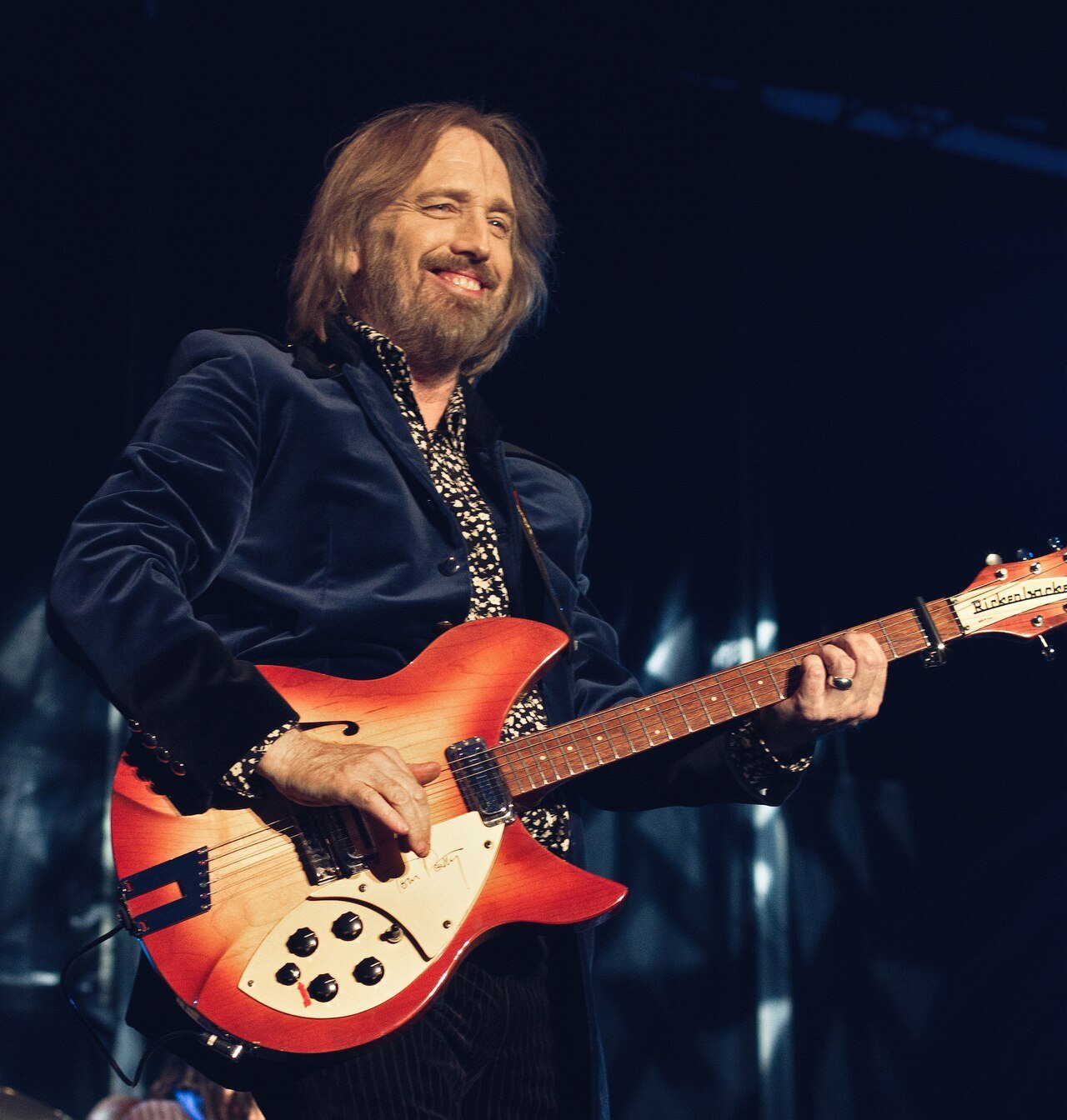

A familiar voice, a different name on the sleeve
When Tom Petty released Full Moon Fever on April 24, 1989, on MCA Records, the name on the sleeve was the first surprise. After more than a decade as the leader of Tom Petty and the Heartbreakers, here was a record billed simply to Tom Petty. It was his debut solo studio album, and it arrived at a moment when a listener might reasonably have expected either a bold break with the past or a cautious side project that would soon be forgotten. It turned out to be neither. Full Moon Fever is best understood as a record about freedom within familiarity: a songwriter stepping outside his band without stepping away from the musicians, the influences, and the plainspoken rock and roll language that had made his work matter in the first place.
That distinction matters, because the album has often been described in shorthand as Petty going it alone. The recording itself tells a more interesting story. The producers were Petty, Jeff Lynne, and Mike Campbell. Campbell was, of course, the Heartbreakers guitarist, and other Heartbreakers contributed as well. What changed was not the company Petty kept, but the centre of gravity. Instead of a band record shaped by a touring group, Full Moon Fever was a songwriter’s record, made in a smaller room, with a smaller core team, and with a producer whose own musical history pulled Petty toward melody, harmony, and a cleaner, brighter sound. The result still sounds like Petty, but it sounds like Petty heard from a slightly different angle, as if someone had opened a window in a room the listener already knew.
The album runs for just under forty minutes across twelve tracks. That brevity is part of its character. There is no sprawling statement here, no attempt to prove that a solo album must be bigger, longer, or more elaborate than a band album. Instead, Full Moon Fever moves quickly and confidently from song to song, trusting that a strong melody and a clear lyric will do the work. It is an album that rewards listening in order, because its pleasures accumulate: the opening lift of one song, the wry turn of the next, the quiet pause of a short acoustic piece, and then the surge of a driving rock song that closes a side with energy to spare.
A solo album that was not a break-up
The background to Full Moon Fever begins in 1987, after the Heartbreakers finished a tour behind Let Me Up (I’ve Had Enough). Petty decided to record a solo album without the Heartbreakers as a formal unit, a situation that has been compared to the arrangement between Bruce Springsteen and the E Street Band at the time. The comparison is useful, because it explains what a solo billing can mean in rock music. It does not necessarily mean that a singer has left his band, quarrelled beyond repair, or decided that his old collaborators have nothing more to offer. It can mean that, for one record, the project belongs to the songwriter, and the musicians join as contributors rather than as a band with a collective identity at stake.
That distinction did not remove all tension. The decision stirred controversy among members of the Heartbreakers, and the record’s history notes that all but drummer Stan Lynch contributed to the album. Benmont Tench and Howie Epstein, both Heartbreakers, were part of the story of the record, even as the billing changed. In practical terms, then, Full Moon Fever was less a divorce than a reshaping of roles. Petty was still working with people he trusted. He was simply working with them in a different configuration, and that difference allowed the songs to take a different shape.
For a listener coming to the album for the first time, this is worth keeping in mind, because it changes how the record should be heard. If you expect a lonely, stripped-down confessional, you will be surprised by how full, warm, and companionable the album sounds. If you expect a Heartbreakers album under another name, you will notice the differences soon enough: the production is glossier, the backing vocals are more prominent, the keyboards sit differently in the mix, and the whole record has a lightness that sets it apart from the harder-edged band work around it. The solo billing, in other words, was not a marketing trick. It described a real change in how the music was made, even though the faces in the room were largely familiar.
The garage, and Jeff Lynne
Much of Full Moon Fever was recorded in the relaxed atmosphere of Mike Campbell’s garage studio, and that setting is central to the album’s appeal. A garage studio suggests informality, but it does not mean carelessness. In this case, it meant that Petty, Campbell, and Lynne could work without the pressure and ceremony of a large commercial session, trying ideas, keeping what worked, and letting songs develop at their own pace. The recording took place in 1987 and 1988, and sessions were interrupted to allow time for the first Traveling Wilburys album. That interruption, far from derailing the project, seems to have fed into it, because the Wilburys sessions brought Petty into close creative contact with some of the same musicians who appear on Full Moon Fever.
Jeff Lynne’s role cannot be overstated, and it is the key to understanding why this album sounds the way it does. Lynne, known for his work with the Electric Light Orchestra, co-produced the album with Petty and Campbell, and the songwriting on the record consists primarily of collaborations between Petty and Lynne. That partnership gave Petty a collaborator who was both a strong melodic writer and a producer with a distinctive ear for arrangement. Lynne played bass, guitar, guitar synthesizer, keyboards, and sang backing vocals, among other contributions, and his presence is audible in the layers of keyboards and backing vocals that give the album its polished, melodic character.
Critics and historians have described the album as a cleaner and glossier version of the Heartbreakers’ roots rock, with a Beatles-like feel created by those layered vocals and keyboards. That description is fair, but it should not be taken to mean that the record lost its roots. Petty’s writing still draws on American rock and roll, country, and folk traditions, and the album includes a cover of a Byrds song, Feel a Whole Lot Better, written by Gene Clark. There is also a nod to Del Shannon in Runnin’ Down a Dream. What Lynne added was not a new identity imposed from outside, but a frame that let Petty’s melodies shine more clearly. The guitars still drive the faster songs, the acoustic guitars still carry the quieter ones, and Petty’s voice remains the centre of the record. Lynne’s production simply gives that voice more light.
The partnership also mattered because it was collaborative rather than merely technical. Lynne was not a producer hired to polish finished songs. He was a co-writer on many of them, including Free Fallin’, I Won’t Back Down, A Face in the Crowd, A Mind with a Heart of Its Own, and Yer So Bad. Love Is a Long Road was written by Petty and Campbell, while Runnin’ Down a Dream was written by Petty, Lynne, and Campbell. Three songs, Depending on You, The Apartment Song, and Alright for Now, were written by Petty alone. That spread of credits tells the story of the sessions better than any single anecdote: a core partnership between Petty and Lynne, with Campbell as a crucial third voice, and with room for Petty to write on his own when a song called for it.
The Wilburys bridge
No account of Full Moon Fever is complete without the Traveling Wilburys, because the two projects overlap in time, personnel, and spirit. The Wilburys were a supergroup comprising George Harrison, Jeff Lynne, Bob Dylan, Roy Orbison, and Tom Petty. Their debut album, Traveling Wilburys Vol. 1, was released in October 1988, and its recording interrupted the Full Moon Fever sessions. Dylan was not involved with Full Moon Fever itself, but Harrison, Orbison, and Lynne all contributed to Petty’s solo album, alongside the Heartbreakers musicians already mentioned.
Harrison contributed acoustic guitar and backing vocals on I Won’t Back Down. Orbison contributed backing vocals on Zombie Zoo, the album’s closing track. Orbison died prior to the release of Full Moon Fever, which gives that contribution a particular poignancy in retrospect, even though the album itself is not a mournful record. The Wilburys connection also helps explain the album’s tone. Working with Harrison, Dylan, Orbison, and Lynne as equals, rather than as a frontman leading a band, appears to have encouraged Petty to write with a lighter touch, to enjoy the process, and to trust songs that were direct and unpretentious. The Wilburys were, by many accounts, a project built on friendship and shared musical pleasure, and some of that pleasure carried over into Full Moon Fever.
It is also worth noting what the Wilburys connection did not do. It did not turn Full Moon Fever into a supergroup album, and it did not make Petty sound like Harrison or Dylan or Orbison. The guest contributions are part of the texture, not the headline. A listener who did not know the personnel might hear I Won’t Back Down as a strong Petty song with fine backing vocals, and might hear Zombie Zoo as a playful, slightly odd closing track, without realising who was singing behind the lead vocal. That restraint is part of the album’s charm. The famous friends are there, but they are there in service of Petty’s songs, not as a showcase in their own right.
The songs, side by side
Full Moon Fever opens with Free Fallin’, and that opening remains one of the most recognisable beginnings in American rock. The song was written by Petty and Lynne, and accounts of its writing describe lyrics coming together spontaneously in the studio, as a way of amusing Lynne, rather than through a long, laboured process. Whether or not a listener knows that background, the song’s effect is clear: a long, steady acoustic figure, a vocal that sounds both relaxed and certain, and a chorus that feels inevitable by the second time it arrives. The music video, directed by Julien Temple and shot in the San Fernando Valley, placed Petty in the landscape the song evokes, and helped establish the album in its early weeks. Free Fallin’ was released as a single in October 1989, after the album itself, and it became one of Petty’s most enduring songs, reaching number seven on the American charts in the accounts summarised for this article.
I Won’t Back Down follows, and it was the first single from the album, released in April 1989. Written by Petty and Lynne, with Harrison on backing vocals and acoustic guitar, it is a short, direct statement of resolve, built on a simple chord pattern and a vocal that does not need to raise its voice to sound determined. Its success, reaching number twelve in the United States, helped set the tone for the album’s reception. It suggested that Petty’s solo turn would not be a retreat into obscurity, but a confident continuation of his songwriting, with a new clarity of sound.
Love Is a Long Road, written by Petty and Campbell, shifts the mood toward a driving, guitar-led rock song, while A Face in the Crowd, written by Petty and Lynne, offers a more reflective, melodic moment. Runnin’ Down a Dream, written by Petty, Lynne, and Campbell, closes the first side with energy and momentum. Released as a single in July 1989, it reached number twenty-three in the United States. Its guitar work, with Campbell’s playing at the forefront, reminds the listener that this solo album never abandoned the electric guitar, even when Lynne’s production gave it a cleaner frame.
The second side begins with Feel a Whole Lot Better, the Gene Clark song originally associated with the Byrds. Including a cover at this point in the album is a telling choice. It places Petty explicitly in a lineage of melodic, harmony-rich American rock, and it shows that his solo project was also a project of paying attention to his influences. Yer So Bad, written by Petty and Lynne and released as a single in April 1990, follows with a wry, observational lyric and a light, almost conversational delivery. Depending on You and The Apartment Song, both written by Petty alone, are shorter and more intimate, and they give the second side a sense of variety that prevents the album from settling into a single mood.
Alright for Now, also written by Petty alone, is only two minutes long, and its brevity is a strength. It functions as a pause, a quiet acoustic moment that clears the air before the final two songs. A Mind with a Heart of Its Own, written by Petty and Lynne, uses a Bo Diddley-style rhythm, a reminder that Petty’s roots in early rock and roll were never far away. Zombie Zoo, written by Petty and Lynne, closes the album with a stranger, more playful tone, with Orbison among the backing vocalists. The original compact disc release also included a brief spoken interlude addressed to compact disc listeners, placed where cassette and vinyl listeners would turn the record over, with barnyard noises credited to Del Shannon. That small joke, tucked into the format of the time, captures something essential about Full Moon Fever: it is a serious album about songwriting, but it never takes itself so seriously that it forgets to enjoy the process.
The label that said no
One of the most revealing stories about Full Moon Fever concerns its initial reception at MCA Records. According to the album’s history, MCA under Irving Azoff originally refused to issue the album, believing it did not contain any hits. Azoff resigned within a few months, and with new label management reviewing the album positively, the decision was reversed and the record was released. That sequence of events is worth pausing over, because it says something about how difficult it can be to judge a record before an audience has heard it.
From a listener’s perspective today, the idea that Full Moon Fever contained no hits seems almost impossible to understand. The album produced five singles: I Won’t Back Down, Runnin’ Down a Dream, Free Fallin’, A Face in the Crowd, and Yer So Bad. Two of those singles reached the top twenty of the American Billboard Hot 100, and three topped the American Mainstream Rock chart. The album itself peaked at number three on the United States Billboard 200 and number eight in the United Kingdom. It was later certified five times platinum in the United States and six times platinum in Canada. Those figures are not the whole story of the album, but they do show how wide the gap can be between an early internal judgement and a public response.
The label story also fits the album’s broader theme. Full Moon Fever was made in a garage, with a small team, at a relaxed pace, and it was initially doubted by the very company that would release it. Its success was not the result of a large, obvious campaign to create a blockbuster. It was the result of songs that connected with listeners over time, through radio, through the music videos, through live performance, and through the simple fact that people kept returning to them. Many of the songs became fixtures at Heartbreakers concerts in later years, which is perhaps the clearest evidence that the solo album did not divide Petty from his band in the long term. Instead, it added a set of songs to a shared repertoire that both Petty and his band could carry forward.
A cleaner sound, and what it kept
Musically, Full Moon Fever is often described as heartland rock and roots rock, and those labels are accurate as far as they go. Petty’s writing draws on the same American traditions that shaped his earlier work: the directness of folk and country, the drive of rock and roll, and the melodic clarity of the best pop songwriting of the 1960s. What Lynne’s production changed was the surface of that sound. Layers of keyboards and backing vocals give the album a gloss that earlier Heartbreakers records did not always have, and the overall effect has been described as Beatles-like. That comparison should be understood as a description of texture, not as a claim that Petty was imitating the Beatles. The harmonies are fuller, the arrangements are more carefully layered, and the sound is less raw, but the songs themselves remain rooted in Petty’s own voice and writing.
That balance between polish and roots is one reason the album has lasted. A record that was only polished might have sounded dated within a few years, as production fashions changed. A record that was only raw might have sounded like a retreat. Full Moon Fever avoids both traps because its polish serves its songs. The acoustic guitars in Free Fallin’ are clear and present, not buried under effects. The electric guitars in Runnin’ Down a Dream and Love Is a Long Road still have bite. The quiet songs still sound intimate, because the production does not try to make them sound bigger than they are. Lynne’s skill, in this context, was knowing when to add a layer and when to leave a song alone.
It is also worth listening to how the album uses space. At just under forty minutes, it does not overstay its welcome. The short songs, especially Alright for Now and The Apartment Song, give the record breathing room, and the sequencing creates a sense of movement from the open, expansive feeling of the first side to the more varied, slightly quirkier second side. A listener can hear the whole album in a single sitting without fatigue, and can also return to individual songs without losing the sense of the whole. That quality, of being both a collection of strong singles and a coherent album, helps explain why Full Moon Fever is sometimes mistaken for a greatest-hits collection. It is not one, but it contains enough enduring songs that the confusion is understandable.
Why the solo turn still matters
In the years since its release, Full Moon Fever has been recognised in ways that go beyond its initial chart success. In 2019, the album was inducted into the Grammy Hall of Fame. Rolling Stone ranked it at number 298 on its 2020 list of the 500 Greatest Albums of All Time, and at number 92 on its list of the 100 best albums of the 1980s. Those rankings are, of course, only one measure of a record’s standing, and they change as critical opinion changes. What matters more for a listener is that the album continues to be played, covered, and discussed, and that its songs continue to appear in films, on radio, and in live performance contexts long after their original release.
Part of that longevity comes from the album’s emotional directness. Petty was not writing about abstract ideas in these songs. He was writing about determination, about moving on, about the pleasures and complications of everyday life, and about the feeling of being caught between where you come from and where you are going. Those themes are broad enough to remain relevant, but specific enough to feel personal. A song like I Won’t Back Down works because its statement is simple without being simplistic. A song like Free Fallin’ works because its images feel observed rather than invented, even when the details are generalised. A song like A Face in the Crowd works because it captures the experience of noticing someone in a busy world, a small moment that many listeners recognise.
The solo turn also matters because it showed Petty’s range. Before Full Moon Fever, he was primarily known as a band leader. After it, he was also known as a songwriter who could work in a smaller setting, with a different producer, and still produce work of the same quality. That range would matter in his later career, including on Wildflowers, a later solo album that is often discussed alongside Full Moon Fever. This article deliberately does not retell the Wildflowers story, because Full Moon Fever deserves to be heard on its own terms, as a record from 1989, made in a particular set of circumstances, with a particular group of collaborators. Its interest does not depend on what came later, even though what came later confirmed that the solo turn was not a one-off experiment.
For new listeners, Full Moon Fever is an ideal entry point into Petty’s work, precisely because it is both accessible and representative. It contains some of his best-known songs, it shows his range as a writer, and it introduces the listener to the collaborators who shaped his sound in the late 1980s. For longtime listeners, it remains a record to return to, not only for its hits, but for its quieter moments: the cover of a Byrds song, the short acoustic pause, the playful closing track, and the sense throughout that a group of musicians were enjoying making music together, even when the billing said solo.
Listening today
If you listen to Full Moon Fever today, start with the album as a whole rather than with a single song in isolation. Notice how Free Fallin’ opens the record with space and patience, and how I Won’t Back Down answers it with concision. Notice how the first side builds toward Runnin’ Down a Dream, and how the second side loosens up, allowing room for a cover, for humour, and for shorter, more intimate writing. Notice, too, how Lynne’s production shapes the sound without overwhelming it, and how Campbell’s guitar playing provides continuity with Petty’s band work, even when the name on the sleeve has changed.
It is tempting, when writing about a famous album, to claim that it changed everything, or that it was a radical departure. Full Moon Fever was neither of those things, and that is part of its strength. It was a confident, well-made album by a songwriter who knew what he did well, working with collaborators who helped him do it in a slightly new way. It was doubted by its label, made in a garage, interrupted by a supergroup, and carried by songs that have outlasted the doubts. That combination of modest circumstances and lasting songs is what makes the album worth revisiting, not as a footnote to a band career, but as a central chapter in its own right.
The moon in the title is, in the end, a fitting image for the record. It suggests something familiar seen at night, in a different light, and it suggests a cycle that returns. Full Moon Fever returns, for many listeners, in just that way: a record first heard on the radio, then heard again years later, sounding both familiar and slightly new each time. That is not the mark of a novelty or a side project. It is the mark of an album that found its freedom not by leaving everything behind, but by changing the room in which the music was made, and by trusting that the songs would carry the rest.
Sources / further reading
- Wikipedia, “Full Moon Fever” — https://en.wikipedia.org/wiki/Full_Moon_Fever
- Wikipedia, “Traveling Wilburys Vol. 1” — https://en.wikipedia.org/wiki/Traveling_Wilburys_Vol._1
- Men’s Journal, “1989 Album Ranked as One of the Greatest of All Time — And It Still Hits” — https://www.mensjournal.com/entertainment/1989-album-full-moon-fever-ranked-as-one-of-the-greatest-albums-of-all-time-and-it-still-hits
- Parade, “1989 Rock Album Ranked Among ‘Greatest’ of All Time Turns 37 Years Old Today” — https://parade.com/news/1989-rock-album-ranked-among-greatest-of-all-time-turns-37-years-old-today
- Live for Live Music, “How Tom Petty’s ‘Free Fallin” Went From A Studio Joke To A Worldwide Smash Hit” — https://liveforlivemusic.com/news/free-fallin-petty-lynne-story/
- Classic Rock Artists, “Free Fallin’: Tom Petty’s 30-Minute Rock Masterpiece” — https://classicrockartists.com/tom-petty-and-the-heartbreakers-free-fallin-1989/
- Wikimedia Commons, “File:FullMoon2010.jpg” — https://commons.wikimedia.org/wiki/File:FullMoon2010.jpg

Image credit: Full moon photograph by Gregory H. Revera, via Wikimedia Commons, licensed under CC BY-SA 3.0. File page: https://commons.wikimedia.org/wiki/File:FullMoon2010.jpg
Leave a Reply