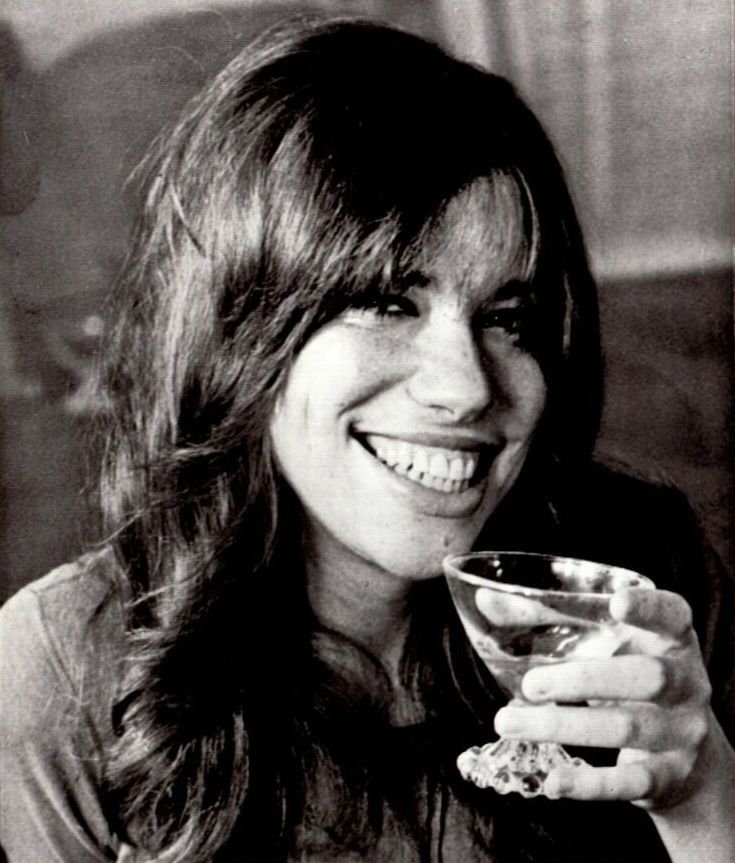
She was born into publishing royalty, raised on classical music and civil rights marches, and she grew up to write one of the most dissected songs in pop history. Carly Simon spent five decades turning her private life into public art — her romances, her anxieties, her triumphs — and she did it all while battling a fear of the stage so severe that it nearly ended her performing career before it began. This is the story behind the mystery.
Born Into Books: The Heiress Who Chose Guitar Strings
Carly Elisabeth Simon was born on June 25, 1943, in New York City, into a family that practically invented American reading. Her father, Richard L. Simon, co-founded the publishing giant Simon & Schuster. Her mother, Andrea, was a civil rights activist and singer. The Simon household in the wealthy Riverdale section of the Bronx was filled with books, music, and famous visitors — a childhood that sounds charmed until you look closer.
Young Carly developed a severe stutter at around age six, a speech impediment so intense that she has described it as traumatic. Her mother helped her through it with an ingenious trick: she taught Carly to tap out a rhythm on her leg and sing her sentences instead of speaking them. The stutter faded, but something permanent remained — the understanding that music could say what ordinary speech could not. Decades later, friends would say that Carly’s conversational singing style, that intimate half-spoken phrasing, was born in those childhood exercises.
Her father’s death when she was just fifteen shattered the family. Richard Simon, the publishing titan, died of a heart attack, and Carly has said the loss left a wound she spent years trying to fill with music, with therapy, and eventually with songwriting itself.
The Simon Sisters: Folk Music Before the Fame
Before she was a solo star, Carly was half of a folk duo with her older sister Lucy. The Simon Sisters signed with Kapp Records in the early 1960s and scored a minor hit in 1964 with a gentle, harmony-rich single about three fishermen. They played the Greenwich Village coffeehouse circuit — the Bitter End, the Gaslight — the same stages where a young Bob Dylan and a teenage James Taylor were cutting their teeth.
When Lucy left to start a family, Carly was suddenly on her own, and she was terrified. She has admitted in her memoir that she never intended to be a performer at all. Her plan was modest: make an album as a kind of demo, a showcase, so that other singers might record her songs. Stage fright, she wrote, was “pure and simple” — or more precisely, her fear of stage fright itself. She had no interest in facing down her phobias. The irony, of course, is that her 1971 self-titled debut produced a Top 10 single about the institution of marriage, and Elektra Records had no intention of letting their new star hide in the studio.
“You’re So Vain”: The Song That Launched a Thousand Guesses
In November 1972, Carly Simon released her third album, “No Secrets,” recorded in London with producer Richard Perry. The lead single was a sleek, stinging kiss-off to a self-absorbed lover, driven by a famous bass introduction from Klaus Voormann and lush string arrangements. It shot to number one in the United States in early 1973 and turned Simon into a household name.
But the song’s greatest hook wasn’t musical — it was the mystery of who it was about. For more than forty years, Simon refused to name the subject, hinting only that the song referred to three different men, a composite of vanity drawn from her eventful romantic life. The press ran wild. Was it Warren Beatty, the Hollywood lothario she had briefly dated? Was it Mick Jagger, whose uncredited backing vocals can be heard on the recording? Was it her new husband, James Taylor, whom she had married just weeks before the single’s release?
The Jagger connection added delicious fuel. While Simon was recording the backing vocals in London, Jagger happened to drop by the studio that very day and ended up singing along — uncredited — on the finished track. The fact that one of rock’s most famously vain frontmen was literally singing on a song called “You’re So Vain” was a coincidence too perfect for the gossip columns to resist. Simon later insisted the song was never about Jagger, but the rumor has never quite died.
The $50,000 Secret and the Warren Beatty Confession
In August 2003, Simon found a characteristically clever way to have fun with the mystery while doing some good. She agreed to reveal the subject’s identity to the highest bidder at the Martha’s Vineyard Possible Dreams charity auction. The winning bid — $50,000 — came from Dick Ebersol, the NBC television executive and a friend of Simon’s. There was one ironclad condition: Ebersol could never tell anyone what she told him.
Ebersol was permitted to share a single clue with the public: the subject’s name contained the letter “E.” That narrowed the field to roughly everybody. A year later, appearing on television, Simon added two more letters — “A” and “R” — which conveniently appear in the name Warren Beatty. Fans with money on Beatty felt vindicated, especially after Beatty himself quipped in 2007 that the song was about him.
The fullest answer came in November 2015, when Simon was promoting her memoir “Boys in the Trees.” She confirmed to People magazine that the second verse — and only the second verse — was about Warren Beatty. As for the rest, she added with a smile that while Beatty believed the whole song was about him, the other verses referred to two other men whose names she still refused to disclose. More than half a century later, two-thirds of pop’s greatest mystery remains unsolved, exactly the way she wants it.
Marrying James Taylor: The Fairy Tale That Wasn’t
In November 1972, at the absolute peak of “You’re So Vain” mania, Carly Simon married James Taylor, the gentle folk-rock troubadour who was himself one of the biggest stars on the planet. Two months later, the couple appeared on the cover of a major music magazine, crowned the king and queen of the singer-songwriter movement. It looked like a fairy tale. It wasn’t.
Both were complicated, fragile people. Taylor was battling heroin addiction; Simon was battling her phobias and insecurities. They recorded a hit duet together — a playful, chart-topping remake of an old R&B tune that reached the Top 5 in 1974 — but behind the harmonies, the marriage was fraying. They divorced in 1983, and Simon has been candid that the split devastated her even as it freed her creatively. Her 1981 album of torch songs, recorded as the marriage was collapsing, is one of the rawest records she ever made — and its famously provocative cover, shot by rock photographer Norman Seeff, earned a Grammy nomination for Best Album Package.
The Night Pittsburgh Carried Her Through the Show
Simon’s stage fright was never a publicity story — it was a genuine affliction that shaped her entire career. The most dramatic episode came in 1981, during a tour following her single “Jesse.” At the first of two scheduled concerts in Pittsburgh, a full-blown panic attack struck mid-performance. Her heart hammered, her hands shook, and rather than fake her way through it, she did something extraordinary: she told the audience exactly what was happening.
The crowd responded with overwhelming kindness. When Simon admitted it would be easier if she weren’t alone up there, roughly fifty audience members climbed onto the stage, surrounding her, rubbing her arms, telling her they loved her. Somehow, wrapped in that human cocoon, she finished the show. The second Pittsburgh date proved too much, and she canceled.
The episode marked a turning point. Simon largely withdrew from public performing for seven years, not returning to a concert stage until a 1987 show on Martha’s Vineyard. Her terror of live performance had already produced one of television’s strangest moments: in May 1976, booked as the musical guest on a late-night comedy show hosted by Madeline Kahn, she was so paralyzed by stage fright that producers pre-recorded her performance instead — one of the only times in the show’s history that the “live” musical guest wasn’t live at all.
“Let the River Run”: The Oscar Nobody Saw Coming
Just when the industry had written her off as a seventies relic, Carly Simon pulled off one of the great second acts in pop history. In 1986, her comeback single from the film “Heartburn” returned her to the Top 10. Then came 1988, when director Mike Nichols asked her to compose the music for his film “Working Girl.” The result was “Let the River Run,” a surging, gospel-tinged anthem she wrote, composed, and performed entirely on her own.
The song swept every major award in existence: the Academy Award for Best Original Song, the Grammy, and the Golden Globe. Simon became the first artist in history to win all three trophies for a single song she had written, composed, and performed herself — a feat that remains vanishingly rare. She was 45 years old, a mother of two, and suddenly the most decorated songwriter in Hollywood.
The Album Covers That Caused a Commotion
Carly Simon’s album covers were almost as famous as her songs — and twice as provocative. The cover of “No Secrets” is a case study in happy accidents. Photographer Ed Caraeff, the man who shot Jimi Hendrix setting his guitar on fire, had spent a full day doing a formal studio session with Simon in London and hated the results. As Simon walked back to the Portobello Hotel in Notting Hill, Caraeff simply followed her down the street, snapping away. The shot they chose — Simon mid-stride in a floppy hat and velour pants, braless beneath a thin jersey top — caused a sensation in 1972. Elektra chief Jac Holzman loved it so much he set her name in an Art Nouveau typeface that became her visual signature for years.
Three years later, she topped it. For 1975’s “Playing Possum,” photographer Norman Seeff had Simon dancing around his studio to the theme from “Shaft” after a couple of glasses of wine, and captured her on her knees in a black teddy and knee-high boots, her face partly cropped out of the frame. Department stores debated whether to display it. The Recording Academy, however, was impressed: the cover earned a Grammy nomination for Best Album Package. Simon later revealed the whole thing had started as a goof — proof that her most iconic images, like her best songs, were born from spontaneity rather than calculation.
Still Standing: The Hall of Fame and the Long Goodbye
The decades since have brought children’s books, standards albums, a memoir, and a quiet life on Martha’s Vineyard. In November 2022, the Rock and Roll Hall of Fame finally came calling, inducting Simon after years of fans wondering what took so long. She did not attend the ceremony in person — the stage, even a celebratory one, was never her favorite place.
Carly Simon’s story is ultimately about the distance between the voice and the person. The voice was fearless: confessional, sensual, cutting, joyful. The person was often frightened, hiding behind sunglasses and stammers and Martha’s Vineyard seclusion. That she gave the world so much honesty while protecting so much privacy may be her greatest trick of all. Somewhere out there, Dick Ebersol still knows the whole truth about “You’re So Vain” — and he’s not telling. Neither is she. And honestly, it’s better that way.
Leave a Reply