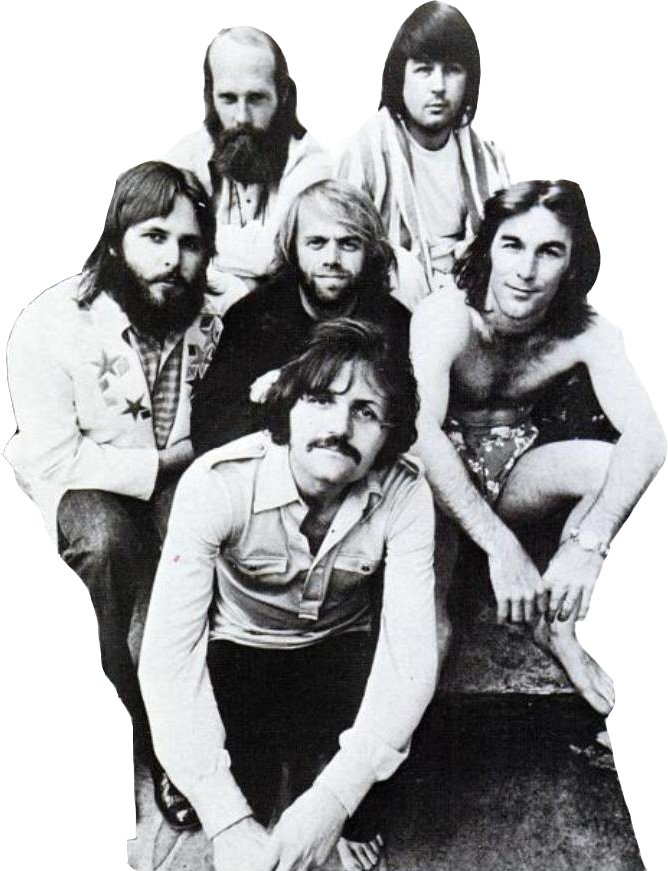

There is a particular kind of silence that follows a very loud success. By the middle of the 1960s, The Beach Boys were one of the most recognisable sounds in American pop music. Their harmonies could make a car radio feel like summer, and their early records had turned surfing, cars, and teenage freedom into a kind of national shorthand. Yet the most important Beach Boys record of all does not sound like a victory lap. It sounds like someone stepping away from the noise, closing a studio door, and asking a quieter and more difficult question: what happens when youth begins to change into something else?
That record is Pet Sounds, released on 16 May 1966 by Capitol Records. It was the band’s eleventh studio album, and it was produced, arranged, and primarily composed by Brian Wilson, with guest lyricist Tony Asher. It runs for just under thirty-six minutes, which makes its reputation all the more remarkable. In that short span, Wilson turned a pop album into a carefully built world of strings, horns, keyboards, unusual percussion, and voices arranged with the precision of a composer and the tenderness of a young man writing about love, doubt, and growing up. This article is not a general biography of the band, and it is not a retelling of the later story of “Good Vibrations”. It is about the retreat itself: the decision to stay home, the writing partnership that gave the album its words, the studio musicians who gave it its colours, and the strange journey from a lukewarm American reception to a place near the very top of almost every serious list of great albums.
Stepping off the road
To understand Pet Sounds, it helps to begin not in a studio but on the road. In January 1965, Brian Wilson declared his withdrawal from touring so that he could concentrate on songwriting and studio production. The rest of the group — his brothers Carl and Dennis Wilson, his cousin Mike Love, and their friend Al Jardine — continued touring without him. Session musician Glen Campbell initially filled his place on stage, followed by Bruce Johnston.
That split was not simply a matter of convenience. Touring is repetitive by nature. Night after night, a band plays the songs people already know, in towns that blur together, for audiences who want the familiar thrill again. The studio, by contrast, rewards patience and experiment. A sound can be tried, discarded, rebuilt, and tried again. A harmony can be stacked voice by voice until it feels less like singing and more like light coming through glass. By staying in Los Angeles while the other Beach Boys toured, Wilson gave himself the one thing a touring musician rarely has: uninterrupted time to listen to what was in his own head.
The albums that came immediately before Pet Sounds show that change already taking shape. The Beach Boys Today!, released in 1965, moved away from the simplest surfing and car themes and introduced more orchestral arrangements and a more emotional, autobiographical tone. Summer Days (And Summer Nights!!), issued later that same year, bridged Wilson’s newer, more progressive style with the band’s earlier approach. Wilson also began work on “Sloop John B” during this period, before setting it aside to focus on Beach Boys’ Party!, an informal album made to meet Capitol’s demand for a Christmas release. When he returned to “Sloop John B” and began recording new compositions, the direction was clear. He was no longer content to make an album that was mostly a container for hit singles with some filler around them. He wanted the whole record to belong together.
This is an important distinction for modern listeners, who are used to albums being treated as serious works in their own right. In the mid-1960s, that idea was still new in pop music. Many albums were assembled quickly, with two or three strong songs and the rest made to fill out the sides of a vinyl record. Wilson’s ambition was different. He wanted every track to earn its place, and he wanted the record as a whole to feel like a single statement, even if its songs were not telling one literal story from beginning to end.
The Rubber Soul challenge
Every great artistic leap has a spark, and for Pet Sounds that spark was The Beatles’ Rubber Soul, released in December 1965. Wilson heard in that album something that changed his sense of what was possible. The American edition of Rubber Soul, reconfigured by Capitol, struck him as unified and free of filler tracks. That was uncommon at a time when albums primarily served to promote singles. He viewed Rubber Soul as a challenge to elevate his own approach, and he aimed to create what he described as the greatest rock album ever made.
It is worth pausing on the nature of that challenge, because it was not simple rivalry. Wilson did not want to copy The Beatles’ sound. He wanted to answer their standard with a standard of his own. He also wanted to expand the approach of producer Phil Spector, whose Wall of Sound technique used large groups of musicians and layered textures to create a huge, enveloping sound. Wilson described Pet Sounds as an interpretation of Spector’s method, aiming in particular to combine different tone colours to create new textures. In other words, he was learning from two different masters at once: from The Beatles, the idea of an album as a complete and cohesive work; and from Spector, the idea that the studio itself could be an instrument, capable of producing sounds that no small band on a stage could produce alone.
That double influence helps explain why Pet Sounds sounds both intimate and orchestral. The lyrics are often about private feelings — uncertainty in love, the fear of not fitting in, the sadness of watching someone change, the hope that a relationship might last. The music around those lyrics, however, is anything but small. It uses strings and horns, keyboards and tuned percussion, guitars and basses, and voices layered so carefully that a single line can feel both fragile and immense. The tenderness is in the words and the singing. The ambition is in the arrangement.
Writing at home with Tony Asher
If the studio was Wilson’s retreat, Tony Asher was his most important collaborator inside it. In 1965, Wilson met Asher, a lyricist and jingle writer, at a Los Angeles recording studio. After exchanging song ideas, Wilson proposed a creative partnership to write songs unlike his prior work. Asher accepted, and their writing sessions began within about ten days, starting with “You Still Believe in Me”. They continued over a roughly three-week period in early 1966, likely January through February, writing at Wilson’s home.
The working method was personal rather than formal. Sessions often started with Wilson introducing musical fragments — chord patterns or melodic ideas he had developed over time — or proposing a lyrical theme. Their preliminary sketches, which they called “feels”, were then developed into fuller songs. Asher later described his role in plain terms: the general tenor of the lyrics was always Wilson’s, while the actual choice of words was usually his own. He saw himself, in effect, as Wilson’s interpreter. That description matters, because it explains why the album feels so unified in tone even though two people were writing it. The feelings came from Wilson. Asher helped find the language that would let a listener recognise those feelings as their own.
Asher also brought influences that Wilson had not fully explored before. He introduced jazz recordings to Wilson, and he advocated for classical instruments such as violins, cellos, and bass flutes in the arrangements. At the same time, Asher recalled that Wilson aimed to craft classical American love songs in the spirit of songwriters such as Cole Porter or Rodgers and Hammerstein. That combination — jazz harmony, classical colour, and the direct emotional language of the great popular songwriters — is one reason Pet Sounds does not sound dated in the way many mid-1960s pop records do. It is not trying to sound fashionable for a single season. It is trying to sound true.
The themes that emerged from those home sessions were, above all, themes of coming of age. Commentators have noted that the lyrics recurrently explore disillusionment with adulthood and lost innocence, and they contrast sharply with the group’s earlier celebrations of adolescence. In “Wouldn’t It Be Nice”, the narrator wishes to be older, so that young love can become a shared adult life. In “You Still Believe in Me”, the narrator is aware of his own flaws and grateful that someone still believes in him. In “I Just Wasn’t Made for These Times”, the narrator feels out of step with the world around him. In “Caroline, No”, the closing song, a lost love is remembered not with anger but with a kind of quiet grief for a person who has changed, or who was never quite as the narrator remembered her.
These are not the themes of a band still singing only about waves and cars. They are the themes of a young adult beginning to understand that growing up involves loss as well as freedom. That is why Pet Sounds has continued to reach listeners who were not alive in 1966 and who have never lived in California. Everyone, at some point, has felt too young for what they want, too old for what they have lost, or unsure whether they belong in the time and place where they find themselves.
The Wrecking Crew and the studio as an instrument
When the songs were ready, Wilson did not simply hand them to The Beach Boys to play as a five-piece band. Recorded largely between January and April 1966, Pet Sounds was the first album in which studio musicians, such as the Wrecking Crew, largely replaced the band on their instruments, and the first in which any rock group abandoned the small-ensemble format for an entire album. The Wrecking Crew was a group of highly skilled Los Angeles session musicians who played on many famous records of the period. Among them were Carol Kaye on electric bass and Hal Blaine on drums, two players whose feel and precision helped define the sound of 1960s Los Angeles pop.
Wilson’s use of these musicians was not a rejection of his bandmates. It was a practical and artistic choice. The Beach Boys would still sing, and their voices remain the emotional centre of the record. But the instrumental tracks required players who could read complex arrangements, switch instruments, follow unusual instructions, and create exactly the texture Wilson heard in his head. A touring band, however talented, is built for a different job. A session orchestra is built for this one.
The range of instruments Wilson used is part of what makes the album so fascinating to listen to closely. Alongside rock instrumentation, his orchestrations blended pop, jazz, exotica, classical, and avant-garde elements, combining layered vocal harmonies with found sounds and instruments not normally associated with rock. Accounts of the sessions mention instruments including ukulele, sleigh bells, French horn, timpani, bass clarinet, theremin, glockenspiel, and banjo, as well as a bicycle horn heard at the end of one track. None of these instruments is used as a joke. Each is chosen because its colour adds something specific: a shimmer here, a low warmth there, a strange electronic wobble that makes a familiar love song feel slightly unreal, as if memory itself were bending the sound.
Wilson recorded at several Hollywood studios, including Western, Gold Star, Columbia, and Sunset Sound. The album’s total production cost was unusually high for its time, exceeding seventy thousand dollars. That figure is less important as a statistic than as evidence of intent. Wilson was not rushing. He was building, layer by layer, and he was willing to spend time and money to get the details right. The result is a record that rewards both casual listening and close listening. On a first hearing, it sounds beautiful and melancholy. On a tenth hearing, a listener begins to notice how a bass line moves against a vocal, how a string part answers a horn, or how a quiet instrumental passage prepares the ear for the next song.
One track, “That’s Not Me”, is notable because it is the only track on the album on which The Beach Boys themselves play instruments, with Brian Wilson on organ, Carl Wilson on guitar, and Dennis Wilson on drums. That exception proves the rule. For the rest of the album, Wilson was working as a producer and composer first, and as a band member second. He had become, in effect, a studio artist, using other musicians as his orchestra and his bandmates’ voices as his choir.
Walking through the album
Pet Sounds contains thirteen tracks, and listening to them in order is still the best way to understand what Wilson achieved. The album opens with “Wouldn’t It Be Nice”, a bright and rushing song about young love and the wish to grow up quickly. It is the most immediately joyful track on the record, and it works as an opening precisely because the rest of the album will complicate that joy. The narrator wants a future that has not arrived yet, and the music moves forward with an energy that feels both hopeful and impatient.
“You Still Believe in Me” follows with a more fragile mood. Its opening, with plucked piano strings, immediately signals that this is not ordinary pop accompaniment. The song is about self-awareness and gratitude, and its arrangement is delicate rather than grand. “That’s Not Me” then turns to identity, to the gap between how a person appears to others and how that person feels inside. “Don’t Talk (Put Your Head on My Shoulder)” slows the pace further, offering a quiet plea for closeness without words. “I’m Waiting for the Day” brings back a stronger rhythmic pulse, while “Let’s Go Away for Awhile”, an instrumental, gives the listener space to breathe before the first side closes.
“Sloop John B” ends the first side, and it is the album’s most unexpected choice. It is a traditional folk song, arranged by Wilson, about a troubled voyage. On paper, it might seem out of place among original songs about modern love and growing up. In practice, it works beautifully, because its story of wanting to go home echoes the album’s larger theme of looking back at a simpler time that may never have existed in quite the way memory suggests. It also gives the Beach Boys’ harmonies a chance to shine in a different setting, turning an old song into something unmistakably their own.
The second side opens with “God Only Knows”, one of the most admired songs in popular music. Its melody moves in ways that surprise the ear, and its harmonies shift beneath the vocal like changing light. It is a love song, but it is also a song about dependence and devotion, about the fear of losing the person who makes life meaningful. “I Know There’s an Answer” follows with a sharper, more questioning tone, while “Here Today” deals with the risks of a new relationship. “I Just Wasn’t Made for These Times” is the album’s clearest statement of alienation, with an arrangement that includes the eerie sound of the theremin, an instrument played without touch that seems perfectly suited to a song about not fitting in.
The instrumental title track, “Pet Sounds”, then offers a burst of colour and rhythm before the album closes with “Caroline, No”. That final song is sung by Wilson alone, and it ends with the sounds of a passing train and barking dogs, a touch that has become famous because it is both literal and symbolic. The album’s title refers to pet sounds, and here, at the very end, the listener hears actual animals. But the effect is not cute. It is lonely. After all the orchestral beauty, the record ends with the everyday sounds of a world going on without the narrator’s lost love. It is a brave ending, and it refuses to offer easy comfort.
Taken together, the thirteen tracks form a cycle rather than a random collection. They move from hope to doubt, from closeness to distance, from youth to the first real experience of loss. They do not tell a single plot, but they share a mood, a set of questions, and a musical language. That is what Wilson meant when he later described Pet Sounds as a production concept album: a collection of pieces designed to stand alone, yet belonging together.
A lukewarm welcome, and a very different welcome in Britain
When Pet Sounds was released, its reception was mixed in a way that now seems almost impossible to believe. In the United States, the album received a lukewarm critical response and peaked at number ten on the Billboard Top LPs chart. That was a lesser performance than many of the band’s previous albums, and Capitol Records, according to later accounts, did not promote it as strongly as it might have. A best-of compilation followed soon afterwards, which further reduced the new album’s chance to find its audience. For listeners who expected another set of sunny Beach Boys hits, Pet Sounds must have felt strange: too quiet in places, too complex in others, too adult in its concerns.
In Britain, the story was different. Bolstered by the promotional efforts of band publicist Derek Taylor, the album was lauded by British critics and musicians, reaching number two on the Record Retailer chart and remaining in the top ten for six months. British listeners and writers were quicker to hear Pet Sounds as a serious artistic achievement rather than as a disappointing follow-up to earlier hits. That difference matters, because it shows how much context shapes reputation. An album is not judged in a vacuum. It is judged against what listeners expect, what a record company promotes, and what critics are prepared to hear.
The British response also helped create the album’s later influence. The Beatles, in particular, heard Pet Sounds as a major influence on their album Sgt. Pepper’s Lonely Hearts Club Band, released in 1967. Producer George Martin later wrote, in liner notes for a Pet Sounds box set, that without Pet Sounds, Sgt. Pepper would never have happened, and that Pepper was an attempt to equal Pet Sounds. Paul McCartney has repeatedly named Pet Sounds as one of his favourite albums, and “God Only Knows” as one of his favourite songs. That exchange — Rubber Soul inspiring Pet Sounds, and Pet Sounds inspiring Sgt. Pepper’s — is one of the great creative conversations in popular music. It shows artists listening to each other, raising the standard, and pushing the album form forward in a few short years.
A planned follow-up album, Smile, was later shelved and substituted with Smiley Smile in 1967. That is a story for another article, but it is relevant here because it underlines how fragile Wilson’s studio retreat was. Pet Sounds was not the beginning of a long, untroubled period of studio freedom. It was a moment of extraordinary focus, achieved under pressure, and followed by difficulties that would shape the rest of Wilson’s career. Knowing that makes the calm and beauty of Pet Sounds feel even more precious. It was not easy to make, and it was not easy to follow.
From overlooked to canonical
Over time, critics and fans reassessed Pet Sounds, elevating it to canonical status as one of the most influential albums in popular music history. Since 2003, it has consistently ranked second in Rolling Stone’s list of the five hundred greatest albums of all time. It was inducted into the Library of Congress National Recording Registry in 2004 for its cultural and artistic significance, and it has been certified platinum in the United States for sales of more than one million copies. Publications such as NME, Mojo, Uncut, and The Times have placed it at or near the top of their all-time lists. The 1997 expanded reissue, The Pet Sounds Sessions, presented its first true stereo mix and allowed listeners to hear the sessions in greater detail.
That long journey from number ten in America to near the top of the all-time lists raises an interesting question: why did it take so long? Part of the answer is that Pet Sounds was ahead of the language available to describe it. In 1966, many listeners still expected pop albums to be collections of singles. The idea of an album as a cohesive work, with a unified mood and a production concept, was still forming. Pet Sounds helped create that idea, but it could not benefit from it immediately, because the idea did not yet exist in the minds of most buyers.
Another part of the answer is that the album’s emotional world is quieter than the world of a hit single. A hit often announces itself loudly and immediately. Pet Sounds invites the listener to sit still, to notice small changes in harmony, and to recognise feelings that are not always easy to name. That kind of record often grows in reputation slowly, as listeners return to it at different ages and hear new things in it. A teenager may hear first the beauty of “Wouldn’t It Be Nice”. A listener in their thirties may hear the sadness in “Caroline, No” more clearly. A musician may hear the arrangements and understand how much craft went into making something sound so effortless.
The album is also credited with helping to change what popular music could be. It elevated recognition of popular music as an art form and of albums as cohesive works, while contributing to the evolution of orchestral pop, psychedelia, soft rock and sunshine pop, and progressive rock and pop. Those are large claims, but they are supported by the sheer number of later artists who have cited the album as an influence, and by the way its techniques — using the studio as a compositional tool, blending classical and pop instruments, treating vocal harmony as an orchestral colour — became part of the common language of recorded music.
Why the retreat still matters
It is tempting to treat Pet Sounds as a museum piece, a great album from a distant decade that students of music history are supposed to admire. That would miss its living appeal. The album still matters because its central experience is still common: the experience of standing between one stage of life and the next, and not being sure which way to step.
Brian Wilson’s studio retreat was, in that sense, both a personal choice and an artistic method. By stepping off the road, he stepped out of the role the public had given him — the cheerful leader of a surf band — and into a more honest role: a composer trying to express what he actually felt. By working with Tony Asher at home, he found words that were simple enough to sing and deep enough to return to. By working with the Wrecking Crew, he found sounds that could carry those words without overwhelming them. By insisting that an album should belong together, he helped change the expectations of an entire art form.
For a first-time listener today, the best approach is simple. Listen to the album in order, without shuffling, and without treating it as background music. Notice how the opening brightness of “Wouldn’t It Be Nice” gives way to quieter songs, and how the instrumental tracks are not filler but breathing spaces. Notice how the voices work together, not as a show of virtuosity but as a way of making a feeling larger than any single voice could make it. Notice, too, how short the album is. In less than thirty-six minutes, Wilson creates a complete emotional journey, from hope through doubt to a kind of acceptance that is not quite happiness and not quite despair.
For a returning listener, the album offers something else: proof that pop music can be both popular and profound, both beautifully crafted and deeply personal. It is possible to admire the arrangements and still be moved by the songs. It is possible to study the production and still feel the ache in a melody. That double quality — craft and feeling, together — is rare, and it is why Pet Sounds has survived changes in fashion that have left many other 1960s records sounding merely nostalgic.
Listening on, beyond the beach
The Beach Boys began with songs about a particular place and a particular kind of youth. Pet Sounds keeps the California light, but it turns that light inward. The beach is still present, in the warmth of the harmonies and in the sense of open space in the arrangements, but it is no longer the whole story. The story is now about what happens after the summer ends, after the first love changes, after the young person realises that adulthood will not simply arrive as a reward for waiting.
That is why the album’s title, which can sound playful, is in fact fitting. Pet sounds are small, everyday, domestic sounds — the sounds of a home, of animals, of a life lived close to the ground. Wilson’s great achievement was to take those small sounds, and the small feelings of everyday love and loss, and to give them an orchestral scale without losing their intimacy. He did not need a grand subject to make a grand album. He needed only honesty, patience, and a studio full of musicians willing to follow him into a quieter kind of grandeur.
Sixty years on, Pet Sounds remains a reminder that retreat is not always escape. Sometimes, stepping away from the road is the only way to hear what you truly have to say. Brian Wilson stepped away, stayed in Los Angeles, wrote with a new partner, trusted a group of studio musicians, and made an album that first puzzled many American listeners, delighted British listeners, inspired The Beatles, and eventually became one of the most honoured records ever made. For anyone who loves songs that are both beautifully made and honestly felt, that retreat is still well worth entering.
Sources / further reading
- Wikipedia, “Pet Sounds” — https://en.wikipedia.org/wiki/Pet_Sounds
- SiriusXM, “The Beach Boys: How ‘Pet Sounds’ Changed Pop Music Forever” — https://www.siriusxm.com/blog/the-beach-boys-pet-sounds
- Best Classic Bands, “The Beach Boys’ ‘Pet Sounds’ is Still Awesome” — https://bestclassicbands.com/beach-boys-pet-sounds-anniversary-5-16-16/
- Collider, “The Beach Boys Changed Music Forever 60 Years Ago with an Iconic Album” — https://collider.com/the-beach-boys-pet-sounds-60-year-ago-anniversary/
- The Second Disc, “Review: The Beach Boys, ‘Pet Sounds’ 60th Anniversary Releases” — https://theseconddisc.com/2026/06/05/review-beach-boys-pet-sounds-60th-anniversary/
- Beach Boys Sessions, “Pet Sounds – A Sessionography” — https://beachboyssessions.com/pet-sounds/
- Far Out Magazine, “The Story Behind The Song: ‘Wouldn’t It Be Nice’” — https://faroutmagazine.co.uk/the-story-behind-the-beach-boys-song-wouldnt-it-be-nice/
- Wikimedia Commons, “File:Beach Scene.jpg” — https://commons.wikimedia.org/wiki/File:Beach_Scene.jpg

Image credit: Beach scene in Monterey, California, by Tammcd7, Wikimedia Commons, CC0 1.0 Universal Public Domain Dedication. File page: https://commons.wikimedia.org/wiki/File:Beach_Scene.jpg
Leave a Reply