
A song that still arrives before its singer does
Some records need an introduction. “My Girl” does not. Its opening is so familiar, so immediately settled in the ear, that many listeners recognise the song before a single voice enters. That recognition is part of its story. It did not begin as a famous song. It began as a problem to solve, a decision about a voice, and a gamble inside a Detroit record company that was learning, almost week by week, how to turn local talent into national pop music.
For The Temptations, “My Girl” was the turning point. It was their first single with David Ruffin singing lead, their first United States number-one single, and the record that is still described, quite reasonably, as their signature song. It also marks the start of what fans now call the David Ruffin years: a period in which a group that had already shown great promise finally found the sound, the centre and the confidence that would carry it through the middle of the 1960s.
To understand why that moment mattered, it helps to begin not with a chart position, but with a city, a house, and a group that had been waiting for its breakthrough.
Detroit, Motown and the house on West Grand Boulevard
Motown was founded by Berry Gordy Jr. on 12 January 1959. Its headquarters and studio, Hitsville U.S.A., stood at 2648 West Grand Boulevard in Detroit, and remained the company’s Detroit base from 1959 to 1968. The building later became the Motown Museum, but in the early 1960s it was a working place: offices upstairs, a studio in the basement, and a constant flow of writers, singers, musicians and hopeful visitors.
The Detroit setting mattered in more than a geographical sense. This was the Motor City, a place built around factories, shifts, assembly lines and precision. Motown borrowed something from that atmosphere without simply copying it. Songs were worked on, tested, revised and polished. Singers learned stagecraft as well as singing. Writers competed for the best material. Musicians who played on session after session developed a shared language, so that a new song could be shaped quickly and still sound finished.
Hitsville’s Studio A became famous for that combination of discipline and warmth. The room was small, but the sound that came out of it was large. Strings could sit beside a rhythm section without losing their clarity. A vocal group could sound intimate and grand at the same time. For a group like The Temptations, whose strength was harmony, blend and movement as much as any single voice, that balance was essential.
It is also worth remembering that Motown in 1964 was not yet the settled institution it later became. It was ambitious, competitive and crowded with talent. The Miracles, Mary Wells, The Supremes, Martha and the Vandellas, Marvin Gaye, Stevie Wonder and many others were all part of the same world. A group did not become a star simply by being good. It needed the right song at the right time, sung by the right person, in a way that listeners could recognise at once.
The Temptations had the talent. What they needed was the record that would make that talent unmistakable.
Two Detroit groups become one
The Temptations were formed in Detroit in 1961, from the merger of two local vocal groups: Otis Williams, Elbridge “Al” Bryant and Melvin Franklin of the Distants, and Eddie Kendricks and Paul Williams of the Primes. They were originally called the Elgins before taking the name by which they became known. From the beginning, they were a five-voice group built around contrast: Kendricks with his high, smooth falsetto; Franklin with his deep bass; Otis Williams and Paul Williams providing baritone and tenor strength; and a shared sense of choreography that made their stage act as polished as their harmonies.
They signed to Motown and began cutting records in 1961. Their early work showed polish and promise, and Smokey Robinson began writing for them in 1963. Their biggest hit before “My Girl” was “The Way You Do the Things You Do”, written by Robinson and Bobby Rogers of The Miracles. It gave them a national presence, but it did not yet make them major stars. In the account published by uDiscover Music, the group had scored only one placing in the United States singles Top 20 before “My Girl”. After it, they scored a further 23. That contrast, even without dwelling on every chart detail, tells the story in a single line: something changed, and it changed decisively.
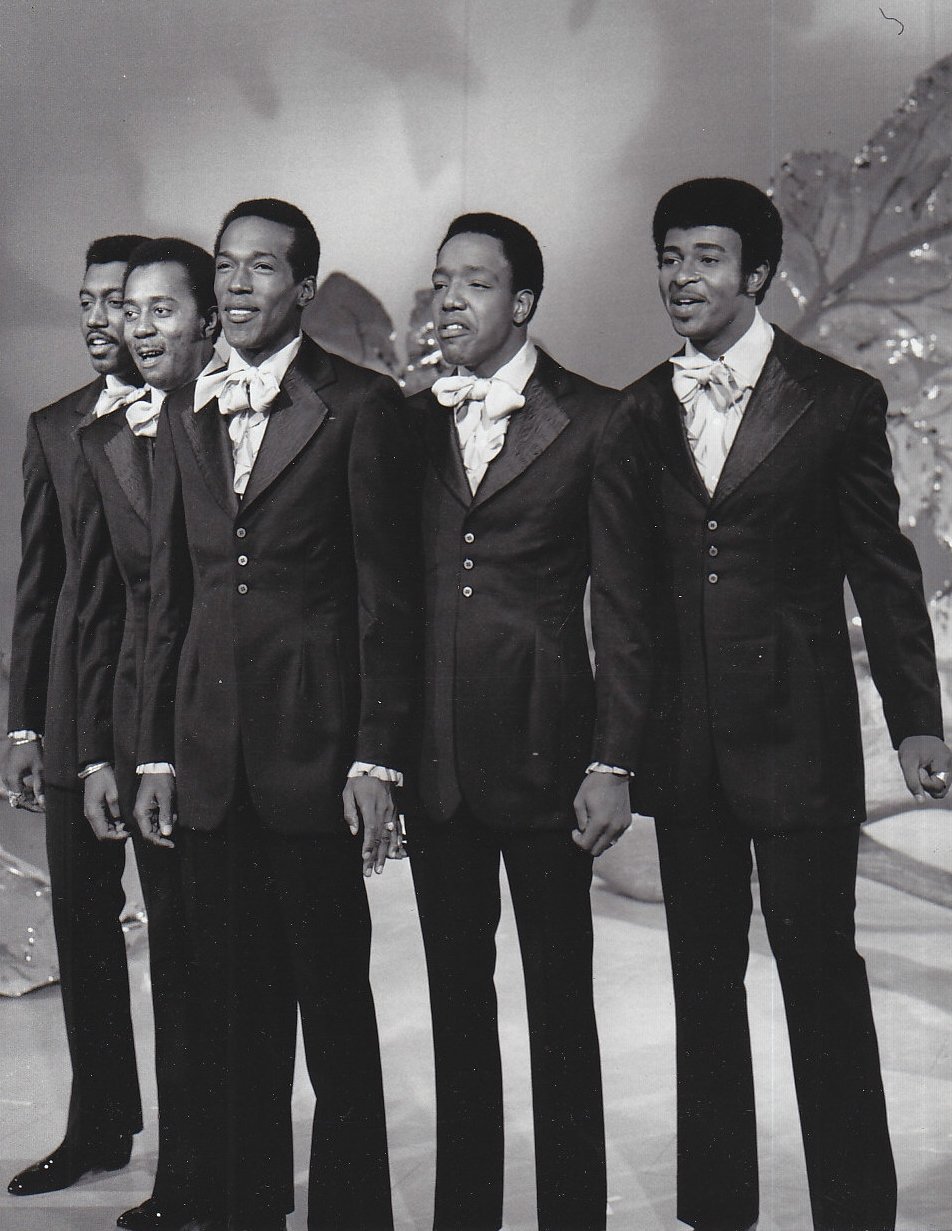
The change had a name. In January 1964, David Ruffin joined the group, replacing Bryant. The classic line-up that followed — Otis Williams, Melvin Franklin, Eddie Kendricks, Paul Williams and David Ruffin — is now often called the Classic Five. It was not simply a new member joining an old group. It was a new balance of voices, and it would take a particular kind of song to reveal what that balance could do.
David Ruffin: the voice waiting in the group
David Ruffin, born Davis Eli Ruffin in Mississippi in 1941, came to Detroit with gospel singing in his background and a voice that did not sound like anyone else in the group. Where Kendricks could float above a song, Ruffin could press into it. His tenor-baritone had grit as well as warmth. It could be tender without sounding fragile, and powerful without sounding forced. That combination is easy to describe in retrospect, but at the time it presented a practical question: how should a group that had built its sound around smooth harmony use a singer whose greatest strength was emotional directness?
At first, the answer was not obvious. Ruffin had joined the group, but most of its lead vocals had previously been handled by Kendricks and Paul Williams. Ruffin was present, but he was not yet the centre of the sound. That changed when Smokey Robinson saw the group live.
The accounts differ slightly on the exact setting — one account places the moment at Detroit’s 20 Grand nightclub, another on the Motortown Revue tour — but the essential detail is consistent across the sources used for this article: Robinson watched Ruffin take a solo spot on a Drifters standard, “Under the Boardwalk”, and was struck by how Ruffin handled a lead vocal in front of an audience. Robinson later described Ruffin as a “sleeping giant” in the group, with a voice that was “mellow” yet “gruff”. He believed that if he could find the right song for that voice, something that Ruffin could both belt out and sing sweetly, the result could be a major hit.
That judgement is worth pausing over. It was not simply a matter of giving the new singer a chance. It was a matter of writing to a particular instrument. Robinson understood that Ruffin’s voice needed melody and feeling, not just volume. A song that asked him only to shout would waste his tenderness. A song that asked him only to whisper would waste his power. The song that became “My Girl” was built, deliberately, to let both qualities appear.
Smokey Robinson, Ronald White and a song with a history
“My Girl” was written and produced by Smokey Robinson and Ronald White, both members of The Miracles. Robinson’s inspiration for the song was his wife, Claudette Rogers Robinson, herself a member of The Miracles. That personal starting point matters, because it helps explain the song’s tone. It is not a song about longing, loss or pleading. It is a song about settled happiness, about a feeling that is already present and does not need to be argued for. That confidence is part of why it has lasted: it does not date itself by drama, but by a kind of calm certainty.
The song also had a musical family history. Robinson had written “My Guy”, a major hit for Mary Wells in 1964. “My Girl” was conceived, in part, as an answer record to that song, told from the other side of the same feeling. The connection is not a gimmick. It shows how Motown writers thought in conversation with their own catalogue, returning to an idea and turning it around to see what else it could hold.
There is also a well-known wrinkle in the story of who was meant to sing “My Girl”. According to the standard account, Robinson had originally intended the song for The Miracles. After persuasion from Ruffin’s bandmates, and after Robinson’s own decision that Ruffin should sing lead, the song went to The Temptations instead. Whether one reads that as generosity, persuasion, good judgement or all three, the result is clear: the song found the group, and the group found its lead singer, at the same moment.
Robinson also gave the group room to shape its own backing vocals, because, as he later put it, they were so good at background vocals. The Temptations created the answering phrases and echoes that surround Ruffin’s lead, so that the record sounds like a group conversation rather than a solo singer with anonymous support. That detail matters for anyone listening closely. Ruffin is unmistakably in front, but he is never alone. Kendricks, Paul Williams, Franklin and Otis Williams are there at every turn, answering, lifting and grounding him. The blend is the point.
Inside Hitsville: the musicians behind the voices
“My Girl” was recorded at Hitsville U.S.A. in Detroit on 25 September and 10 and 17 November 1964. The credited personnel tell a story of their own. David Ruffin sang lead tenor. Eddie Kendricks sang first tenor and falsetto backing vocals. Melvin Franklin sang bass backing vocals. Paul Williams sang baritone backing vocals. Otis Williams sang second tenor backing vocals. Behind them were the Funk Brothers, Motown’s house band, and the Detroit Symphony Orchestra.
Two instrumental details have become almost as famous as the vocal itself. The opening bass notes, played by James Jamerson, are recognised around the world, and Robinson himself later noted that audiences could recognise the song from that opening alone. The signature guitar phrase heard in the introduction and under the verses was played by Robert White of the Funk Brothers. Earl Van Dyke played piano, Benny Benjamin played drums, and Paul Riser provided the horn and string arrangements. Together, they gave the record its particular mixture of lightness and weight: a rhythm section that moves with ease, strings that add warmth without heaviness, and a guitar figure that feels like a greeting.
It is tempting to describe that sound in grand terms, but the more useful description is practical. Nothing in the arrangement crowds Ruffin. The bass announces the song, the guitar answers it, the strings lift it, and then the voice arrives in a space that has already been prepared. That is why the record feels so immediate. The listener is not asked to wait for the song to find its shape. The shape is there from the first notes.
The single was released on 21 December 1964 on Motown’s Gordy label, with “(Talking ‘Bout) Nobody But My Baby” as its B-side. It was included on the group’s 1965 album “The Temptations Sing Smokey”, their second album and a record that remains one of Motown’s classic long-players. The timing — just before Christmas — is often noted, and it is easy to see why a warm, joyful record released in that week might find an audience quickly. But timing alone does not explain what happened next. The song had to earn its rise, and it did.
The breakthrough: from promising group to major stars
“My Girl” climbed to the top of the United States pop charts on 6 March 1965, becoming The Temptations’ first number-one hit. It was also the first number-one hit on the reinstated Billboard rhythm and blues singles chart, which had been on a fifteen-month hiatus from 1963 to 1965, and it gave the Gordy label its first number one on the Hot 100. Billboard later rated it the tenth biggest hit of 1965. Those facts, taken together, show more than a successful single. They show a group crossing a threshold: from a respected Motown act to a national pop act, and from a group with a promising future to a group with a present-tense claim on the charts.
For Ruffin, the change was personal as well as professional. “My Girl” was his first single as lead vocalist for the group, and it established him, almost overnight, as the group’s most prominent voice. That does not mean the other members faded. Kendricks remained essential, and the group’s harmony remained its signature. But the balance shifted. Where earlier records had spread leads more evenly, the Ruffin-led records that followed gave the group a clear focal point, and audiences responded to that clarity.
The follow-up records tell the next part of the story. In 1965 came “It’s Growing”, “Since I Lost My Baby” and “My Baby”, all featuring Ruffin on lead. In 1966 came “Get Ready” and “Ain’t Too Proud to Beg”, the latter again with Ruffin on lead and produced by Norman Whitfield. In 1967 came “I Wish It Would Rain”, another Ruffin-led hit. Taken together, those titles show a group that was no longer searching for its sound. It had found it, and it was refining it, song by song.
That period — roughly 1964 to 1968, when Ruffin was the group’s principal lead voice — is often described as the Classic Five era. It was a period of touring, television, album-making and sustained chart success. It was also a period in which the group’s stage act became as important as its records. The Temptations were known for precise choreography, matching suits and a polished, almost theatrical presentation. Ruffin’s presence at the front of that act gave it a different energy: still disciplined, but with a singer who could seem, in the best sense, less polished and more exposed. The contrast between the group’s immaculate presentation and Ruffin’s raw emotional delivery is one of the reasons their performances from this period still hold attention.
What Ruffin’s voice actually does in “My Girl”
It is easy to praise a famous voice in general terms. It is harder, and more rewarding, to listen for what it does in a particular song. In “My Girl”, Ruffin’s contribution is not about showing off range or power for their own sake. It is about phrasing, timing and tone.
First, he sings the song as if he means it in the present tense. There is no distance, no irony, no sense that the feeling is being reported from far away. That directness is what makes the record feel warm rather than sentimental. Sentimentality often comes from exaggeration. Ruffin avoids exaggeration by singing simply, letting the melody carry the feeling and letting his tone do the work that a more elaborate performance might try to force.
Second, he balances tenderness and control. Robinson’s description of the voice as both “mellow” and “gruff” is useful here. In the verses, Ruffin can sound gentle, almost conversational. When the song lifts, he can sound stronger without changing character. The voice does not split into two different singers. It stays one voice, moving between softness and strength as the song requires. That unity is what makes the performance feel trustworthy.
Third, he leaves room for the group. A lead singer who dominates every moment can make a vocal group sound like a backing band. Ruffin does not do that here. The answering voices are part of the song’s meaning, not decoration. They confirm what he sings, echo it and celebrate it. The result is a record that sounds like shared joy rather than private boasting. That is an important distinction, and it may be one reason the song works for so many different listeners. It is personal without being exclusive.
Finally, the performance is economical. The single version runs under three minutes. Nothing is wasted. The opening, the verses, the backing answers and the instrumental touches all serve the same feeling. In an era when many pop records relied on novelty or volume to stand out, “My Girl” stands out by being clear, warm and well made. That clarity is not an accident. It is the result of a writer who knew the singer, a singer who knew the song, and a studio team that knew how to leave space.
The Ruffin years after “My Girl”
The success of “My Girl” did not end the group’s development. It began a new phase in which Ruffin’s voice became central, but the group’s identity remained collective. The Temptations continued to work with Robinson, and then increasingly with Norman Whitfield, whose productions pulled the group toward a harder-edged, brass-heavy soul sound. That shift is often described as a move away from the ballad-based productions associated with Robinson, and it is an important part of the group’s later story. But it should not obscure what the Ruffin years began with: a ballad, sung with restraint, that proved a soul group could top the pop charts without losing its character.
Ruffin’s time as the group’s main lead singer ended in 1968, when he was replaced by Dennis Edwards. The group continued, and its later history — including psychedelic soul, further line-up changes and decades of touring — is a story in its own right. This article does not need to retell that whole history to make its point. The point is narrower and, in a way, more striking: the four years that began with “My Girl” gave The Temptations a set of records, a stage identity and a public image that have never left them.
It is also worth noting that Ruffin’s legacy is not confined to those four years. He was inducted into the Rock and Roll Hall of Fame with The Temptations in 1989, and his work on “My Girl” and the other Ruffin-led hits remains the standard against which later Temptations lead singers are often measured. That is not a criticism of those who followed him. It is a measure of how completely his voice became identified with a particular moment in the group’s history.
Why “My Girl” still means what it means
Some songs survive because they are tied to a specific memory. “My Girl” survives because it is tied to a feeling that does not belong to one generation. It is a song about affection without anxiety, about happiness that does not need to justify itself. That is a rarer thing in popular music than it sounds. Many love songs are about wanting, losing, waiting or regretting. “My Girl” is about having, and about being glad to say so. That simplicity is part of its durability.
Its musical construction helps as well. The opening bass and guitar figures give listeners an instant point of entry, even before they know the title. The harmony gives them a sense of company. The lead vocal gives them a person to follow. A listener does not need to know anything about Motown, Detroit or 1964 to enjoy the record, but knowing those things adds depth. It turns a pleasant song into a small piece of cultural history: a record made in a basement studio in Detroit, by a group that had waited years for a breakthrough, sung by a man who had waited even longer for a lead vocal that suited him.
The song’s later life confirms that durability. It was inducted into the Grammy Hall of Fame in 1998. In 2004, Rolling Stone ranked it at number 88 on its list of the 500 greatest songs of all time; in the 2021 revision, it moved to number 43. In 2017, it was selected for preservation in the National Recording Registry by the Library of Congress as being culturally, historically or aesthetically significant. Those honours are not the same as popularity, but they show that the song has been recognised, by different institutions at different times, as more than a hit. It is a record that helps explain its era.
Its afterlife in other hands is equally telling. Otis Redding recorded a rawer version in 1965, which reached number 11 in the United Kingdom. The Rolling Stones cut the song in 1965, in a version released on their 1967 compilation “Flowers”. Al Green tackled it on his first album for the Hi label, “Green Is Blues”, in 1969. The Whispers scored a hit with a disco version in 1979. The sources used for this article note more than 150 other recordings of the song. That number is less important than the range it represents: soul, rock, disco and beyond, all finding something in the same melody and feeling.
The song also returned to the charts in a new context. After the November 1991 release of the film “My Girl”, which includes the song, the single was re-released and reached number two on the United Kingdom singles chart, while reaching number 27 on the United States Billboard Adult Contemporary chart. A new generation heard it, not as a revival curiosity, but as a song that still sounded current. That is a test many older records fail. “My Girl” passed it.
Even in recent years, the song has found new public moments. During the 2024 Major League Baseball season, New York Mets shortstop Francisco Lindor used “My Girl” as his walk-up song, and Mets fans at home games serenaded him by singing the opening of the song during his at-bats. Before Game 5 of the 2024 National League Championship Series on 18 October, The Temptations performed the song live at Citi Field. Lindor announced in February 2025 that he would use the song again for the 2025 season. Those details may seem far from Detroit in 1964, but they make a useful point: a song that began as a carefully crafted Motown single can still function, sixty years later, as a shared public ritual.
Listening again, with the story in mind
If you listen to “My Girl” again after reading its history, a few things may stand out differently. Listen first for the space around Ruffin’s voice. Notice how the backing vocals do not simply follow him, but answer him, as if the group is confirming what he has just said. Listen for the bass and guitar at the start, and for how little they need to do to establish the song. Listen for the strings, which add warmth without pushing the record toward grandeur. And listen for the way Ruffin sings the song’s central feeling without strain. He does not have to convince you. He sounds convinced already, and that conviction is contagious.
It is also worth listening to “The Temptations Sing Smokey” as a whole, rather than treating “My Girl” as an isolated hit. The album shows a group and a writer working together across a full set of songs, with the same attention to harmony, arrangement and vocal character. It helps explain why “My Girl” did not feel like a lucky accident. It felt like the clearest expression of a partnership that was already working.
For listeners who want to follow the Ruffin years further, the natural next steps are the Ruffin-led singles that followed: “It’s Growing”, “Since I Lost My Baby”, “My Baby”, “Ain’t Too Proud to Beg” and “I Wish It Would Rain”. Each shows a different side of the same voice — sometimes pleading, sometimes confident, sometimes reflective — but all share the same foundation: a group sound built around harmony, and a lead singer who could make that harmony feel personal.
A Detroit record that became a standard
In the end, the story of “My Girl” is not only a story about a hit. It is a story about recognition: a writer recognising a voice, a group recognising a new centre, a studio recognising how to frame both, and an audience recognising, almost at once, that something had changed. The Temptations had been good before 1964. After “My Girl”, they were unmistakable.
David Ruffin’s years with the group were not the whole of The Temptations’ story, and they should not be made to carry more weight than they can bear. The group existed before him and continued after him, with other singers, other writers and other sounds. But the years that began with “My Girl” remain the period in which the group’s identity became fixed in public memory: five voices, precise movement, Motown polish, and, at the front, a singer whose voice could be both tender and commanding in the same breath.
That is why the song still works. It is not nostalgia for a chart position, or for a particular year, or even for a particular group line-up, though all of those things are part of its history. It is nostalgia for a feeling that the record captures unusually well: the simple, unguarded pleasure of saying that someone has made your world better, and meaning it. Detroit gave that feeling a studio, Motown gave it a system, Smokey Robinson and Ronald White gave it a song, and David Ruffin gave it a voice. The rest — the charts, the honours, the covers, the decades of listening — followed from that combination, and they have not yet run out.
Sources / further reading
- Wikipedia, “My Girl (The Temptations song)” — https://en.wikipedia.org/wiki/My_Girl_(The_Temptations_song)
- uDiscover Music, “‘My Girl’: Why The Temptations’ Classic Song Speaks To Everybody” — https://www.udiscovermusic.com/stories/the-temptations-my-girl-motown-song/
- BlackPast, “The Temptations (1960– )” — https://blackpast.org/african-american-history/temptations-the-1960/
- Wikipedia, “The Temptations” — https://en.wikipedia.org/wiki/The_Temptations
- Wikimedia Commons, “File:Hitsville (cropped).jpg” — https://commons.wikimedia.org/wiki/File:Hitsville_(cropped).jpg
Image credit: CC BY-SA 4.0, Moundcreek, https://commons.wikimedia.org/wiki/File:Hitsville_(cropped).jpg; thematic image only, a photograph of the Motown Museum building in Detroit, not a photo of the artist or a performance
Leave a Reply