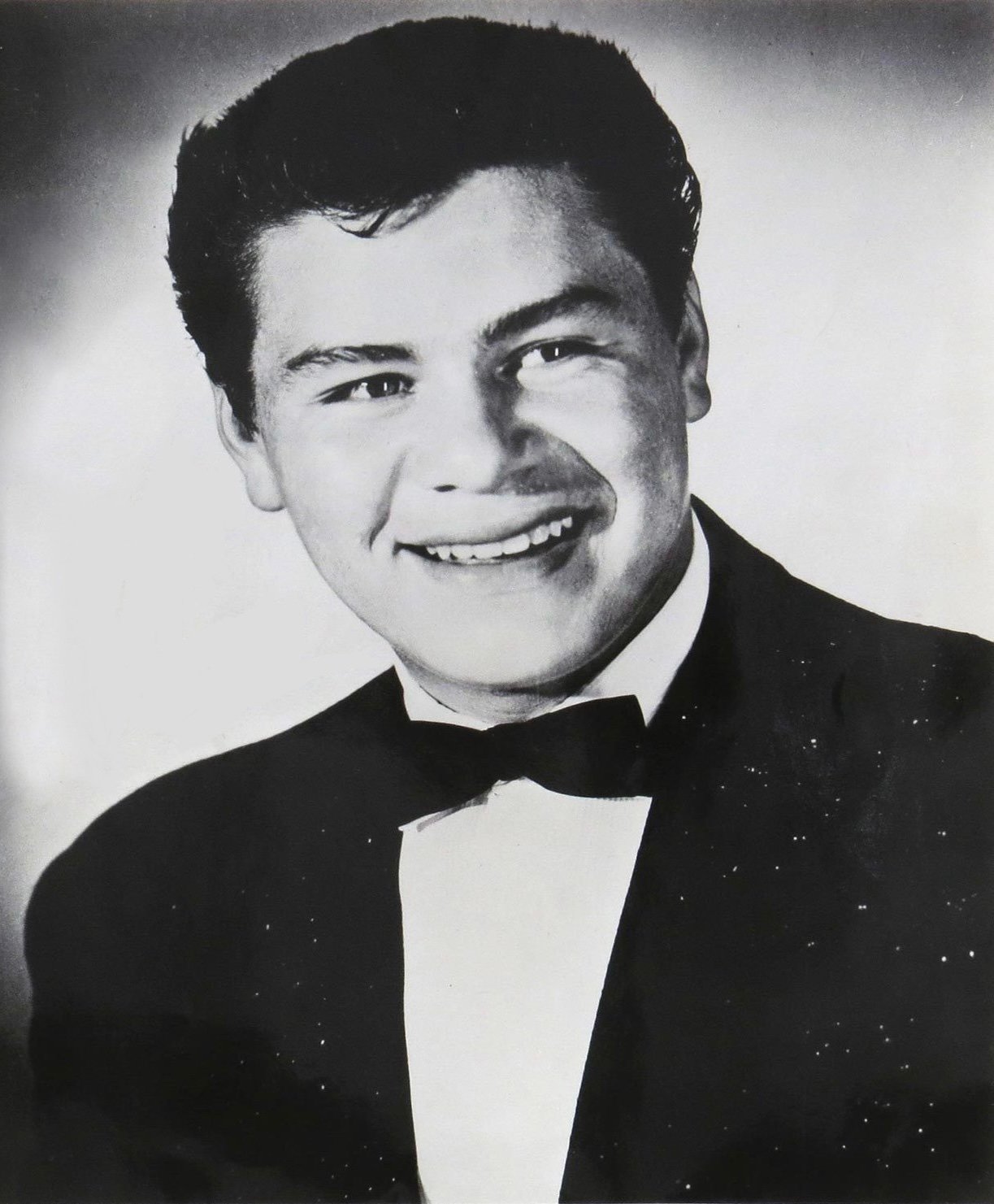

Ritchie Valens was born Richard Steven Valenzuela on 13 May 1941 in Pacoima, California, in the San Fernando Valley, the son of Mexican-American parents, and he grew up in a household where Mexican music, country music, and rhythm and blues all reached the radio, and where a boy who taught himself guitar could, in a few years, become a star. He died on 3 February 1959, at the age of seventeen, in the same plane crash that killed Buddy Holly and J. P. “The Big Bopper” Richardson, after a professional recording career that lasted, in commercial terms, about eight months. In that brief time, he recorded a handful of songs that have become classics, including “Donna”, “Come On, Let’s Go”, and, above all, “La Bamba”, a traditional Mexican folk song that he transformed into a rock and roll record, and that, in doing so, became a landmark in the history of Latin music in the United States. Valens was the first major Mexican-American rock star, the first to sing a Spanish-language song on the American pop charts in a rock style, and, for many listeners, the first to show that rock and roll could speak in more than one language. That his career lasted only eight months makes his achievement more, not less, remarkable.
Valens grew up in Pacoima, a working-class neighbourhood in the San Fernando Valley, where his family, like many Mexican-American families of the time, lived in a world that was, in some ways, separate from mainstream American culture and, in other ways, deeply part of it. He attended Pacoima Junior High School and San Fernando High School, played guitar in school and at local dances, and, as a teenager, formed a band, the Silhouettes, with school friends. He was, by all accounts, a talented, confident young musician, with a strong voice, a rhythmic guitar style, and a stage presence that belied his age. He was discovered, in 1958, by Bob Keane, the owner of Del-Fi Records, a small Los Angeles label, who heard Valens playing at a local dance and signed him, changing his name from Valenzuela to Valens, a shorter, more easily pronounced name for a pop singer, and a name that, in the practice of the time, was meant to make a Mexican-American singer more acceptable to a mainstream audience. Valens himself, according to later accounts, accepted the change, but he did not hide his heritage, and his music, as his career developed, made that heritage central.
Eight Months, Three Hits
Valens’s first record, “Come On, Let’s Go”, released in 1958, was a fast, rocking number, written by Valens himself, that reached the pop top forty and established him as a rock singer in his own right, not as an imitation of anyone else. It was followed, later in 1958, by “Donna”, a ballad written by Valens for his high-school girlfriend, Donna Ludwig, a song that was, in its simplicity and sincerity, one of the most affecting teenage love songs of its era. “Donna” reached number two on the pop chart, and it made Valens a star, a teenager singing, in a clear, earnest voice, about a girl he loved, in a song that millions of other teenagers recognised as their own experience. The record’s success was, in part, a matter of timing: in late 1958, rock and roll was still dominated by young singers, and a seventeen-year-old singing about his girlfriend was, in the best sense, authentic.
“La Bamba” was released, in 1958, as the B-side of “Donna”, a placement that, in the practice of the time, meant that it was not expected to be a major hit in its own right. It became, however, Valens’s most famous and most influential record, and the one for which he is best remembered today. “La Bamba” was not a song Valens wrote; it was a traditional Mexican folk song, a son jarocho from the state of Veracruz, with a history going back to the eighteenth or nineteenth century, a song that had been sung, in many versions, at weddings, dances, and celebrations, and that, in its traditional form, was a dance song with verses that varied from performance to performance. Valens, who had grown up hearing the song, adapted it for rock and roll, keeping its Spanish words and its basic melody, but giving it a driving beat, an electric guitar, and a rhythm section that made it sound, at the same time, traditional and new. The record reached number twenty-two on the pop chart, a modest position by the standards of “Donna”, but its significance was not measured by its chart position. It was the first rock and roll record in Spanish to reach the American pop charts, and it showed that a Mexican folk song, sung in Spanish, by a Mexican-American teenager, could be a rock record.
The adaptation itself deserves attention, because it was not a simple translation or a novelty. Valens sang “La Bamba” in Spanish, with a pronunciation that, while not perfect, was confident and natural, and he played guitar with a rhythmic, almost percussive style that gave the song a rock beat without losing its folk character. The record’s arrangement — electric guitar, bass, drums, and a saxophone that answered the vocal — was, in its essentials, a rock and roll arrangement, but the song’s melody, with its distinctive, lilting phrase, remained unmistakably Mexican. That combination — a Mexican song, in Spanish, played as rock — was new, and it was important, because it suggested that rock and roll, which had already absorbed blues, country, and gospel, could also absorb Latin music, and that Latin musicians could be rock stars without abandoning their language or their traditions. Later Latin rock artists, from Carlos Santana to Los Lobos, who recorded a famous version of “La Bamba” for the 1987 film about Valens’s life, have all, in different ways, built on Valens’s example.
A Teenager on Tour
Valens’s career, as it developed in late 1958 and early 1959, was that of a young star in a hurry. He toured, he appeared on television, including on “American Bandstand”, he recorded new material, and he was, by early 1959, one of the most promising young singers in rock and roll. He was also, by all accounts, a normal teenager in many respects: he attended school when he could, he lived at home with his mother, and he was, according to friends and family, excited and sometimes overwhelmed by his sudden fame. He was not, in the manner of some older rock stars, a hardened professional; he was a seventeen-year-old who had, in a few months, gone from playing school dances in Pacoima to playing concert halls across the country, and who was learning, on the job, how to be a star.
That youth is part of what makes his death so shocking. In January 1959, Valens joined the Winter Dance Party tour, the same tour that Buddy Holly had joined, a package tour through the Midwest that included Holly, J. P. Richardson, Dion and the Belmonts, and Valens himself. The tour, as described in the Buddy Holly article in this series, was badly organised, with long distances, bitter cold, and a bus whose heating system failed, leaving the performers ill and exhausted. After a performance in Clear Lake, Iowa, on 2 February 1959, Holly chartered a small plane to fly to the next venue, and Valens, who had originally been scheduled to travel by bus, won a seat on the plane on a coin toss with Tommy Allsup, Holly’s guitarist. The plane crashed shortly after take-off in the early hours of 3 February, killing Valens, Holly, Richardson, and the pilot, Roger Peterson. Valens was seventeen years old, and he had been a recording star for about eight months.
The coin toss has become, in Valens’s story, a detail that is both true and, in a sense, misleading. It is true that Valens won his seat by chance, and that Allsup, who lost the toss, survived. But to focus only on the toss is to miss the larger story: that Valens was on that tour at all, at seventeen, because he was already a star, and that his presence on the tour was a measure of how far he had come, in so short a time, from Pacoima. He was not a passenger by accident; he was a performer, on a professional tour, with other stars, because his records had made him one. The tragedy of his death is not that he won a coin toss; it is that a career of such promise, which had barely begun, was ended, in a single night, by a plane crash in a cornfield in Iowa.
The Legacy: A Door Opened
Valens’s legacy, like Holly’s, is out of proportion to his lifetime fame, but for a different reason. Holly’s legacy is about songwriting and groups; Valens’s legacy is about identity, language, and representation. He was the first Mexican-American rock star, and he showed, by his example, that a Mexican-American teenager could be a pop star without hiding who he was, and that a song in Spanish could be a rock record. That example mattered, in the late 1950s, when Mexican-Americans, like other Latino groups in the United States, were often invisible in mainstream popular culture, or visible only as stereotypes. Valens was not a stereotype; he was a teenager from Pacoima, singing about a girl he loved and about a folk song he had grown up with, and he did so with a naturalness that made his heritage seem, not exotic, but normal. That normalcy was, in itself, a form of progress.
Later artists have acknowledged Valens’s example directly. Los Lobos, a Mexican-American band from East Los Angeles, recorded “La Bamba” for the soundtrack of the 1987 film “La Bamba”, a biographical film about Valens’s life, and their version reached number one on the pop chart in the United States, a success that Valens himself never achieved with the song, and that, in a sense, completed his work. The film, which starred Lou Diamond Phillips as Valens, introduced Valens’s story to a new generation, and it did so at a moment when Latino representation in American popular culture was again a live issue. The film was not a perfect biography — it simplified some events and invented others, as biographical films often do — but it captured, in its essentials, the story of a young Mexican-American singer who, in eight months, changed what rock and roll could sound like and who could sing it.
Valens was inducted into the Rock and Roll Hall of Fame in 2001, more than forty years after his death, an honour that recognised, belatedly, what his contemporaries had already known: that he was not a footnote to Buddy Holly’s story but a pioneer in his own right. He is also remembered in Pacoima, where a park and a mural honour him, and in the wider Latino community, where he remains a symbol of pride and possibility. His records, which are few in number — three albums, released posthumously, and a handful of singles — are still played, still covered, and still recognised, not because they are numerous but because they are good: “Donna” for its sincerity, “Come On, Let’s Go” for its energy, and “La Bamba” for its historic importance as a Spanish-language rock record.
To listen to Valens today is to hear a voice that is, above all, young. It is not a polished voice, and it is not a technically perfect voice, but it is a voice that sounds, in every note, like a teenager who loves music and who is excited to be singing it. That youth is part of its charm, and part of its tragedy. Valens never had the chance to grow older, to develop as a songwriter, to make the records he might have made in his twenties and thirties. What he left, in eight months, was a handful of songs, a historic first, and an example that has inspired generations of Latino musicians to believe that rock and roll, like America itself, belongs to everyone who sings it. That is a legacy that no plane crash could end, and it is why Ritchie Valens, seventeen years old, eight months a star, is still remembered, more than sixty years after his death, as a pioneer.
Sources / further reading
- Reference entries on Ritchie Valens (1941–1959), born Richard Steven Valenzuela, Del-Fi Records, Bob Keane, “Donna”, “Come On, Let’s Go”, and “La Bamba” as a traditional son jarocho from Veracruz.
- Rock and Roll Hall of Fame: Ritchie Valens, inducted 2001.
- Winter Dance Party tour and 3 February 1959 crash accounts, including the coin toss with Tommy Allsup.
- Los Lobos, “La Bamba” (1987 film soundtrack, number one in the United States) and the film “La Bamba” (1987).
Image credit: Image: Wendy Wei via Pexels, free licence (thematic singer with guitar on stage, not a photograph of Ritchie Valens).
Leave a Reply