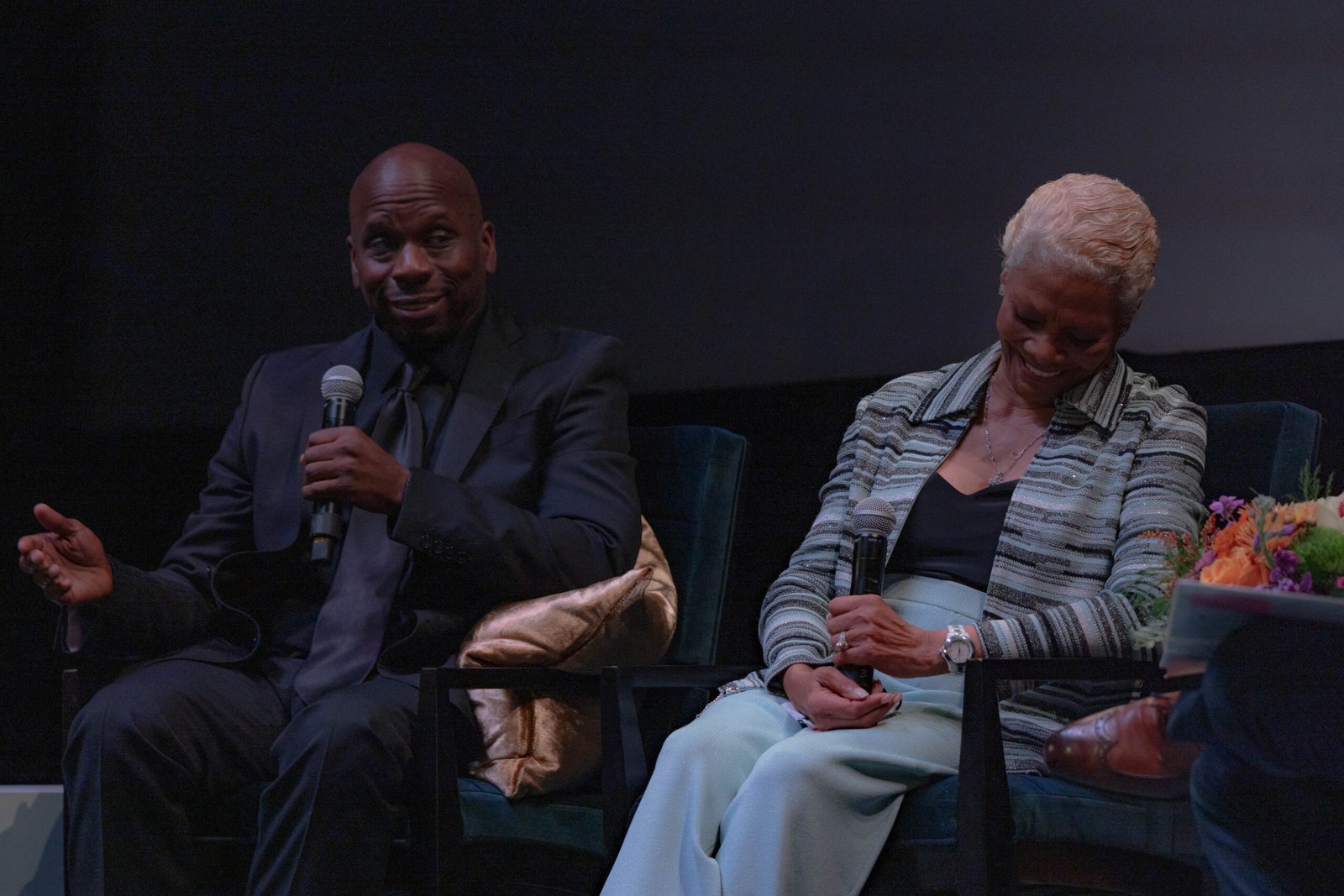
Dionne Warwick thought the song was dumb. She said so at the time, she said so fifteen years later in the pages of Ebony, and she has never really taken it back. The song was Do You Know the Way to San Jose — a bright, breezy two minutes and fifty-eight seconds about a failed actress giving up on Los Angeles and driving home. Warwick had to be talked into recording it by the two men who wrote it, Burt Bacharach and Hal David, the most successful songwriting team in her life. It became her biggest international hit to that point, sold more than three and a half million copies, put a California city on the world map, and won her the first Grammy Award of her career.
The story is one of pop’s great lessons in the unreliability of artists as judges of their own material. It is also a story about what happened inside a New York studio when an engineer wired a microphone directly onto a bass drum — and produced one of the most recognizable openings in all of sixties pop.
A Lyricist Who Knew the Way
The song began, as the Bacharach–David partnership usually did at its best, with the music. Bacharach composed the melody first — one of his characteristically graceful constructions, a tune that sounds effortless and is anything but. Then David wrote the words, and for once he was writing about somewhere he actually knew. David had been stationed in San Jose during his Navy service, and the city had stayed with the Brooklyn-born lyricist. His lyric imagines a young woman from San Jose who went south to Los Angeles chasing stardom, watched the weeks turn into years, and finally accepts the truth: she can go home, put a little money down on a car, and find the peace of mind that fame never offered. It is a failure story told in sunshine — every line smiles while it admits defeat.
Warwick’s objection was partly that she simply didn’t know the place. “I was like, ‘Where is San Jose?’” she later recalled. But her resistance ran deeper: the song felt slight to her, a trifle next to the dramatic ballads she considered her real work. Bacharach admitted the truth in later years without embarrassment: “Dionne did not want to record that song. She didn’t like it. But we talked her into it and she did it. Her mind changed once it was a hit.”
The Microphone on the Drum
The session took place in 1967 at Bell Sound Studios in New York, the room where Warwick had cut most of her Scepter Records hits with Bacharach conducting and producing. Do You Know the Way to San Jose would be the last Dionne Warwick single recorded there — the end of an era hiding inside a song about going home.
The record’s most famous sound is its heartbeat: the deep, thumping bass drum that opens the track and drives it throughout. Session drummer Gary Chester was behind the kit, and engineer Ed Smith devised the trick that made the record instantly identifiable — he attached a microphone directly to the head of Chester’s bass drum, capturing a round, booming pulse that no conventionally placed microphone could have produced. With Lou Mauro’s electric bass gliding alongside and Bacharach’s arrangement skipping around the vocal, the track turned a lyric about disappointment into pure momentum. Warwick’s performance is the final act of misdirection: she sings about a broken dream as if she were describing a drive up the coast with the windows down, her cool, precise phrasing letting the sadness seep in only around the edges.
Release, and a Song That Wouldn’t Stay Small
Scepter released the single in April 1968, drawn from the gold-certified album Dionne Warwick in Valley of the Dolls. It arrived as the follow-up to an extraordinary run — I Say a Little Prayer and (Theme from) Valley of the Dolls had both just been top five hits — and it extended Warwick’s streak to a third consecutive top ten record, punctuating the most successful stretch of her recording career. The B-side, Let Me Be Lonely, another Bacharach–David song, charted in its own right, one of the many double-sided hits the partnership produced.
Consider the run she was on. In the space of a few months, Warwick had sung the wistful prayer of a woman whose lover is at war, the haunted theme of a film about ambition and pills, and now a cheerful song about surrendering the dream entirely and going home. Three different emotional registers, three enormous hits, all from the same two writers and the same unhurried voice. Bacharach’s melodies from this period are notoriously treacherous — full of shifting meters and chords that swerve where other writers would go straight — and Warwick navigated them as if they were nursery rhymes. Do You Know the Way to San Jose sounds like the simplest record she ever made. It is simple the way a trapeze act looks simple.
In America the single reached No. 10 on the Billboard Hot 100, No. 4 on the adult contemporary chart, and climbed even higher in the trade papers — No. 2 in Cash Box and No. 1 in Record World. Abroad it was bigger still: No. 8 in Britain, Ireland, and Canada, and a hit across Europe, Australia, South America, and Japan, on its way to those three and a half million copies. San Jose, a city most of the world could not have found on a map, responded with gratitude: in 1968 the singer received the key to the city and a mayor’s award. A generation of travelers would learn where San Jose was from a song written by a New Yorker and sung by a woman from New Jersey who had asked where it was.
The Grammy, and the Song She Can’t Put Down
At the Grammy Awards in 1969, Do You Know the Way to San Jose won Warwick the prize for Best Contemporary Pop Vocal Performance, Female — the first Grammy of her career. The win carried weight beyond her own shelf of trophies: she was only the second Black woman ever to win in that category, after Ella Fitzgerald, and the first artist of the contemporary pop era to do it, opening a door through which Roberta Flack, Tina Turner, and eventually her own young cousin Whitney Houston would walk. Warwick has never been ambiguous about what it meant. Asked by Jet in 2002 to name the highlight of her career, she chose that award.
And the song itself simply refused to leave her life. Connie Francis, the Carpenters, Nancy Sinatra, and Frankie Goes to Hollywood all recorded it; Bacharach himself cut an instrumental arrangement for his 1969 album Make It Easy on Yourself; a famous lunch scene in the 1997 film My Best Friend’s Wedding collapses into a spontaneous rendition of it. San Jose adopted it wholesale as an unofficial anthem — the rare case of a city thanking a song for teaching the world to pronounce its name, and of a throwaway pop single becoming a piece of civic identity. Warwick, for her part, still includes it in almost every concert she performs — the song she called dumb, sung nightly for more than half a century, to audiences who would riot if she skipped it. “It’s a dumb song and I didn’t want to sing it,” she told Ebony in 1983. “But it was a hit… I’m happy these songs were successful, but that still doesn’t change my opinion about them.”
There is something deeply endearing in that stubbornness, and something instructive too. Bacharach and David knew their singer better than she knew herself that day in 1967: they heard how her elegance would dignify a simple song, and how a melody like sunlight could carry a story about failure all the way around the world. The artist gets the last word on almost everything. On Do You Know the Way to San Jose, history respectfully overruled her.
Leave a Reply