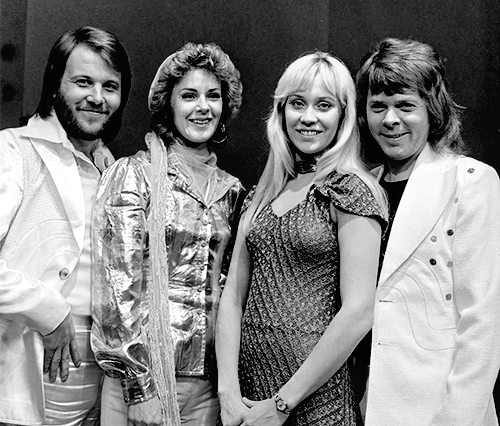
By December 1978, ABBA were arguably the biggest pop group on Earth, and they were building the album that would become Voulez-Vous in the most advanced recording studio in Scandinavia — their own Polar Studios in Stockholm, converted from a vacant cinema. The sessions had been running since March, and the album was nearly finished. Then, in the final weeks of the year, Benny Andersson and Björn Ulvaeus came up with a gentle, Spanish-tinged ballad that had been through a string of throwaway working titles — Kålsupare, 3 Wise Guys, Chiquitita Angelina and In the Arms of Rosalita. It was one of the last tracks recorded for the album. It became a No. 1 hit in ten countries, and ABBA gave away its royalties to the children of the world.
The Ballad That Arrived at the Last Minute
The finished song, renamed Chiquitita — Spanish for “little girl” — was recorded on 13 December 1978 at Polar Studios, with Andersson and Ulvaeus producing, as they did all of ABBA’s records. Its sound carried a deliberate Latin flavour: a revised version of the song had been shaped by the influence of El Cóndor Pasa (If I Could), the Peruvian melody Simon & Garfunkel had popularised, and Spanish guitars run through the arrangement. Agnetha Fältskog sings alone for roughly the first minute of the record, her voice exposed over the piano, before Anni-Frid Lyngstad joins her in harmony for the rest of the song — a structure that turns the lyric’s comfort, addressed to a heartbroken friend, into something that sounds like two voices closing around one.
The timing mattered. ABBA had been invited to perform at the Music for UNICEF Concert in New York, a benefit gala for the International Year of the Child, and the plan had been to present a different new song, the disco workout If It Wasn’t for the Nights, which was also pencilled in as the next single. Once Chiquitita was completed, the plan was scrapped altogether: the ballad took the concert slot, took the lead-single slot, and If It Wasn’t for the Nights was never released as a single at all. The album itself helps explain the shift in mood. Voulez-Vous was ABBA’s disco record, made in the age of Saturday Night Fever — its title track’s backing track had even been cut at Criteria Studios in Miami, where the Bee Gees had recorded their disco-era classics — and it was full of sleek, rhythmic material. Against all that gloss, the piano-led Chiquitita, opening with a melancholy solo verse before blooming into harmony and Spanish guitar, stood out as the album’s emotional centre of gravity. The group knew a universal song when they had one: the melody was designed, deliberately, to travel across languages, and within months it would prove them right on three continents.

A Debut at the United Nations
On 9 January 1979, ABBA performed Chiquitita for the first time on one of the most unusual stages in pop history: the hall of the United Nations General Assembly in New York, as part of the Music for UNICEF Concert, broadcast worldwide. The bill placed them alongside the Bee Gees, Donna Summer, Olivia Newton-John, Rod Stewart and Earth, Wind & Fire — a roll call of the era’s biggest stars, each contributing a song to the cause. Pop stars rarely make business decisions on a stage, but ABBA did. As a direct result of the event, the group donated 50 per cent of all royalties from the song to UNICEF — in effect handing half the song’s earnings to charity in the International Year of the Child, before the record had sold a single copy.

The single followed a week later, released on 16 January 1979 as the first single from Voulez-Vous, with the non-album track Lovelight on the B-side. The first notices were divided: the Manchester Evening News praised “yet another smooth as-silk production,” while the NME’s Julie Burchill dismissed it as “a rubbish song” that “will be a hit, but not a massive one.” She was half right. In Britain the record debuted at No. 8 — the highest chart entry of any ABBA single there — and climbed to No. 2, held off the top in both Britain and Sweden only by Blondie’s Heart of Glass. But across the rest of the world it went all the way: No. 1 in Belgium, Finland, Ireland, the Netherlands, New Zealand, Spain, Switzerland, Mexico, South Africa and Rhodesia, and a Top 5 hit in Germany, Austria and Norway. America, where the single was not released until October 1979, was cooler, taking it to No. 29 — a reminder that ABBA’s American career never quite matched their conquest of everywhere else.
The Spanish Second Life
The song’s most extraordinary chapter was still to come. RCA Records, ABBA’s label in most of South America, proposed recording one of the group’s current hits in Spanish. The suggestion came from RCA employee Buddy McCluskey, who with his wife Mary wrote the Spanish lyric. The Spanish Chiquitita, released in Argentina in April 1979, became a phenomenon in its own right: it topped charts across Latin America and Spain, sold more than 2.5 million copies, and was described as the biggest hit in Latin America in twenty-five years. ABBA followed it with a full Spanish-language album, Gracias Por La Música, and in Spain the song was revered by some critics as the finest thing the group ever recorded — “even more so than Fernando.” In Argentina alone, the Spanish single sold half a million copies by the end of July 1979, twenty times the sale of the English version in the same market. The song’s Spanish life has never really ended: the Puerto Rican boy band Menudo later took their own version across the Spanish-speaking world, and Chiquitita remains, for millions of listeners from Madrid to Mexico City, not a translation of an ABBA song but simply an ABBA song — the original, as far as they are concerned.
The Gift That Keeps Giving
Most charity singles flare and vanish. Chiquitita has been quietly working for UNICEF for more than four decades. In 2014, the four members of ABBA agreed to raise their donation from half to all of the song’s royalties — 100 per cent now goes to the charity — and by 2021 the song had raised some $4.8 million. The gesture even repeated itself: in May 2020, Cher re-recorded Chiquitita in Spanish with all proceeds going to UNICEF, consciously following the path ABBA had cut in 1979. The song lives on in the Mamma Mia! stage musical and film, where it serves as one of the story’s tenderest scenes, and the performance that serves as its official video — ABBA singing on a snowy Swiss mountainside, filmed by the BBC in Leysin in February 1979 for the show ABBA in Switzerland, with a snowman behind them and the wind blowing Frida’s hair into her face — has become part of the group’s visual folklore.
Listening Back
Time has been kinder to the record than some of its first reviewers were. Retrospective critics have repeatedly singled it out as one of the group’s most perfectly constructed ballads: AllMusic included it among its highlighted ABBA album tracks, later critics have called it perhaps the group’s “most beauteous and beloved” recording, and in Spain — as ABBA biographer Carl Magnus Palm noted — critics seriously rank it alongside, or even above, Fernando as the pinnacle of the group’s ballad writing. Its five minutes and twenty-six seconds trace a complete emotional arc, from Fältskog’s lone, consoling opening to the full-group chorale of the ending, and the song’s central promise — that the singer will still be there when the sorrow is gone — has only grown more touching as the decades and the donations have accumulated.
It is a strange and fitting legacy. Chiquitita was nearly an afterthought: a late song, with joke working titles, that shoved aside the track ABBA had actually planned to promote. Yet it became the most successful single from Voulez-Vous worldwide, the group’s biggest record across the Spanish-speaking world, and the rare pop hit that functions as a permanent endowment for a cause. Benny and Björn wrote a song about telling a sad friend that the sun is still shining. Then they gave the sunshine away.
Leave a Reply