By 1985, the Bee Gees had become the most bankable ghostwriters in pop. Frozen out of American radio by the anti-disco backlash, Barry, Robin and Maurice Gibb had reinvented themselves as a songwriting and production service for other people’s voices: Barbra Streisand’s Guilty, Dionne Warwick’s Heartbreaker, Kenny Rogers and Dolly Parton’s “Islands in the Stream”. When Diana Ross brought Barry Gibb and his production partners Albhy Galuten and Karl Richardson in to make her album Eaten Alive, the pattern seemed set. The collaboration had been discussed on and off since the early eighties, and Ross came to it as an artist between empires: four years earlier she had walked away from Motown, the label that had made her, for RCA in one of the most talked-about deals of the era, and her records since had been polished, expensive and increasingly adult. What nobody expected was that the biggest song of the entire project would be the one the brothers were frightened to let her hear.
They had written “Chain Reaction” as an act of deliberate nostalgia: a loving, note-perfect reconstruction of a mid-sixties Motown record, all handclaps, tambourine drive and Holland-Dozier-Holland architecture, with Barry Gibb’s voice feathering the choruses. Maurice Gibb would later explain the logic: wouldn’t it be great to make a great Supremes record — they already had the lead singer. But that was precisely the problem. Ross had spent fifteen years, ever since leaving the Supremes in 1970, building a solo identity that pointed away from the girl-group sound. The brothers kept the song back through the whole of the Miami sessions, convinced she would never want to go back there.
The Song in the Drawer
The Eaten Alive album was not short of star power. Its title track was co-written by Michael Jackson, Ross’s friend and protégé, and was chosen as the lead single, complete with an expensive video. It stalled at No. 77 in America and No. 71 in Britain. Ross, unimpressed by how the album was shaping up, told the brothers she still needed one more song — the one she could call a single. Only then did they open the drawer.
Barry Gibb remembered the moment years later: they had “Chain Reaction” all along but hadn’t had the nerve to play it to her, because it was so Motown-ish. It was Robin who finally talked her round, telling her the brothers believed it was time she did something she would have done with the Supremes, rather than something she would do as the solo Diana Ross. She liked the idea. When she heard the playback of her own recording, she sat down and recognised it for what it was — a credible tribute to her past, rather than a retreat into it. The supposed nostalgia trip was, on inspection, a modern Gibb song wearing a beehive: euphoric, rhythmically relentless, and carrying a second verse considerably more suggestive than anything Holland, Dozier and Holland would have dared to write in 1965.
What They Were Rebuilding
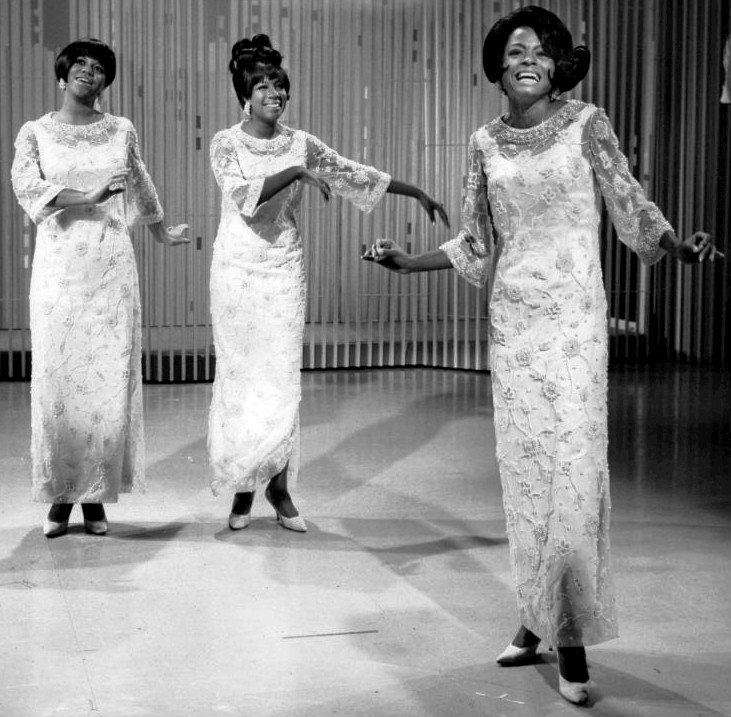
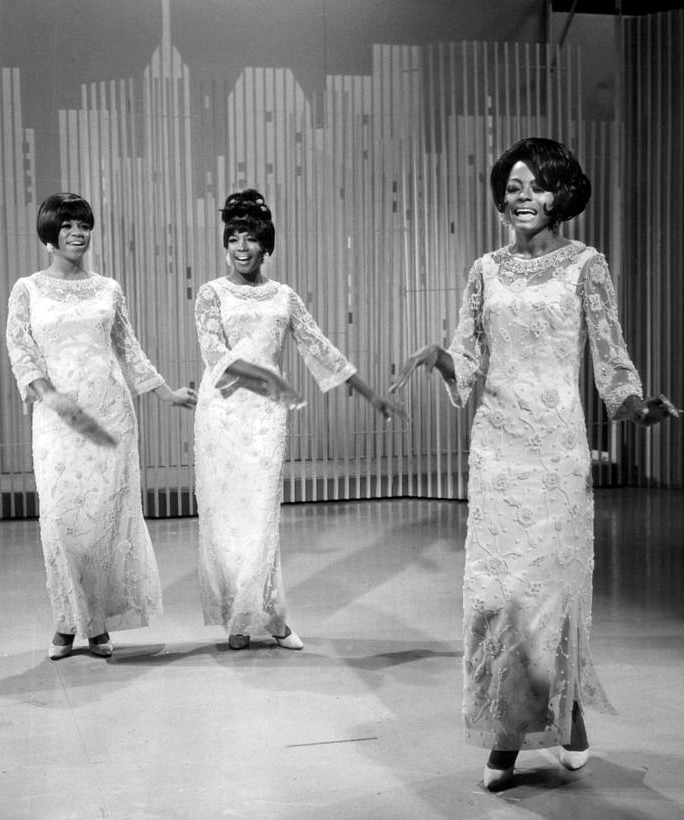
To hear what the brothers were aiming at, you have to go back to Detroit in the mid-sixties, when Ross, Mary Wilson and Florence Ballard — three teenagers from the Brewster housing projects — became the most successful American group of the decade. Between 1964 and 1967 the Supremes put together a run of Billboard No. 1 singles that still looks unreal: “Where Did Our Love Go”, “Baby Love”, “Come See About Me”, “Stop! In the Name of Love”, “Back in My Arms Again”, “I Hear a Symphony”, “You Can’t Hurry Love”, “You Keep Me Hangin’ On” — most of them built by Motown’s writing team Holland-Dozier-Holland on the same chassis of stomping beat, tambourine, call-and-answer backing vocals and a melody a child could whistle. That chassis is what “Chain Reaction” lovingly rebuilds, bolt by bolt, with eighties studio gloss where the Funk Brothers used to be. The Gibbs were not imitating a rival’s sound. They were returning Ross’s own property to her, gift-wrapped.
A Flop in America, a Landslide Everywhere Else
RCA released “Chain Reaction” as the album’s second single on 12 November 1985, and in Ross’s homeland the record simply died. It peaked at No. 95 on the Billboard Hot 100. Even a remixed reissue the following year could only drag it to No. 66. American pop radio in 1985 wanted nothing to do with a Motown pastiche, however expertly made.
Britain heard the same record completely differently. Released there in late January 1986, “Chain Reaction” began to climb — and kept climbing, carried by one of the great music videos of the era, directed by David Mallet. The clip is a small masterpiece of self-mythology: in black and white, a young-looking Ross in a beehive hairdo performs on a lovingly recreated sixties television dance show, while in a control room, baffled technicians keep catching glimpses of a second, colour transmission — the modern superstar Ross, in a silver dress, performing the same song from somewhere else entirely. Past and present keep interrupting each other, and neither gives way.

On 8 March 1986 the single reached No. 1 in Britain, where it stayed for three weeks. It was Ross’s second solo UK No. 1 — her first, “I’m Still Waiting”, had topped the chart in 1971, almost fifteen years earlier — and it became the biggest-selling single of her career in Britain, earning her a gold disc and winning the Ivor Novello Award for the most performed song of 1986. It also went to No. 1 in Australia, where it finished as the best-selling single of the entire year, and topped the charts in Ireland and Zimbabwe. The transatlantic split remains one of the strangest in her catalogue: the same three minutes of music, a footnote in America and a landslide almost everywhere else.
Two Number Ones America Ignored
The pattern, oddly, was a repeat. Ross’s only previous British No. 1, “I’m Still Waiting” in 1971, had been an afterthought at home too: a track Motown had to be pushed into releasing as an American single at all, where it stalled at No. 63. Twice, then, British listeners heard an all-time Diana Ross record where American programmers heard a throwback. The difference in 1986 was scale: she was no longer a departing Supreme proving herself, but a forty-something superstar whose homeland had quietly decided she was heritage, while the rest of the planet — Britain, Australia, Ireland — treated her as current.
The record itself deserved the argument. Under the period fancy dress, the Gibb brothers had engineered it with their usual ruthlessness: the stop-start Motown rhythm never lets the energy drop, the brothers’ backing vocals answer Ross like a girl group remembered in a dream, and a bold key change in the final third lifts the whole thing into delirium just as the video’s colour Ross bursts through the studio doors in a silver dress. Nostalgia was the invitation; craftsmanship was the reason it stayed at No. 1 for three weeks.
The Song That Kept Coming Back
Most singles get one life. “Chain Reaction” has had at least four. In 1993 Ross re-released it to mark her thirtieth anniversary in show business, and it climbed back to No. 20 in Britain. In 2001 the British group Steps covered it and took it to No. 2 — a new generation learning the handclaps. And in concert, decade after decade, it remains one of the moments in a Diana Ross show where the whole room stands up.
There is a pleasing symmetry to it. The Bee Gees, hiding from their own past as disco pariahs, wrote Ross a song about returning to hers. She had walked out of the Supremes in 1970 determined to be more than a voice in a girl group; sixteen years later, her biggest British hit was an open-hearted embrace of exactly that sound, made by three brothers who understood, because they had needed rescuing by other singers themselves, that there is no shame in a perfect pop record. The chain reaction of the title turned out to be a real one: Motown to the Supremes, the Supremes to Ross, Ross to the Bee Gees, and the Bee Gees straight back to Motown.
Leave a Reply