
Most anthems are written at home. Carolina in My Mind was written about as far from home as a homesick twenty-year-old could get. In the summer of 1968 James Taylor was in London, the first non-British artist signed to the Beatles’ Apple Records, recording his debut album in the same studio complex where the Beatles were making the White Album. He had grown up in Chapel Hill, North Carolina, and everything in his new life — the fame arriving early, the city, the pressure — conspired to make him think about the place he had left.
So he wrote a song about going back there, if only in his mind. He wrote it in three places, none of them Carolina: a borrowed London flat, a Mediterranean holiday island, and a second island where he was stranded with a girl he had just met. The song failed as a single not once but twice, was rescued by other singers, and finally became immortal only when Taylor sat down, eight years later, and recorded the whole thing again from scratch.
The Demo That Beat the Beatles’ Door Down
Taylor had not arrived in London by accident. Back in New York he had fronted a band called the Flying Machine, which collapsed in 1967 and left him broke and increasingly dependent on heroin. His friend and fellow guitarist Danny Kortchmar — they had played together since their teenage summers on Martha’s Vineyard — helped steer Taylor’s demo toward Peter Asher, the former Peter and Gordon singer who had just become head of A&R at the Beatles’ new Apple label. Asher heard the songs, Carolina in My Mind among the batch Taylor was shaping, and made the unknown American the first non-British signing to Apple. It was an astonishing act of faith: a twenty-year-old addict with no hits, handed the run of Trident Studios while the most famous band on Earth worked down the corridor.
A Song Written in Three Places
Taylor started the song at the London flat of his producer, Peter Asher, on Marylebone High Street. He picked it up again while on holiday on Formentera, the quiet Mediterranean island off the coast of Spain, and he finished it stranded on nearby Ibiza, where a missed connection left him in the company of Karin, a Swedish girl he had only just met. She survives in the lyric as a kind of guardian spirit — the “silver sun” of the song — and Taylor, who never saw her again, was still telling audiences about her four decades later, joking from the stage of his One Man Band tour about ways he might find her.
What he was homesick for was specific: his family, his dog, the red soil and quiet hills of the North Carolina Piedmont. Taylor’s father taught at the University of North Carolina’s medical school, and the Chapel Hill landscape of his boyhood was the still centre of a life that had suddenly become anything but still. The song’s geography is imaginary by necessity. He could not go home. He could only go there in his mind, and the chorus does exactly that, over and over, like a man rocking himself to sleep.
Down the Hall from the Beatles
The original recording was made at London’s Trident Studios between July and October 1968, with Asher producing. The session personnel tell you everything about the strange world Taylor had landed in: Paul McCartney played bass, credited on the album, and George Harrison sang backing vocals, uncredited. When Taylor sang about a “holy host of others standing round me,” he was not being metaphorical. He was describing the room.
But the very next turn of the lyric darkens — he is still, as he puts it, on the dark side of the moon — and that was literal too. Taylor had slipped back into the heroin addiction that had already derailed his teenage years, and it shadowed the whole Apple adventure. Richard Hewson arranged strings for the track, and an even grander thirty-piece orchestral part was recorded and then shelved. Critics who heard the album heard the song clearly enough: Jon Landau, reviewing it in Rolling Stone in April 1969, called it beautiful, one of the two most deeply affecting cuts on the record, and singled out McCartney’s bass playing as extraordinary. Biographer Timothy White would later call it the album’s quiet masterpiece.
The Hit That Wasn’t — Twice
None of that saved it. The debut album appeared in Britain in December 1968 and in America the following February, with Carolina in My Mind released as a single in both countries. Taylor, hospitalised for his addiction, could not tour or promote, and the single stalled at No. 118 in the United States and missed the British chart entirely.
Other singers had better luck with it. Fellow North Carolinian George Hamilton IV took the song to No. 29 on the American country chart and No. 3 in Canada in 1969. The Everly Brothers cut it as a single the same year; Melanie and John Denver both recorded it in 1970. And after Taylor’s second act began — after Sweet Baby James and Fire and Rain made him a star — Apple reissued his original recording as a single in October 1970. This time it reached No. 67: better, and still nowhere near what the song would become.
Recording It All Over Again
In 1976, Warner Bros. prepared Taylor’s Greatest Hits, and ran into a wall: licensing the Apple masters proved difficult, and nobody could be entirely sure where they were. So Taylor and Asher simply remade the two Apple songs they needed. In October 1976, at the Sound Factory in Los Angeles, Carolina in My Mind was recorded for the second time.
Everything about the remake is slower, surer, closer to the song’s actual temperature. Where the 1968 version bustles with strings and youthful urgency, the 1976 performance leans on Dan Dugmore’s pedal steel, sighing down the scale at the song’s end, with Leland Sklar on bass, Russ Kunkel on drums, Clarence McDonald on piano, Andrew Gold on harmonium and Byron Berline on fiddle. Critic Stephen Holden called the remake stunning, proof of how much Taylor’s singing had deepened. Greatest Hits went on to become a diamond record, selling more than eleven million copies in America alone — and the version of Carolina in My Mind the world knows, the one on the radio, the one in the culture, is the remake. The anthem had to be recorded twice to be heard once.

An Anthem He Never Charted
The rest is adoption. The song became a fixture of Taylor’s concerts, in the set list of virtually every tour he has ever played; on his 1993 Live album you can hear the audience cheer at the very first notes. It has been called North Carolina’s unofficial state anthem. At the University of North Carolina at Chapel Hill it is played at games and pep rallies and sung by the graduating class at every commencement; the Chapel Hill Museum built an exhibit around it. Taylor performed it at the 2012 Democratic National Convention, held, fittingly, in Charlotte, North Carolina, greeting the crowd as a fellow Tar Heel. He had sung it with the Dixie Chicks for the CMT Crossroads series in 2002, and with them again on the Vote for Change tour two years later, dedicating it to North Carolina senator John Edwards. A song that peaked at No. 118 had become the closest thing American politics has to a North Carolina hymn. In 2020 he told Parade it was his favourite song to perform: it wears well, he said, and he has never tired of it.
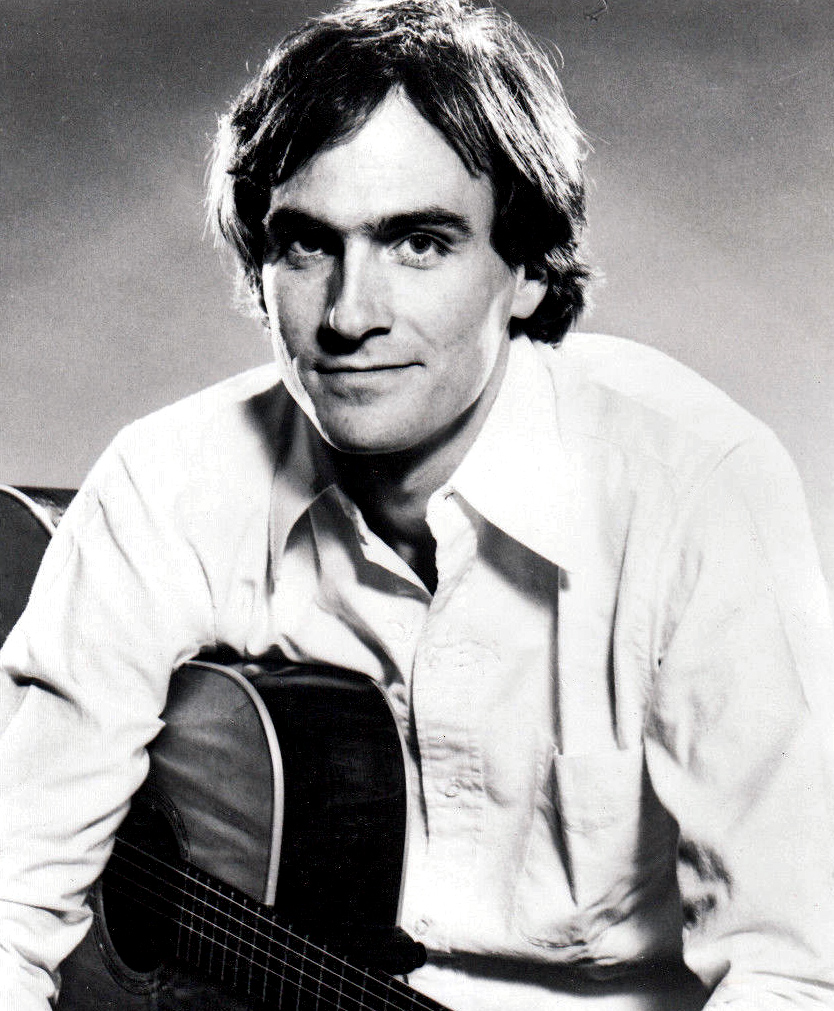
The performance attached to this article shows why it settled so fast. It comes from the BBC’s In Concert, filmed in November 1970 — Taylor is twenty-two, the Apple failure behind him, the stardom brand new, and he is already singing the song the way he would sing it for the next fifty years: quietly, exactly, like a man reading a letter from home.
Leave a Reply