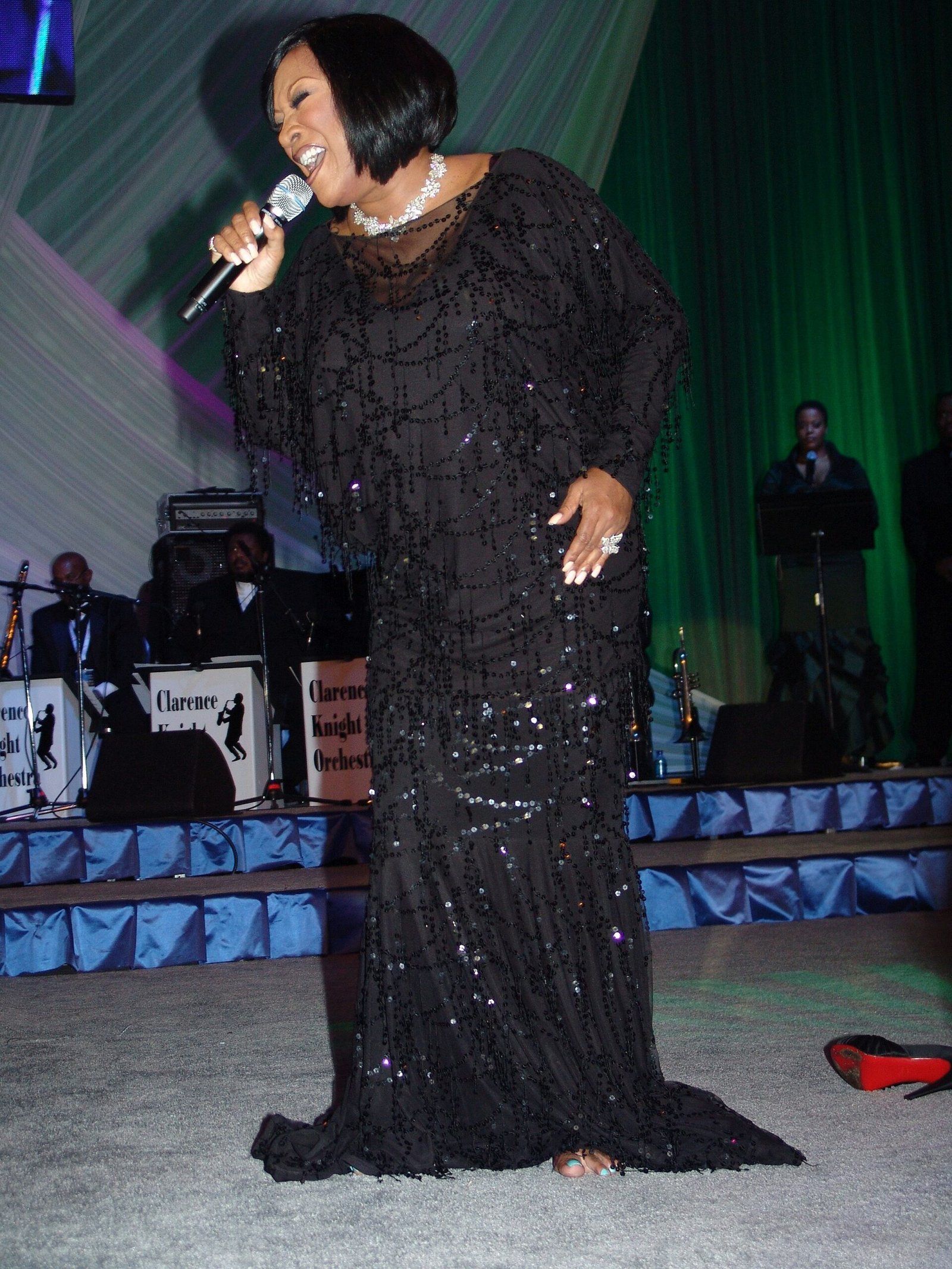
By the early 1980s Patti LaBelle had been famous for twenty years, and almost none of that fame was hers alone. She had fronted the Bluebelles as a teenager, reinvented herself in the glitter and feathers of Labelle, and sung the lead on Lady Marmalade, one of the biggest records of 1975. But the solo career that followed the group’s 1977 break-up drifted through a run of albums that critics liked and charts mostly ignored. The voice was never in doubt; the song was. If Only You Knew — a quiet, aching ballad that had sat unreleased on a shelf while its singer performed on Broadway — finally supplied it, giving LaBelle, at thirty-nine, the first solo number one of her life.
A Hometown Label and a Fresh Start
The drought had a particular sting for an artist of her pedigree. LaBelle had been recording since 1962, when the Bluebelles’ I Sold My Heart to the Junkman became a hit while she was still in her teens; she had survived the group’s lean years, its reinvention as the futuristic trio Labelle and the triumph of Lady Marmalade, which had put her voice — uncredited by many listeners who assumed a group — at number one in 1975. Going solo in 1977 was supposed to be the coronation. Instead it became a test of endurance, album by album, label by label.
Seeking a change of direction, CBS transferred LaBelle’s contract from Epic to Philadelphia International Records, the label co-founded by two of her hometown friends, Kenny Gamble and Leon Huff. Her first album for the label, The Spirit’s in It (1981), won praise but no breakthrough, and Gamble and Huff set about searching for the songs that could give a singer of her power the hit she had not had since Lady Marmalade. Among the musicians in the label’s stable were keyboardist and producer Dexter Wansel and songwriter Cynthia Biggs, a writing-producing team who had already supplied LaBelle with material — Wansel’s Shoot Him on Sight, a song he had originally intended for Jackson Browne, had appeared on The Spirit’s in It. The trust between the singer and the young team was established; what they had not yet produced together was the hit.
The connection between singer and songwriter, in fact, went back much further than the sessions. As a twelve-year-old, Wansel had worked as a gofer at Philadelphia’s Uptown Theater, fetching sandwiches and dry cleaning for the visiting acts — among them a young girl group called the Bluebelles, fronted by Patti LaBelle. Three decades on, the errand boy was writing for the headliner.
During the sessions of that period, Wansel and Biggs presented her with a mid-tempo ballad about longing for someone who does not know he is loved. LaBelle recorded it at Sigma Sound Studios in Philadelphia, the room where the whole Philly soul sound had been built, with Wansel arranging and playing across drums, bass, rhythm guitar and strings scored by longtime Philadelphia International arranger John R. Faith. And then — nothing. The song did not make the final track listing of the album it was recorded around, and it went onto the shelf, one of a dozen LaBelle performances waiting in the vault while her career moved on without it.
The Title Gamble Settled
The song very nearly went into the world without its famous name. Its title, by the standard account, was settled by Kenny Gamble, who stepped in to resolve a dispute between Wansel and Biggs over a line of the lyric — and If Only You Knew is what came out of the argument. It is the right title for the record’s whole strategy: where LaBelle’s reputation rested on vocal fireworks, this song whispers. It is a confession sung to a man who never hears it, and LaBelle, famously capable of blowing the doors off any room, spends most of it holding back, letting the ache accumulate until the release, when it comes, feels earned.
Meanwhile the album around it was taking its time. LaBelle spent part of 1982 on Broadway, appearing in the gospel musical Your Arms Too Short to Box with God, and her theatrical commitments slowed the completion of her second Philadelphia International album to a crawl; more than a year passed before the record was finished. When Gamble and Huff assembled the album, they went back into the vault, searching the archival material for songs that fitted — and they picked the shelved ballad not merely for the track listing but to lead the entire campaign, judging that it had hit potential above everything else she had recorded for them.

Released at Last: The Slow Climb
If Only You Knew was released on 28 October 1983 as the first single from the album I’m in Love Again, which followed on 25 November. Nothing about its rise was instant. It climbed the R&B chart steadily through the autumn, reached the top ten by December, and in January 1984 settled at number one on Billboard’s Hot Black Singles chart, where it stayed for four weeks, into February. The pop crossover came just as patiently: the record entered the Hot 100 at number ninety in the first week of January and did not reach its peak of number forty-six until late February, spending thirteen weeks on the chart — a slow burn entirely in keeping with a song that had already waited years in a vault for its moment. On the pop side it reached number forty-six on the Hot 100 — a modest number that understates the milestone: it was LaBelle’s first-ever entry on the Hot 100 as a solo artist, six and a half years after she went solo, and the first solo single of her career to top the R&B chart. It remains, remarkably, her only solo R&B number one.
The album it carried rose with it. I’m in Love Again reached number forty on the Billboard 200 and number four on the R&B albums chart, and went gold — the first gold album of LaBelle’s solo career. Its second single, Love, Need and Want You, followed the first into the R&B top ten, confirming that the breakthrough was no accident.
The record also found its format waiting for it. By 1983 American R&B radio had built an entire late-night world around records exactly like this one — the “quiet storm”, slow, lush and confessional — and If Only You Knew became one of the format’s defining exhibits, a song engineered for the hours when radio turns intimate. LaBelle wrote about its success in her memoir Don’t Block the Blessings, and the industry’s memory has kept it in the same place: when SWV chose songs to honour her at their 2021 Verzuz celebration, If Only You Knew was the LaBelle record they reached for.

The Door It Opened
The importance of If Only You Knew is easiest to measure by what stands on either side of it. Behind it lie the wilderness years: the split of Labelle, the underperforming solo albums, the sense of an all-time voice waiting for its material. Ahead of it, in quick succession, come New Attitude in 1985 and On My Own, her duet with Michael McDonald, at number one in 1986 — the full commercial rebirth of Patti LaBelle as a solo star. The shelved ballad was the hinge. Gamble and Huff’s remodelled singer — the same singer, in truth, finally framed at the right scale — had proved she could rule a chart without a group, a costume or a French refrain.
She has never let the song go. It remains a fixture of her concerts more than four decades later, the moment in the show where the godmother of soul sets aside the fireworks she is famous for and sings, instead, like someone confiding a secret the whole room already shares. Wansel and Biggs wrote it, Gamble named it, the vault kept it — and LaBelle, when it finally reached her audience, made it the foundation stone of the second act of her career.
Leave a Reply