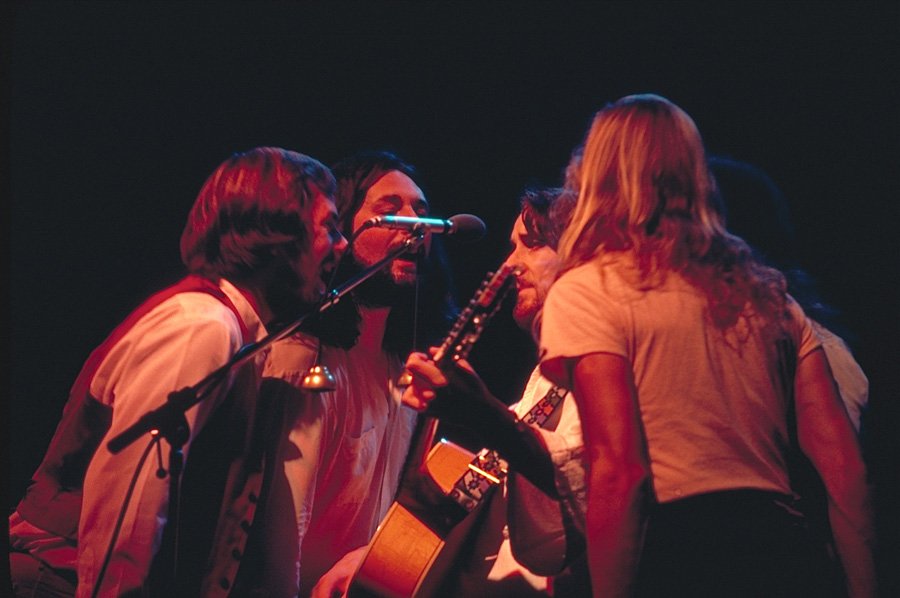
One of the most polished recordings of the 1970s began as a teenager banging on household objects in his mother’s front room. Roger Hodgson was nineteen years old when he sat down at a Wurlitzer electric piano — the first one he had ever played — and felt a song simply fly out of him. He sang it as it came, close to the form the world now knows, and built his demo out of whatever was at hand: vocals, the Wurlitzer, and percussion improvised on boxes and lampshades. Five years later, that front-room sketch became Dreamer, the single that carried Supertramp’s Crime of the Century onto the charts and introduced one of the defining sounds of the decade.
Boxes, Lampshades and a Brand-New Wurlitzer
“I was excited — it was the first time I laid hands on a Wurlitzer,” Hodgson recalled of the demo, recorded at his mother’s house around 1969. “I was sitting at the keyboard in my mother’s house and it was something that just flew out of me. I just sang words and the words that came out were very close to what’s in the final song. I was banging boxes and light shades and I created this magical demo.”
The lyric that arrived unbidden had a teasing edge to it: a string of questions aimed at a dreamer who is urged to put his hands in his head and see. Hodgson has rated Dreamer among the ten best songs he ever wrote, and its staying power in his affections is easy to understand — it arrived whole, before Supertramp had any success worth the name, before the band’s classic line-up even existed. Like all Supertramp songs of the era it would eventually be credited jointly to Hodgson and Rick Davies, the band’s twin songwriters, but Dreamer was Hodgson’s alone, a keepsake from the very start of his writing life. The boxes and lampshades matter more than they seem to: Supertramp’s entire career would be built on making fastidious studio craft sound weightless, and the blueprint was already there in that demo. The band’s real task, five years later, was learning to reproduce an accident on purpose — at studio quality, without squeezing the air out of it.
That start came in 1969, when Hodgson answered the same Melody Maker advertisement that had brought Davies to London, and the two formed Supertramp under the patronage of a Dutch millionaire, Stanley Miesegaes. The money ran out, the first two albums sank, and by 1973 the partnership had rebuilt itself from scratch. The demo of Dreamer, cut in that first flush of possibility, survived the collapse — a song from the band’s innocent beginning, waiting for the band to become good enough to record it.

Imitating the Demo
Supertramp had two failed albums behind them when they regrouped around Hodgson and Davies with the line-up that would define them: saxophonist and showman John Helliwell, drummer Bob Siebenberg, and bassist Dougie Thomson. For Crime of the Century, recorded in London in 1974 — at Trident Studios among others, in sessions spread across the first half of the year — they worked with producer Ken Scott, an engineer-turned-producer whose résumé ran from the Beatles to David Bowie, and who helped the band chase a sound as meticulous as the songs deserved. Sessions also ran at Ramport, the Who’s Battersea studio, and at Scorpio Sound; Scott’s great gift to the band was patience, building each track in layers until a five-piece group sounded like a small orchestra that happened to swing. The album that resulted climbed to No. 4 in Britain and broke the band in America, but its lightest track was the oldest song on it.
When they came to record Dreamer, the band made an unusual decision: rather than reinvent the song, they cut their own recording in imitation of Hodgson’s homemade demo. The finished track keeps the demo’s bouncing, weightless feel. Two Wurlitzers interlock — Hodgson and Davies both play the instrument on the record, and both sing, answering each other as the questions pile up — while Helliwell contributes the eerie glass harp, an effect he recreated on television by playing the rim of a wine glass balanced on his keyboard, and Siebenberg adds glockenspiel sparkle over his drums. It lasts three minutes and thirty-three seconds, and almost nothing in it behaves like progressive rock was supposed to. It is prog played with a pop song’s discipline and a music box’s brightness. Critics have kept returning to that lightness: Ultimate Classic Rock’s Nick DeRiso called it a “diaphanous slice of sentiment” in which it became apparent that Supertramp had found its own “art-pop sound.”

The B-Side That Stole America
Crime of the Century was released in September 1974, and Dreamer followed as a single in Britain on 1 November. It climbed steadily and peaked at No. 13 on the UK chart in February 1975 — Supertramp’s first real hit, and the record that turned a cult band into a commercial proposition.
In North America, the story twisted. The B-side of the single was Davies’ Bloody Well Right, and American radio preferred it: Bloody Well Right charted at No. 35 in the United States while Dreamer itself managed only No. 75 in Canada, though the studio version also crept into the charts in Australia and New Zealand. For a while, the two sides of the same seven-inch told opposite stories on opposite sides of the Atlantic — Britain took the teenager’s front-room reverie, America took its cynical flip side. The trade press, at least, sensed the single’s charm. Cash Box called it a “funny little song” with “a great deal of commercial potential,” and Record World found its vocals and swirling keyboards contagious.
The dreamer himself became Hodgson’s recurring character — the sensitive misfit who runs through Crime of the Century, from the schooldays dread of School to the asylum-haunted title track, drawn from Hodgson’s own unhappy years at boarding school. Dreamer is that figure caught at his most hopeful, before the world has had its say, and it is no accident that the album’s famous cover — two hands gripping prison bars against a field of stars — reads like the dreamer’s view from inside. Hodgson, looking back in 2023, kept the song in his personal top ten of everything he had written.
A Second Life in Paris
Dreamer had to wait six years for its American vindication, and it arrived in concert. In November 1979, at the height of the Breakfast in America tour, Supertramp recorded a run of shows at the Pavillon de Paris for the live album Paris, and when the live Dreamer was released as a single in September 1980, it completed the journey the studio version never had: No. 15 on the Billboard Hot 100, No. 1 in Canada, and Top 40 placings across Europe and Australia. Billboard, reviewing the live single, praised its “sweet pop melody, clear vocals and bubbly keyboards” — the front-room demo, polished by a decade of arenas, still bubbling. The song Hodgson had sung into a homemade demo at nineteen was now being sung back to him by arena crowds in two-part harmony, and it has never really left his stage since: a live recording of it anchors his solo album Classics Live, taped on tour in 2010.
Its reputation has only grown since. In 2017, Billboard critic Gary Graff rated Dreamer the greatest Supertramp song of all, praising its twists and hooks, and Hodgson still performs it as the centrepiece of his solo shows. The official video attached here — the band’s vintage performance film, restored in 4K by Universal Music — returns to the band in their mid-seventies pomp, but underneath the polish, if you listen for it, you can still hear the front room in it: a boy, a borrowed-feeling piano, and the sound of boxes being banged in time.
Leave a Reply