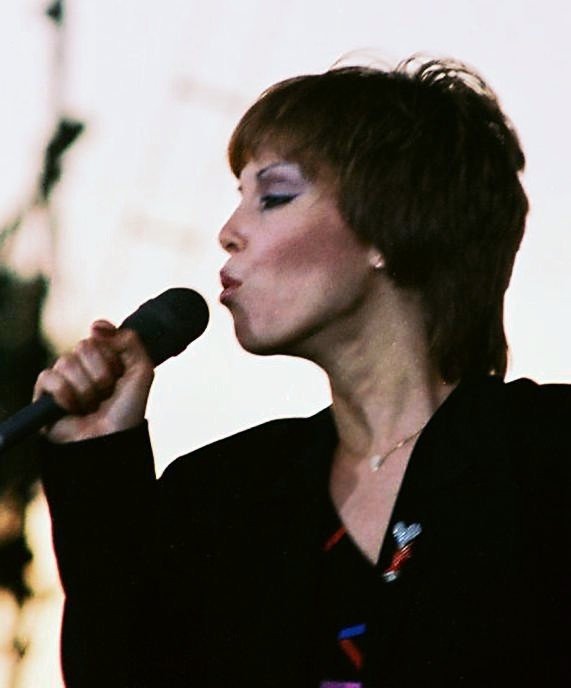
Every hit song has a backstory, but few have one as improbable as “Shadows of the Night.” It began life as a castoff — written for a movie that didn’t want it, released by a label that didn’t believe in it, and recorded twice by other singers before it ever reached the woman who would make it immortal. By the time Pat Benatar got her hands on it, the song was practically a rumor. What she and her husband and guitarist Neil Giraldo did with it turned a Hollywood reject into one of the defining rock anthems of 1982 — and earned Benatar her third consecutive Grammy Award. This is the story of how a song nobody wanted became a masterpiece nobody could forget.
A Song Written for a Movie That Said No
The year was 1980, and a young songwriter named D.L. Byron had a promising assignment: write a song for “Times Square,” a new film about two teenage runaways navigating the gritty streets of New York City. The movie starred Trini Alvarado and Robin Johnson as the runaways, with Tim Curry in one of his earliest roles as a radio DJ. Byron poured himself into the task and delivered “Shadows of the Night,” a driving, atmospheric rocker built for the film’s neon-soaked mood.
The film’s producers listened — and passed. They didn’t think the song had chart-topping potential, and it was left off the soundtrack entirely. Byron’s own record label, Arista, wasn’t interested either; the word from the label was that the song simply wasn’t commercial enough. So “Shadows of the Night” sat in a drawer, a fully formed rock song with nowhere to go, while Byron watched his creation gather dust.
It is one of the great ironies of pop history that the gatekeepers were so spectacularly wrong. But the song wasn’t dead. It was just waiting for the right voice.
Two Singers Try It First — and Almost Get There
Before Pat Benatar ever heard it, “Shadows of the Night” had two earlier lives. In 1981, the American singer Helen Schneider recorded it and released it on her album “Schneider with the Kick.” According to Byron himself, Schneider’s version was a genuine smash in parts of Europe, going five times platinum in Germany and the Benelux countries. Around the same time, the singer Rachel Sweet cut her own version with slightly altered lyrics for her 1981 album “…And Then He Kissed Me.”
Both versions proved the song had real bones. But neither one cracked America, and neither turned “Shadows of the Night” into the anthem it was destined to be. The song was still searching for its definitive interpreter — someone who could give it the urgency, the drama, and the sheer vocal firepower it demanded. In the summer of 1982, it found her.
Benatar Was at a Crossroads When the Song Arrived
To understand what happened next, you have to understand where Pat Benatar was in 1982. She was coming off an extraordinary run: her debut “In the Heat of the Night” had introduced her snarling rock voice, “Crimes of Passion” had made her a superstar, and “Precious Time” had topped the album chart outright. She had already won two consecutive Grammy Awards for Best Female Rock Vocal Performance, an unprecedented streak.
But success had brought pressure. Her label, Chrysalis, was pushing her hard, and the machinery of stardom was grinding. She was heading into her fourth album, “Get Nervous,” at a moment when the stakes couldn’t have been higher — the whole industry was watching to see whether she could keep the streak alive. It was exactly the kind of moment when an artist needs a song with something to prove. “Shadows of the Night” arrived like it had been waiting for precisely this moment.
Benatar didn’t just record Byron’s song as written. Working with Giraldo and her drummer Myron Grombacher, she reconstructed it — reworking the lyrics, reshaping the arrangement, and transforming a solid rock tune into something cinematic and immense. The official writing credits reflect the transformation: D.L. Byron as the primary writer, with Benatar and Grombacher credited for their reworking. Produced by Giraldo and Peter Coleman, the track opens with a slow, atmospheric build — keyboards and guitar gathering like storm clouds — before erupting into the full-throated chorus. Giraldo’s production ear was the secret weapon: he understood that for Benatar to truly own the song, it needed that sense of scale, that feeling of headlights cutting through darkness.
Inside the Studio: Giraldo’s Masterstroke
The recording sessions for “Shadows of the Night” revealed everything about how the Benatar-Giraldo partnership worked. Giraldo wasn’t just the guitarist or the husband — he was the architect, the arranger, and the producer with the golden ear, and this track was his showcase. Together with co-producer Peter Coleman, he built the song’s arrangement around a simple but brilliant idea: start in near-darkness and let the light break slowly.
Listen to the opening seconds and you can hear the strategy. The track doesn’t kick down the door the way “Heartbreaker” did. Instead, it creeps in — atmospheric keyboards, a guitar figure that feels like something moving through fog, Benatar’s voice low and controlled. It’s a full minute of gathering tension before the song finally opens up, and when it does, the release is enormous. Giraldo understood something crucial: a singer with Benatar’s power doesn’t need to shout from the first bar. The restraint makes the explosion mean more.
The band rose to the occasion around her. Myron Grombacher’s drumming drives the track with a relentless pulse that never overwhelms the vocal, and the layered guitars give the chorus its widescreen punch. It was a more sophisticated production than anything on her earlier records — polished enough for pop radio, but with its rock spine fully intact. In many ways, “Shadows of the Night” was the bridge between the raw arena rock of “Crimes of Passion” and the sleek, modern sound she would perfect on “Love Is a Battlefield” the following year.
What made the sessions remarkable was the confidence in the room. Benatar was recording a song that had already been rejected twice over, reworking lyrics that weren’t originally hers, for an album her label was watching like a hawk. Lesser artists would have played it safe. Instead, she and Giraldo swung for the fences — and the take they captured still sounds like a band with absolutely nothing to lose.
The Release That Proved Everyone Wrong
Chrysalis released “Shadows of the Night” as the lead single from “Get Nervous” on September 18, 1982. The song that Arista had once dismissed as not commercial enough promptly became one of the biggest rock hits of the year. It climbed to number 13 on the Billboard Hot 100 and soared to number 3 on the Mainstream Rock chart, becoming one of the defining rock radio tracks of 1982 and 1983. It also reached the Top 15 in Canada and the Top 20 in Australia.
Then came the ultimate vindication. At the 1983 Grammy Awards, “Shadows of the Night” won Best Female Rock Vocal Performance — Benatar’s third consecutive win in the category. Three years, three Grammys, three songs that nobody else could have sung the way she sang them. The streak would extend to four the following year. A song that had been rejected by a movie, rejected by a label, and handed down through two other singers had carried Pat Benatar to the peak of her profession.
The Video That Was a Miniature War Movie
If the song was a triumph, the music video was a revolution. In 1982, MTV was still in its infancy, and most music videos were little more than bands performing on a foggy stage. Benatar had other ideas. For “Shadows of the Night,” she and her team created what amounted to a short feature film — a World War II epic in which Benatar plays a riveter, a Rosie the Riveter-style factory worker, who drifts into a vivid daydream where she serves as a fighter pilot battling the enemy in the skies over Europe.
The production values were unheard of for a music video at the time. Benatar actually flew a vintage T-6 Texan aircraft for the shoot, and the plane was christened “Midnight Angel” — a phrase lifted from the song’s own lyrics. The cast included two young, hungry actors who were just getting started in the business: Judge Reinhold, who played an American pilot, and Bill Paxton, cast as a German radio operator. Both were unknown Screen Actors Guild members taking whatever jobs they could find; within a few years, both would be stars.
The video’s storyline, by Benatar’s own admission, wasn’t really tied to the song’s lyrics or message — but that didn’t matter. What mattered was the ambition: a female rock star commanding a war movie the way male action heroes commanded the screen. The label’s higher-ups were reportedly uneasy about the concept, but Benatar and her band rallied behind it. The gamble paid off — the clip became an MTV staple and helped cement her as one of the visual queens of the early video era. There was one unexpected consequence: because of its Nazi imagery, the video was banned outright in Germany, a distinction few music videos can claim.
The Afterlife of a Song That Refused to Die
“Shadows of the Night” never really left the culture. Decades after its release, it kept finding new audiences in new places. It turned up in the 2014 video game “Grand Theft Auto V,” introducing the song’s midnight drive to a generation that hadn’t been born when it was recorded. Mary J. Blige covered it in 2012 for the film “Rock of Ages.” Demi Lovato sampled its unmistakable pulse on her 2014 track “Really Don’t Care.” Each new incarnation was a reminder of what Benatar and Giraldo had understood back in 1982: the song’s bones were indestructible.
There’s a lesson in the story that goes beyond one hit record. Benatar didn’t write “Shadows of the Night” — and she never pretended she did. What she did was rarer: she recognized a great song that everyone else had overlooked, and she had the artistry and the confidence to make it unmistakably hers. Being a great artist, it turns out, often means being a great editor — knowing what to keep, what to change, and when to bet everything on a song the whole industry had already thrown away.
From a rejected movie demo to a Grammy-winning anthem, from a drawer at Arista Records to the skies over a World War II daydream, “Shadows of the Night” traveled further than its writer ever imagined. D.L. Byron gave it life; Helen Schneider and Rachel Sweet kept it breathing; but it was Pat Benatar — at a crossroads, under pressure, with everything to prove — who gave it immortality. Every time that opening build gives way to the chorus, you can hear the whole journey in it: a song nobody wanted, sung by a woman who never took no for an answer. And that, in the end, is the most Benatar story ever told.
Leave a Reply