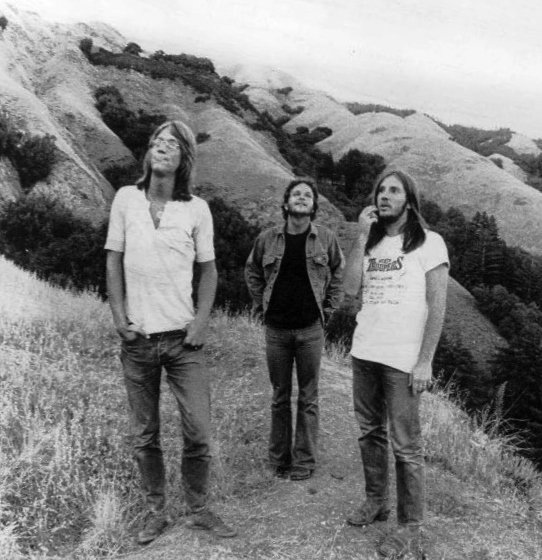
There is a particular kind of magic in a song that tells the truth by making things up. “Sister Golden Hair” — America’s shimmering, bittersweet number-one hit from the summer of 1975 — sounds like a confession. It sounds like a man singing about one specific woman, one specific Sunday, one specific heartbreak. And for fifty years, listeners have assumed it was exactly that.
It wasn’t. By the songwriter’s own admission, there was no Sister Golden Hair. There never had been. The song was a beautiful fiction — stitched together from a Beatle’s guitar riff, a melancholy Californian’s honesty, and the imagination of a young man who understood that sometimes the truest songs are the ones you invent.
This is the story of how Gerry Beckley wrote America’s second chart-topper out of thin air, borrowed moonlight, and poetic license.
The Beatles’ Producer Walks In
To understand “Sister Golden Hair,” you have to understand where America stood in early 1975. The trio — Gerry Beckley, Dewey Bunnell, and Dan Peek, three sons of American servicemen who had met at London Central High School — had already lived an entire career’s worth of ups and downs. “A Horse with No Name” had made them instant stars in 1972. Then came the inevitable slump: two albums that sold respectably but produced no career-defining hits, and a growing sense that the band might be a beautiful memory rather than an ongoing concern.
Then they did something bold. For their fourth album, “Holiday” (1974), they hired George Martin — the man who had produced the Beatles — to produce them. It was a inspired choice. Martin understood harmony the way the band did; he understood that three voices blending could be as powerful as any guitar solo. “Holiday” gave America their first Top 10 hit in years with “Tin Man,” and suddenly the band was back.
So when it came time to record the follow-up, there was no question about the producer. George Martin would return. The album would be called “Hearts.” And the band would travel to California to make it — to the Record Plant in Sausalito, just across the bay from San Francisco, where the air smelled of eucalyptus and the studio walls had absorbed the ghosts of a hundred classic sessions.
It was there, in Sausalito, in the winter and spring of 1975, that Gerry Beckley brought in a new song. It had a twelve-string shimmer, a melody like sunlight through leaves, and a title that sounded like a person: “Sister Golden Hair.”
Sausalito, 1975
The Record Plant in Sausalito was, by all accounts, a magical place to make a record. The studio sat in a wooded setting in Marin County, and the atmosphere was relaxed, creative, unhurried — exactly the environment where a band like America did its best work. George Martin, the most distinguished producer in popular music, ran the sessions with his characteristic blend of rigor and warmth. He pushed the band without pressuring them. He polished their sound without sanding off its soul.
Beckley arrived with “Sister Golden Hair” essentially complete — a song he had written on his own, one he would also sing. It was, from the first playback, obviously special. The melody had that effortless, floating quality that was Beckley’s signature — the same gift that had given the band “I Need You” years earlier. But this song had something extra: a emotional complexity, a bittersweet undertow, that suggested its writer had been listening hard to the world around him.
And indeed he had. When Beckley later talked about the song’s origins, he pointed to two very specific sources of inspiration — one for the music, one for the words. Neither of them was a golden-haired girl.
The Honest Depressive
The words came first, in a sense. Beckley had been listening to Jackson Browne — the Southern California singer-songwriter whose early albums were masterpieces of beautiful melancholy, songs about love and loss and the long drives between them. Browne had a way of writing about sadness that never felt self-pitying; it felt honest, almost journalistic. He reported from the scene of his own heartbreak.
Beckley admired that honesty enormously, and he said so in a way that became one of the great quotes in the America’s story. “I find Jackson can depress me a little bit,” Beckley admitted, “but only through his honesty.”
That honesty became the template for “Sister Golden Hair.” Listen to the song’s opening line — “Well I tried to make it Sunday, but I got so damn depressed” — and you can hear Browne’s influence immediately. It is plainspoken, unadorned, almost startlingly direct for a pop song in 1975. No poetry, no metaphor, just a man telling you he tried to make it through the weekend and failed. The rest of the lyric unfolds in the same spirit: a man addressing a woman he loves, admitting his own inadequacy, wondering if he is worthy of her. It is a love song written from the losing side of love — and it feels true in every line.
Except, as Beckley later confessed, it was not true at all. Not literally, anyway.
Stealing From George
If the words came from Jackson Browne’s honesty, the music came from a Beatle. Beckley never hid this; in fact, he seemed almost proud of it. The song’s opening guitar figure — that bright, chiming, instantly recognizable riff — was, by his own admission, inspired by George Harrison’s “My Sweet Lord.”
It was a brazen thing to admit, and a revealing one. “My Sweet Lord” had been one of the biggest songs of the decade — and also one of the most controversial, having been the subject of a famous plagiarism lawsuit over its resemblance to “He’s So Fine.” Beckley was not stealing a melody; he was borrowing a feeling, a texture, a twelve-string shimmer. But the admission tells you something about how songwriters actually work. They do not create in a vacuum. They hear something they love, they absorb it, and they transform it into something new. The “Sister Golden Hair” riff does not sound like “My Sweet Lord.” It sounds like a memory of “My Sweet Lord,” filtered through Gerry Beckley’s imagination and America’s harmonies.
George Martin, hearing the song in the studio, must have recognized the lineage immediately. Here was a band produced by the Beatles’ producer, playing a song inspired by a Beatle’s solo hit, about to become a hit in its own right. The circle was almost too perfect. Martin did what he did best: he arranged the song with a light, sure touch, letting the twelve-string guitars ring, letting the three voices blend, adding just enough polish to make it gleam without making it slick. It was, in every sense, a George Martin production — and it was gorgeous.
A Composite of Girls
And then there is the matter of the girl herself. “Sister Golden Hair.” The title sounds like a nickname, like someone specific. For decades, fans speculated about her identity. Was she a real person? A girlfriend? A groupie? A sister?
Beckley finally settled the question, and his answer was disarming in its honesty. The song, he explained, was based on a composite of different girls he had known — blended together, idealized, fictionalized. “There was no actual Sister Golden Hair,” he said. It was, in his phrase, “poetic license.”
Think about what that means for the song’s emotional power. Every heartbroken listener who ever heard “Sister Golden Hair” and thought, “He’s singing about someone real” — they were right, and they were wrong. The emotion was real. The girl was invented. Beckley had done what all great songwriters do: he had taken fragments of real feeling and assembled them into a fiction more true than any fact. The Sunday depression, the unworthiness, the plea — those were real. The golden hair was a beautiful lie that told the truth.
It is worth pausing on how unusual this was for America. The band’s biggest hits had always had an air of mystery — “A Horse with No Name” was famously opaque, its lyrics debated for decades. But “Sister Golden Hair” was different: it was intimate, personal, confessional. It invited the listener to believe in a real relationship, a real Sunday, a real girl. The revelation that she never existed does not diminish the song. If anything, it deepens it. It means Beckley imagined his way into heartbreak so completely that millions of people felt it as their own.
Number One, Again
“Hearts” was released in March 1975. “Sister Golden Hair” was released as a single, and the response was immediate. Radio embraced it. Listeners embraced it. And in June 1975, three years after “A Horse with No Name” had done the same, “Sister Golden Hair” reached number one on the Billboard Hot 100.
It was America’s second American chart-topper — and, as it turned out, their last. The song also reached number 11 in Canada, though it notably failed to chart in Britain, the country where the band had been formed. But in America — the country they were named for — it was inescapable that summer. It played from car radios on highways, from transistor radios on beaches, from kitchen radios on Sunday mornings. It was the sound of 1975: golden, melancholy, perfect.
The success of “Sister Golden Hair” confirmed what “Holiday” had suggested: the George Martin partnership was magic. Martin would go on to produce one more America album, “Hideaway” (1976), completing a trilogy of records that represented the band’s commercial and artistic peak. But “Sister Golden Hair” was the crown jewel — the moment when everything aligned: the right song, the right producer, the right studio, the right summer.
For Gerry Beckley, it was a particular triumph. In a band with three songwriters, each with his own style and following, Beckley had written and sung the group’s biggest hit since “Horse.” The quiet one — the harmony singer, the melodicist — had stepped forward and delivered a masterpiece.
The Song That Outlived the Band’s Youth
“Sister Golden Hair” endures for a reason that has nothing to do with charts. It endures because it captures something universal: the feeling of loving someone and fearing you are not enough for them. That feeling does not age. It does not belong to 1975. It belongs to every person who has ever looked at someone wonderful and thought, “I don’t deserve this, but please don’t go.”
The song’s afterlife has been long and affectionate. It has appeared in films, in television shows, in commercials. It plays on oldies stations every day, and every time it does, some listener hears that opening twelve-string riff and feels the summer of 1975 rush back. It has become one of those songs that defines not just a band but an entire sensibility: the soft-rock seventies, when harmonies were lush, melodies were king, and heartbreak could be beautiful.
And somewhere in the song’s DNA, if you listen closely, you can hear its strange parentage: Jackson Browne’s honesty, George Harrison’s shimmer, George Martin’s polish, and Gerry Beckley’s imagination. Four ingredients, one fiction, one number-one hit.
There never was a Sister Golden Hair. But there did not need to be. Beckley invented her, and in inventing her, he gave every listener someone to remember. That is not deception. That is songwriting at its highest — the art of making something up so beautifully that it becomes true. When the last chord rings out and the harmonies fade, the girl with the golden hair is as real as any of us. She lives in the song. She always will.
Leave a Reply