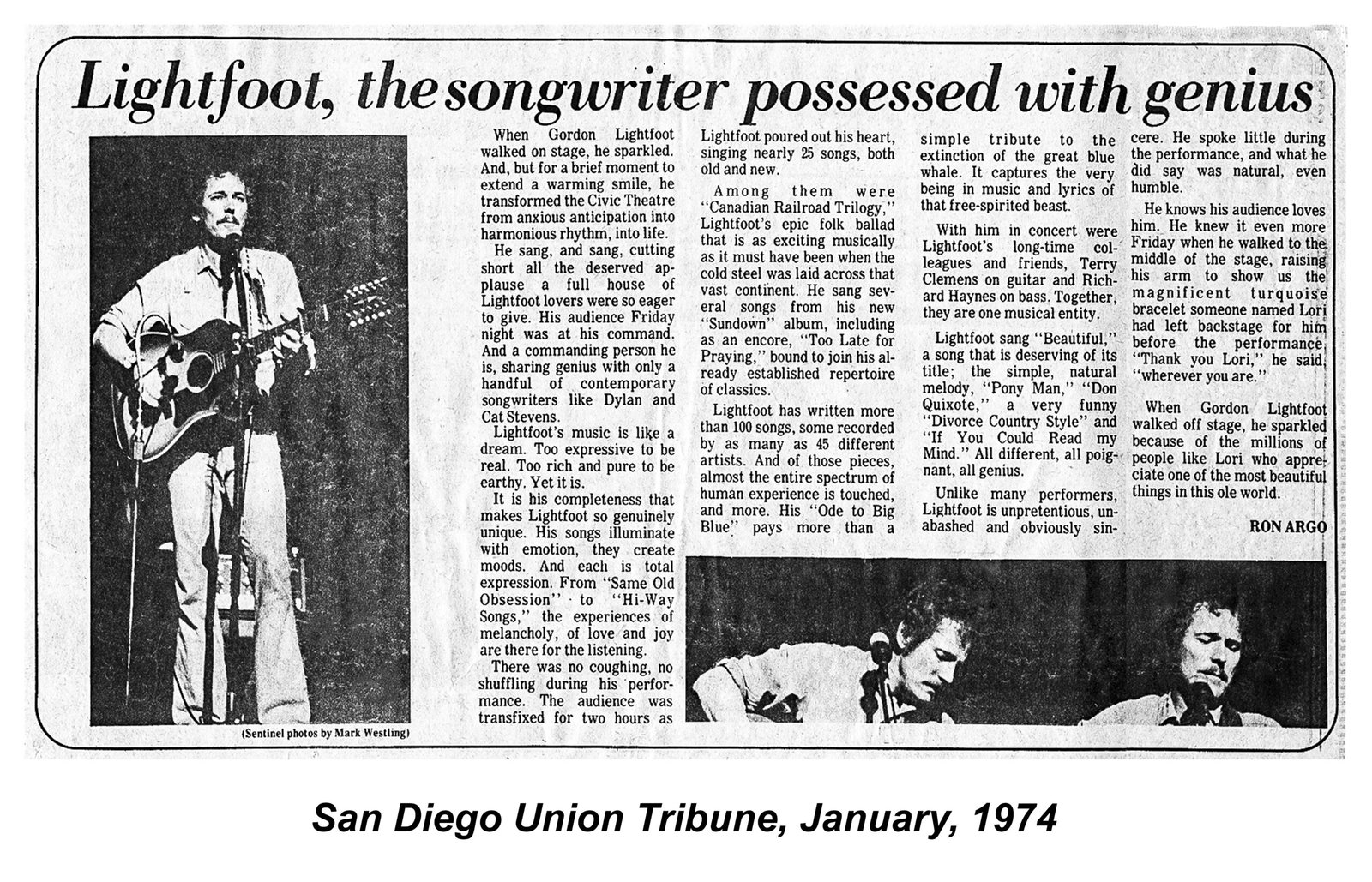
He sang about restless hearts on lonely highways, and he lived the words. Gordon Lightfoot’s public image was the plainspoken Canadian bard — steady, modest, reliable as a twelve-string guitar. His private life was stormier: three marriages, six children, a legendary temper, a ferocious battle with alcohol that he won, and a devotion to his hometown and his audience that never wavered across six decades. The man who wrote “Sundown” in a jealous rage and “If You Could Read My Mind” in a dying marriage contained multitudes. This is the heart behind the highways.
The Swedish Girl in the Rooming House
Lightfoot’s first great love story began in the most ordinary way. In 1962, he was a struggling young folksinger living in a rooming house in Toronto’s Annex neighborhood. Brita Ingegerd Olaisson, newly arrived from Sweden, lived in the same house. She was smart, blonde, and game for the adventure of a musician’s life. They married in April 1963 in her hometown of Stockholm, and spent their first summer together in London, where Lightfoot was appearing on a BBC television series, before honeymooning in Ireland.
Two children came quickly: Fred and Ingrid. And then the road came between them. Lightfoot has never hidden the reason the marriage failed: his own infidelity, abetted by endless touring and the temptations of a career that was taking off just as his family needed him home. They divorced in 1973, after a decade together. The wreckage produced one of the greatest songs ever written about a failing marriage — but for Brita, it was simply the end of a life she had signed up for in a Stockholm church ten years earlier.
The Wilderness Years
What followed was the wildest stretch of Lightfoot’s life. He did not marry again for sixteen years, and those years were, by his own admission, chaotic. There were relationships that produced two more children — a son, Eric, and a daughter, Gaylen McGee — whose mothers stayed out of the spotlight. And there was the famous, volatile affair with Cathy Smith, the woman who inspired “Sundown” and who would later become a tabloid fixture after her role in John Belushi’s death.
Through it all, Lightfoot was drinking heavily — by his own account, about a bottle of Canadian Club a day — and doing what he called “irrational things.” He fired opening acts for flirting with his girlfriend. He burned through goodwill. The man writing songs of exquisite emotional control was, offstage, barely in control at all. It is one of the central paradoxes of his life: the steadier the songs sounded, the stormier the singer was.
The Day He Quit
In 1982, Lightfoot stopped drinking. Cold. No rehab narrative, no public announcement — he simply quit, and stayed sober for the remaining forty-one years of his life. Friends noticed the change before he ever talked about it: the temper cooled, the reliability returned, the shows got better. He later said quitting was the single most important decision he ever made, the one that made everything after it possible — the comeback from the coma, the decades of touring, the late-life renaissance.
Sobriety also changed his relationship with his own catalog. In his later years he stopped performing some of his earliest hits, including “For Lovin’ Me,” saying he had outgrown the sentiments — a songwriter publicly retiring his own youthful certainties, the way a man might quietly shelve the letters he wrote when he was someone else.
Elizabeth and the Second Family
In 1989, sixteen years after his divorce from Brita, Lightfoot married again. Elizabeth Moon was a British author, and their marriage — which lasted until 2011, though Lightfoot later said they had been separated for nine years before the official split — gave him two more children: Meredith and Miles. It was a quieter chapter, the domestic life of a man in his fifties who had survived his own worst years and was trying, deliberately, to be a better husband and father than he had been the first time.
The children of all these chapters — Fred and Ingrid from the first marriage, Eric and Gaylen from the wilderness years, Meredith and Miles from the second — grew up with a father whose job kept him on the road two hundred nights a year and whose most famous songs were about the cost of exactly that life. Ingrid, the daughter of the first marriage, would one day change a word in her father’s most famous song, turning “you” into “we.” The family and the music were never separate. They were the same story, told in two keys.
Kim: The Final Chapter
In December 2014, at Toronto’s Rosedale United Church, the seventy-six-year-old Lightfoot married for the third and final time. Kim Hasse, a former actress, became his partner for the last nine years of his life — the steady presence through the final tours, the health scares, and the quiet wind-down of a sixty-year career. She was at his side when he died of natural causes at Sunnybrook Hospital in Toronto on May 1, 2023, at eighty-four — and in the days that followed, the tributes that poured in from around the world kept returning to the same word: grace.
Those final years had their indignities — the emphysema diagnosis in 2018 that made him quit smoking, the canceled 2023 tour dates attributed to “health-related issues” — but they also had their grace notes. In 2022 he received the Golden Plate Award of the American Academy of Achievement. In March 2020, at eighty-one, he released “Solo,” built from rediscovered home recordings. He kept writing, kept touring, kept showing up, until his body would not let him.
Massey Hall and the Hometown Boy
For all his wandering, Lightfoot never left home spiritually. He played Toronto’s Massey Hall — the venue where he had first appeared at age twelve as a boy soprano competition winner — more than 170 times across his career, a record of devotion no other artist can touch. When the hall reopened after renovations in November 2021, the first show was his. He was eighty-three, frail, and unmissable.
Orillia never forgot him either. In 2015 the town unveiled a four-meter bronze sculpture of its favorite son, created by Timothy Schmalz. He had sung about Canada his whole life — the “Canadian Railroad Trilogy,” commissioned by the CBC for the country’s centennial in 1967, remains the closest thing the nation has to a folk national anthem — and Canada returned the affection with interest: sixteen Junos, the Companion of the Order of Canada, the Canadian Music Hall of Fame, and, in 1991-92, the honorary captaincy of his beloved Toronto Maple Leafs.
The Yorkville Brotherhood
Lightfoot did not emerge alone. He came up in Toronto’s Yorkville scene in the early sixties, playing the less glamorous rooms while Joni Mitchell, Neil Young, and Ian & Sylvia worked the famous Riverboat up the street. They were all young, all broke, all certain that folk music could carry the weight of literature. The friendships forged in those coffeehouses lasted lifetimes. Ian Tyson was the one who first championed him to the wider world after hearing him at a lounge called Steele’s in 1964.
And then there was Dylan. The two men orbited each other for sixty years — Dylan recording Lightfoot’s “Early Morning Rain” on 1970’s “Self Portrait,” Lightfoot absorbing Dylan’s influence and then, improbably, returning it. Dylan’s praise never wavered, and Lightfoot wore it the way he wore everything: plainly, without show. When the 2019 documentary “Gordon Lightfoot: If You Could Read My Mind” finally let him tell his own story, the respect of his peers was the through-line — the kid from Orillia who had earned the admiration of the very giants he once opened for.
The Discipline
For all the chaos of his personal life, Lightfoot’s professional life was a monument to discipline. He toured relentlessly — two hundred nights a year at his peak — with essentially the same core band for decades. He was a bandleader in the old sense: rehearsed, punctual, exacting. The shows were never sloppy, never phoned in, even when his voice had thinned and his hands had stiffened.
That discipline is what made the comebacks possible. After the ruptured aneurysm and the six-week coma in 2002, he spent twenty-eight months clawing his way back to the stage, relearning how to sing around damaged vocal cords. After the minor stroke in 2006 cost him his guitar hand for the better part of a year, he came back again. He played Massey Hall into his eighties. His final concert was in October 2022; he canceled the 2023 dates only when his body finally refused. The man had survived a bottle-a-day habit, a burst aorta, a stroke, and emphysema, and he still showed up for the gig. That was the job. That was the man.
The Man His Friends Knew
Ask the people who knew him, and a consistent picture emerges beneath the legend. Bob Dylan, who called Lightfoot one of his favorite songwriters and even a mentor, once said, “I can’t think of any Gordon Lightfoot song I don’t like. Every time I hear a song of his, it’s like I wish it would last forever.” Robbie Robertson called him “a national treasure.” His bandmates — the same core group for decades — spoke of a bandleader who demanded excellence and rewarded loyalty, who could be prickly and then disarmingly kind.
He was, by every account, a man who knew exactly what his flaws were and spent the second half of his life trying to outgrow them. The jealous young man of the “Sundown” years became the sober elder who changed “you” to “we.” The absentee father became the patriarch of a sprawling, complicated family. The restless highway singer became the hometown boy who never really left.
Gordon Lightfoot wrote about lonely highways, wrecked ships, and restless hearts because he had lived all three. He was married three times and loved imperfectly every time; he fathered six children across four decades and spent his later years trying to be present for all of them; he drank enough to kill most men and then, at forty-four, simply stopped. But the truest thing he ever wrote might be the smallest: a one-word correction, suggested by his daughter, that turned an accusation into an apology. The heart behind the highways was, in the end, a father’s heart — flawed, stubborn, and finally, fully human. The songs will keep playing every November when the gales come early. And somewhere in them, if you listen closely, you can hear a man who spent eighty-four years learning how to say he was sorry, and then set it to music.
Leave a Reply