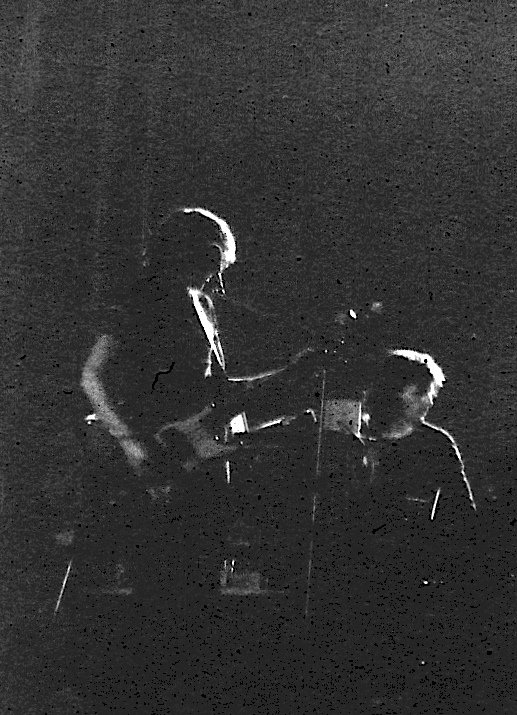
It began with the ugliest moment of Roger Waters’ career. On July 6, 1977, at the Olympic Stadium in Montreal, on the final night of Pink Floyd’s “Animals” tour, a fan kept climbing the netting that separated the band from the crowd. Waters, exhausted and furious after months of stadium shows he had come to loathe, spat in the man’s face. He was disgusted with himself the instant he did it. And on the way back from the hospital that night, where he had gone to treat a foot injury, he said something to producer Bob Ezrin that became one of the most famous sentences in rock history: what if he built a wall between himself and the audience?
Two years later, that shame became “The Wall,” a 26-track double album released on November 30, 1979, that told the story of Pink, a rock star who builds a psychological wall brick by brick until it imprisons him. It gave Pink Floyd their only number-one single on both sides of the Atlantic, it nearly destroyed the band, and it remains the most theatrical, most ambitious album they ever made. This is how it was built.
Two Concepts on the Table
By the summer of 1978, Pink Floyd were in an odd position: the biggest cult band in the world, rich beyond imagining, and creatively exhausted. Waters arrived at the band’s rehearsals with two competing concepts for the next album, both drawn from his notebooks. One was a surreal road-trip story that would eventually become his solo album “The Pros and Cons of Hitch Hiking.” The other was “The Wall.”
The band chose “The Wall,” and it is easy to see why. Where the other concept was personal and strange, “The Wall” was universal. Everyone has built walls. Everyone has felt the bricks going up: the cruel teacher, the overprotective mother, the lost father, the cheating wife, the fame that separates you from the people who love you. Waters’ genius was to take his own very specific traumas, including the father killed in World War II when Waters was five months old, and turn them into an everyman’s nightmare.
Waters had written demos for nearly the whole thing himself, recording them at home and at the band’s Britannia Row studios, but the material was raw, more like a diary than an album. Some of it was barely more than Waters singing over an acoustic guitar, with long spoken passages explaining the story. He needed someone to shape it into a record. At the suggestion of his then-girlfriend, who had once worked as Bob Ezrin’s secretary, the band hired Ezrin, the Canadian producer behind Alice Cooper’s “School’s Out” and Lou Reed’s “Berlin,” to co-produce. Ezrin’s first job was to do what Waters could not: impose structure. He wrote a proper script for the album’s narrative, identified the holes in the plot, and even called for new songs to be written to fill them. “The Trial,” the album’s climactic courtroom sequence, was co-written by Ezrin and Waters from scratch.
Exile in France
For tax reasons, the band recorded much of “The Wall” outside Britain. The bulk of the sessions took place between January and July 1979 at Super Bear Studios near Nice in the south of France, with Waters’ vocals cut at the nearby Studio Miraval, and orchestral and later work done in New York and Los Angeles. It was a fragmented, pressurized process, spread across four studios and eight months, with the band’s internal relationships deteriorating by the week.
The music itself was a departure. Where “The Dark Side of the Moon” and “Wish You Were Here” had floated, “The Wall” hammered. Guitars were harsher, arrangements more theatrical, Waters’ voice more of a snarl. David Gilmour, co-producing alongside Waters, Ezrin, and engineer James Guthrie, provided the album’s moments of soaring release, most famously the two guitar solos on “Comfortably Numb,” which he reportedly assembled from multiple takes into the definitive version. It is one of the most beloved guitar performances ever recorded, and it arrived as a kind of rescue: beauty breaking through the wall’s concrete.
Session musicians filled the gaps the band could no longer fill themselves. When Nick Mason struggled with the complex time signatures, studio legend Jeff Porcaro played drums on “Mother.” The polish of the final record hides how close the whole thing came to collapse.
The Disco Beat and the Schoolchildren
The most famous story from the sessions concerns the song nobody expected to become a single. “Another Brick in the Wall, Part 2” began as a short, dour verse. The band, in Waters’ words, “didn’t do singles.” But Ezrin heard something else. Inspired by the disco records he had been hearing, he suggested giving the track a danceable, four-on-the-floor beat, and when the band went out for the evening, he stayed behind, copied the first verse and chorus, stitched them together with a drum fill, and presented the band with a finished single the next day.
Then came the masterstroke. Remembering the children’s choir he had used on Alice Cooper’s “School’s Out,” Ezrin sent engineer Nick Griffiths to the Islington Green School, just around the corner from the band’s Britannia Row studios in London. The head of music, Alun Renshaw, rehearsed twenty-three pupils for a week, hiding the lyrics from the headteacher, who might not have approved of children singing “we don’t need no education.” The school gave them forty minutes. Griffiths recorded the voices about a dozen times, layering them until two dozen kids sounded like a playground uprising.
When Ezrin played the result to Waters, those present say the songwriter’s face completely softened, the hard man of the sessions suddenly hearing his bitter song turned into something universal. The children’s voices turned a bitter song into an anthem. Released as a single in November 1979, “Another Brick in the Wall, Part 2” went to number one in Britain and America, Pink Floyd’s only chart-topper in either country, and it has never left the radio since. The kids themselves got a concert ticket and a copy of the record each, and nothing else. They were uncredited and unpaid. In 2004, the now-grown choir members finally made a royalty claim, and eventually received their due. It had taken twenty-five years, but the wall’s most famous bricks got paid.
Scarfe’s Nightmares
The album’s visual world came from Gerald Scarfe, the British caricaturist Waters had admired since the mid-seventies. Scarfe designed the inner sleeves and the picture labels for the vinyl, drawing the album’s grotesques: the screaming teacher, the devouring mother, the marching hammers that would become the album’s most chilling symbol, and the grotesque judge of “The Trial,” with his obscene, inflated majesty. His images gave Pink’s inner life a face, and they would become inseparable from the music, as recognizable as the songs themselves.
The outer cover, though, was defiantly blank: a plain white brick wall, no band name, no title, no text at all. It was Waters’ idea, and it followed a falling-out with Hipgnosis designer Storm Thorgerson, who had created the band’s classic covers. The minimalism was the point. After the elaborate artwork of the seventies, “The Wall” presented itself as nothing, a void, daring the listener to fill it.
The Wall Goes Up on Stage
Waters had conceived the wall as a stage device from the very beginning, back in that car in Montreal. For the 1980 and 1981 tours, the band built an actual wall of cardboard bricks across the stage during the first half of the show, brick by brick, until the musicians were completely hidden from the audience. Then, at the climax, the wall came crashing down.
It was one of the most elaborate stage productions rock had ever seen, with Scarfe’s giant inflatable puppets looming over the crowd and the band playing behind their own barrier. It was also ruinously expensive. The tour lost money for everyone involved except one person: Richard Wright, whom Waters had fired mid-recording and who was now employed as a salaried session musician. As the only member on a fixed wage, Wright was the only one who turned a profit. It remains the most bitterly funny footnote in rock history: the fired founding member, the only winner.
The shows were filmed and recorded, and in 1982 the story became a film directed by Alan Parker, with Bob Geldof, the Boomtown Rats singer, cast as Pink, and Scarfe’s animations woven through live-action nightmares. The film of “The Wall” extended the album’s reach to a generation that had never seen the stage show, and its images, the marching hammers, the faceless children, the teacher as a grotesque puppet, became part of the visual language of the eighties.
The Cracks in the Foundation
For all its triumph, “The Wall” broke Pink Floyd. Waters’ dominance of the sessions alienated Gilmour and Mason, and the firing of Wright poisoned the well for years. Waters would leave the band in 1985, and the lawsuits over the Pink Floyd name would drag on for years after. The album’s theme, isolation, had become the band’s reality.
But listen to it today and the cracks are part of the power. “The Wall” is not a comfortable album. It is angry, paranoid, theatrical, and overwrought, and it is also completely sincere. It has sold more than thirty million copies worldwide, making it one of the best-selling albums of all time, and every one of those sales represents someone who recognized their own wall in Pink’s. Waters took the worst night of his professional life, a moment of shame in a Montreal stadium, and turned it into a mirror for everyone who has ever felt the world closing in. The bricks in Pink’s wall are specific: a dead father, a cruel school, a broken marriage. But the wall itself belongs to all of us.
That is why, more than forty-five years later, the wall still stands. Not the cardboard one from the stage show, long since collapsed into storage. The real one, the one in the music, the one Waters built out of his own shame on a summer night in Montreal and then offered to the world. We all keep building it, brick by brick, out of our own dead fathers and cruel teachers and broken hearts. And every time “Another Brick in the Wall” comes on the radio, sung by schoolchildren who had no idea what they were part of, we are reminded of the simplest truth in the whole sprawling masterpiece: we don’t need it. We never did.
Leave a Reply