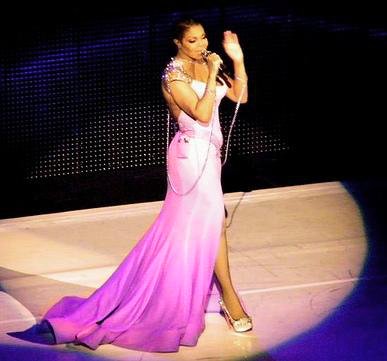
For four decades, Janet Jackson has been one of the most watched women on earth, and one of the least known. She grew up on television, became a pop revolutionary, survived a career-threatening public shaming, and did it all while keeping her inner life locked away from the cameras. The 2022 documentary that finally bore her name, “Janet Jackson.,” offered the first real glimpse behind the curtain: a woman shaped by an extraordinary family, three marriages, late-in-life motherhood, and a fierce devotion to the causes she rarely publicizes. This is the story of the private heart behind the spotlight.
The Youngest Jackson
Janet Damita Jo Jackson was born on May 16, 1966, in Gary, Indiana, the tenth and youngest child of the most famous musical family in America. She was performing almost as soon as she could walk, appearing on stage with her brothers at seven and becoming a television fixture at ten, playing Penny on “Good Times” and later appearing on “Diff’rent Strokes” and “Fame.” To the public she was the cute kid sister. At home, she was the baby of a family run like a small corporation, under a father whose discipline was legendary and whose love, she has suggested, came wrapped in control.
That duality, adored by millions and managed within an inch of her life, shaped everything that followed. When she finally broke free of her family’s management in the mid-1980s and made “Control” with Jimmy Jam and Terry Lewis, the title was not just a pop slogan. It was a life plan, and its opening declaration, “this is a story about control,” was aimed as much at her own history as at any listener. She would spend the next forty years deciding, song by song and choice by choice, who Janet Jackson got to be. The world got the performances. She kept the person.
Three Marriages, One Quiet Life
Her romantic life has been as private as her art is public. At eighteen, she eloped with R&B singer James DeBarge; the marriage was annulled within a year, and decades of tabloid rumors followed, including a persistent story about a secret child that she finally addressed head-on in her 2022 documentary. In 1991, she secretly married dancer and songwriter René Elizondo Jr., a union the public didn’t learn about until their divorce in 2000. Elizondo co-wrote much of “The Velvet Rope,” which means some of her most confessional music was made beside the man she was quietly married to.
Her third marriage was the most surprising of all. In 2012, she wed Qatari businessman Wissam Al Mana in a private ceremony so quiet the world didn’t hear about it until the couple confirmed it months later. In a gesture that said everything about their values, their wedding gifts to each other were charitable donations. The marriage brought her the thing she had waited longest for, and it would not last.
Motherhood at Fifty
On January 3, 2017, Janet Jackson gave birth to her son, Eissa. She was fifty years old. For a woman who had spent her entire life performing, the arrival of a child she had long wanted was, by all accounts, the profoundest plot twist of all. Friends described her as transformed, radiant, utterly devoted.
Only months later, the marriage to Al Mana ended. What followed was the kind of split the tabloids dream about, complete with wild speculation about nine-figure settlements, but Jackson herself said almost nothing, as always. Her longtime creative director publicly defended her against suggestions that money had anything to do with the relationship, and no verified account has ever supported the wilder claims. What she has shared, sparingly, is her son. She describes Eissa as deeply musical, a violin player with a love of classical music, a child of the Jackson bloodline in the most literal sense. And she has guarded his privacy with a ferocity she never applied to her own fame, giving him the one thing she never had: a childhood out of the spotlight.
Standing by Her Brother
No account of Janet Jackson’s private life is complete without Michael. She was the little sister who watched her brother become the biggest star on earth, and she never wavered in her loyalty to him. When he faced allegations in 1993, she stood with her family publicly. When they recorded together, the results were historic: their duet “Scream” remains one of the great sibling collaborations in pop, two Jacksons demanding to be heard on the same track.
Her 2022 documentary made clear how deeply his loss in 2009 affected her, and how much of her own story is inseparable from his. She has carried the Jackson name through its brightest triumphs and its darkest headlines, and she has done it without ever exploiting the connection. The loyalty runs both ways through the family mythology: the Jacksons may be complicated, but they show up for each other.
https://www.youtube.com/watch?v=7SXKHiPQPhk
Telling It Herself
For decades, the most private superstar in pop let other people tell her story, and they often got it wrong, reducing a complex artist to a punchline, a scandal, or a footnote in her brother’s legend. In 2022, she finally took the pen back. “Janet Jackson.,” a four-part documentary made for Lifetime and A&E, gave her unprecedented control of her own narrative, and the access she granted was startling for an artist famous for granting none.
The film is full of treasures: home videos of a young Janet at work, studio footage of her and Jimmy Jam and Terry Lewis building the “Rhythm Nation” album with the creative chemistry and frustrations on full display, and the fascinating tape of her and Michael writing their duet “Scream” together, two siblings slipping effortlessly into a shared musical language. She addressed the messier chapters too, the elopement with James DeBarge and the long-rumored secret child, the withering of her marriage to René Elizondo Jr., her insistence that the family stood behind Michael during the 1993 allegations.
What the documentary could not do, even with her cooperation, was make her an open book. Her third marriage, to Wissam Al Mana, goes conspicuously unmentioned, a silence that speaks volumes about the legal and emotional walls around that chapter. The film’s real revelation was not any single secret. It was the sight of Janet Jackson, after forty years of perfect control, allowing herself to be seen mid-process: uncertain, funny, tired, determined. The control, it turned out, had always been in service of the work, not the image.
Two Dads and a Dance Family
If the Jacksons were the family she was born into, the family she chose was built in studios and rehearsal halls. Her bond with Jimmy Jam and Terry Lewis runs deeper than business; when she inducted them into the Rock and Roll Hall of Fame’s orbit in 2022, presenting them with the Award for Musical Excellence, she called them “my two dads and so much more.” It was a startlingly tender thing to say in public, and it explained four decades of loyalty. They were the collaborators who waited through the silent weeks of the “Velvet Rope” sessions, who built their sound around her words, who never asked her to be anyone but herself. She has said that making music with them was never about chasing trends or watching the charts, but about saying what she truly felt in a way fans could enjoy, a philosophy that sounds simple and is almost impossible to sustain for forty years.
Around them grew an extended creative family: choreographers, dancers, and her longtime creative director Gil Duldulao, the friend who publicly defended her character when the tabloids came calling. For a woman whose biological family was a global brand, these were the relationships she selected, one by one, on the basis of trust. They are the people who have seen Janet Jackson without the armor, and stayed. In a life defined by control, her chosen family may be the thing she controlled most wisely: not an image, not a narrative, but the circle of people allowed inside the rope.
The Causes She Carries Quietly
For someone so private, Jackson’s charitable footprint is remarkably large. She is an ambassador for amfAR, the foundation for AIDS research, and she once chaired a charity gala in Milan that raised more than a million dollars for the cause, a personal commitment rooted in the friends she lost to the disease and memorialized in “Together Again.” In 2013, she lent her voice to UNICEF, appearing in a public service announcement for children facing severe malnutrition in the Sahel region of West and Central Africa, pledging her heart, her love, and her resources to the effort.
She established the Rhythm Nation Scholarship through the United Negro College Fund, putting her most famous phrase to work for students who needed a door opened. And in 2011, she published “True You,” a best-selling memoir about her lifelong struggles with self-esteem and body image, the rare moment she turned her private pain into public counsel. She does not trumpet these things. They surface in press releases and gala programs, the quiet ledger of a woman who gives without performing generosity.
The Comeback Nobody Scripted
In 2004, a Super Bowl halftime performance turned into a national controversy that derailed her career for years. The punishment was wildly disproportionate to the incident: radio blacklists, disinvitations, a stigma that clung to her while her fellow performer sailed on largely untouched. It was, in its way, the inverse of everything she had built since “Control,” a woman who had spent two decades commanding her own narrative suddenly turned into a cautionary tale by forces beyond her control.
Lesser artists would have vanished. Jackson did what she has always done: she went back to work. She kept recording and kept touring for the fans who never left, and in 2015 she founded her own label, Rhythm Nation Records, completing the journey that began when she fired her father’s management as a teenager: total ownership of her art, her name, and her narrative. The 2019 Rock and Roll Hall of Fame induction made the vindication official. She had outlasted the scandal the same way she had outlasted everything else, by refusing to disappear.
Janet Jackson spent forty years teaching the world to respect her control. The deeper lesson of her private life is what she did with it: she protected her child, honored her brother, married for love rather than spectacle, chose a second family she could trust, and gave her money and voice to people the spotlight never finds. The spotlight made her a star. The private heart made her something rarer, a person who survived fame with her humanity intact.
Leave a Reply