The Little Movie That Ate Hollywood
On November 19, 1975, a small, strange film opened in American theaters. It had no car chases, no happy ending, and a leading man who spends half the movie pretending to be insane inside a real mental hospital. It was made for about $4.4 million — pocket change even then — by a first-time producer who had to borrow against his record company to finish it. Nobody expected it to do much.
Then it made $163 million worldwide. Then it won all five major Academy Awards — Best Picture, Best Director, Best Actor, Best Actress, Best Adapted Screenplay — the first film to sweep the “Big Five” since It Happened One Night in 1934. And at the center of it all was Jack Nicholson, thirty-seven years old, giving the performance that turned him from a gifted rebel into a living legend: Randle Patrick McMurphy, the con man who fakes insanity to dodge a prison work farm and discovers that the asylum is a crueler prison than the one he left.
This is the story of how that film got made — in a working psychiatric hospital, amid feuds, firings, seasickness, and one author who hated it so much he sued.
A Decade on the Shelf
The road to One Flew Over the Cuckoo’s Nest began more than a decade before cameras rolled. Kirk Douglas — the great granite-jawed star of Hollywood’s golden age — had bought the rights to Ken Kesey’s 1962 novel in the early 1960s and even starred as McMurphy in a Broadway stage adaptation. But the film version stalled for years. Directors came and went. The studios didn’t want it.
Enter Michael Douglas, Kirk’s son, who had never produced a film in his life. “I had never thought about producing,” he later recalled, “but I told my dad: ‘Let me run with this.’” Douglas partnered with Saul Zaentz, the owner of Fantasy Records, a voracious reader who felt a personal kinship with Kesey’s book. Their first screenwriter, Lawrence Hauben, introduced them to the work of a Czech director named Miloš Forman, whose 1967 film The Firemen’s Ball had exactly the blend of chaos and humanity they were after. Unlike every other director they interviewed, Forman went through the script page by page and told them precisely what he would do with it. He got the job.
Casting McMurphy was the next mountain. The role had been offered around town — Gene Hackman, Marlon Brando, and Burt Reynolds all passed on it, a trio of rejections that now reads like a comedy of errors. It was director Hal Ashby, briefly in the running to direct, who suggested Jack Nicholson. At first the producers hesitated; coming off Chinatown, Nicholson had never played anyone quite like McMurphy. Then Nicholson’s schedule forced a six-month delay, and the delay turned out to be a blessing — it gave Forman time to assemble the extraordinary ensemble of unknowns around him: Danny DeVito, Christopher Lloyd, Brad Dourif, and the rest of the ward’s unforgettable inmates.
Filming Inside a Real Asylum
Forman made one decision that defined everything: he shot the film inside a working mental hospital. The production took over a wing of the Oregon State Hospital in Salem, Oregon — the very institution Kesey had written about — and for three months, from January to March 1975, the line between fiction and reality dissolved.
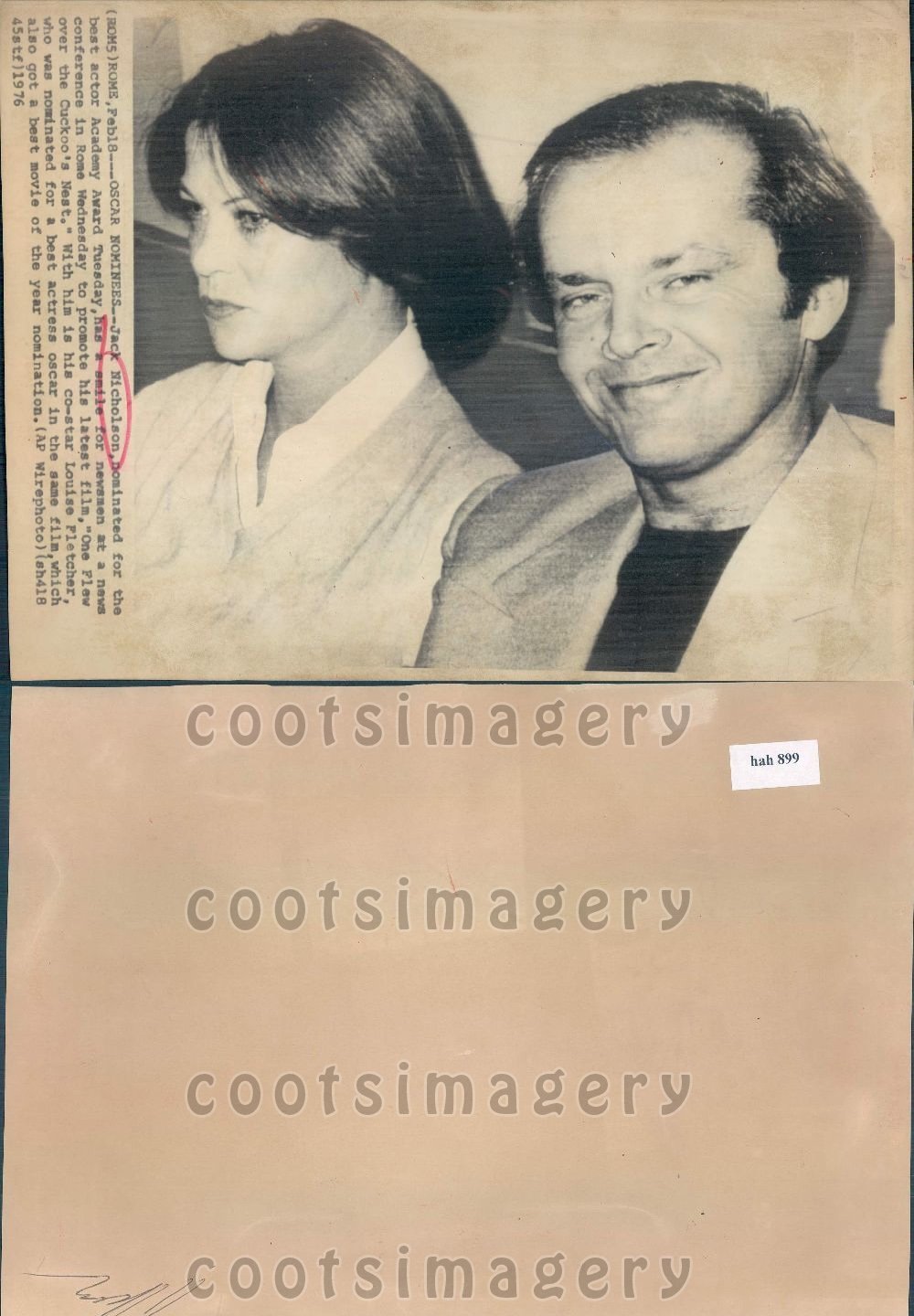
The cast didn’t just visit the hospital; they lived in it. They ate with the patients, joined group therapy sessions, and studied the rhythms of institutional life. Nicholson went further than anyone. He spent weeks among actual psychiatric patients, watching them, mimicking their gaits and tics, absorbing the strange physical vocabulary of the ward. He stayed in character even when the cameras stopped. At 6 a.m. one morning, he and co-star Louise Fletcher watched real electroconvulsive shock therapy being administered — “that was heavy,” Fletcher said later, in what may be the understatement of the decade.
The realism extended to the crew’s methods. Forman was notorious for keeping the cameras rolling when the actors didn’t know they were being filmed, hunting for the unguarded twitch, the genuine discomfort, the moment nobody was performing. Real hospital residents appeared as extras. And in one of the film’s most inspired pieces of casting, the role of Dr. Spivey — the mild-mannered psychiatrist who interviews McMurphy — went to Dr. Dean Brooks, the actual superintendent of the Oregon State Hospital. Brooks wasn’t an actor. He was a doctor, improvising his scenes opposite Nicholson, and his bewildered professionalism gives those sequences an authenticity no script could manufacture.
The Star and the Director Go to War
For all the harmony of the ensemble, the two most important men on the set could barely stand each other. Jack Nicholson and Miloš Forman clashed over the soul of McMurphy from the first week, and the feud became the stuff of Hollywood legend.
The flashpoint came when Nicholson showed up on set one day wearing a large, bushy beard he believed was right for the character. Forman disagreed — violently. The argument escalated until the two men simply stopped speaking to each other. For much of the shoot, they communicated exclusively through the cinematographer, Bill Butler. Nicholson would give Butler a note; Butler would carry it to Forman; Forman would reply through Butler. It was, by all accounts, excruciating — and it worked. The tension between McMurphy’s anarchic energy and the film’s controlled, institutional frame is the engine of the entire movie, and some of it was real.
The rift never fully healed. Years later, when the DVD edition was being assembled with retrospective bonus features, Nicholson refused to take part. He had given the performance of his life, won the Oscar for it, and still couldn’t bring himself to sit in a room and reminisce about the director with him. Some wounds, like some performances, are permanent.
Louise Fletcher, playing the icy Nurse Ratched, had her own quieter battle. She had been away from acting for eleven years, raising a family, when Forman spotted her in Robert Altman’s Thieves Like Us. It took four or five meetings over more than a year to convince him she could play one of cinema’s great monsters — a role several bigger stars had already turned down. She arrived in Oregon on January 4, 1975, for a week of rehearsal that she later called invaluable, and she made a crucial decision: Ratched would not be a villain but a true believer, a woman convinced she was helping. Drawing on the era’s fresh memories of Nixon and the abuse of institutional power, Fletcher played her as the banality of evil in a nurse’s uniform. The cast, she later admitted, kept its distance from her on set — which was exactly right for the character.
The Fishing Trip From Hell
The film’s most beloved sequence — McMurphy hijacking a bus, stealing a fishing boat, and taking the patients out past the breakwater for a day of impossible freedom — was, behind the scenes, a week-long nightmare. The entire company (Nicholson excepted) got violently seasick. The shoot dragged on for seven days on open water. And Forman, it turned out, had never wanted the scene at all; he felt the story’s power lived inside the ward’s walls and resisted letting his characters escape them.
He lost that argument, and cinema is richer for it. The fishing trip remains the film’s beating heart — the one full day when the inmates are simply men on a boat, laughing, drinking beer, living. Nicholson, immune to the seasickness that felled his castmates, led the revelry like the pied piper he was playing. When McMurphy teaches the Chief to fish and the old man finally smiles, it’s the movie’s thesis in a single image: freedom isn’t a place, it’s a moment, and moments can be stolen.
Firings, Lawsuits, and the Author Who Walked Away
The production’s chaos wasn’t confined to the set. Early in the shoot, Forman fired his cinematographer, the great Haskell Wexler, and replaced him with Bill Butler — the same Butler who would become the human telephone between Forman and Nicholson. Wexler believed he was dismissed because of his concurrent work on a documentary about the Weather Underground; Forman insisted it was purely artistic differences. In a delicious Hollywood footnote, both men ended up Oscar-nominated for Best Cinematography for the same film — though Wexler maintained that there were “only about a minute or two” in the finished movie he hadn’t shot himself.
Then there was Ken Kesey. The author of the novel had been promised involvement, wrote a screenplay draft, and then watched the production drift away from his vision — most painfully in its sidelining of Chief Bromden, the novel’s narrator, in favor of McMurphy’s story. Kesey sued the producers, seeking a share of the gross and hundreds of thousands in damages, and claimed for years that he had never watched the finished film in its entirety. It was a bitter coda to a project that had begun with such literary promise: the man who wrote the book couldn’t bear to see what Hollywood had done with it.
The Night Everything Changed
None of the turmoil mattered on March 29, 1976, at the 48th Academy Awards. One Flew Over the Cuckoo’s Nest entered the ceremony with nine nominations and walked out with the Big Five: Best Picture (for producers Michael Douglas and Saul Zaentz), Best Director for Forman, Best Actor for Nicholson, Best Actress for Fletcher, and Best Adapted Screenplay for Lawrence Hauben and Bo Goldman. The little $4.4 million film that had gone over budget and over schedule — the one Zaentz had personally kept alive by borrowing against Fantasy Records — had become the second-highest-grossing film of 1975 in North America and the biggest hit United Artists had ever released.
Nicholson’s win sealed his transformation. He had been the brilliant outlaw of Easy Rider and Five Easy Pieces, the wounded romantic of Chinatown. Now he was something rarer: the definitive American rebel, the man who laughed in the face of every institution and paid the price with a smile. McMurphy doesn’t survive the film — the system lobotomizes him, and the Chief smothers him out of mercy before lifting the sink, hurling it through the window, and running free. But the spirit survives, and so did Nicholson’s career. He would win two more Oscars and become the most-nominated male actor in Academy history.
The Speech in Sign Language
The Oscar ceremony itself gave the film one final unforgettable moment, and it belonged to Louise Fletcher. Accepting Best Actress for playing one of cinema’s coldest villains, Fletcher did something nobody expected: she thanked her parents in sign language. Both of Fletcher’s parents were deaf, and as millions watched, she signed her gratitude on live television — “I want to thank you for teaching me to have a dream. You are seeing my dream come true” — then spoke the words aloud for the audience. It was the most human moment of the night, delivered by the woman who had just won for playing the least human character in the film. The contrast said everything about what Cuckoo’s Nest really was: a movie about systems and the people crushed inside them, made by people who never forgot the humans underneath.
Half a Century Later
The film hasn’t aged a day. Its fluorescent-lit hallways still feel claustrophobic, its battle between the individual and the system still feels urgent, and Nicholson’s grin — dangerous, tender, doomed — still feels like the most alive thing ever captured on film. They made it in a real asylum, with real patients, a feuding star and director, a fired cinematographer, and an author who disowned it. Somehow, out of all that beautiful chaos, they made a masterpiece.
Leave a Reply