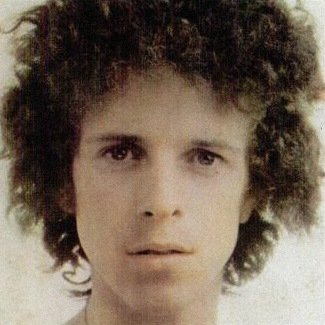
Picture this: it is 1973, and a young singer steps onto the stage of Britain’s most-watched music show dressed as a sad Pierrot clown — white face paint, baggy white costume, ruffles at the neck. He looks like he has wandered in from a French mime troupe. Then he opens his mouth, and out comes one of the most extraordinary voices in pop: a feral, soaring wail that can fill an arena. That was Leo Sayer’s entrance into the world’s living rooms, and it was only the first of his many reinventions. Songwriter for rock royalty, busker, Grammy winner, Muppet Show guest, Australian citizen, and the man behind one of the most improbable comebacks in chart history — Sayer’s career is a masterclass in never standing still.
The Busker in Whiteface
Gerard Hugh Sayer was born in May 1948 in Shoreham-by-Sea, Sussex, and grew up the arty, restless son of an Irish mother and English father. He sang in the church choir, studied art, fronted a blues band called the Terraplane Blues, and moved to London to work as a typographic designer — supplementing his wages by busking on the streets, sometimes alongside the eccentric saxophonist Lol Coxhill. It was there, on the pavement, that he learned the performer’s oldest lesson: if you want strangers to stop, you had better give them something to look at.
His songwriting partnership with David Courtney led to a band called Patches, managed by former sixties pop star Adam Faith. The band flopped, but Faith saw something in the curly-haired kid with the huge voice. At the suggestion of Faith’s wife, Gerard became Leo — and Leo became a clown. For his breakthrough single “The Show Must Go On” in 1973, Sayer performed in full Pierrot costume and white makeup, a ghostly sad-clown figure that made him instantly unforgettable on television. The single reached number two in Britain, the album “Silverbird” also hit number two, and suddenly the busker was a star. He kept the whiteface for a while — it was brilliant marketing — then shrewdly discarded it for his second album, “Just a Boy,” before it could become a cage.
The Songs He Gave to a Who
Before Leo Sayer was famous himself, he was already writing hits for other people — very famous other people. While recording his debut at Roger Daltrey’s Sussex studio, Sayer and Courtney played their songs for the Who’s frontman, who was so impressed he built his entire first solo album, “Daltrey” (1973), around their material. The standout, “Giving It All Away,” became a UK top-five hit and remains Daltrey’s signature solo song.
Think about the nerve of it: an unknown twenty-four-year-old handing songs to the voice of the Who — and the voice of the Who saying yes. It was the ultimate industry calling card. When Sayer’s own records took off months later, nobody in the business needed an introduction. The busker had already been vouched for by rock royalty.
The Song He Did Not Remember Recording
In 1976, Sayer flew to Los Angeles to make “Endless Flight” with producer Richard Perry, the hitmaker behind Carly Simon and Ringo Starr. During the sessions, the studio band started jamming, and Sayer began improvising a bouncy, joyous tune on the spot, hammering it into shape with songwriter Vini Poncia. The session guitarist that day was a young Ray Parker Jr. — years before “Ghostbusters” made him famous. They cut it quickly, almost as an afterthought.
When Perry later told Sayer the throwaway jam was the album’s obvious hit single, Sayer’s response was startling: he did not even remember recording it. “You Make Me Feel Like Dancing” went on to top the American charts in January 1977, reach number two in Britain, and win Sayer and Poncia the Grammy for Best R&B Song in 1978 — a gloriously unlikely award for a white Englishman in clown makeup. It remains the definitive Sayer record: pure, weightless joy, written in minutes and remembered forever. Sometimes the songs you labour over for months vanish without trace, and the ones you toss off between takes become immortal.
The Muppet Show and the Giant Birds
By 1978, Sayer was famous enough to be invited onto the biggest variety show on television — “The Muppet Show.” His appearance became instant legend, though not quite in the way anyone planned. Performing “You Make Me Feel Like Dancing,” Sayer found himself dancing alongside a flock of enormous, gangly birds that were not even, strictly speaking, Muppets. He threw himself into it with total commitment, grinning through the absurdity, and the clip has delighted viewers ever since.
It said everything about him as a performer. Sayer never had the cool detachment of the rock aristocracy; he had something better — the busker’s willingness to look ridiculous in service of the song. That same year he scored another transatlantic number one with “When I Need You,” the sweeping ballad that finally gave him his first British chart-topper and proved the clown could break hearts as easily as he could fill dance floors.
The Hits Between the Bookends
It is easy to remember only the two American number ones, but Sayer’s seventies were stacked with singles that defined the era on both sides of the Atlantic. “One Man Band,” his exuberant 1974 hit, was a love letter to his busking days — all street-corner energy and defiant joy. “Long Tall Glasses (I Can Dance)” reached the UK top five and the American top ten, its title alone a perfect Sayer miniature. “Moonlighting,” the wistful 1975 single, climbed to number two in Britain and became one of his most beloved records. And in 1980, just as the seventies dream was fading, he roared back with “More Than I Can Say,” a gorgeous remake of the old Bobby Vee song that gave him another huge UK hit and proved his voice had lost none of its power.
All told, his first seven British singles reached the top ten — a feat his manager Adam Faith was fond of pointing out — and more than twenty of his singles made the top ten internationally across his career. The clown, the busker, the balladeer: they were all the same man, and the charts kept finding room for every version of him.
Thunder, Then Silence, Then Thunder Again
The hits kept coming into the early eighties — “More Than I Can Say,” “Orchard Road” — and then, as the decade turned, the chart magic faded. Sayer kept working, kept touring, kept recording, but the spotlight moved on. Most seventies stars in that position settle gracefully into the heritage circuit. Sayer did something far more interesting: he waited, and the world came back to him.
In 2006, a British DJ called Meck took Sayer’s 1977 disco track “Thunder in My Heart,” looped its irresistible groove under a thumping house beat, and released “Thunder in My Heart Again.” Sayer gave it his blessing, reportedly delighted that the remix had kept the original’s integrity. The record exploded. In February 2006 it spent two weeks at number one on the UK singles chart — Sayer’s first British chart-topper in twenty-nine years, since “When I Need You” in 1977. At the time, that twenty-nine-year gap between number ones was a chart record, beating even Cher’s famous long wait. Clubbers who had no idea who Leo Sayer was were dancing to his voice; DJs like Fatboy Slim were reportedly playing the track without realising its singer was a seventies legend. It was the most joyful ambush in pop history.
The Australian
There is a lovely final chapter to the Sayer story, and it is about belonging. Sayer had first toured Australia in 1974 and felt an instant connection with the country; the affection was mutual and never faded. In 2009 he became an Australian citizen, settling in New South Wales, where he remains a beloved adopted national treasure. The Sussex busker became an Aussie — and Australia, which had cheered him since the Pierrot days, claimed him as its own.
He has never stopped performing. Now in his late seventies, Sayer still tours with a band, still hits those extraordinary high notes, still tells the stories — the clown costume, the Who sessions, the Muppets, the Grammy — with the glee of a man who cannot quite believe his luck. His fiftieth-anniversary tours have played to packed houses of fans who have grown old alongside him, plus a newer generation who discovered him through a dance remix.
The Voice That Would Not Quit
The Meck comeback could have been a one-season wonder. Instead, Sayer treated it as a second debut. He rode the revival into a career-spanning compilation, a new generation of fans, and — in a move that surprised everyone — a stint on “Celebrity Big Brother” in 2007, where millions of younger viewers met the irrepressible showman for the first time. He celebrated his fiftieth anniversary in music with extensive tours, still leaping around stages in his late seventies, still nailing the high notes that made his name.
Recent years have found him on the road with his “Still Feel Like Dancing” tours, playing to packed houses in Britain and Australia, spinning the old stories between songs with obvious delight. Concertgoers describe a show that is part gig, part living scrapbook: Sayer performs against a rolling montage of photographs and news clippings chronicling his long career, from the Pierrot days to the Meck revival, while he narrates the journey in between songs. The voice that once soared over a Pierrot costume now soars over half a century of memories. Pop careers are supposed to have arcs — rise, fall, nostalgia slot. Leo Sayer’s just has chapters, and he keeps writing new ones.
Leo Sayer’s career is proof of a simple, unfashionable truth: showmanship matters, joy matters, and a great voice never goes out of style. He started as a busker in whiteface trying to make strangers stop on a London pavement. Fifty years later, the whole world is still stopping to listen. And somewhere, on a dance floor in 2006, a teenager who had never heard of the seventies was dancing to a song recorded before she was born — sung by a man who once forgot he had recorded it at all.
The show, as he told us at the very start, must go on. He was right. It did — through whiteface and ballads, through silence and a dance-floor resurrection, all the way to a citizenship ceremony on the other side of the world. Few pop careers have contained so many second acts; Leo Sayer simply never learned how to take a final bow.
Leave a Reply