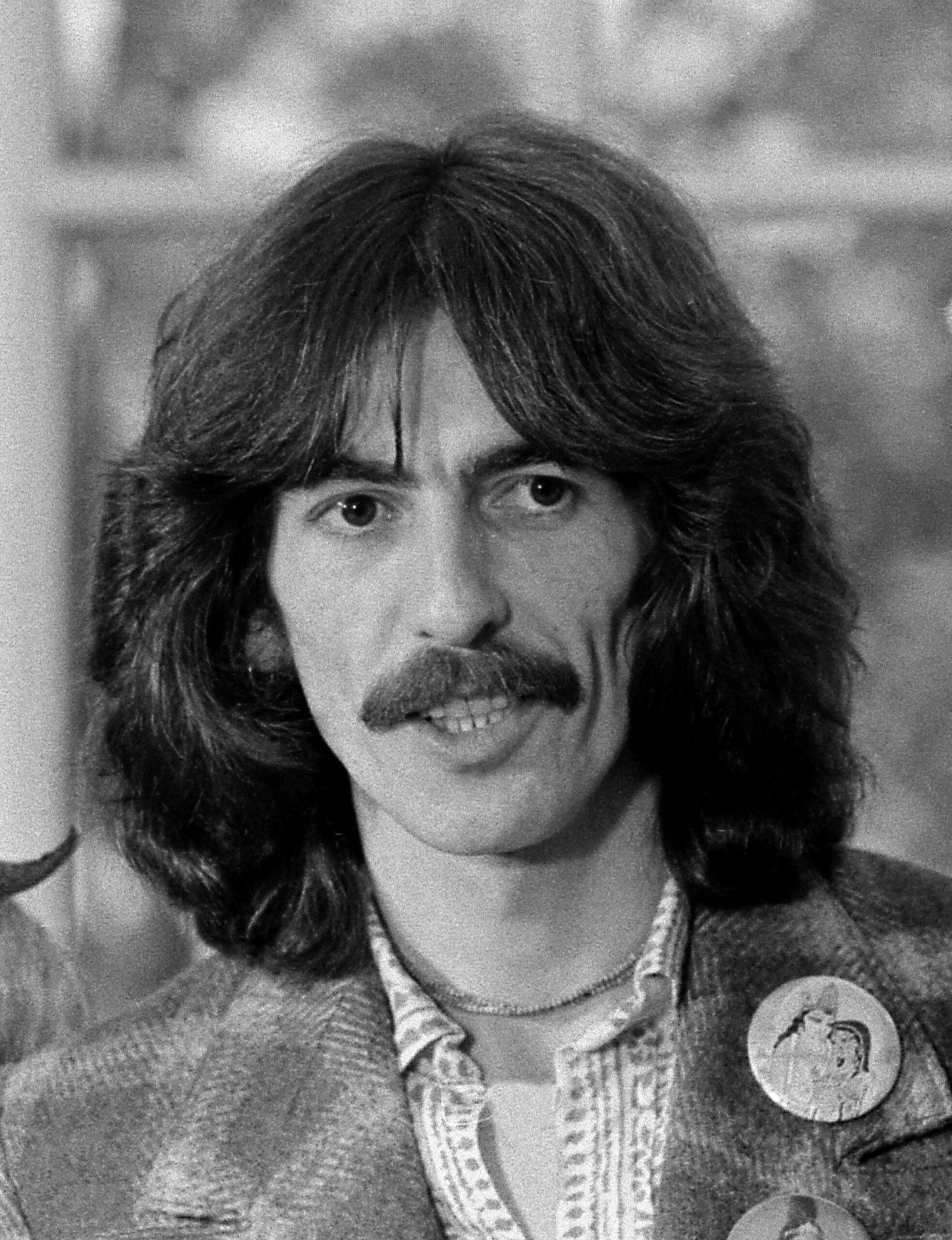
They called him the quiet Beatle, and for years that was a convenient way to overlook him. But George Harrison lived one of the most dramatic lives in rock history: the first Beatle to walk out, the author of a prayer that became a plagiarism landmark, the man who invented the modern benefit concert, a film producer who bet his mansion on a joke, and the survivor of a home invasion so violent he believed he was dying. He was quiet the way a coiled spring is quiet.
The Quiet Beatle Who Quit First
By January 1969, Harrison had reached his limit. The Beatles were rehearsing at Twickenham Film Studios for the troubled “Get Back” project, cameras grinding away, and Paul McCartney was openly directing Harrison’s guitar playing — “I’ll play whatever you want me to play, or I won’t play at all,” Harrison finally snapped. On the morning of January 10, after a frustrating session on “Get Back” and “Two of Us” and a heated lunch-table exchange, Harrison stood up, said, “See you ’round the clubs,” and walked out.
John Lennon’s response was ice-cold: “Let’s get in Eric. He’s just as good and not such a headache.” Harrison went home and that afternoon wrote “Wah-Wah,” a blistering dismissal of the whole suffocating scene. He stayed away for nearly two weeks, returning only after extracting concessions: no more Twickenham, no forced live comeback, and sessions moved to Apple’s own basement studio. The quiet one had staged the band’s first real walkout — and he had a backlog of rejected songs, including “All Things Must Pass” and “Isn’t It a Pity,” that would soon make his point better than any argument.
Skipping Apple to Write a Classic
In April 1969, with Apple Corps turning into what Harrison called a school for businessmen — “sign this and sign that” — he did what any sensible twenty-six-year-old would do: he played hooky. He drove to his friend Eric Clapton’s country house, Hurtwood Edge, in Surrey, borrowed one of Clapton’s acoustic guitars, and walked around the garden on a beautiful spring morning. The relief of not facing Apple’s accountants was, in his words, wonderful. The first thing that came out of the guitar was “Here Comes the Sun.” He finished it later on holiday in Sardinia.
Recorded that July — John Lennon was absent, recovering from a car crash — the song became one of the two Harrison masterpieces on “Abbey Road,” alongside “Something.” It was never released as a single, yet it grew into the most-streamed Beatles song of all time. A song about the arrival of spring, written by a man escaping the winter of his own band.
The Guest Solo Nobody Was Supposed to Hear
A year earlier, Harrison had pulled off one of the boldest moves in Beatles history. His “While My Guitar Gently Weeps,” inspired by the random wisdom of the I Ching, was dying in the studio — the band’s performances were, in his words, unenthusiastic, an unfortunately typical response to his songs. So on September 6, 1968, Harrison invited his friend Eric Clapton to Abbey Road to overdub the lead guitar. Clapton, initially protesting that the others might object, played the now-legendary solo in a single session and went home uncredited. His name appeared nowhere on the original “White Album” sleeve.
The irony was exquisite: Clapton’s presence shamed the Beatles into taking the song seriously, and the track became one of Harrison’s defining achievements. It also foreshadowed everything — within months, Lennon would be suggesting Clapton replace Harrison, and within years, Clapton would marry Harrison’s wife, Pattie Boyd, the inspiration for “Layla.” Through it all, the two men remained friends. Harrison even attended the wedding, with Ringo Starr and Paul McCartney beside him.
A Prayer That Became a Lawsuit
“My Sweet Lord” began in December 1969, when Harrison slipped away from a press conference to an upstairs room with a harmonium and wrote a devotional song blending “hallelujah” with the Hare Krishna mantra. Released in November 1970 as the lead single from the triple album “All Things Must Pass,” it spent four weeks at number one in America and five in Britain — the first solo chart-topper by an ex-Beatle, and a genuine cultural phenomenon.
Then came the lawsuit that would shadow him for twenty-seven years. In February 1971, Bright Tunes Music sued, claiming the melody copied the Chiffons’ 1963 hit “He’s So Fine.” Harrison insisted he had been inspired by the Edwin Hawkins Singers’ “Oh Happy Day,” not the girl group — John Lennon, never one to spare a bandmate, said he had “walked right into it” and knew what he was doing. In August 1976, Judge Richard Owen ruled that Harrison had committed “subconscious plagiarism”: his conscious mind had forgotten the tune, but his subconscious remembered it. He was ordered to pay over $1.6 million.
The case then took a turn worthy of a thriller. Harrison’s former manager Allen Klein — whom Harrison, Lennon, and Starr had fired in 1973 — bought Bright Tunes in 1978 for $587,000, becoming the plaintiff suing his own ex-client. In 1981, a judge ruled that Klein could not profit from his maneuvering: Harrison would pay exactly the $587,000 Klein had spent, and in return received ownership of “He’s So Fine” in North America and Britain. The litigation dragged on until 1998, one of the longest copyright battles in American history. Harrison’s response to the whole ordeal was typical: he wrote “This Song,” a wry, cheerful single about the lawsuit itself.
The Concert That Invented the Benefit Show
In the summer of 1971, Harrison’s friend and sitar teacher Ravi Shankar came to him with a modest proposal: a small benefit to raise perhaps $25,000 for refugees fleeing the Bangladesh Liberation War and the aftermath of the devastating 1970 cyclone. Harrison thought bigger. On August 1, 1971, he staged two concerts at Madison Square Garden — afternoon and evening — with Bob Dylan, Ringo Starr, Eric Clapton, Leon Russell, Billy Preston, and Badfinger, playing to 40,000 people. It was the first major benefit concert in rock history, the template for Live Aid, Farm Aid, and every superstar charity spectacular since.
It was also, administratively, a mess — and Harrison paid for that, too. Because the organizers had never secured tax-exempt status, millions sat in an IRS escrow account for over a decade while Apple’s affairs were audited. The concerts themselves raised about $243,000 for UNICEF; the triple album and film added millions more, and by the mid-1980s nearly $12 million had reached Bangladesh relief. Frustrated by the red tape, Harrison later established the George Harrison Fund for UNICEF, which continues its work to this day. Bob Geldof called Harrison for advice before Live Aid. The student had become the master.
The Most Expensive Cinema Ticket in History
In 1978, Monty Python’s “Life of Brian” was dead in the water. EMI Films had agreed to finance it, then chairman Lord Delfont actually read the script, decided it was blasphemous, and pulled out days before filming was to begin in Tunisia. Eric Idle called his friend George Harrison. Harrison’s response, whenever anyone asked why he stepped in, was disarmingly simple: he wanted to see the movie.
Harrison and his business manager Denis O’Brien formed HandMade Films and Harrison mortgaged his beloved Friar Park — the 120-room Victorian Gothic mansion in Henley-on-Thames, built by the eccentric Sir Frank Crisp, which he had bought in 1970 and spent years restoring — to raise the money. Idle later called it “the most anybody’s ever paid for a cinema ticket in history.” Harrison even took a fifteen-second cameo as “Mr. Papadopoulos.” The film grossed $21 million in America alone, and HandMade went on to produce “The Long Good Friday,” “Time Bandits,” “Mona Lisa,” and “Withnail and I” — effectively bankrolling the most daring decade in modern British cinema because one Beatle fancied a laugh.
A B-Side, a Garage, and Five Rhythm Guitarists
The most joyful accident of Harrison’s later career began in April 1988, when Warner Bros. asked him for a B-side for the European single “This Is Love.” Over dinner in Los Angeles with Jeff Lynne and Roy Orbison, Harrison mentioned he needed to record something the next day. Lynne offered to help; Orbison volunteered too. They couldn’t book a studio on short notice, so Harrison called Bob Dylan, who let them use his garage studio in Malibu. On the way, Harrison stopped at Tom Petty’s house to pick up a guitar he’d left there and invited Petty along.
The song they cut was “Handle with Care” — titled after a label Harrison spotted on a box in Dylan’s garage. When Warner executives Mo Ostin and Lenny Waronker heard it, they refused to waste it on a B-side. The five men decamped to Eurythmics’ Dave Stewart’s Los Angeles home and, sitting in a circle of five chairs in the kitchen with acoustic guitars, wrote and recorded an entire album in about ten days. They called themselves the Traveling Wilburys — Harrison was Nelson, Lynne was Otis, Dylan was Lucky, Orbison was Lefty, and Petty was Charlie T. Jr. “It’s the first band I can think of that’s got five rhythm guitar players,” Harrison beamed.
“Traveling Wilburys Vol. 1” was released in October 1988, reached number three in America, went triple platinum, and won the 1990 Grammy for Best Rock Performance by a Duo or Group. Seven weeks after its release, Roy Orbison died of a heart attack at fifty-two. It was his final triumph, and the last great adventure of Harrison’s career.
The Night His Wife Saved His Life
On December 30, 1999, at around 3:30 in the morning, a 34-year-old paranoid schizophrenic from Liverpool named Michael Abram scaled the walls of Friar Park, smashed a ground-floor window with a piece of a Saint Michael statue, and came inside with a seven-inch knife. He believed he was the archangel Michael, sent by God to kill Harrison, whom his delusions had cast as the Antichrist.
Awakened by breaking glass, Harrison went downstairs and tried to reason with the intruder, chanting the Hare Krishna mantra. Abram stabbed him repeatedly in the chest, puncturing a lung — one thrust barely missed the superior vena cava, a wound the surgeon later said would have been fatal within minutes. Olivia Harrison grabbed a brass fireplace poker and attacked Abram, thinking, as her baseball-loving father had taught her, “follow through.” When Abram turned on her and began choking her, the bleeding Harrison got up and jumped on his back. Olivia finally felled the intruder with a Tiffany lamp. “I believed I had been fatally stabbed,” Harrison later said. Abram was found not guilty by reason of insanity and confined indefinitely to a psychiatric hospital.
Harrison never fully recovered his equilibrium. In May 2001 he had surgery for lung cancer; that summer he was treated for a brain tumor in Switzerland; by November he was undergoing radiotherapy in New York. He spent his final days at a house on Heather Road in Beverly Hills — widely reported as a property owned by Paul McCartney, though the death certificate initially listed a false address and McCartney’s spokesman denied it at the time. On November 29, 2001, at 1:20 in the afternoon, George Harrison died at fifty-eight, with Olivia, his son Dhani, and close friends chanting and praying beside him. Within ten hours he had been cremated in a simple Hare Krishna service, with readings from the Bhagavad Gita. His ashes were scattered, per Hindu tradition, in the Ganges and Yamuna rivers near Varanasi, India.
A year later to the day, the Concert for George filled London’s Royal Albert Hall — McCartney, Starr, Clapton, and a generation of musicians playing his songs in tribute. It was the farewell the quiet Beatle deserved: no screaming, no hysteria, just the music, played beautifully, by the friends he had spent a lifetime gathering. He had walked out of the biggest band in history to become himself. In the end, himself was more than enough.
Leave a Reply